• Welcome to Photrio!
    Registration is fast and free. Join today to unlock search, see fewer ads, and access all forum features.
    Click here to sign up

Microdol X question?

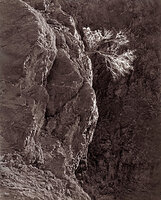
Bush on Canyon Wall

A
Bush on Canyon Wall

  • 2
  • 1
  • 11
double portrait

A
double portrait

  • 1
  • 0
  • 33

Forum statistics

Threads
203,258
Messages
2,852,020
Members
101,748
Latest member
Thesnowman21
Recent bookmarks
0
Microdol-X is a developer that loses both speed and sharpness. Idea is that it dissolves the edges of the grains, making the grain mushier. Think of it as a low acutance developer. If you dilute it 1:3 there is less sharpness loss.

If you already exposed the 125PX at EI 125, consider that it's hard to hit "box speed" with Microdol-X. One normally allows an extra half stop of exposure.
 
When I used to use Microdol-X, it was only ever @ 1:3. Never had any of the issues so many here complain about. Good luck.
 
Microdol-X is very similar to Perceptol and at 1+3 should give exceptionally good acutance & sharpness, and and less loss of film speed.

Ian
 
I use M-X extensively, especially with TMax-100, where it produces almost Tech-Pan levels of (non)grain. With TMax-100 a 1:3 dilution produces identical results to full strength and M-X becomes a very economical developer to use. With older emulsions, like Tri-X and Plus-X, there is about 1/3 - 1/2 a stop of speed loss when used full strength; at 1:3 grain is a bit more noticeable - though still extremely fine - and you may still want to give about a 1/3 stop more exposure.

Microdol-X does not produce the sharp, fine and even salt-and-pepper grain that 35mm Plus-X is famous for when used with D-76 1:1. The grain growth restraining property of the sodium chloride in M-X results in smaller grains that are, for lack of a better word, softer or fuzzier. This is erroneously blamed on 'solvent action' - but Microdol-X has the same amount of S. Sulfite in it as D-76 or D-23 and when used 1:3 it has one of the lowest concentrations of S. Sulfite. Very sharply defined grain can give the illusion of sharpness and resolution when none is present - the smooth grain of Microdol-X thus makes lens aberrations, poor focus and camera shake more apparent. When used with good equipment and technique the 'apparent sharpness' of Microdol-X leaves nothing to be desired and the true resolution of negatives developed in Microdol-X is as high as any other developer when measurements are made with a resolution target.

 
Thanks for the good information. Here is a shot I did last weekend to test 125PX in Microdol 1:3. I would also be curious of what you think of this shot apart from the Microdol question.
 

Attachments

  • frame-7.1.850x677.jpg
    frame-7.1.850x677.jpg
    153.2 KB · Views: 169
Very sharply defined grain can give the illusion of sharpness and resolution when none is present - the smooth grain of Microdol-X thus makes lens aberrations, poor focus and camera shake more apparent. When used with good equipment and technique the 'apparent sharpness' of Microdol-X leaves nothing to be desired and the true resolution of negatives developed in Microdol-X is as high as any other developer when measurements are made with a resolution target.

Geoffrey Crawley said much the same about the use of Acutance developers back in 1960/1, and Barry Thornton re-iterated the same issues in his book "Edge of Darkness" in his case advocating Perceptol at 1+3 (essentially the same as Microdol-X).

stradibarrius, it's difficult to tell how fine the grain is in your image, how about an enlarged section, at the moment there's grain or noise from the scan.

Ian
 
Microdol-X does not produce the sharp, fine and even salt-and-pepper grain that 35mm Plus-X is famous for when used with D-76 1:1. The grain growth restraining property of the sodium chloride in M-X results in smaller grains that are, for lack of a better word, softer or fuzzier.

Is this the reason why Midrodol-X is a must for shooting architectural scenes with large area of concrete or other materials? am I correct?
 
Never heard that Microdol-X is a must, but large areas of a single tone tend to show up the grain. in professional work choice of film format is the main controlling factor with grain rather tahn developer.

In the background what you are seeing is grain.
Here is a 100% crop that covers several of the tonal areas.

There appears to be more grain than should be expected with a 125 ISO film and Microdol-X/Perceptol or even ID-11/D76. But it's difficult to say why without seeing the negatives etc. Grain can be caused by a number of things like underexposure, micro reticulation - when temperatures of the various stages aren't closely controlled, this causes grain clumping.

But it might be from your scanning it's impossible to tell. But if the image (Post #6) was 35mm and full frame then there definitely excessive grain for a 100/125 ISO film.

Ian
 
That shot was actually taken with a Yashica124G 6x6 not 35mm. I have use 125PX many times but have only processed it in Microdol this one time. Every other time it was in D76 1:1 and I have been very pleased with the results.

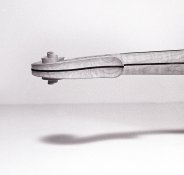
As an example these two shots were taken using the same lighting conditions with the same camera. It is Acros 100 in D76 1:1.

For what it is worth...when I use my digital camera in this same lighting set up I set the white balance to 2850 deg. K to get the correct white balance.
 

Attachments

  • Stephens-5-string_850x812.jpg
    Stephens-5-string_850x812.jpg
    126 KB · Views: 149
  • Imbuia-ribs-850x642.jpg
    Imbuia-ribs-850x642.jpg
    79.9 KB · Views: 147
I suspect that the PX Microdol-X combination of film speed and dev time wasn't optimal for the images. It should be far better, but may need some further trials.

If Acros & D76 are giving much better results then there may also be issues of reciprocity or just colour sensitivity. Some films used to have 2 speeds FP4 used to be 125 ASA in Daylight, 80 ASA in Tungsten.

Any film in Microdol-X needs about a stop more exposure than in D76, then perhaps PX needs half a stop more for tungsten, that could cause issues.

Ian
 
Something else, I found out that Tmax100 and Microdol-X gave me a neg with sort of chocolate tone! I don't know yet how it prints though
 
Yes, that's very common with Microdol-X. You'll see it with just about any film, and it is normal. The negs print just fine.
 
Photrio.com contains affiliate links to products. We may receive a commission for purchases made through these links.
To read our full affiliate disclosure statement please click Here.

PHOTRIO PARTNERS EQUALLY FUNDING OUR COMMUNITY:


Ilford ADOX Freestyle Photographic Stearman Press Weldon Color Lab Blue Moon Camera & Machine
Top Bottom