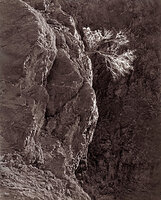
I use M-X extensively, especially with TMax-100, where it produces almost Tech-Pan levels of (non)grain. With TMax-100 a 1:3 dilution produces identical results to full strength and M-X becomes a very economical developer to use. With older emulsions, like Tri-X and Plus-X, there is about 1/3 - 1/2 a stop of speed loss when used full strength; at 1:3 grain is a bit more noticeable - though still extremely fine - and you may still want to give about a 1/3 stop more exposure.
Microdol-X does not produce the sharp, fine and even salt-and-pepper grain that 35mm Plus-X is famous for when used with D-76 1:1. The grain growth restraining property of the sodium chloride in M-X results in smaller grains that are, for lack of a better word, softer or fuzzier. This is erroneously blamed on 'solvent action' - but Microdol-X has the same amount of S. Sulfite in it as D-76 or D-23 and when used 1:3 it has one of the lowest concentrations of S. Sulfite. Very sharply defined grain can give the illusion of sharpness and resolution when none is present - the smooth grain of Microdol-X thus makes lens aberrations, poor focus and camera shake more apparent. When used with good equipment and technique the 'apparent sharpness' of Microdol-X leaves nothing to be desired and the true resolution of negatives developed in Microdol-X is as high as any other developer when measurements are made with a resolution target.