

• Welcome to Photrio!
    Registration is fast and free. Join today to unlock search, see fewer ads, and access all forum features.
    Click here to sign up

LUCKY C200 120

Forum statistics

Threads
203,277
Messages
2,852,217
Members
101,756
Latest member
rsj1360
Recent bookmarks
0
It’s very slow, like EI 3, and it didn’t look particularly true to life from the one sample image I saw

There's a decent chance that they have the formula for an E-6 duplicating stock rather than a camera film (people forget how much demand there was for duplicating stocks not so long ago). My understanding is that the formulae that made it to the plant were largely those of products that were in such high demand/ price sensitive that it made sense to manufacture them closer to market.

I think that the reality as to what they can make will depend on what they have in their formula book (aka whatever got licensed to them) and can achieve without major reformulation rather than being anywhere close to fulfilling people's fantasises of various materials. The probable reality is that they have recipes to follow rather than necessarily having a set of techniques and researchers to product build at a more fundamental level. That may change relatively quickly.

@koraks, to follow up on the LF question, if the formulations are for CTA rather than PET coating, and if thick-base CTA is not readily available, there's quite a lot of work that would have to be done to potentially enable the emulsions to go on PET base.
 
@koraks, to follow up on the LF question, if the formulations are for CTA rather than PET coating, and if thick-base CTA is not readily available, there's quite a lot of work that would have to be done to potentially enable the emulsions to go on PET base.

IIRC they’re using 0.1mm PET for everything. Lucky doesn’t make polyester from my understanding, but they’ve been making PET for a long while. It shouldn’t be too hard to put film on thicker base, just a matter of getting the thick base, assuming they even bother to, they might just use 0.1mm PET and cut sheets from that.
 
IIRC they’re using 0.1mm PET for everything. Lucky doesn’t make polyester from my understanding, but they’ve been making PET for a long while. It shouldn’t be too hard to put film on thicker base, just a matter of getting the thick base, assuming they even bother to, they might just use 0.1mm PET and cut sheets from that.

Given that most of the alterations relate to getting the emulsion coating package to work with a PET substrate, the base thickness difference is very minor. That said, if there are no other current products that they coat that use thick PET base, then the economics might take some time to add up.
 
Given that most of the alterations relate to getting the emulsion coating package to work with a PET substrate, the base thickness difference is very minor. That said, if there are no other current products that they coat that use thick PET base, then the economics might take some time to add up.
Thinking about it now, I bet they could coat on thick PET if they wanted, considering a large part of their film operation is for PCB and X-Ray film. Just a matter of if there’s enough demand for sheets to justify an entire master roll (or multiple)
 
I think it is a typical product decision: for now it needs to focus 100% on getting color emulsion right, 35mm and 120 mass produced, and making a decent profit. Only after that it will look into the potential demand for sheet format.
 
I think it is a typical product decision: for now it needs to focus 100% on getting color emulsion right, 35mm and 120 mass produced, and making a decent profit. Only after that it will look into the potential demand for sheet format.

Yes, from black-and-white to color, from 135 to 120, from C200 to C400—one step at a time.
 
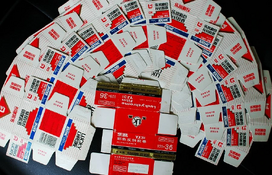
I have a collection of research reports published in 1979 by the Technical Institute of Physics and Chemistry of the Chinese Academy of Sciences (which was still called the Institute of Photographic Chemistry at that time). It mentions that in 1973 they began trial production of a duplicating stock for television production, but it certainly wasn't for the E-6 process, since the E-6 process didn't appear until 1976. After that, there are no further records of duplicating stock—only the Lucky YJ31 and 100HC models(See image), which are ISO 100 consumer 135 color reversal films using the E-6 process (I haven't even found any packaging pictures of a 120 version)...
There's a decent chance that they have the formula for an E-6 duplicating stock rather than a camera film (people forget how much demand there was for duplicating stocks not so long ago). My understanding is that the formulae that made it to the plant were largely those of products that were in such high demand/ price sensitive that it made sense to manufacture them closer to market.

I think that the reality as to what they can make will depend on what they have in their formula book (aka whatever got licensed to them) and can achieve without major reformulation rather than being anywhere close to fulfilling people's fantasises of various materials. The probable reality is that they have recipes to follow rather than necessarily having a set of techniques and researchers to product build at a more fundamental level. That may change relatively quickly.

@koraks, to follow up on the LF question, if the formulations are for CTA rather than PET coating, and if thick-base CTA is not readily available, there's quite a lot of work that would have to be done to potentially enable the emulsions to go on PET base.
 

Attachments

  • 乐凯反转.png
    乐凯反转.png
    973.7 KB · Views: 60
I have a collection of research reports published in 1979 by the Technical Institute of Physics and Chemistry of the Chinese Academy of Sciences (which was still called the Institute of Photographic Chemistry at that time). It mentions that in 1973 they began trial production of a duplicating stock for television production, but it certainly wasn't for the E-6 process, since the E-6 process didn't appear until 1976. After that, there are no further records of duplicating stock—only the Lucky YJ31 and 100HC models(See image), which are ISO 100 consumer 135 color reversal films using the E-6 process (I haven't even found any packaging pictures of a 120 version)...

When were the JY31 and 100HC films discontinued? How did they compare to their competitors at the time (Kodak, Fuji, Agfa)?

My understanding is that Lucky ARE working to produce (re-introduce?) colour slide film. Let's hope this comes to fruition.
 
They were discontinued around the early 2000s, and it seems they were never launched on a large scale. Lucky film is one of the worst films in the world—the reversal film is even slightly worse than AGFA CT100 (though there are only a few factories in the world capable of producing C‑41 and E‑6 films). I also hope that Lucky can resume producing color reversal film, even though its quality certainly won't be very good.
When were the JY31 and 100HC films discontinued? How did they compare to their competitors at the time (Kodak, Fuji, Agfa)?

My understanding is that Lucky ARE working to produce (re-introduce?) colour slide film. Let's hope this comes to fruition.
 
I'm not sure what that means, something is getting lost in translation here, but that's okay.

He assumed you meant pro equipment like Drum Scanners, whereas in my way you likely mean a normal negative scanncer without too much smoothing setting. Many chinese film enthusiasts are a little grain-averse, so web-labs tend to bake in much smoothing by default instead of leaving it to the user.
 
E-6 options are really thin right now. Quality aside, having more variety is always a good thing
 
I'm not sure what that means, something is getting lost in translation here, but that's okay.

I believe this must be an issue that arose when translating from Chinese into English. Besides, film photography forums in China have long been in decline (even the surviving ones make it difficult to access historical content from the early 2000s). Most Chinese film enthusiasts now connect with each other through Xiaohongshu, as well as WeChat and QQ group chats.
 
Focus has a problem, or the lens group is installed backward, or there is a scanning issue, only one image is normal
 
Focus has a problem, or the lens group is installed backward, or there is a scanning issue, only one image is normal
Looks like a severe film flatness problem during scanning. There also appears to be heavy scratching on some of the frames. I'd talk to the people operating this processing service about it; it's not how things are supposed to work.

The set in #67 looks better!

More importantly, looks like a perfectly usable color negative film. I see no coating defects etc. or other signs of QA problems. Did you notice any, at all? Thanks for sharing these examples!
 
Looks nice, I have 2 rolls of 120 Lucky 200 in the fridge, must get out and use it!
 
This looks like it was developed and scanned by the lab near my home... This is the lab's scan of Lucky C200, though in 135 format. I developed this roll myself using an adjusted dilution of Lucky G-71 developer (Lucky sells C-41 lab processing kits similar to Kodak's and Fuji's through distributors) with a Jobo CPA2 processor.
 

Attachments

  • 42480009x.jpg
    42480009x.jpg
    442.1 KB · Views: 28
  • 42480030x.jpg
    42480030x.jpg
    426 KB · Views: 21
  • 42480031s.jpg
    42480031s.jpg
    431.3 KB · Views: 26
Looks like a severe film flatness problem during scanning. There also appears to be heavy scratching on some of the frames. I'd talk to the people operating this processing service about it; it's not how things are supposed to work.

The set in #67 looks better!

More importantly, looks like a perfectly usable color negative film. I see no coating defects etc. or other signs of QA problems. Did you notice any, at all? Thanks for sharing these examples!

I actually didn’t know that was possible, I’ll check my negatives next time I’m at the shop. Thanks for your expert advice. 67 is too big, and the total cost is too high. I think the C200 works just fine.
 
Photos look great. How would you rate the film's blue and cyan color? Compared to what you saw when you took those photos?、

If I'm guessing right, the image being correctly captured by 65mm camera lens may be a little further away than the viewfinder lens.
 
Last edited:
This looks like it was developed and scanned by the lab near my home... This is the lab's scan of Lucky C200, though in 135 format. I developed this roll myself using an adjusted dilution of Lucky G-71 developer (Lucky sells C-41 lab processing kits similar to Kodak's and Fuji's through distributors) with a Jobo CPA2 processor.

Taizhou, the City of Light. Judging by the photos, the red hasn’t run. I’ve been shooting film for a few years now, but I’ve never considered developing my own film. For me, disposing of used chemicals is a major headache, so as long as I don’t do it myself, I don’t have to deal with it.
 
Photrio.com contains affiliate links to products. We may receive a commission for purchases made through these links.
To read our full affiliate disclosure statement please click Here.

PHOTRIO PARTNERS EQUALLY FUNDING OUR COMMUNITY:


Ilford ADOX Freestyle Photographic Stearman Press Weldon Color Lab Blue Moon Camera & Machine
Top Bottom