
• Welcome to Photrio!
    Registration is fast and free. Join today to unlock search, see fewer ads, and access all forum features.
    Click here to sign up

Lomography Metropolis C-41 Color Negative Film

DeVeaux School

H
DeVeaux School

  • 0
  • 0
  • 0
Pitt Meadows trail.

H
Pitt Meadows trail.

  • 4
  • 2
  • 83

Recent Classifieds

Forum statistics

Threads
202,614
Messages
2,843,059
Members
101,409
Latest member
Luki
Recent bookmarks
0
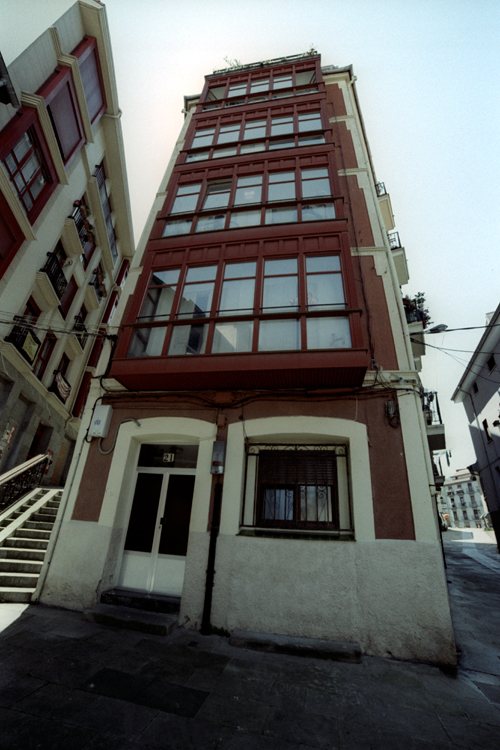
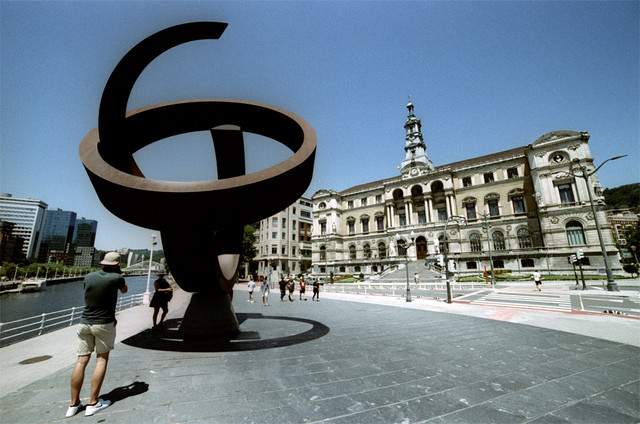
Some examples of LomoChrome Metropolis 2021 formulation test roll. Exposed to ISO 200 on a Nikon FM2n with a Samyang 14mm f/2.8 (also testing the lens). Shot at noon of a super sunny day, harsh contrast and colors as vivid as it gets. Scanned on a Nikon 8000ED and Vuescan with plain adjustement (no highlights compression, no fill in shadows). Reframe and general levels and color balance to taste in PS, no other mask of any kind applied.
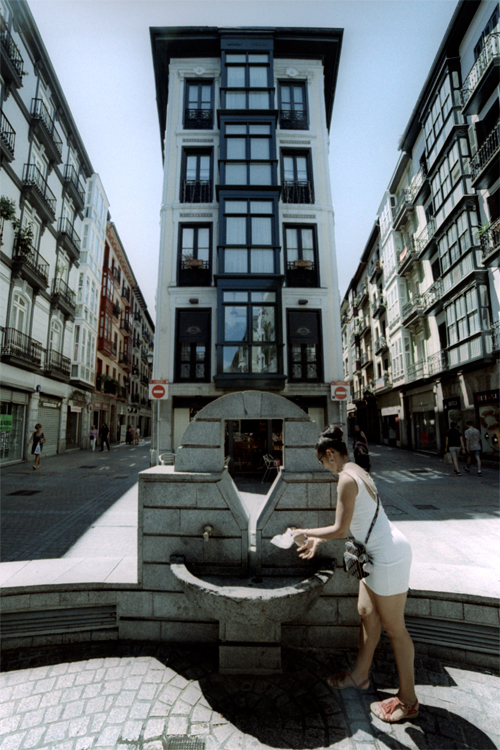
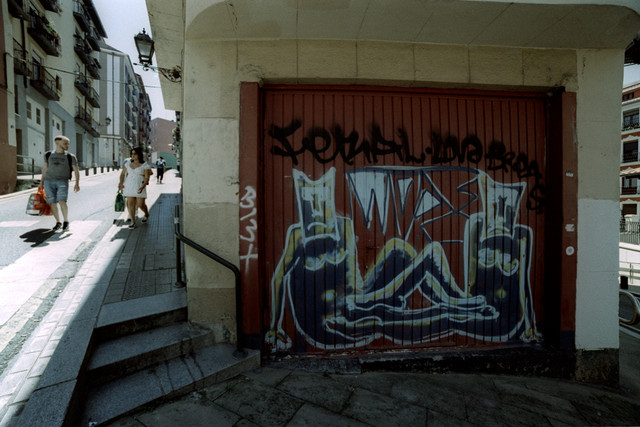
Image112.jpg

Image114.jpg

Image115.jpg

Image118.jpg

Image124.jpg

Image128.jpg


My impressions: Grainny film to the extend of affecting sharpness, very good overexposure latitude, kind of weird but still decent color balance with strong tendency to green, and, the most obvious, very low color saturation. I am curious to see how this film behaves on a cloudy fay.... could be something interesting that I can use for some idea I have in mind.
 
Last edited:
There's something very, very odd going on with those images with a sort of halo effect around dark objects. It seems highly unlikely to me that either the film or the lens are responsible for this.

Also note the severe color gradients in the skies; perhaps this does have to do with the film, but looking at the examples that Lomo posted of this film, colors are all over the place but don't show this kind of weird crossover in areas of the same hue and density.

How was this film developed?
 
There's something very, very odd going on with those images with a sort of halo effect around dark objects. It seems highly unlikely to me that either the film or the lens are responsible for this.

Also note the severe color gradients in the skies; perhaps this does have to do with the film, but looking at the examples that Lomo posted of this film, colors are all over the place but don't show this kind of weird crossover in areas of the same hue and density.

How was this film developed?

Yes, I notice those halos too. Usually they are caused by the scanner lens in very abrupt contrast transitions and sometimes referred as "bleeding", but my Nikon never showed that kind of problem before with any other film. Negative look quite contrasty compared to any other regular C41 film I have seen and the film base is just a very light greenish tone. Development is with my usual Fuji Hunt Environeg C41 chemistry in my usual Jobo CPP2.
 
Yeees, that makes sense. Originally I was writing that I suspected the scanner, but I noticed the type of scanner and I just couldn't imagine that particular scanner would exhibit this problem. Apparently it does! Nice that you've been able to nail it down so quickly.
 
I wonder how much lighting and film speed has to do with the outcomes. It would be interesting to test that. I haven't shot any of this film at 200 or in different lighting situations. It seems that the greens are more green in the above pictures than the ones I took at 400.
 
Maybe just a mirror that accumulated dust.

Bleeding is not related with dust. Reading more carefully, it is a sensor issue and not related with the lens as I mentioned before. Something like a crosstalk between areas of the sensor in high contrast transitions. What I can do to scan with the Nikon is to expose the film to ISO 400 to decrease that contrast (lower highlights density).
 
it is a sensor issue and not related with the lens as I mentioned before

Not so sure about this...I think it's more likely to be bleeding due to stray light in the optical path. So dust or some other form of contamination is the most likely cause, and a thorough cleaning of the optical path might clear the issue. If you think of how a CCD strip sensor works, it's really, really unlikely that you'd get anything like this from a sensor defect.
 
Not so sure about this...I think it's more likely to be bleeding due to stray light in the optical path. So dust or some other form of contamination is the most likely cause, and a thorough cleaning of the optical path might clear the issue. If you think of how a CCD strip sensor works, it's really, really unlikely that you'd get anything like this from a sensor defect.

"Bleeding" is not a strange thing with this Nikon scanner and I can get it anytime I want. For example, using the MF film holder I just need to remove the black frame mask from the holder and the bleeding will appear on the film edges not covered.

But it is the first time ever I get it within a frame, and I have scanned one Fuji 400H roll just a few weeks ago without any problem. So I think this film at ISO 200 is too much for the Nikon CCD sensor.
 
So I think this film at ISO 200 is too much for the Nikon CCD sensor.

If that were true, your scanner would have never had any meaningful success in the market. Do you know what kind of densities your Nikon will easily scan through when scanning slides? If you keep that in mind, you'll find it sensible that it will have no problem whatsoever with inherently wafer-thin C41 negatives, even if they're a bit on the heavy side.
 
If that were true, your scanner would have never had any meaningful success in the market. Do you know what kind of densities your Nikon will easily scan through when scanning slides? If you keep that in mind, you'll find it sensible that it will have no problem whatsoever with inherently wafer-thin C41 negatives, even if they're a bit on the heavy side.

You have a good point with the slides, contrast difference should be much higher and I don't remeber bleeding problems (even I have scanned very few slides). Ok, I will try to clean the mirror with some guide I found and let you all know...
 
If that were true, your scanner would have never had any meaningful success in the market. Do you know what kind of densities your Nikon will easily scan through when scanning slides? If you keep that in mind, you'll find it sensible that it will have no problem whatsoever with inherently wafer-thin C41 negatives, even if they're a bit on the heavy side.

Dusty main mirror from Nikon Super Coolscan cleaned, it was really dusty, and....

asid-2.jpg


Perfect! No bleeding at all! The scan is now also sharper than before the cleaning.

Thanks to you, koraks and bernard_L! 😁
 
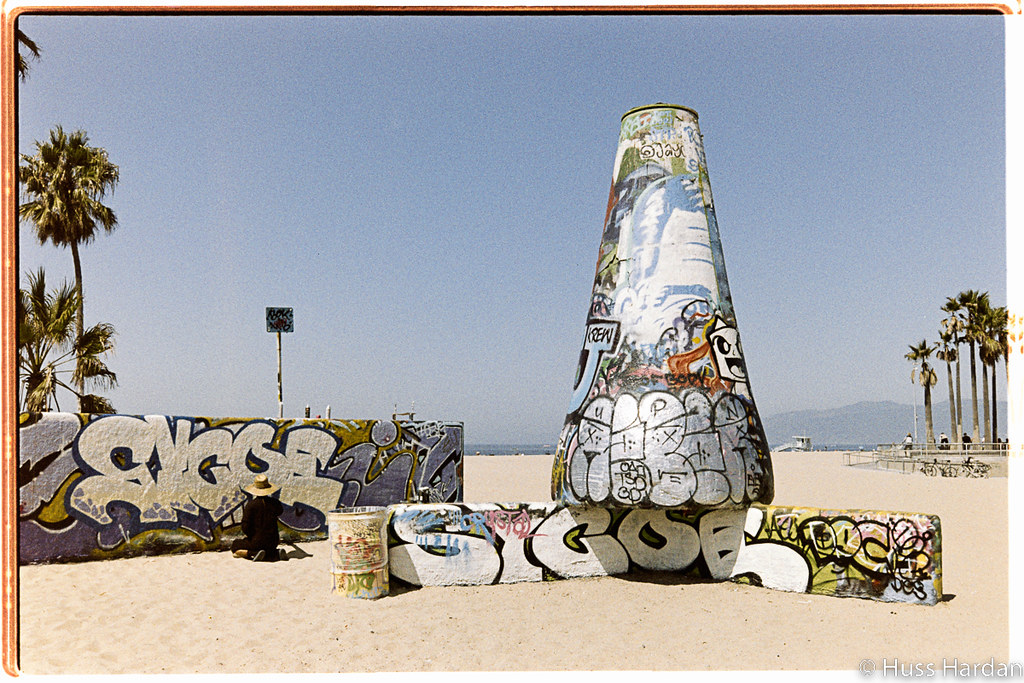
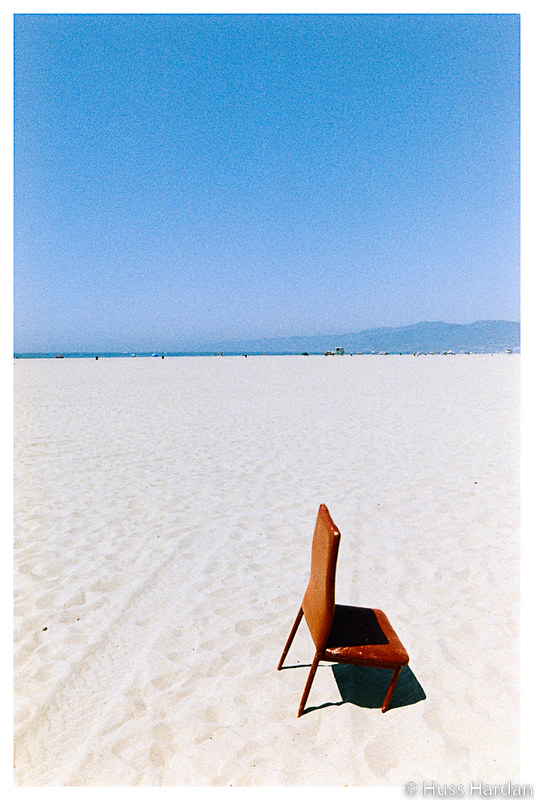
That's nice Huss, I like it.

Thanks. I have a bunch of the original batch in my freezer so thought I might a well use it the way I use my regular color film. So people can see how it behaves outside the concrete jungle type shots.
 
  • Huss
  • Deleted
One great photo after another. I really do like Metropolis. Too bad it's so pricey now.
 
Photrio.com contains affiliate links to products. We may receive a commission for purchases made through these links.
To read our full affiliate disclosure statement please click Here.

PHOTRIO PARTNERS EQUALLY FUNDING OUR COMMUNITY:


Ilford ADOX Freestyle Photographic Stearman Press Weldon Color Lab Blue Moon Camera & Machine
Top Bottom