I think the scratch is on the emulsion side. Look at the third image you attached to your first post. See the tiny, curlycue shaped pieces of dust, lying along the line of the scratch? Those are little bits of emulsion that were scraped from the surface as it passed over some foreign object.
I think the scratch happened while the film was moving left to right with respect to the images you have posted.
Since the image is upside down in the camera gate, that probably means that they were created as the film was advanced to the next frame.
I'm not 100% certain how the film path of this camera works. I'm only guessing from my own experience.
This could possibly be the reason why they are wavy. The film moves, gets scratched then stops. The process repeats each time you crank the film forward.
Others have said that light is diffused as it passes through damaged film, causing it to appear darker than the image. This is true but the caveat is that the scratch must only penetrate the surface layer of the gelatin. If the scratch was deep enough to disturb the grains of silver (or dye) it would produce a totally white mark on black and white film which would appear as opaque black on a print. That would be a non-repairable scratch. In your case, I don't think you have disturbed the image-bearing layer. Only the surface. Applying some scratch concealer fluid might help.
I'm going to guess that the scratch happened AFTER the image was taken. This would lead me to believe that there is a piece of crud or a burr some place on the right side of the film gate.
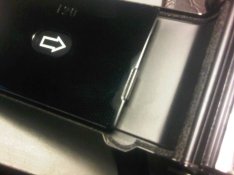
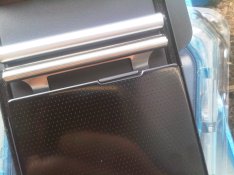
Lay a piece of the damaged film in the film gate and compare the location of the damage to the parts of the rails, rollers and pressure plates that the film comes in contact with. This will help you localize your search. Then get a piece of thin silk cloth or a pair of pantyhose and rub it along the film path. The material will catch on any burrs. You can also use the thin edge of a guitar pick as a feeler. If there are any burrs you will feel a distinct "click" as the pick rides over them.
It could be a piece of crud stuck in the film path but I think it's a burr. If it was a piece of crud, it wouldn't have lasted through 30 or 40 rolls of film. It would have eventually worn away. Whatever it is must be stationary.