
I always calibrate my light meters to my DSLR because it's the easiest to judge (what with the histogram and all). I usually first calibrate them to an 18% gray card, and then pick a few other scenarios around the house to double check that they agree in both bright light, and dim light scenarios. That may or may not be "accurate" in a scientific sense. Rather than strive for extreme accuracy, I just go for consistency. So long as all of the light meters I use agree with each other, I don't have any problems switching between them. In most cases, I would think that a good digital camera should be pretty close. But I wouldn't be surprised to find one off by a third of a stop or so. That being said, what's important is you find a solution that produces good results consistently for you. And that relies as much on your process as it does on your equipment.
-
Welcome to Photrio!Registration is fast and free. Join today to unlock search, see fewer ads, and access all forum features.Click here to sign up
You are using an out of date browser. It may not display this or other websites correctly.
You should upgrade or use an alternative browser.
You should upgrade or use an alternative browser.
Light meter for landscape photography
-
A
- Thread starter Susstudium
- Start date
Recent Classifieds
-
For Sale Leica Summicron-M 50mm F/2.0 Black 11826 V5 (Boxed 2018) (6-Bit)
- Started by jshcrlsn
-
For Sale CAMERA KIT
- Started by jeffreyg
-
For Sale Mint Nikon Lenses
- Started by Barlow
-
For Sale 3 Mint Nikon D2X Camera Bodies
- Started by Barlow
-
For Sale Minolta SR Extension Tube Set
- Started by Jon Shiu
Forum statistics
You don't have a reliable standard to compare with, these folks do - https://www.yelp.com/biz/quality-light-metric-hollywoodBill. Thanks for the tip. But the only camera I have are old Nikormat FT3 and Nikon N6006 and I don't know if the meters even work or are accurate. Shouldn't I be able to use my digital 1" camera? I can see if I'm getting the results on it that I want. Then use as well as the histogram. I would shoot "normal" daylight sunny and also shade and overcast shoots as well. Shouldn't I be able to calibrate the Minolta light meter to these sample shots? The only variable might be that digital cameras meter for the highlights I would think like positive slide film. I use both slide film (Velvia 50) and also BW negative film (Tmax 100) where you expose for the shadows. So would comparing to a digital be a good way of calibrating? Also, should I consider what I shoot when I calibrate the light meter - negative vs. positive film?
Yep. They area very quick, reliable and honest - quite enjoyable to work with.You don't have a reliable standard to compare with, these folks do - https://www.yelp.com/biz/quality-light-metric-hollywood
- Selena Jain
- Deleted

Buy Gossen Digirro F2 meter.
It covers a wide measuring range with perfect accuracy. It covers exposure times from 1/8000sec-60mins, and flash sync speeds up to 1/1000sec. Reviews are also good.
Not the worst advice !
For use with roll film I'd opt for a Luna Pro SBC. It's a bit larger than the regular Luna Pro but nicer, IMO. The price isn't much higher these days. It's elegantly simple, analog, accurate, reliable.

For those in most of the world, the Luna Pro SBC is badged as the Gossen Profisix.For use with roll film I'd opt for a Luna Pro SBC. It's a bit larger than the regular Luna Pro but nicer, IMO. The price isn't much higher these days. It's elegantly simple, analog, accurate, reliable.
It was the replacement for what ONF refers to as the Luna Pro.

Sirius Glass
Subscriber
For use with roll film I'd opt for a Luna Pro SBC. It's a bit larger than the regular Luna Pro but nicer, IMO. The price isn't much higher these days. It's elegantly simple, analog, accurate, reliable.
Mine has three red LED lights, not a swinging needle. I like it. I also have a Sekonic L308S in bright green that I bought at a high price in Paris because another store sold me bad batteries for my Hasselblad PME.
Known as a Lunalite SBC (Luna-Lux in the USA).Mine has three red LED lights, not a swinging needle. I like it.
- Selena Jain
- Deleted

Another vote for the Sekonic 308 for incident (though I use the Spotmeter F much more these days). A meter is like a tripod - buy a good one and it will outlast 20 years of various camera flings and affairs.
Sirius Glass
Subscriber
Another vote for the Sekonic 308 for incident (though I use the Spotmeter F much more these days). A meter is like a tripod - buy a good one and it will outlast 20 years of various camera flings and affairs.
I have one of those for back up. I like the EV readings for the Hasselblads.

You can't do better than the Digital Pentax SpotmeterV;notcheap but excellent; get it used and stay away from the Zone VI modified version;It's not any better; just more expensive about $200 should get you there 2nd-hand.Hi everyone, I'm looking for a recommendation on a good, reasonably affordable light meter. I've been getting into film over the last year, and have a Yashica MAT 124G I use primarily for landscape photography. It's great, except that it's got an inoperative light meter. Up til now I've just used my digital camera to get light readings, but that can be cumbersome and inelegant, switching back and forth between two systems. I presume what I need is a reflected spot meter, but beyond that, I'm at a loss. Can someone point me towards a good meter for landscape/travel photography?
adding info:You can't do better than the Digital Pentax SpotmeterV;notcheap but excellent; get it used and stay away from the Zone VI modified version;It's not any better; just more expensive about $200 should get you there 2nd-hand.
Attachments

adding info:
Ralph L just provided a crucial link.


People who are looking for simple answers to a seemingly simple question are rarely satisfied with the many and varied opinions/suggestions on Photrio.
I think it's great; gives you a lot of options and opinions, but some people are just overwhelmed.
Hopefully, the OP is just pondering the multitude of choices and not huddling under their computer desk...
I think it's great; gives you a lot of options and opinions, but some people are just overwhelmed.
Hopefully, the OP is just pondering the multitude of choices and not huddling under their computer desk...
pentaxuser
Member
He disappeared on 31 Jan 2018 with only his opening post. You could say that at least he stayed around long enough to digest the first set of answers and we can be grateful that his subject matter did not result in the break-up of any beautiful friendships and withdrawal of anyone else from Photrio65 post thread....I don't think he is following any more...
View attachment 215845

pentaxuser
I'm partial to the any Gossen DigiSix or the Gossen Luna Pro.Gossen is just where it is when it comes to light meters. Of course, when you venture into the Zone System a Pentax digital Spotmeter is the most convenient but expensive.A Gossen LunaPro or a Sekonic L-398 are both good, versatile meters. The Sekonic is still available new id does. Ot require a battery - an advantage, in my opinion) There is also the tiny Gossen DigiSix.
Sirius Glass
Subscriber
I'm partial to the any Gossen DigiSix or the Gossen Luna Pro.Gossen is just where it is when it comes to light meters. Of course, when you venture into the Zone System a Pentax digital Spotmeter is the most convenient but expensive.
I moved from the Gossen Luna Pro to the Pentax Digital Spot meter because the 2.5 degree attachment was not narrow enough to be a useful spot meter. The spot meter with the Zone System sticker make a powerful tool. After spend sirius money on cameras and lenses, spend a little more and get a powerful tool to really get much more use out of your investment.
He disappeared on 31 Jan 2018 with only his opening post. You could say that at least he stayed around long enough to digest the first set of answers and we can be grateful that his subject matter did not result in the break-up of any beautiful friendships and withdrawal of anyone else from Photrio
pentaxuser
It seems in many cases, these initial posts are just springboards so the 'regulars' can discuss (or argue!) a topic. Isn't this the whole idea of a 'forum?'
My post was to poke fun at you guys (myself included) for carrying on for 65 posts


I have a bunch of light meters. Yes I have a fetish for them lol. However the ones I use on a regular basis are the Sekonic 558 and an old Zeiss pictured below. The image is not mine I snagged it off epray. My Zeiss meter came from my dad and is still in great physical shape and still very accurate. 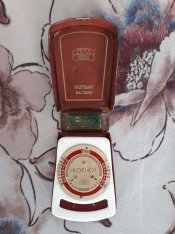
- Joined
- Nov 1, 2007
- Messages
- 539
- Format
- Multi Format
You don't have a reliable standard to compare with, these folks do - https://www.yelp.com/biz/quality-light-metric-hollywood
Another vote for Quality Light Metric. They did a great job of calibrating both my Minolta Light and Color Meters. That said, I primarily use the light meter for studio flash and spot metering and rarely use the color meter. I found that the light meter app for my iPhone was more than adequate for my other needs and using it meant one less thing to carry and fewer batteries to remember to check.
Sirius Glass
Subscriber
You don't have a reliable standard to compare with, these folks do - https://www.yelp.com/biz/quality-light-metric-hollywood
That is who I used to calibrate my Pentax Digital Spotmeter. He could not calibrate the PME which had to be sent to Hasselblad. I dropped the light meters at his FedEx store front and picked it up there a few days later.
| Photrio.com contains affiliate links to products. We may receive a commission for purchases made through these links. To read our full affiliate disclosure statement please click Here. |
PHOTRIO PARTNERS EQUALLY FUNDING OUR COMMUNITY:  |