


• Welcome to Photrio!
    Registration is fast and free. Join today to unlock search, see fewer ads, and access all forum features.
    Click here to sign up

Leica R Cameras New Appreciation Thread (Images, Repairs, Accessories, & More)

Forum statistics

Threads
202,627
Messages
2,843,231
Members
101,413
Latest member
USMC46
Recent bookmarks
0
Is the Minolta heritage of these cameras such that they use the same sort of pneumatic damper as the XD-7? If so, excessive shutter lag is due to sticky oil on it, which can be cleaned, with reasonable effort on the Minoltas. Plus the delay can be adjusted.

@Andreas Thaler can explain

Or:
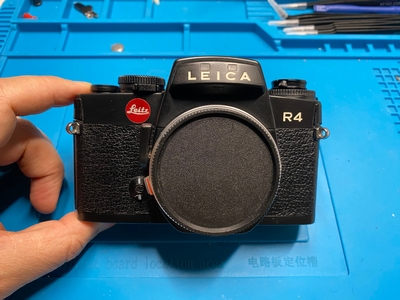
 
Do we need to explain (again) the relationship between Minolta and the R3/R4, or can we assume that this has been discussed and documented extensively already?

 
Do we need to explain (again) the relationship between Minolta and the R3/R4, or can we assume that this has been discussed and documented extensively already?


In terms of technology, it makes sense to consider the Leica R3/Minolta XE and Leica R4(s), R5, R-E/Minolta XD pairs, as they have similarities.

Also, more technical documentation is (publicly) available for the two Minoltas.
 
Today, I had someone visiting in my city, and I took my R6 and the 135mm for some outdoor shots, largely portraits. I dont know...IQ of the lens is good, but even outdoors the focal length was a bit too cramped for me. Now eyeing 50mm lenses.
 
Today, I had someone visiting in my city, and I took my R6 and the 135mm for some outdoor shots, largely portraits. I dont know...IQ of the lens is good, but even outdoors the focal length was a bit too cramped for me. Now eyeing 50mm lenses.

IMO I always found the 135 to be either too long or too short.... 90 jump to 180 always worked better for me
 
Does anyone here have firsthand experience with the Leica 28–70mm Vario-Elmar? I’m aware of its less-than-stellar reputation online, but I’m curious how much of that is grounded in actual use versus hearsay or assumptions.

Would particularly appreciate input from those who own and shoot with this lens — especially in real-world conditions, not just on test charts.
 
Just picked up a user-grade 50mm Summicron-R (11216) to put it through its paces — particularly curious how it holds up against my much-maligned but secretly capable 28–70mm Vario-Elmar. Will report back once I’ve run a few rolls.

While checking prices on Leica’s Classic Store site, something struck me: many of the R lenses (especially the later APOs, ROM lenses, and the rarer focal lengths) are now firmly in four-digit EUR territory.

It seems the old mantra of “R glass is Leica’s best-kept bargain” is increasingly only valid for a few unloved or earlier designs. The 28–70, for example, still gets sneered at, which keeps it accessible — but a clean 80 Summilux-R or 100 APO Macro? Prepare your wallet.

Has the tide quietly turned? Are we in the post-bargain R era now?
 
IMO I always found the 135 to be either too long or too short.... 90 jump to 180 always worked better for me
I wanted to like it, but I did not...we are in the same boat.
 
I remember when the Leica R4 and R5 were new in the shop windows, along with the lenses. The prices were insane compared to those of their Japanese competitors. Today, I wonder what added value they offered.

Here's your answer.

Back in the early 1970's when Minolta came out with the 80-200mm f4.5 Rokkor-X, the asking price was $400 (over $3,000 today). When it was sold as the Leica Vario-Elmar 80-200 f4.5 (NOT the f4.0), the price was $1,200 (over $9,000 today).

Today the Minolta sells on EBAY for around $25-30, and the Leica for around $75-100 -- so the difference remains about the same proportionately, 1:3. Of courses, prices will vary depending on the condition, etc. Either way, today you are getting some great glass for relatively next to nothing.
 
Here's your answer.

Back in the early 1970's when Minolta came out with the 80-200mm f4.5 Rokkor-X, the asking price was $400 (over $3,000 today). When it was sold as the Leica Vario-Elmar 80-200 f4.5 (NOT the f4.0), the price was $1,200 (over $9,000 today).

I consider Leica an excellent marketing success, flanked by effective image work over decades. The last company in the great tradition of German camera manufacturers, associated with only the very best. A brand for which people are willing to pay a premium.

Today the Minolta sells on EBAY for around $25-30, and the Leica for around $75-100 -- so the difference remains about the same proportionately, 1:3. Of courses, prices will vary depending on the condition, etc. Either way, today you are getting some great glass for relatively next to nothing.

And these lenses must then toil with working aperture on mirrorless digital cameras 😝
 
And these lenses must then toil with working aperture on mirrorless digital cameras 😝

They can, but they work better on film cameras:

seagulldf300m85.jpg
 
I bought a late model 50mm Summicron and that is "it" for now.
 
Good choice. Now, with the money you saved by choosing the Summicron instead of the Summilux, and by returning the two previously mentioned lenses, you have some left to get the 28 and 90
 
So the Summicron 50mm arrived. What a difference to the 28-70mm!
 
Noticed something curious while browsing Leica’s official "Leica Classic" webshop: R bodies and especially R lenses — long the “shame corner” of the Leica ecosystem — seem to be picking up in price. Not just collector-condition R6.2s, but even lenses like the 135 Elmarit or 50 Summicron-R now command figures that would have been unthinkable a few years ago.

Could be wishful thinking on Wetzlar’s part — their way of softly rehabilitating the R line’s image now that the M back-catalogue is nearly canonized. Or maybe I’m just projecting because I happen to like the R cameras more than I probably should…

Still, interesting to see the shift. Curious if others have noticed the same pattern?
 
Noticed something curious while browsing Leica’s official "Leica Classic" webshop: R bodies and especially R lenses — long the “shame corner” of the Leica ecosystem — seem to be picking up in price. Not just collector-condition R6.2s, but even lenses like the 135 Elmarit or 50 Summicron-R now command figures that would have been unthinkable a few years ago.

Could be wishful thinking on Wetzlar’s part — their way of softly rehabilitating the R line’s image now that the M back-catalogue is nearly canonized. Or maybe I’m just projecting because I happen to like the R cameras more than I probably should…

Still, interesting to see the shift. Curious if others have noticed the same pattern?
Lens price increase could reflect the fact that many are buying R-lenses to use with adapters on cameras like my Sony 7RII. One of the very best lenses for my Leica-R adapter on my Sony is the old 180mm f2.8. It absolutely amazed me. Heavy, but perfect optically. It also works just peachy on my original Leicaflex body, but so do the rest of my R lenses.
 
I am talking lenses AND bodies.

First they buy the lenses to use on their digital bodies.
Then they get curious, so they start looking for the film bodies.
"Gateways" left and right! :smile:
 
I remember when the Leica R4 and R5 were new in the shop windows, along with the lenses. The prices were insane compared to those of their Japanese competitors. Today, I wonder what added value they offered.

There's nothing like a Leica.
 
Photrio.com contains affiliate links to products. We may receive a commission for purchases made through these links.
To read our full affiliate disclosure statement please click Here.

PHOTRIO PARTNERS EQUALLY FUNDING OUR COMMUNITY:


Ilford ADOX Freestyle Photographic Stearman Press Weldon Color Lab Blue Moon Camera & Machine
Top Bottom