• Welcome to Photrio!
    Registration is fast and free. Join today to unlock search, see fewer ads, and access all forum features.
    Click here to sign up

Kodak Tri-X Pro 320 vs Kodak TMAX 400

Tied to the dock

D
Tied to the dock

  • 4
  • 0
  • 51
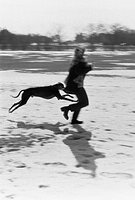
Running in the Snow

H
Running in the Snow

  • 1
  • 2
  • 61

Recent Classifieds

Forum statistics

Threads
203,080
Messages
2,849,587
Members
101,648
Latest member
eionaci3
Recent bookmarks
1

Darryl Roberts

Member
Allowing Ads
Joined
Jul 1, 2017
Messages
704
Location
Atlanta, GA
Format
Large Format
Hi, the Tri-X Pro 320 is available for less money, aside from that which film would you recommend for head and shoulder, traditional portraiture?

Thank you. :smile:
 

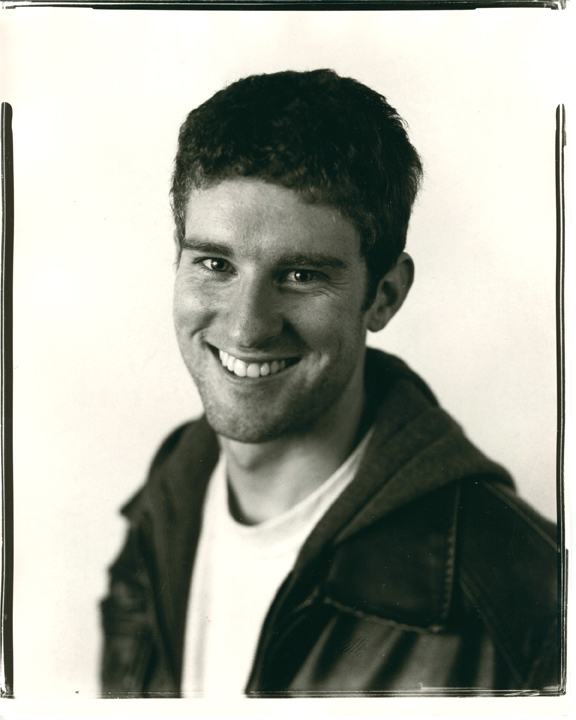
This is tri-x 320 in i think hc-110

scan of print, the print looks better then the scan tho.
 
Hi, the Tri-X Pro 320 is available for less money, aside from that which film would you recommend for head and shoulder, traditional portraiture?

Thank you. :smile:
Have a look at the Naked Photographer's(Greg Davis) video on Tri-X v Tmax 400 . He uses identical head and shoulder portraits taken in both films

pentaxuser
 
I hope someone can confirm this, but I think they're two different films in a sense. The Pro 320 is more for studio work, different curve. I only shot one roll of the Pro many years ago, but think this is still true.
 
They are different films because of formulation. Tri-X is the older cubic grain film, TMax is tabular grain. Tri-X has been around since the 50s' and TMax arrived in the 80's.
 
Tri-X 320 is a very different film from Tri-X 400 which in turn is a very different film from T-Max 400.
I haven't seen any Tri-X 320 available for sale for a long time - check the dates.
 
I can't remember - is there a sheet film version of Tri-X 400?
The OP is asking about TXP 320 which has been continuously available in sheet film. Not sure how TX 400 entered into this thread.
 
The OP is asking about TXP 320 which has been continuously available in sheet film. Not sure how TX 400 entered into this thread.
Because I was wondering if it was a third option that the OP might consider, or if it may have been one in the past.
I expect the OP is considering this for large format use, but that isn't specifically stated.
 
Have a look at the Naked Photographer's(Greg Davis) video on Tri-X v Tmax 400 . He uses identical head and shoulder portraits taken in both films

pentaxuser
Can you provide a link to that please? I can't find any video of his where he compares TX and TMax 400.
 
Because I was wondering if it was a third option that the OP might consider, or if it may have been one in the past.
I expect the OP is considering this for large format use, but that isn't specifically stated.
To my knowledge TX has never been available in sheet film, only TXP.
 
The films are different, but it's a mostly subtle difference. The success of your portrait is going to depend more on how you relate with your subject. You can make a successful portrait with either of those films.
 
Significant difference. TMY has very fine grain for its speed, TRI-X quite conspicuous grain. TMY has a very long straight line characteristic curve deep down into the shadows, Tri-X more of a conspicuous toe. Spectral sensitivity is also different. Just depends on the look you want, and often issues like specific complexion. As already suggested, if you want a relatively fast film, you might also want to look into HP5, with its own kind of look, and not as expensive as the Kodak options.
 
I can't believe how quickly the thread got off topic. The OP asked about alternatives to TXP. It's obvious that he's talking sheet film as TXP is only available as sheet film, (it used to come in 120 size but hasn't for many years.) Next thing people are talking about TX (which has never been available as sheet film to the best of my knowledge) and comparing it to TMY (which is available in sheets).
 
@markbau TX was available in sheet form, but only in filmpacks (120 base, cut into sheet sizes) - however, that is a side matter here.

@Darryl Roberts you'll be best served buying a 10 sheet 4x5 pack of each emulsion & actually trying them - it's the cheapest & best method. What form of lighting are you planning on using them with?
 
There were once two different Tri-X stocks (for stills, I'm not talking about Tri-X Reversal for cine). The one (Tri-X) sold in 35 mm and 120 was the 400 speed, and the one (Tri-X Professional) sold in 120 and sheet size was the 320 speed. Used to be (fifteen or so years ago) they were 400TX and 320TXP, but every time Kodak reformulated the emulsion they changed the designation. AFAIK, the 320 speed version was dropped during the slide into Kodak's bankruptcy (or immediately after?). The 400 speed, AFAIK, has never been offered in sheet formats other than, as noted above, film packs (which themselves haven't been made in a good while).

Different markets, among other things -- by the time Tri-X was introduced, press photography was almost exclusively 35 mm and 120; the 400 speed was aimed at that market (it pushed better than the 320, and had much more than 1/3 stop higher true speed). The 320 was aimed more at studio photography, where lighting was controlled and smoothness was more important that true speed or ability to push (and in 120, never mind larger sizes, and portraits rarely made very large, grain wasn't that big an issue but ability not to blind everyone in the room with flash was).
 
Yes Greg's comparison is between Tri-X 400 and not Tri-X Pro 320 but assuming that the OP is talking about a film which is now only in sheet form which he hasn't stated then this may help him unless Tri-X Pro is in terms of actual appearance a completely different film.

What may or may not be important to the OP is that in Greg's videos his print comparisons are of identical head and shoulders portraits in studio lighting and are from 35mm film enlarged to 11X14 which is likely to tell him the difference in grain is fairly marginal(IMO) between the 2 films even at close to a x15 enlargement.

I'd have thought that at all normal enlargements from a 4x5 sheet for a portrait say x4 the difference would be non existent

He may feel differently of course and hopefully there is enough in Greg's comparison to make it of some value to him

pentaxuser
 
Last edited:
One can spend great deal of time and effort comparing and contrasting [pun again] film types, but the bottom line is that if one wants a 400 speed traditional grain film in 4"x5" then the easily available choice is Ilford HP5+ and the tabular grain choice is TMax 400. Test all one likes, those are the two major choices. Yes there are other alternatives, but the major easily available choices are down to those two. So quit quibbling and testing, choose one of them, both good choices, and shoot film.
 
Either film will work well. But do you want to see grain or don't want to see grain... That is the question. But...since I have TMY on hand and no Tri-X 320 (I have lots of 400), I would use it.
 
Grain can be brutally evident at only 4X enlargement with TX 320. It is almost invisible in 6X enlargement factor with TMY400. HP5 has rather coarse grain, but whether it's conspicuous or not depends on the specific developer. The original question was about a SUBSTITUTE for TX320. There really isn't any except for the ongoing availability of that product itself in sheet sizes. But there are obviously two options in the general speed category, each with their own signature or look.
 
Substitute for Tri-X 320? What about Fomapan 400?
 
Photrio.com contains affiliate links to products. We may receive a commission for purchases made through these links.
To read our full affiliate disclosure statement please click Here.

PHOTRIO PARTNERS EQUALLY FUNDING OUR COMMUNITY:



Ilford ADOX Freestyle Photographic Stearman Press Weldon Color Lab Blue Moon Camera & Machine
Top Bottom