




lt_col_gordon_tall
Subscriber
Hello Photrio friends,
I recently purchased a 9.5" wide x 500' long roll of Kodak 2430 Fine Grain Aerial Duplicating Film from eBay. Since this specific stock seems to occasionally come up for sale, I thought I would share my initial experiences.
Before purchasing, I had a hard time finding much information about the film. According to the paper insert from Kodak's Aerial Systems division, 2430 is a "very fine-grain film for duplicating high-definition aerial negatives." It has been mentioned a few times on this forum. Many of the positive hits date back to older NASA scientific reports and internal CIA reconnaissance documentation, showing that the primary audience for this film was within government—and for a very scientific/technical official audience at that.
The roll I bought was manufactured in 1994 and expired in October 1997. It came sealed in a box and an unopened container; the film itself was on a giant spool. Removing the tape from the roll was a challenge. No matter how slowly or gently I tried to remove it, I kept seeing tiny flashes of light. Triboluminescence. I worried this would affect the film, but at least with the first roll I shot, I don't think it did.
In complete darkness, I cut a ~33in long sheet off from the bulk roll. Then, with a safelight on, I cut three 61.5mm wide pieces for rolling in 120 backing paper, with a bit of trim leftover. The film is on an Estar base that appears yellow prior to development. Having never seen a yellow film, I was pretty surprised at the color and worried that something with the roll had gone bad.
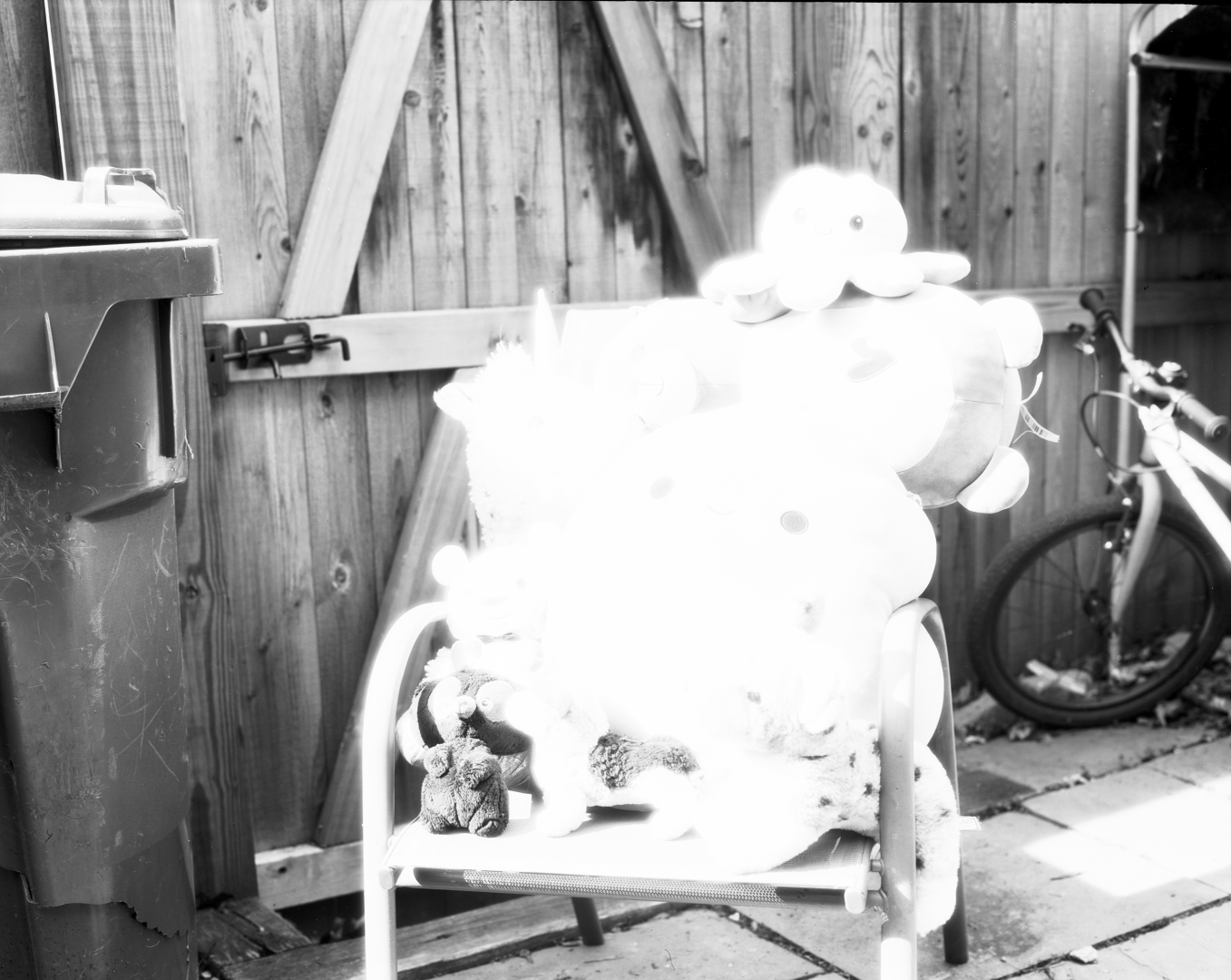
Unsure of where to start, I did an ISO bracketing test from ISO 25 down to ISO 0.12, using my children's stuffed animals positioned in extremely bright light as subject matter. I shot on my RZ67 Pro II, 90mm lens at f/8, using a tripod and mirror-up cable release. I developed the film in Xtol 1+7 for 2 hours stand development.
For the sake of consistency, I made no adjustments to the SilverFast settings when scanning these negatives using my Epson V600, so I am sure each frame could be improved in different ways. Pardon the dust on the negatives as well. Since this was a test, I did not bother to clean them up.
The film is microscopically sharp but extraordinarily slow; it also has poor latitude. But I am quite pleasantly surprised with the results from this first test roll, and it seems useful in the ISO 3–12 range.
Given how much of this film I have, I may offer to give some away at cost at some point. I'm going to keep working with it and get a little more experience before I do that, though.
By the way, I am definitely a hobbyist and not a technical expert when it comes to film photography, so I am sure my approach to using and testing this film could be improved. Feedback welcome!
ISO 25
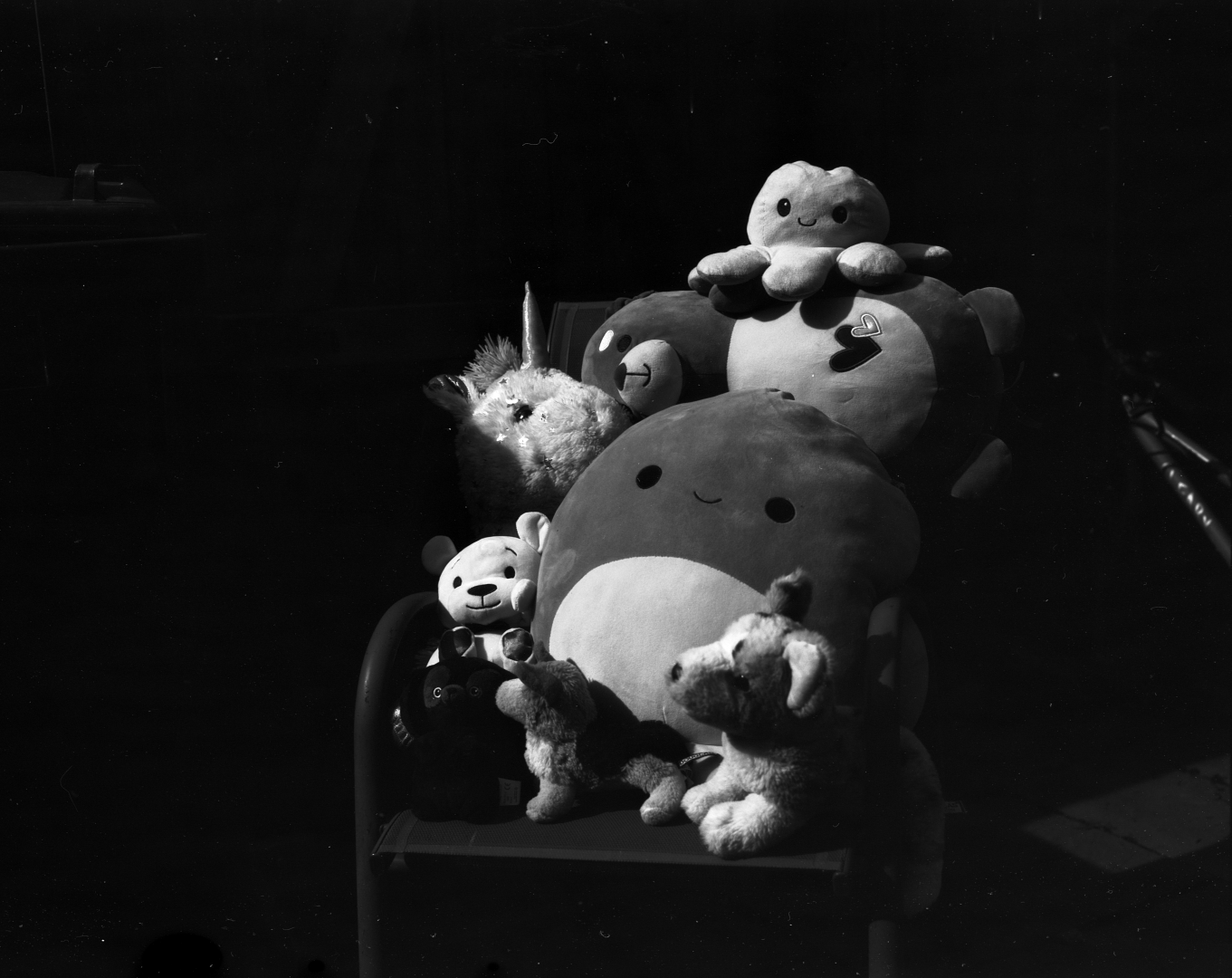
ISO 12
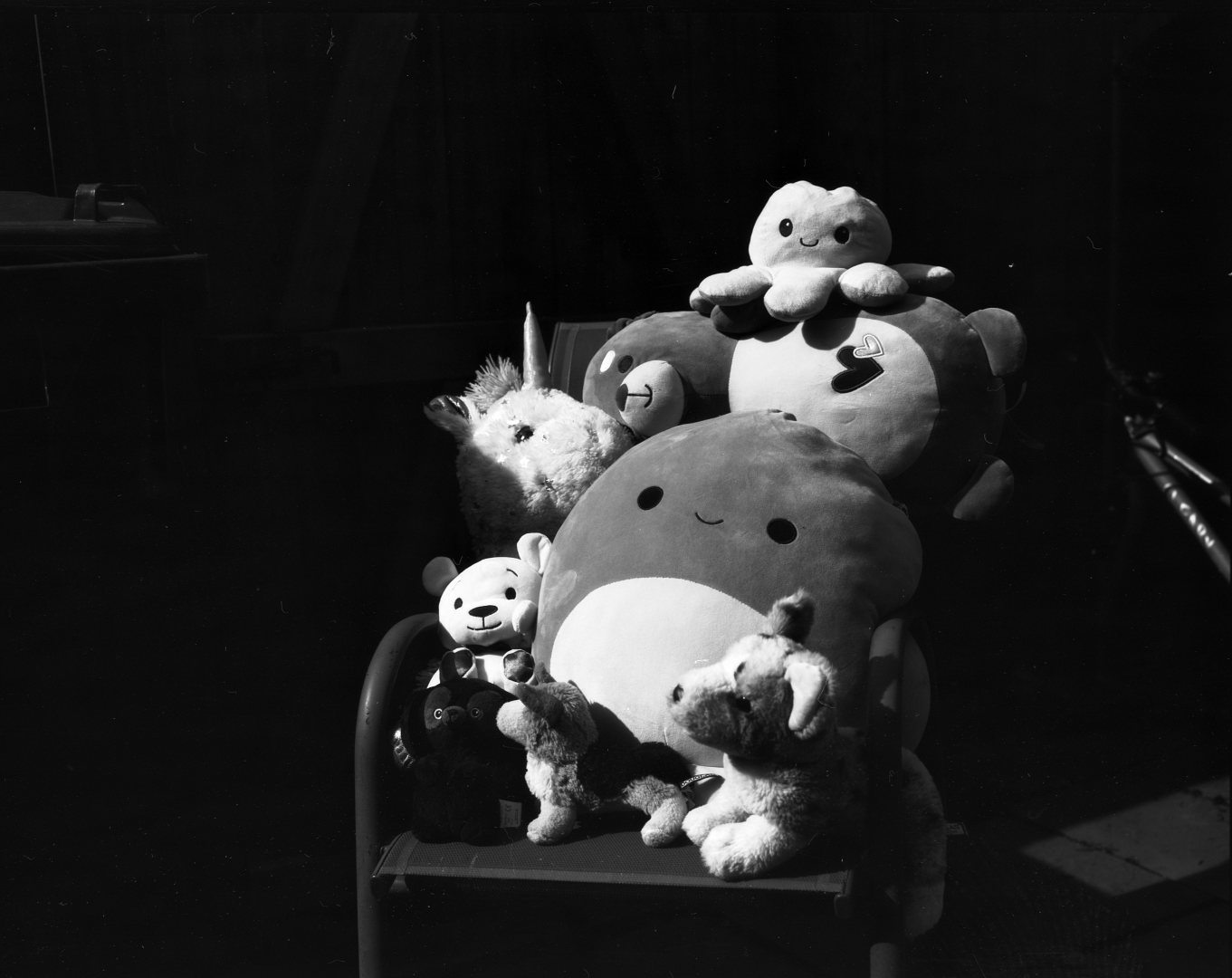
ISO 6
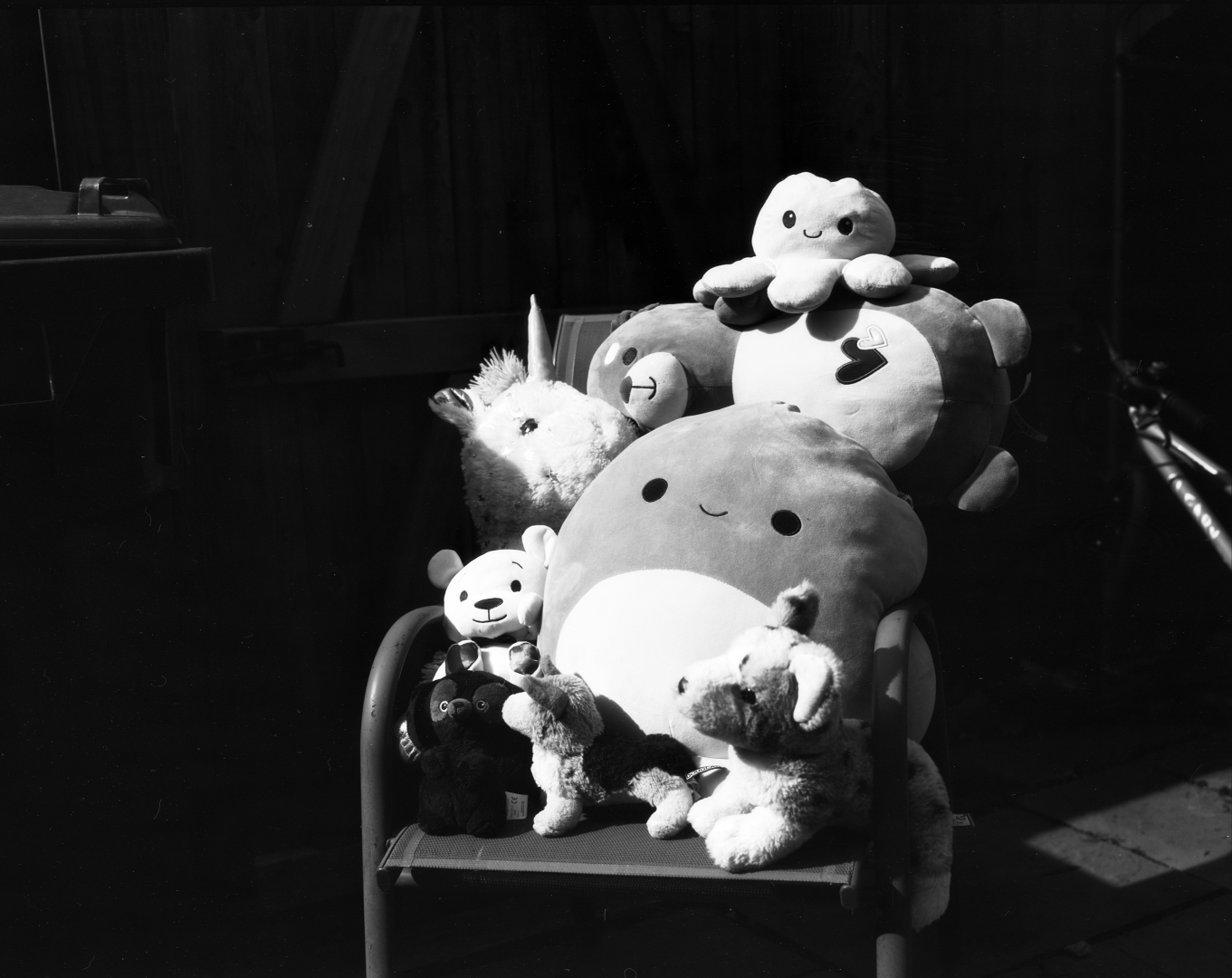
ISO 5
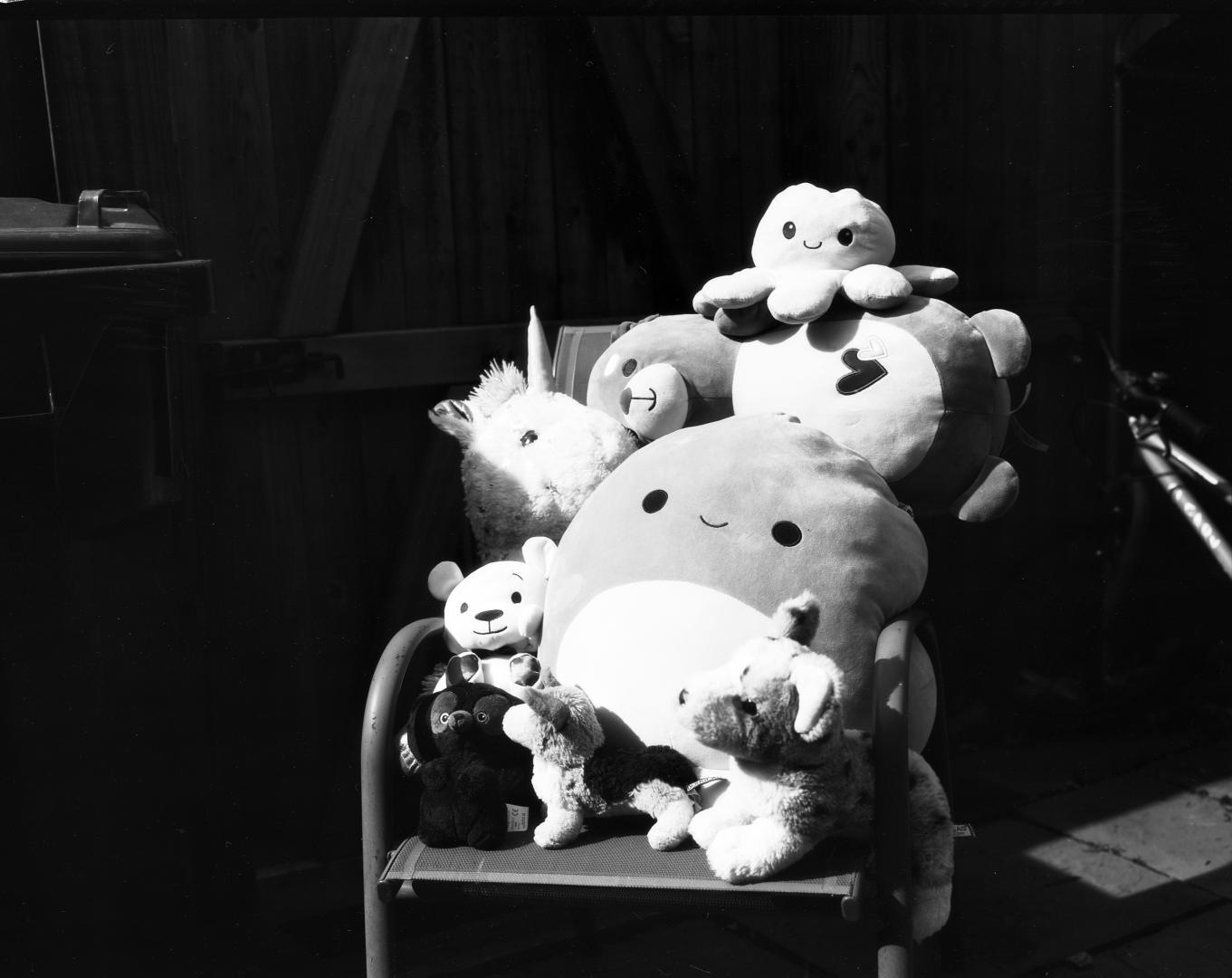
ISO 3
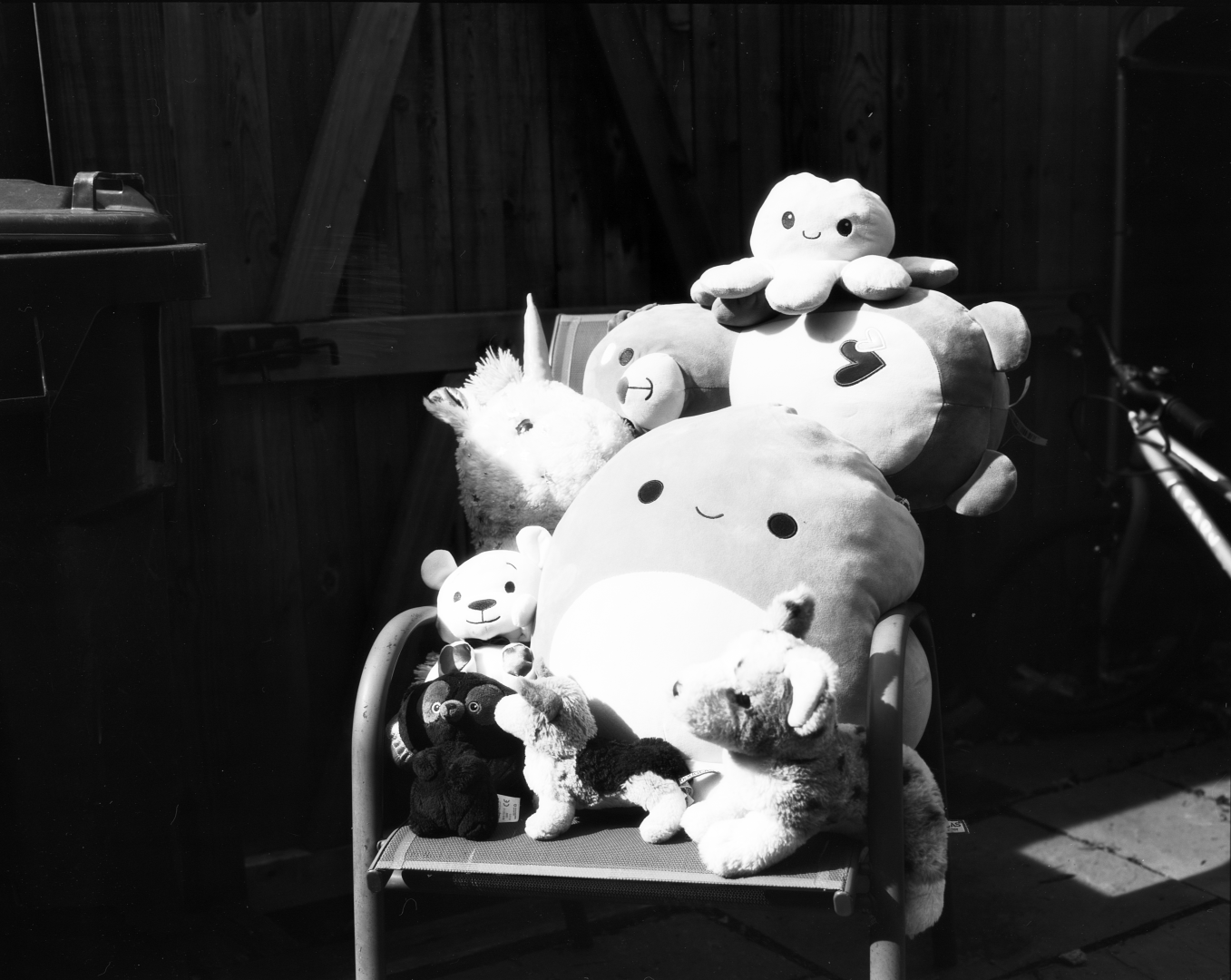
ISO 2
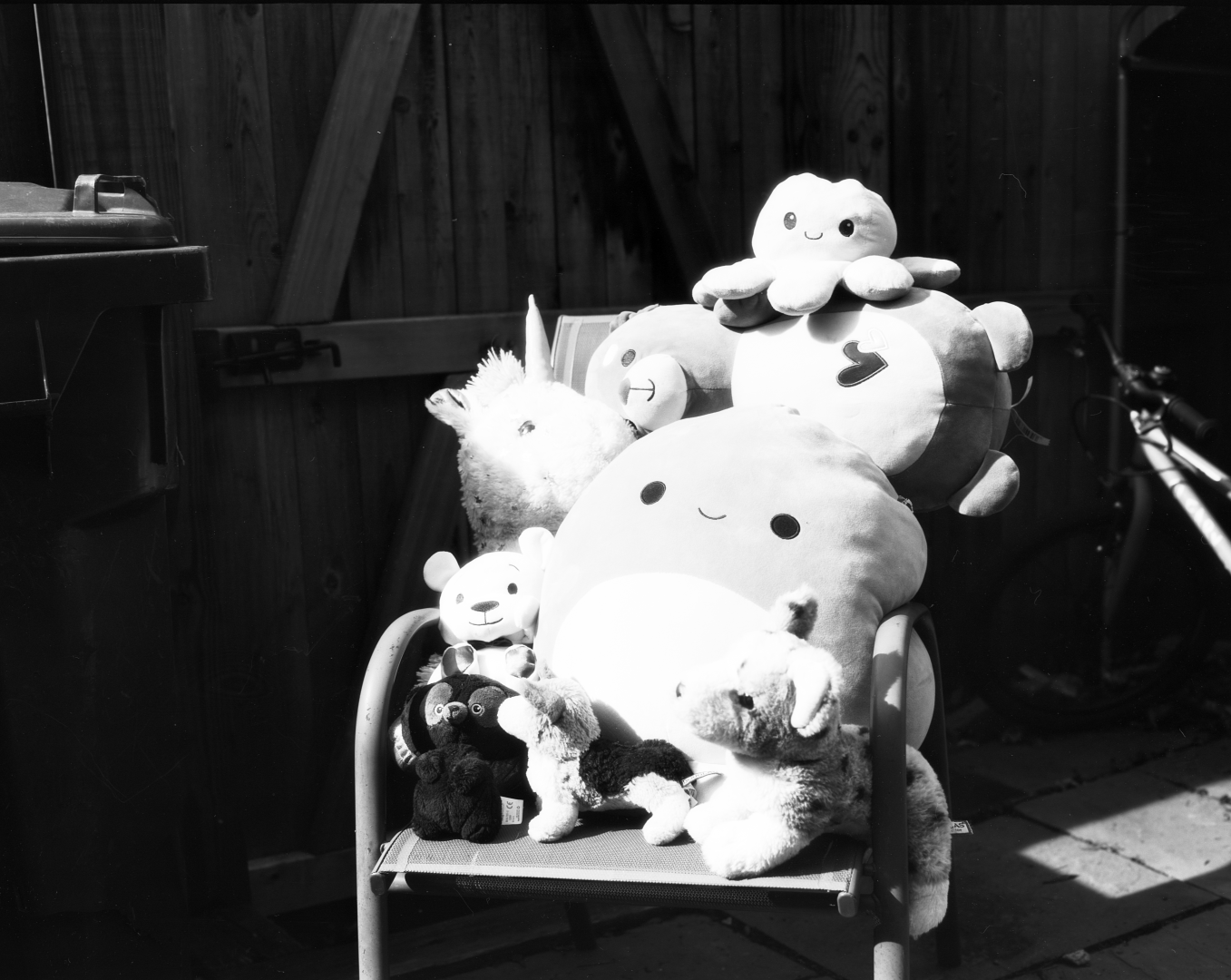
ISO 1
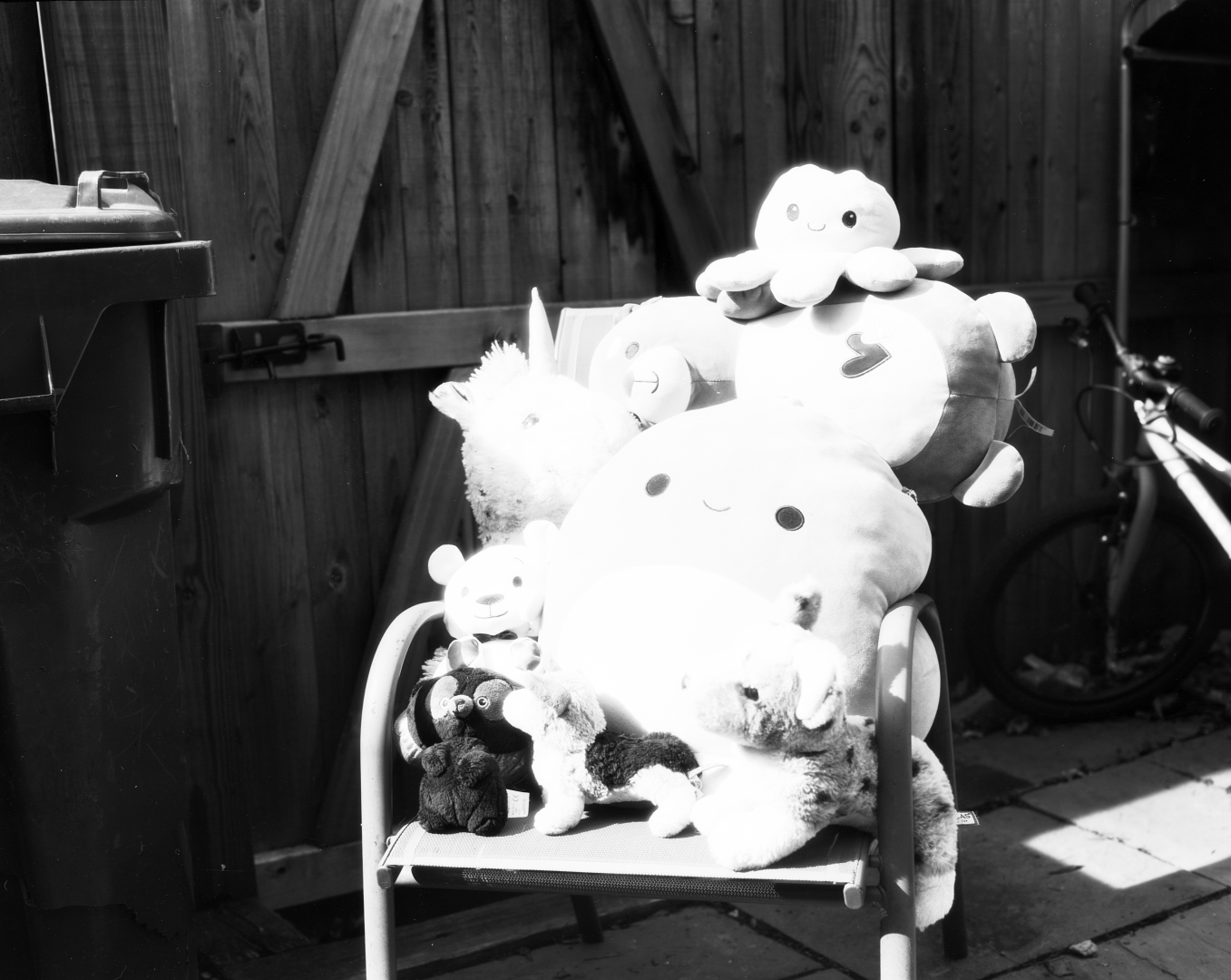
ISO .5
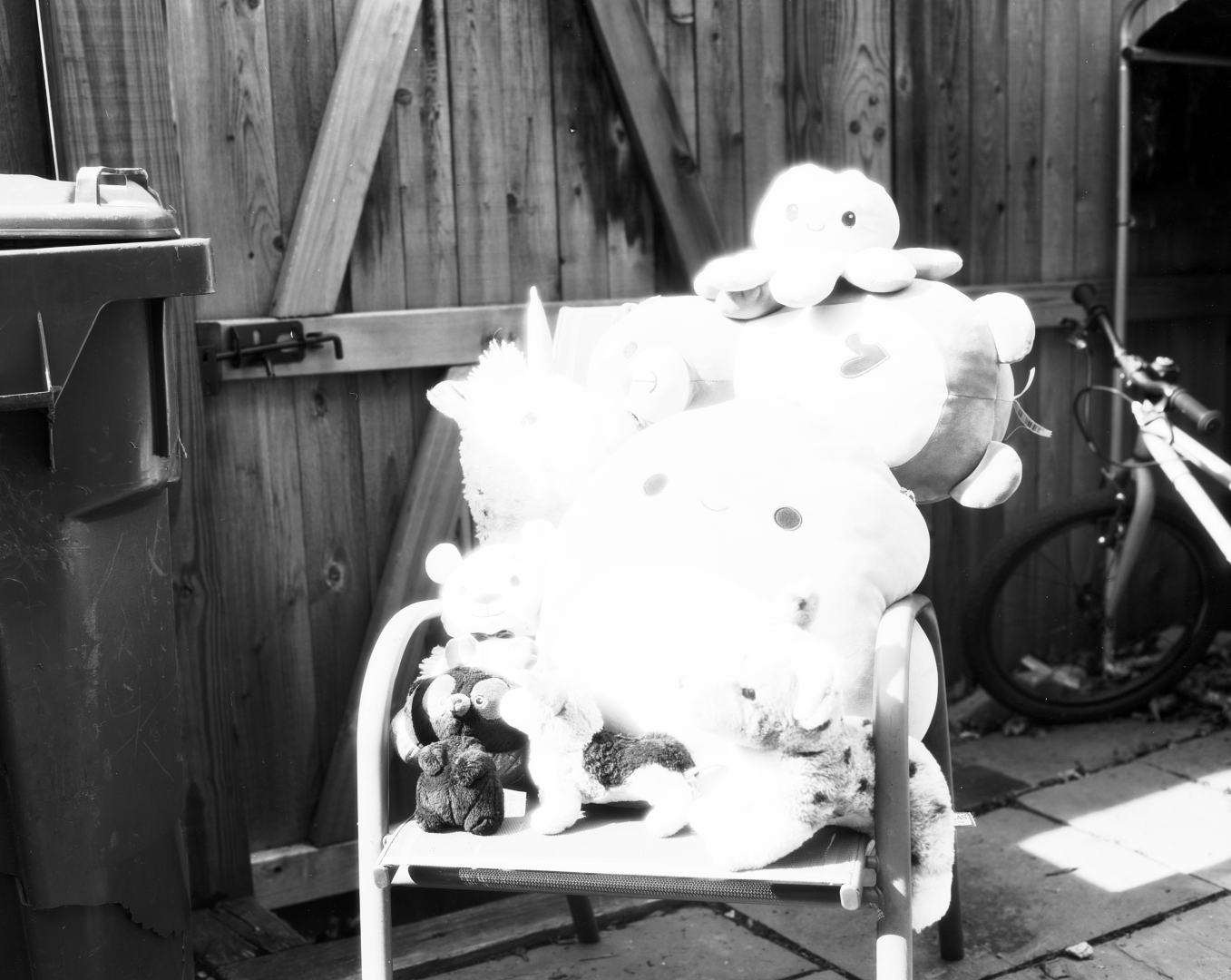
ISO .25
ISO .12
I recently purchased a 9.5" wide x 500' long roll of Kodak 2430 Fine Grain Aerial Duplicating Film from eBay. Since this specific stock seems to occasionally come up for sale, I thought I would share my initial experiences.
Before purchasing, I had a hard time finding much information about the film. According to the paper insert from Kodak's Aerial Systems division, 2430 is a "very fine-grain film for duplicating high-definition aerial negatives." It has been mentioned a few times on this forum. Many of the positive hits date back to older NASA scientific reports and internal CIA reconnaissance documentation, showing that the primary audience for this film was within government—and for a very scientific/technical official audience at that.
The roll I bought was manufactured in 1994 and expired in October 1997. It came sealed in a box and an unopened container; the film itself was on a giant spool. Removing the tape from the roll was a challenge. No matter how slowly or gently I tried to remove it, I kept seeing tiny flashes of light. Triboluminescence. I worried this would affect the film, but at least with the first roll I shot, I don't think it did.
In complete darkness, I cut a ~33in long sheet off from the bulk roll. Then, with a safelight on, I cut three 61.5mm wide pieces for rolling in 120 backing paper, with a bit of trim leftover. The film is on an Estar base that appears yellow prior to development. Having never seen a yellow film, I was pretty surprised at the color and worried that something with the roll had gone bad.
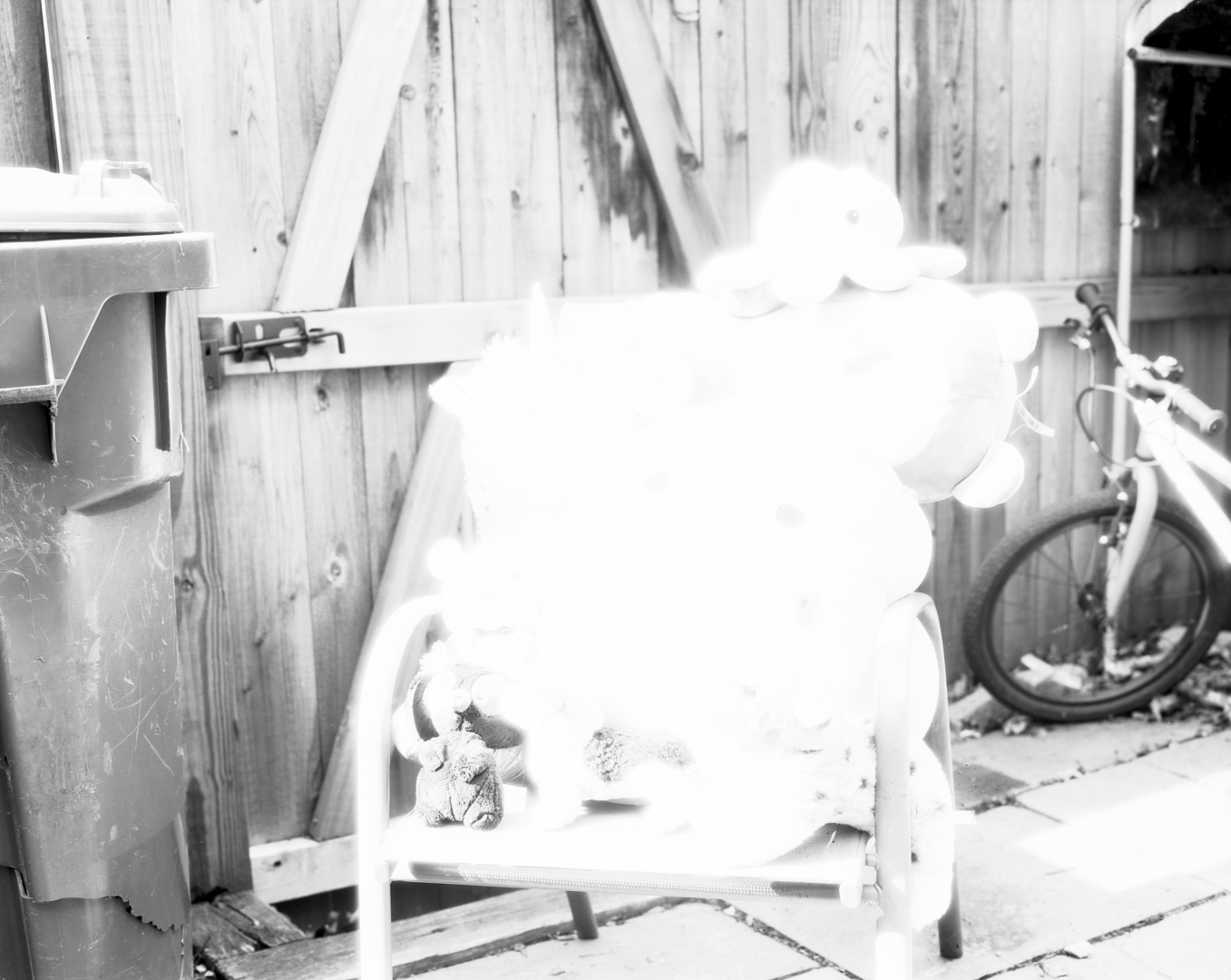
Unsure of where to start, I did an ISO bracketing test from ISO 25 down to ISO 0.12, using my children's stuffed animals positioned in extremely bright light as subject matter. I shot on my RZ67 Pro II, 90mm lens at f/8, using a tripod and mirror-up cable release. I developed the film in Xtol 1+7 for 2 hours stand development.
For the sake of consistency, I made no adjustments to the SilverFast settings when scanning these negatives using my Epson V600, so I am sure each frame could be improved in different ways. Pardon the dust on the negatives as well. Since this was a test, I did not bother to clean them up.
The film is microscopically sharp but extraordinarily slow; it also has poor latitude. But I am quite pleasantly surprised with the results from this first test roll, and it seems useful in the ISO 3–12 range.
Given how much of this film I have, I may offer to give some away at cost at some point. I'm going to keep working with it and get a little more experience before I do that, though.
By the way, I am definitely a hobbyist and not a technical expert when it comes to film photography, so I am sure my approach to using and testing this film could be improved. Feedback welcome!
ISO 25
ISO 12
ISO 6
ISO 5
ISO 3
ISO 2
ISO 1
ISO .5
ISO .25
ISO .12

