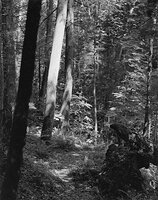
I can't tell a difference between a well executed print on graded paper versus variable contrast.
What I do like about variable contrast papers is the ability to split grade print them. You can really manipulate the tonality on difficult prints, even locally, by using different filtration on different parts of the print. You can give a landscape lots of detail in the foreground with lower grade filtration while you burn in the sky a tad with a #4 filter or similar. It opens up possibilities in printing that are virtually impossible with graded paper.
But, graded papers have their advantages. As has been mentioned before, you can tweak the contrast by changing or altering your developer, etc, and you obviously don't need any filters. I enjoy simplifying the printing by just dodging and burning, and if you have dense negatives, the lack of a filter will speed up the exposure, taking you out of the risk zone of reciprocity failure of the paper when exposures are long.
But just pick a paper and run with it. You can get amazing results with almost any paper and developer - as long as you learn how to make negatives that fit the combo you chose.