• Welcome to Photrio!
    Registration is fast and free. Join today to unlock search, see fewer ads, and access all forum features.
    Click here to sign up

Is there a reason to use graded BW paper anymore?

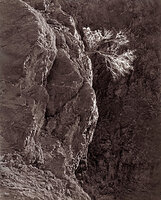
Bush on Canyon Wall

A
Bush on Canyon Wall

  • 2
  • 1
  • 20
double portrait

A
double portrait

  • 1
  • 0
  • 48

Forum statistics

Threads
203,260
Messages
2,852,027
Members
101,749
Latest member
frieMo
Recent bookmarks
0
There is an interesting parallel discussion going on here....Traditional theory of exposure and development and variable contrast paper

(there was a url link here which no longer exists)
 
Last edited by a moderator:
Are any here using Azo type papers including the new Lodima-contact printing?

Yes,

I've been using Azo for about 5 years (I ordered my 1st box from MAS the day BEFORE Kodak discontinued it).

I have just started working with Lodima. So far, I'm pretty impressed with it.
 
Yes,

I've been using Azo for about 5 years (I ordered my 1st box from MAS the day BEFORE Kodak discontinued it).

I have just started working with Lodima. So far, I'm pretty impressed with it.

HI John: Yes, I am also using the new Lodima-both grades, and the "Grade 3" which was produced before the current iterations. I am still "experimenting", and trying to determine the "grades" of the new Lodima paper so as to try to "match" my negatives with the paper. I have also noted, as have a few others here on threads concerning Emaks paper, that Emaks in Amidol produces results that might rival those of Azo type papers. Realizing that many here have little desire to try Lodima with Amidol, I will be pleased to have additional exchanges privately. Please PM me so that we can share information.

Ed
 
I can't tell a difference between a well executed print on graded paper versus variable contrast.

What I do like about variable contrast papers is the ability to split grade print them. You can really manipulate the tonality on difficult prints, even locally, by using different filtration on different parts of the print. You can give a landscape lots of detail in the foreground with lower grade filtration while you burn in the sky a tad with a #4 filter or similar. It opens up possibilities in printing that are virtually impossible with graded paper.

But, graded papers have their advantages. As has been mentioned before, you can tweak the contrast by changing or altering your developer, etc, and you obviously don't need any filters. I enjoy simplifying the printing by just dodging and burning, and if you have dense negatives, the lack of a filter will speed up the exposure, taking you out of the risk zone of reciprocity failure of the paper when exposures are long.

But just pick a paper and run with it. You can get amazing results with almost any paper and developer - as long as you learn how to make negatives that fit the combo you chose.

 
Thomas: As I recall, you were one of those who commented positively about EMAKS paper and Amidol. I wonder if you have continued to use the combination, and if you have additional information to share.
 
Emaks and Amidol. I really liked the combination. On the grade 2 Emaks I was able to print using water bath treatment and get prints from negatives I had previously thought were impossible on silver paper.

But I haven't used it for a couple of years, mostly due to the pain of mixing Amidol every time. I am now using replenished Ethol LPD and one Foma paper and one Ilford. I have learned those two combinations and am as happy with it as I was with the Emaks and Amidol combo.

So I'm afraid I have next to no information to share from personal experience.
 
Thanks Tom. Judging from the wonderful quality of the prints you produce, there is no reason to change! Well done.
 
No new information, but I'm still a fan of Emaks and amidol as well. Emaks and Ansco 130 are also a good combination but with less flexibility for waterbath control.
 
Thanks David and Tom. Have either of you compared Emaks and amidol with Lodima ( or other Azo paper ) and amidol?
 
Yes, and they serve different purposes. Azo and Lodima are much slower, contact printing papers and they do better with a contrastier negative. Emaks is a faster enlarging paper better suited to making enlargements. That's not to say that you can't get a nice contact print on Emaks, particularly if the neg is targeted for Emaks, but a neg that is targeted for Lodima or Azo will generally make a more detailed print with better local contrast on Lodima or Azo than a negative targeted for Emaks will make on Emaks.

I feel like this a topic that has been discussed fairly extensively in other threads. Ultimately you've just got to make some prints and decide what looks good to you.
 
I still keep graded paper around. If you are consistant in your exposures then you are shooting for a single grade of paper.Pick the contrast that suits your style then expose and develope for it.
************
Rain should mention, also, consistent in developing your film so it prints best on your target grade paper.
 
I wish I was that consistent with exposure and processing. When I was assisting an old timer that used strictly graded paper. He told me to "build" the negative for graded paper meaning exposing and processing the negative for graded paper. When I shoot a roll of film, I photograph a wide range of contrasts and subjects so I'm not going to use graded paper. When I was in college taking a class on the Zone System, my college professor was such a Zone nut that when he shot 35mm film, he would have a camera where he shot "N" subject matter, another camera for "N-1" etc. He was a slave to the Zone System. I have one processing time for my favorite film and I used VC paper to compensate for different contrast ranges. As long as my shadows have detail and my highlights aren't blown out on my negs, I'm happy.
 
Photrio.com contains affiliate links to products. We may receive a commission for purchases made through these links.
To read our full affiliate disclosure statement please click Here.

PHOTRIO PARTNERS EQUALLY FUNDING OUR COMMUNITY:


Ilford ADOX Freestyle Photographic Stearman Press Weldon Color Lab Blue Moon Camera & Machine
Top Bottom