• Welcome to Photrio!
    Registration is fast and free. Join today to unlock search, see fewer ads, and access all forum features.
    Click here to sign up

Is straight photography dead?

Afternoon Calm

D
Afternoon Calm

  • 2
  • 0
  • 31
Toby's Bar

H
Toby's Bar

  • Tel
  • Apr 25, 2026
  • 1
  • 0
  • 56

Recent Classifieds

Forum statistics

Threads
203,496
Messages
2,855,555
Members
101,867
Latest member
GeorgyEremin
Recent bookmarks
1
95% of photographs are unmanipulated, shot by average people of themselves, friends, and families, vacations, parties, etc. to memorialize the activity or person. They weren't trying to create art. Interestingly, their shots are more representation of "real" photography than the stuff we're talking about here.
 
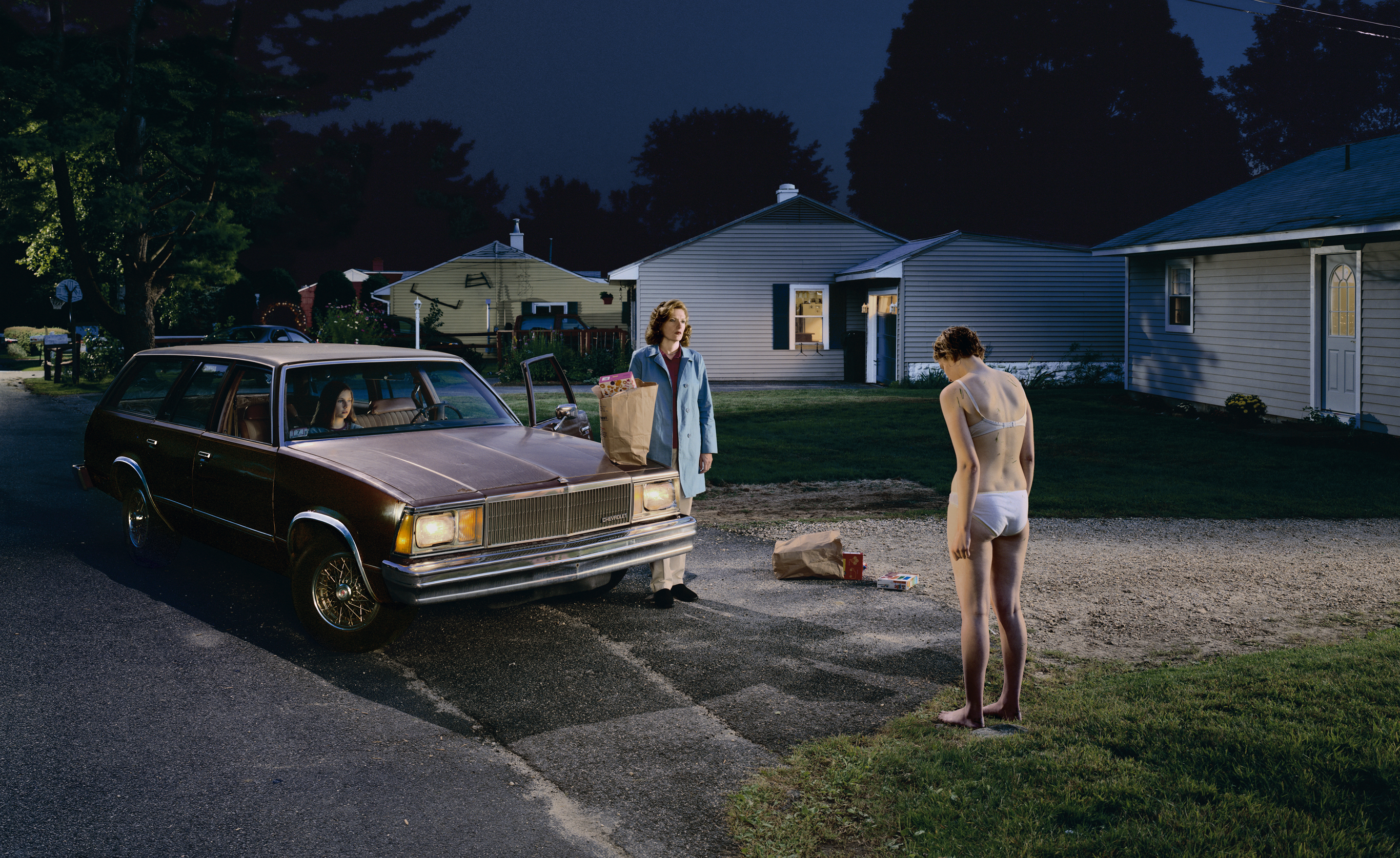
Good examples, Logan. One image seems spontaneous, whether it was or not, and the other outright looks blatantly staged, Hollywood-style, which in fact it was. I identify one with photography per se, and the other as more stagecraft - wholly different art forms in my opinion. One image was "found" or discovered, the other one, concocted, replete with actors, and not my cup of tea at all.
 
No, you are confused about what is straight photography. What the lens records regardless of position, lens, focus exposure is straight photography. Adding or deleting major object is not straight photography. Please stop weasel wording just to get your way.

The lens records flare, distortion, diffraction, movement, lens aberrations, blur, invisible UV light, and many other things that were not evident in the scene. It (photography) also converts a 3D scene to 2D as tiny clumps of silver and removes all color. It (photography) also leaves out great portions of the scene that are too dark or bright to show in the print. Woha the print!....now we are discussing distortions in brightness scales, un-even enlarger illumination, Callier effect, alterations in tone by developer chemistry, more flare, etc.

Nothing "straight" about any of it. Any "straightness" is an illusion of the viewer.
 
Last edited:
The lens records flare, diffraction, movement, blur, and many other things that were not there in the scene. It (photography) also converts a 3D scene to 2D as tiny clumps of silver. Nothing "straight" about any of it. Any "straightness" is an illusion of the viewer.

A jury and judge won't buy that. There's deception and then there's deception.
 
The lens records flare, distortion, diffraction, movement, lens aberrations, blur, invisible UV light, and many other things that were not evident in the scene. It (photography) also converts a 3D scene to 2D as tiny clumps of silver and removes all color. It (photography) also leaves out great portions of the scene that are too dark or bright to show in the print. Woha the print...now we are discussing distortions in brightness scales, un-even illumination, etc. Nothing "straight" about any of it. Any "straightness" is an illusion of the viewer.

That is part of what is recorded on the negative and part of straight photography. Your misunderstanding is that you are not using the definition most of the rest of us are using which is also the definition that most of the worlds is using. There is no discussion of lens aberations or distortions in the definitions.
 
Are you suggesting that this:

01-robert-frank.jpg


Is the same as this?

Daughter_cover_2.jpg


I think they're entirely different.


I didn't suggest that at all - if I somehow implied it that wasn't my intention. I was simply pointing out that I don't see much in the way of straight photography in books/competitions/galleries from contemporary photographers so my thesis was that it is dead/dying - or at least temporarily out of fashion.

Both are complicated pictures that would require a huge amount of expertise.
Neither is better than the other, just different.
 
I was simply pointing out that I don't see much in the way of straight photography in books/competitions/galleries from contemporary photographers so my thesis was that it is dead/dying - or at least temporarily out of fashion.

I don’t think it is dying. Just look at the number of people photographing the Houses of Parliament or the Eiffel Tower every day, even though there must already be billions of photos of those things. And social media are full of straight images.

It may well be out of fashion though, among serious photographers and in the art world. Those who do something unexpected out of the ordinary have always commanded interest there, although it may be brief.

Perhaps you should rebuild the f/64 club, if indeed it has died?
 
That is part of what is recorded on the negative and part of straight photography. Your misunderstanding is that you are not using the definition most of the rest of us are using which is also the definition that most of the worlds is using. There is no discussion of lens aberations or distortions in the definitions.

In that case there is no difference between your World's Definition of straight photography and non-straight photography.


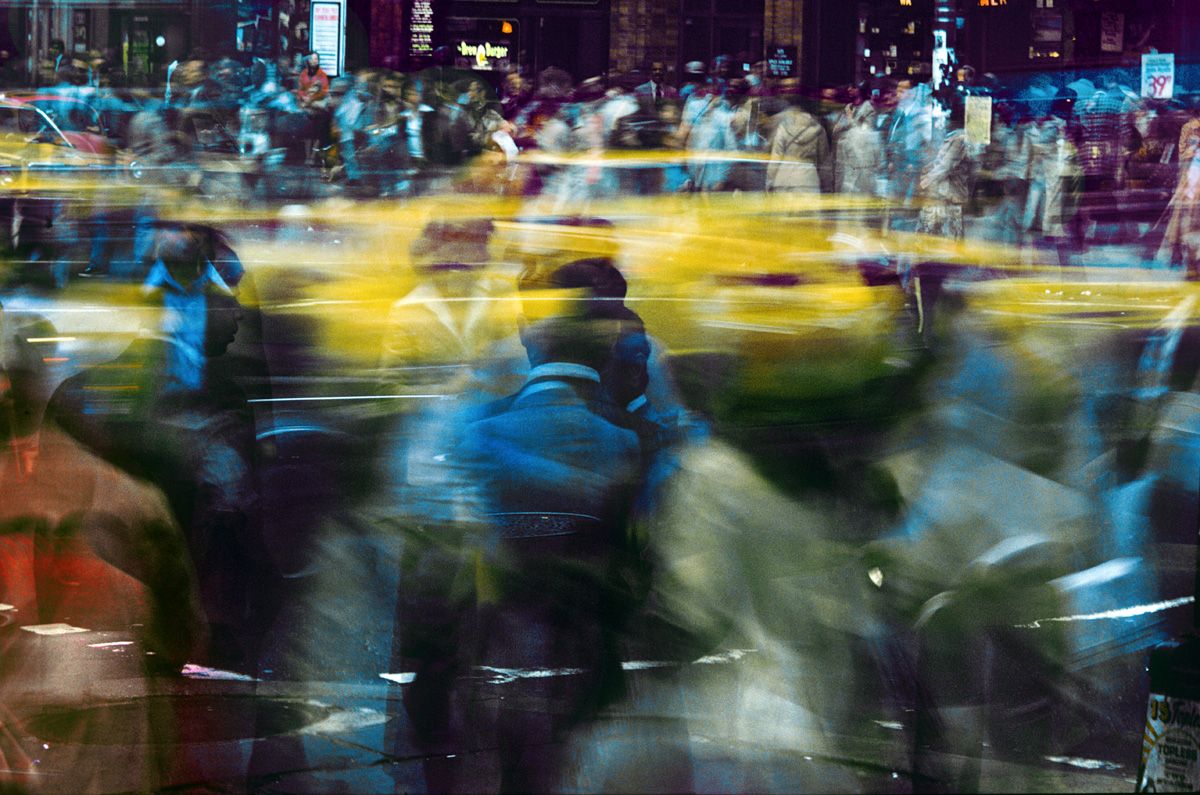
Ernst Haas, Lights of New York City, NY , 1972 - Artwork 30677 | Jackson  Fine Art
Sunburn: Long Exposure Photographs With Markings Burned by ...
ERNST HAAS ESTATE | COLOR: NEW YORK | Blur photography, Color photography,  Photo
 
It is a photography. The image is on the negative. There was not FauxTow$hopping here, just the mechanics of the shutter in the camera.

True, but many people would have thrown this shot away because it didn’t portray the world as they saw it. Lartigue delighted in the distortion. Arguably it conveys a sense of speed better than a diaphragm shutter would have rendered it, but in reality wheels are round.
 
Much of the AI work I have seen tends toward the sci-fi, fantastic style. But maybe that's due to the early creators taste.

According to just released open letter signed by few well known names, and addressed to Open AI, the fear is already in place over the direction this development is taking. it used by just Sc-Fi but even the relatively “dumb” MS chatbot has some scary answers. Open AI project is reportedly gaining pace feared to run itself over, if not checked.
 
Back to the original post, the point was about the predominance of deliberately manipulated images in galleries. So-called "straight" photography is still being practiced in droves, but the galleries (and by extension, the critics and collectors) seem to be uninterested unless it is by a blue-chip name. Photoshopped images are old hat and mainstream now. In the quest to interest new collectors or to broaden a collection, galleries are expanding their offerings, showing more artwork that features or is based on photography but doesn't stop there. You can't download or have AI create a 3-dimensional, hand-colored, multi-media (such as the addition of other materials like sewing thread or metal) artwork. So these pieces become more unique and collectable for some.
 
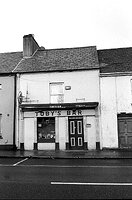
The reflection in the second photograph is an obvious manipulation because as a reflection the letters would be backwards. "Fakin' it, but not makin' it"

That reflection (in the 2nd) is from a mirror hanging on the wall inside the shop and reflecting te text which is written on the window, not a subject from outside the shop reflected on that window.
A little confusing but well spotted by the photographer.
 
Are you suggesting that this:

01-robert-frank.jpg


Is the same as this?

Daughter_cover_2.jpg


I think they're entirely different.


I didn't suggest that at all - if I somehow implied it that wasn't my intention. I was simply pointing out that I don't see much in the way of straight photography in books/competitions/galleries from contemporary photographers so my thesis was that it is dead/dying - or at least temporarily out of fashion.

While I agree with what Drew said, that based on your experience of the way photos look the second one looks more like a still from a movie, there is nothing about the first photo that precludes the possibility it was staged. Is there some reason it would have been impossible to tell those people what to do and where to stand for the photo?

But that doesn't even matter. We need to have a consistent understanding of terms, here. And "straight", with regard to photography, means that going from negative to print doesn't receive any heavy alteration or addition. The camera takes a picture and that's it. But it includes staged scenes, deliberate lighting, landscapes, still lifes, and candid photography.

1680169210372.png


That photo was staged. Arbus told him where to stand and to look crazy. She chose when he looked crazy enough. But it's still a straight photo.

And your second photo, although staged, seems to just be a photo with intentionally selected lighting and framing. It's a straight photo.

That reflection (in the 2nd) is from a mirror hanging on the wall inside the shop and reflecting te text which is written on the window, not a subject from outside the shop reflected on that window.
A little confusing but well spotted by the photographer.

Excellent - as I said above, I thought it was a shadow from the window, from the sun being low in the sky.
 
"noticing something" and "framing it up" are completely sufficient to demonstrate that what you have there is not "straight from the world" but mediated by your choices. We get to see what you choose to take a picture of. In that way, it's no different from setting up a scene and photographing it.

I generally don't have much to say in these type threads, but I usually follow along, sometimes an opinion works its way out of me...........................this is just complete nonsense.
 
I generally don't have much to say in these type threads, but I usually follow along, sometimes an opinion works its way out of me...........................this is just complete nonsense.

Then elaborate on what way it is nonsense. When you take a photo, you choose what ends up in it. Past that, when you go through your photos, you choose what you should keep. By that time, it's completely removed from the world - it becomes a function of your personal valuation.

Saying "just complete nonsense" but not justifying it or explaining how things truly are is vapid.
 
I wouldn't go as far as to say that "staged" scenes are straight photography, but it's debatable in that sense. Meaning, is straight really as simple as a record of what was out there at the moment, or is staging that veering away from straight. Straight implies that's how it happened, if scene was set up to deceive what took place, then maybe that is not as straight as it looks in the photo?

Straight is certainly nothing that's was NOT in the scene when picture was taken, but became part of it in post production.

But to go further, not-straight has also several facets, some fine or at least digestible in my view, some are just representation of crazy art that is meant to say something, only that something is simply not there. Listening to some gallery visitors discussing the thing hanging on a wall is often plain amusing. One could argue lots of poetry falls into same category, word salads are not far off either.
 
I wouldn't go as far as to say that "staged" scenes are straight photography, but it's debatable in that sense. Meaning, is straight really as simple as a record of what was out there at the moment, or is staging that veering away from straight.

I think, at this point in time when composites and outright photographic fabrications are not only possible but both easy and convincing, that "straight" is most helpfully reserved for whatever the camera shot.
"Staged" is a different word and its meaning is obvious. But you can take a straight photo of a staged scene or you can composite, distort, or otherwise change the image - which makes it not-straight. But the original image was straight. Otherwise, what exactly is it that's being fabricated?

If you stage a scene, whatever you put there was actually there, the things were actually together, it existed in the real world. A photo of it remains straight until you introduce elements to the photo that were not in the scene you staged.

Leaving terms vague just leads to an inability to communicate.
 
I think, at this point in time when composites and outright photographic fabrications are not only possible but both easy and convincing, that "straight" is most helpfully reserved for whatever the camera shot.
"Staged" is a different word and its meaning is obvious. But you can take a straight photo of a staged scene or you can composite, distort, or otherwise change the image - which makes it not-straight. But the original image was straight. Otherwise, what exactly is it that's being fabricated?

If you stage a scene, whatever you put there was actually there, the things were actually together, it existed in the real world. A photo of it remains straight until you introduce elements to the photo that were not in the scene you staged.

Leaving terms vague just leads to an inability to communicate.
Well, that is my point, is straight representing what took place, or is it pure meaning of not being fabricated afterwards? That is the difference I am not convinced about.

Many portraits are staged to get better lighting/shadow cast etc, but that is not same as having a person take a posture to imply something it was not, or unnatural, or far form actual. Or is it, in the sense of what straight photography is supposed to be?
 
I think, at this point in time when composites and outright photographic fabrications are not only possible but both easy and convincing, that "straight" is most helpfully reserved for whatever the camera shot.

Is it that simple, though? W. Eugene Smith added, from another negative, the hand and saw handle at the bottom right of this photo because he felt it made for better composition and added depth and meaning, does that mean that the photo is no longer "straight"? After all, it is, essentially, a fabricated photo, corresponding not to what was seen but to what the photographer wants to show, and the story he wants to tell.

01_1266316.jpg


Also shows that composites have been possible for quite a while.
 
Is it that simple, though? W. Eugene Smith added, from another negative, the hand and saw handle at the bottom right of this photo because he felt it made for better composition and added depth and meaning, does that mean that the photo is no longer "straight"? After all, it is, essentially, a fabricated photo, corresponding not to what was seen but to what the photographer wants to show, and the story he wants to tell.

01_1266316.jpg


Also shows that composites have been possible for quite a while.

But this example does not alter the scene, nor the message. To every rule there are exceptions. Some fabrications are just in clear sight, some are hidden and in fact can only be realised without a confession or microscopic investigation.

BTW, this particular add-on was rathe easy to put in and look natural. I don't particularly agree with the logic behind it either.
 
Then elaborate on what way it is nonsense. When you take a photo, you choose what ends up in it. Past that, when you go through your photos, you choose what you should keep. By that time, it's completely removed from the world - it becomes a function of your personal valuation.

Saying "just complete nonsense" but not justifying it or explaining how things truly are is vapid.

Ok.............those street scenes were about "as is" as they could be, the camera was put to the eye, a moment was chosen, and the shutter was tripped. To me, your comment amounts to such a degree of frog hair splitting and philosophizing as to be simply nonsensical, imo. The comment takes the beautiful simplicity of the use of the camera and convolutes it to some unnecessary degree of complexity, imo. There you have it, I just don't agree with you at all. Now, I won't go on, ad infinitum, providing a "tat" to someone else's "tit" on such matters. It's just my opinion, it may sound harsh and insensitive, it's not meant to be but that's how it comes out.......and I've nothing more to say on it as I'm not a "last word" seeker. We are all just espousing opinions here and that's mine. I find the thread interesting and will keep following.
 
Last edited:
In all this straight talk, where do images like Moonrise of Ansel fall? What about any infrared photographs?

Neither to me would be straight, but they were just records of what was in front of the lens.

Is there even a chance to define that line of what alterations retain straight designation and where do they move away ?
 
Back to the original post, the point was about the predominance of deliberately manipulated images in galleries. So-called "straight" photography is still being practiced in droves, but the galleries (and by extension, the critics and collectors) seem to be uninterested unless it is by a blue-chip name. Photoshopped images are old hat and mainstream now. In the quest to interest new collectors or to broaden a collection, galleries are expanding their offerings, showing more artwork that features or is based on photography but doesn't stop there. You can't download or have AI create a 3-dimensional, hand-colored, multi-media (such as the addition of other materials like sewing thread or metal) artwork. So these pieces become more unique and collectable for some.

I agree. It has to be different for galleries and museums to present them unless they're from old well-established names. Also there often has to be a modern theme, a story line. Saving the earth, racism, social conflict, current and important news., etc.
 
I wouldn't go as far as to say that "staged" scenes are straight photography, but it's debatable in that sense. Meaning, is straight really as simple as a record of what was out there at the moment, or is staging that veering away from straight. Straight implies that's how it happened, if scene was set up to deceive what took place, then maybe that is not as straight as it looks in the photo?

Straight is certainly nothing that's was NOT in the scene when picture was taken, but became part of it in post production.

But to go further, not-straight has also several facets, some fine or at least digestible in my view, some are just representation of crazy art that is meant to say something, only that something is simply not there. Listening to some gallery visitors discussing the thing hanging on a wall is often plain amusing. One could argue lots of poetry falls into same category, word salads are not far off either.

Replace the word "straight" with "honest" and it all will become clear.
 
Photrio.com contains affiliate links to products. We may receive a commission for purchases made through these links.
To read our full affiliate disclosure statement please click Here.

PHOTRIO PARTNERS EQUALLY FUNDING OUR COMMUNITY:


Ilford ADOX Freestyle Photographic Stearman Press Weldon Color Lab Blue Moon Camera & Machine
Top Bottom