


If your photo opportunity only lasts 10 seconds, you're obviously not going to capture it on a large format camera that you haven't set up yet. There are many great shots that had a very narrow time window for the photographer to A) realize there was a picture there worth taking and B) quickly execute on their equipment.
-
Welcome to Photrio!Registration is fast and free. Join today to unlock search, see fewer ads, and access all forum features.Click here to sign up
- Home
- Forums
- Analog Workflow Forums (100% Analog/Traditional)
- Analog Equipment
- Large Format Cameras and Accessories
You are using an out of date browser. It may not display this or other websites correctly.
You should upgrade or use an alternative browser.
You should upgrade or use an alternative browser.
Invest in 4x5 equipment?
-
A
- Thread starter RalphLambrecht
- Start date
Recent Classifieds
-
For Sale Berning Robot Motor Recorder 24B + Schneider Xenon 50/1.9 _ rare German camera
- Started by Manual Camera
-
For Sale FS: Toyo Long Loupe 3.6X
- Started by B.S.Kumar
-
For Sale Berning Robot II + Carl Zeiss Jena Tessar _ vintage German motor drive 35mm camera
- Started by Manual Camera
-
For Sale Canon Full-Frame EF 28-135mm f3.5-5.6 IS Ultrasonic Zoom Lens
- Started by davela
-
For Sale Jobo CPE 2 Plus with Lift, - Tanks, Reels, accessories
- Started by nbagno
Forum statistics
DREW WILEY
Member
- Joined
- Jul 14, 2011
- Messages
- 15,410
- Format
- 8x10 Format
So? There's no rule that says you have to shoot only one kind of camera.

Pieter12
Member
If your photo opportunity only lasts 10 seconds, you're obviously not going to capture it on a large format camera that you haven't set up yet. There are many great shots that had a very narrow time window for the photographer to A) realize there was a picture there worth taking and B) quickly execute on their equipment.
Kind of an absurd proposition. If your lens cap is on, or your camera is in a case, bag or pocket, you’re going to miss that 10 second opportunity, no matter er the format.
So? There's no rule that says you have to shoot only one kind of camera.
Right! I love to carry 2 very different sized cameras.
Kind of an absurd proposition. If your lens cap is on, or your camera is in a case, bag or pocket, you’re going to miss that 10 second opportunity, no matter er the format.
There are cameras that go from pocket to shot in 2 or 3 seconds. I use filters and/or hoods to eliminate the lens cap delay. Hanging your camera from a strap or having it in your hand works sometimes too.
All this to say, the equipment does have an impact on the type of photos you can take. It isn't all driven by the artist's vision.
Pieter12
Member
Sure there are such cameras. Should everyone carry one? Cameras at the ready are great for street and photojournalism. Not much advantage for portraits, landscape or architectural work.There are cameras that go from pocket to shot in 2 or 3 seconds. I use filters and/or hoods to eliminate the lens cap delay. Hanging your camera from a strap or having it in your hand works sometimes too.
All this to say, the equipment does have an impact on the type of photos you can take. It isn't all driven by the artist's vision.
I would propose that the artist's vision would be the factor in what kind of equipment is carried and used rather than the camera dictating the type of photos the photographer takes.
DREW WILEY
Member
- Joined
- Jul 14, 2011
- Messages
- 15,410
- Format
- 8x10 Format
Specific craft and specific tools have always gone together. But you never know what it will be actually like until you are married. A person doesn't just use his gear - he gets moulded to it. It's just like that when taking a significant step into equipment you aren't familiar with already. There's a learning curve before you really understand the capabilities. And in my case, lest I get rusty, I make sure to periodically switch things up, and reacquaint myself with cameras and lenses which I might not have used for awhile. And that is also a great way to get the creative juices going again if some former approach has temporarily lost its spark.
Travel logistics, cost of use, commercial applications, etc are a somewhat different topic. But having a diverse arsenal to choose from is helpful. But I don't like to have too much in use at one time - that just gets complicated.
Old age logistics are one more element. I just loaded up my 8x10 gear in the pack. How come it feels heavier than last year?
But with Spring warmth arriving, there will be less risk of shoulder bursitis. If that starts acting up, it's back to 4x5 for awhile.
Travel logistics, cost of use, commercial applications, etc are a somewhat different topic. But having a diverse arsenal to choose from is helpful. But I don't like to have too much in use at one time - that just gets complicated.
Old age logistics are one more element. I just loaded up my 8x10 gear in the pack. How come it feels heavier than last year?
But with Spring warmth arriving, there will be less risk of shoulder bursitis. If that starts acting up, it's back to 4x5 for awhile.
Ardpatrick
Subscriber
I like Drew’s point above about not thinking in terms of ‘investment’. Film gear may or may not increase in value over time but unless you’re a professional camera collector, it’s not a good way of ‘investing’. Put your money in a fund or buy bonds etc.
Relatively speaking Large Format gear is cheap. A friend who has been shooting an RB67 for decades just inherited a cambo 4x5 and asked my advice on lenses for table-top work. Even compared to his existing RB67 rig, large format optics are a bargain. I told him any 210mm lens from the big four made in the last 40 years is good enough for anything he needs, provided it’s in good condition. $200 later he had a fantastic Fuji lens from Japan that he’ll never need to replace.
Sure you can buy ‘the best’ and pay the premium, but gear that was top grade pro gear 20 or 30 years ago is for nothing relatively speaking. And as someone who bought my first lens - an apo-Sironar S 150mm nearly 30 years ago and still love using it today, what’s the cost benefit on that?
Relatively speaking Large Format gear is cheap. A friend who has been shooting an RB67 for decades just inherited a cambo 4x5 and asked my advice on lenses for table-top work. Even compared to his existing RB67 rig, large format optics are a bargain. I told him any 210mm lens from the big four made in the last 40 years is good enough for anything he needs, provided it’s in good condition. $200 later he had a fantastic Fuji lens from Japan that he’ll never need to replace.
Sure you can buy ‘the best’ and pay the premium, but gear that was top grade pro gear 20 or 30 years ago is for nothing relatively speaking. And as someone who bought my first lens - an apo-Sironar S 150mm nearly 30 years ago and still love using it today, what’s the cost benefit on that?
Chuck1
Member
Sironar s's are great

Vaughn
Subscriber
I took the title of this thread to refer to a personal investment of time and energy into LF, rather than of money. The investment cost is high for the first two…and quite variable for the last.

wiltw
Subscriber
Over the years , I built a working set for 35mm MF and 4x5, but I have no intention of growing the 4x5 set. With 35mm and MF system cameras, I've got all I need for my photographic future. 4x5 is not better in image quality than MF. So why 4x5? What do others think?
I cannot agree about 'not better in image quality'.
- Just as MF provides more film area for the same image, allowing finer grain in enlargements and better gradations in tone/color than can be captured in the smaller frame using the same emulsion; the identical arguments apply to 4x5 improvements over MF.
- MF is said to be as much as 4x the film area (6x7) compared to135; 4x5 film area is3x the film area of 4x5; and all three share the same emulsions, so identical granularity.
I will freely admit that not every needs the greater flexibility of large format monorails, but when the need arises, there are few alternatives. I will admit that the choice of lens FL and max apertures in LF is more restrictive than the smaller formats, as is the choice of emulsions. I view 4x5 as complementary to shooting MF and 135...each has some rather unique advantages for shooting in different situations. For some photographers, they will never 'see' the advantages to make a difference in use.
Last edited:
Ardpatrick
Subscriber
Sironar s's are great
That’s my point. I bought it new for 6-700 USD. The fact that they go used for twice that price 30 years later, and that I’ve got 30 years of gentle use out of it in the meantime, shows that the purchase price is actually minor.
And is my now $1400 Sironar S 7x better, or even 2x better then my friends $200 Fuji W? No it isn’t. Certainly not for black & white neg which is what we both shoot.
Ardpatrick
Subscriber
I took the title of this thread to refer to a personal investment of time and energy into LF, rather than of money. The investment cost is high for the first two…and quite variable for the last.
Indeed. But if it’s not a financial consideration why fret over personal investment of time and energy into something you do for pleasure anyway?
Or to reframe the thought- why ask for opinion on a forum about how to spend your time? Given Ralph’s undoubted expertise I don’t think it’s a naive technical question about which is better MF or LF?

Alan Edward Klein
Member
I started 4x5 photography during Covid shooting landscapes after shooting MF for decades. I found that the upside-down view limits my ability to see the best composition compared to medium format RB67 6x7 with an eye level viewfinder. Also, there's less fiddling with MF setup and I can bracket more easily. Sure, the movements of 4x5 helps DOF and the pictures do scan better. But I’m not sure it’s worth the hassle because I’m not printing much or printing large.
Alan Edward Klein
Member
In my photography my oeuvre is visible and the same in any of the formats I work in, being 35mm (a format I used and refined skills and visualisation with over many decades) and medium format (6x6 pinhole and 6x7). Introducing a larger format e.g. LF (which I do have but rarely use now) did not and will not change anything from my long-established approach and methodology; if anything, unpacking the thing, sorting film holders, setting up etc — that is what slows things down, and all that fussing and fiddling is definitely not something I want in my well-known line of work of photographing in drenched and dripping rainforests!
Too many of the works I have seen coming from large format — 4x5 (especially), 8x10, 11x14 (and bigger, too) etc., have been very lacklustre, dull, bland and unserviceable — generally deficient in insight and execution of reading and interpreting a scene with the camera, not through it. Hobbyist stuff rather than serious work that commands intellect and justification of the format. It does strike me as being peculiar to spend comparatively huge amounts of money on such a format, only to print to postcard size! I can think of some of Tim Rudman's prints (among legions of others) being in this category. We're not in the 19th century. Granted, a few practitioners certainly do print larger, but this repeating motif of tiny prints coming from large format cameras doesn't sit well with me. If I presented a postcard-sized print to a client, I would expect blowback.
There's much that could be read into that.
I had been printing from 35mm (Ilfochrome Classic, then RA4 and latterly giclée for decades before my jump to MF and printing from there too. That came with the revelation, of sorts, of printing much bigger still, and another revelation that it is 3x more expensive to fully frame larger prints than those I routinely made on 35mm! I would not say my prints from 35mm are especially better than those from 6x6 or 6x7, or for that matter, the other way around. Each format has its particular 'presence' to the viewer, and what is critically more important is the knowledge, interpretation and execution of the subject, not the format. I have not once been asked, from memory, of the type of format my photographs are made from. If they see one of the cameras, an educated person will know, or it will be explained to them. Yes, a Pentax 67 has been mistaken as a "35mm camera on steroids!".
I thought you might enjoy Clyde Butcher's methods of shooting in Florida's Everglades with snakes and alligators, as well as a lot of water.

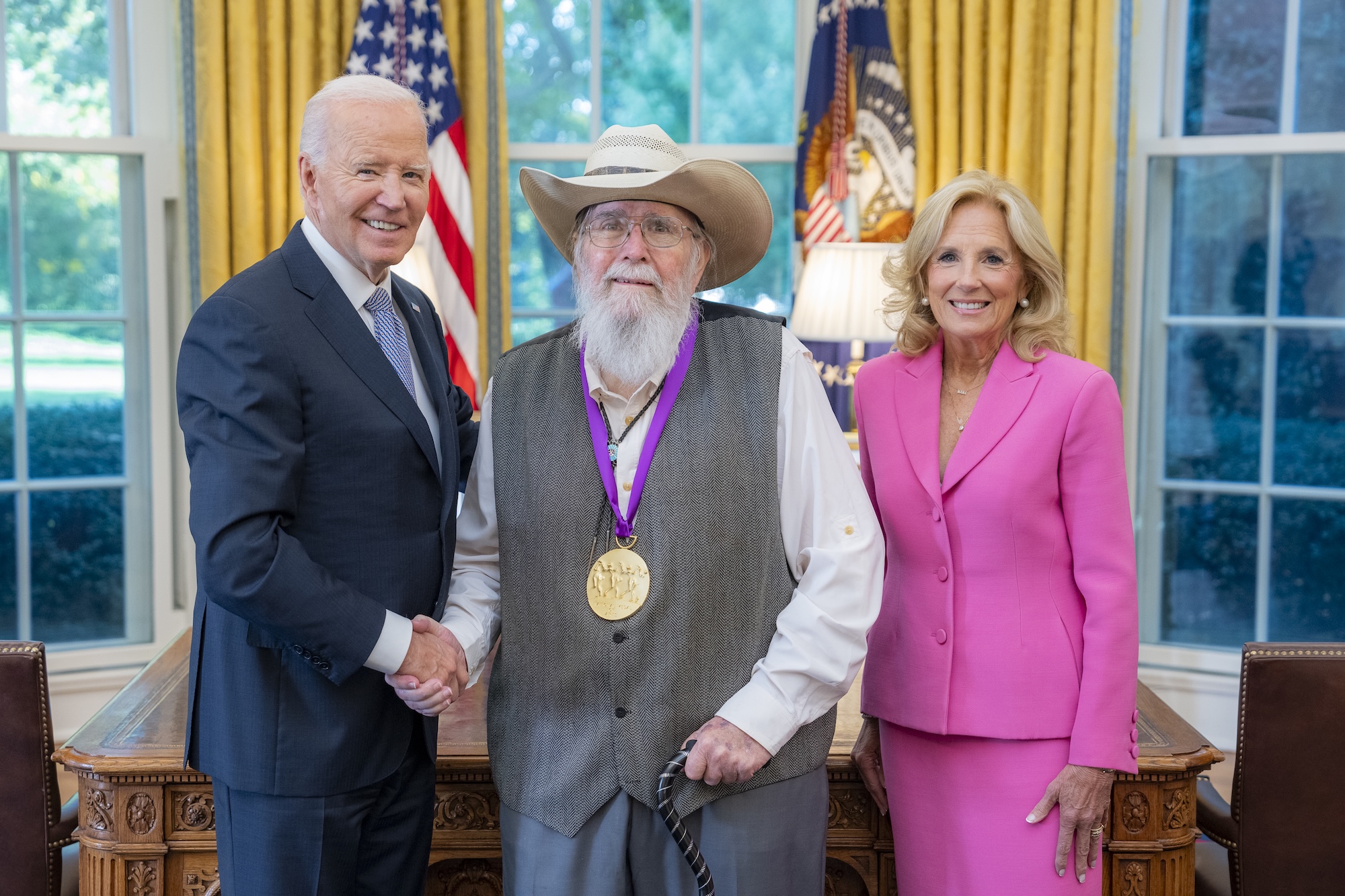
Clyde Butcher
Discover the life and works of Clyde Butcher, a master of black and white photography. Explore his stunning images of nature and landscapes, and learn about his artistic journey.
 clydebutcher.com
Clyde Butcher
Discover the life and works of Clyde Butcher, a master of black and white photography. Explore his stunning images of nature and landscapes, and learn about his artistic journey.
clydebutcher.com
Ardpatrick
Subscriber
I thought you might enjoy Clyde Butcher's methods of shooting in Florida's Everglades with snakes and alligators, as well as a lot of water.
Clyde Butcher
Discover the life and works of Clyde Butcher, a master of black and white photography. Explore his stunning images of nature and landscapes, and learn about his artistic journey.Clyde Butcher
Discover the life and works of Clyde Butcher, a master of black and white photography. Explore his stunning images of nature and landscapes, and learn about his artistic journey.
Interesting link. How does he get a decent shot with that 8x10 wobbling like crazy on the end of a long tripod column! Its really bouncing around.
DREW WILEY
Member
- Joined
- Jul 14, 2011
- Messages
- 15,410
- Format
- 8x10 Format
That's why I never use any kind of tripod head with a view camera, and certainly never use extended columns! I simply bolt the camera right to a substantial top itself of a substantial tripod. With practice, one can set up and aim the camera nearly as fast.
That's how old-time surveyors did it for decades, and had to routinely do it more accurately than typical photographic needs. My dad had been a surveyor early on in his career, and I learned the legs-only method using his old 1930's brass transit and battered wooden tripod. Wobble-bobble ballheads are the worst.
Maybe Clyde could set up a portable platform atop a big alligator instead, to alleviate some of that need for an extended column.
That's how old-time surveyors did it for decades, and had to routinely do it more accurately than typical photographic needs. My dad had been a surveyor early on in his career, and I learned the legs-only method using his old 1930's brass transit and battered wooden tripod. Wobble-bobble ballheads are the worst.
Maybe Clyde could set up a portable platform atop a big alligator instead, to alleviate some of that need for an extended column.

Interesting link. How does he get a decent shot with that 8x10 wobbling like crazy on the end of a long tripod column! Its really bouncing around.
That's why I never use any kind of tripod head with a view camera, and certainly never use extended columns!
But he does!

Sirius Glass
Subscriber
Should you spend more money on camera equipment? Yes, who else will prop up the economy?
-

- wiltw
- Deleted
- Reason: tariff talk
DREW WILEY
Member
- Joined
- Jul 14, 2011
- Messages
- 15,410
- Format
- 8x10 Format
I rarely shot in Yosemite Valley, though owning property near there, and having spent lots of time in the far less crowded high country above. But I often "commuted" past there on my way to and back from the eastern side of the Sierra. There was a time when rich guys would go out a spend 15 thousand dollars on a brand new Sinar P 8x10 with all the trimmings and a set of the most expensive lenses, sometimes just for sake of a two day workshop with some famous instructor. I'd see them out in the meadow, waiting and waiting and waiting for their camera to finally stop wobbling before they pressed the shutter, then finally just giving up, since the wobbling never stopped. Either they had way too heavy a camera along, or way too light a tripod support, or both.
I like people like that, because when they get utterly frustrated, they sell off their nearly brand new gear cheap. They apparently expect to get a classic Ansel Adams shot just because they are at the "right" location with the very best studio gear (which he never could afford, or else never thought he needed). It doesn't work like that.
I like people like that, because when they get utterly frustrated, they sell off their nearly brand new gear cheap. They apparently expect to get a classic Ansel Adams shot just because they are at the "right" location with the very best studio gear (which he never could afford, or else never thought he needed). It doesn't work like that.
-

- Pieter12
- Deleted
- Reason: tariff talk
Pieter12
Member
Interesting link. How does he get a decent shot with that 8x10 wobbling like crazy on the end of a long tripod column! Its really bouncing around.
You'll notice he has a digital set-up. Higher ISO is possible, allowing for faster shutter speeds.
DREW WILEY
Member
- Joined
- Jul 14, 2011
- Messages
- 15,410
- Format
- 8x10 Format
He probably used a much heavier support back when he worked with a ULF film view camera.
-
- wiltw
- Deleted
- Reason: tariff talk
Ardpatrick
Subscriber
You'll notice he has a digital set-up. Higher ISO is possible, allowing for faster shutter speeds.
I’m responding to the actual video linked in post 190. In that video he’s using an 8x10 on top of a very noticeably wobbly long center column. It’s not difficult to see in this <30 second clip.
As Miha says in post 192, he gets wonderfully sharp images - visible across his site. But unless the tripod set-up was purely for the video clip, I can’t see how anyone could get a crisp shot under those conditions.
Anyway it’s a digression from the topic.
Good investment is all about the use value you derive from the equipment. The cost of used film gear is relatively modest unless Leica & Xpans are your taste, and even they tend to appreciate in price it seems. So if you use the gear regularly it’s good value. If you don’t use it, it’s cash tied up in gear that may or may not appreciate and there are probably better ways of parking cash.
Alan Edward Klein
Member
Interesting link. How does he get a decent shot with that 8x10 wobbling like crazy on the end of a long tripod column! Its really bouncing around.
That's a great question. Maybe it was a setup for just making a video.
-

- Alan Edward Klein
- Deleted
- Reason: tariff talk
- DREW WILEY
- Deleted
- Reason: tariff talk
-
- Pieter12
- Deleted
- Reason: tariff talk
- DREW WILEY
- Deleted
- Reason: tariff talk
-
- wiltw
- Deleted
- Reason: tariff talk

Just remember, cat pictures are always exempt from this discussion.
Just remember, cat pictures are always exempt from this discussion.
Last edited:

Taylor K Nankervis
Member
cat pictures are always exempt from this discussion.
They're a lot more interesting too...

| Photrio.com contains affiliate links to products. We may receive a commission for purchases made through these links. To read our full affiliate disclosure statement please click Here. |
PHOTRIO PARTNERS EQUALLY FUNDING OUR COMMUNITY:  |