

• Welcome to Photrio!
    Registration is fast and free. Join today to unlock search, see fewer ads, and access all forum features.
    Click here to sign up

I'm Positive I shot a Negative (so what happened?)

Flooded woodland

Flooded woodland

  • 2
  • 0
  • 12
Babylon

D
Babylon

  • 2
  • 1
  • 38

Recent Classifieds

Forum statistics

Threads
202,832
Messages
2,846,175
Members
101,555
Latest member
MartinWild
Recent bookmarks
0

Bosaiya

Member
Allowing Ads
Joined
Apr 6, 2005
Messages
396
Location
Sumner, Wash
Format
4x5 Format
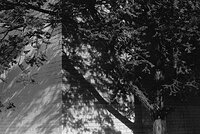
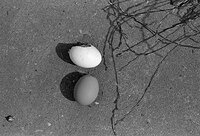
No, it's not the title of my brand new hit single, but a perplexing question. Recently I shot a bunch of Type 55 and have been steadily printing the negatives with good result. Today I was trying to print one in particular and I noticed something strange: the negative was positive. The darks are dark and the lights are light. How can that be?

Here are some quick and dirty scans:

Polaroid positive
Dead Link Removed

Polaroid negative
Dead Link Removed

Appologies for the cruddy scans.
 
That is really weird. I think somehow you solarized your negative, but I don't see how it can happen with a Polaroid neg. Could it have been massively overexposed or maybe lightstruck at some point before or after shooting? Did you pull it on the spot or take it home for processing?
 
David A. Goldfarb said:
That is really weird. I think somehow you solarized your negative, but I don't see how it can happen with a Polaroid neg. Could it have been massively overexposed or maybe lightstruck at some point before or after shooting? Did you pull it on the spot or take it home for processing?

I've heard, but not tried, that you can solarize it by pulling it apart before full development and then re-contact the pieces, but I shot this the same way I did the twenty or so others I shot that day. I pulled them all on the spot and they were all exposed essentially the same. I've extremely overexposed accidentally (left the lens open) before but that just gives white/black. Everything else shot that day has turned out great.

The funny thing is that I didn't even notice until my second print turned out negative. I went back to check the enlarger, thought maybe I had used too much diffusion on the print, checked the focus, then noticed that the projected image looked... funny.
 
Just a guess, maybe the neg was not completely cleared when you hung it up to dry.
 
glbeas said:
Just a guess, maybe the neg was not completely cleared when you hung it up to dry.

That certainly could be. I cleared it at the same time as all the others in the same solution (all at once), but who knows, maybe it didn't get the right treatment.
 
Comparison of the positive and "negative" suggest to me that this is a Sabbatier effect (incorrectly called solarization) -- still-active developer after peeling, combined with bright light, can cause partial reversal. You'll notice that the very bright strip along the lower edge of the low building is dark gray in the negative, rather than bright white as in the positive; this would be a region that got enough initial exposure/development to be either insensitive or shielded by existing silver at the time of the reexposure. Delay in clearing (holding the negatives until the end of session to clear) could have contributed.

FWIW, this kind of effect is very commonly seen on the paper negative of non-P/N Polaroid B&W materials. Normally, the combination of the clear film base and clearing bath prevent it from occurring with Type 55.
 
I had this effect a couple of times as well, always when working in bright light. I thought the effect rather interesting in the portraits i shot, but was never able to repeat it in a systematic way.
 
Donald Qualls said:
Comparison of the positive and "negative" suggest to me that this is a Sabbatier effect (incorrectly called solarization) -- still-active developer after peeling, combined with bright light, can cause partial reversal. You'll notice that the very bright strip along the lower edge of the low building is dark gray in the negative, rather than bright white as in the positive; this would be a region that got enough initial exposure/development to be either insensitive or shielded by existing silver at the time of the reexposure. Delay in clearing (holding the negatives until the end of session to clear) could have contributed.

FWIW, this kind of effect is very commonly seen on the paper negative of non-P/N Polaroid B&W materials. Normally, the combination of the clear film base and clearing bath prevent it from occurring with Type 55.

That certainly makes sense. I stick all of my negatives in water right away, then clear at a later time. Even though I shot over twenty pieces that day in the same fashion, this is the first time I've seen this.
 
Photrio.com contains affiliate links to products. We may receive a commission for purchases made through these links.
To read our full affiliate disclosure statement please click Here.

PHOTRIO PARTNERS EQUALLY FUNDING OUR COMMUNITY:


Ilford ADOX Freestyle Photographic Stearman Press Weldon Color Lab Blue Moon Camera & Machine
Top Bottom
