
• Welcome to Photrio!
    Registration is fast and free. Join today to unlock search, see fewer ads, and access all forum features.
    Click here to sign up

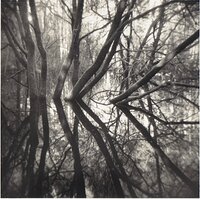
Ilford Hp5+ @6400 in 510-Pyro

Flooded woodland

Flooded woodland

  • 7
  • 0
  • 59
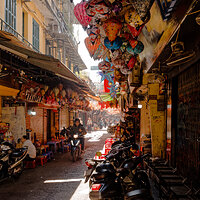
Babylon

D
Babylon

  • 2
  • 1
  • 62

Recent Classifieds

Forum statistics

Threads
202,836
Messages
2,846,264
Members
101,559
Latest member
gnafin61
Recent bookmarks
0

cerber0s

Member
Allowing Ads
Joined
Nov 16, 2020
Messages
618
Location
Sweden
Format
Multi Format
These two were shot at EI 6400 and semi stand developed in 510-Pyro 1:500 for 90 minutes with agitations at 30 and 60 minutes. Based on the results, I won't try that again. I will however try HP5+ at EI 6400 in Pyro 1:100, I'm guessing the developing time will be around 30 minutes.

Why shoot HP5 at 6400 you wonder? Well I've been planning to take a trip to Copenhagen for a while, but there's always something getting in the way. The bright season came and went, now darkness is upon us again. In other words; I'm preparing to shoot handheld in low light. Will i be using 510-Pyro for developing those rolls? Probably not. I have a bag of Microphen waiting, but don't want to mix it up in case it goes bad before I get to go.
Here are the photos:

hp5 at 6400.jpg

hp5 at 6400-2.jpg
 
Well the first one looks pretty good with HP5+ shot at 6400. The second one might be equally good but as there is less to measure the underexposure against I am less sure It is interesting for me when I have asked about evidence of stand development of HP5+ in Rodinal at 5 and 6 stops under in another thread

Thanks

pentaxuser
 
These two were shot at EI 6400 and semi stand developed in 510-Pyro 1:500 for 90 minutes with agitations at 30 and 60 minutes. Based on the results, I won't try that again. I will however try HP5+ at EI 6400 in Pyro 1:100, I'm guessing the developing time will be around 30 minutes.

Why shoot HP5 at 6400 you wonder? Well I've been planning to take a trip to Copenhagen for a while, but there's always something getting in the way. The bright season came and went, now darkness is upon us again. In other words; I'm preparing to shoot handheld in low light. Will i be using 510-Pyro for developing those rolls? Probably not. I have a bag of Microphen waiting, but don't want to mix it up in case it goes bad before I get to go.
Here are the photos:

View attachment 351073
View attachment 351074

I did a push development test with HP5 about a year ago, but I used XTOL. I've also pushed it with 510-Pyro, and Pyrocat-HD. I found EI 1600 to be the sweet spot with all three developers. There's a video on my youtube channel (just search for analogue andy... some people said they couldn't remember my name, but were able to find me by typing in andy+doughnuts 😩)
 
@Andrew O'Neill what do you mean by sweet spot? As with all films, quality deterioration begins even when exposed at box speed with some developers, and for Xtol the sweet spot is actually 400. How's it possible for the sweet spot to end up above the box speed?
 
@Andrew O'Neill what do you mean by sweet spot? As with all films, quality deterioration begins even when exposed at box speed with some developers, and for Xtol the sweet spot is actually 400. How's it possible for the sweet spot to end up above the box speed?

Because my comment is in regards to push development. The sweet spot with XTOL and for my "normal" work is EI 250.
 
@Andrew O'Neill Sorry I wasn't clear enough. Pushing gradually degrades image quality, so naturally I always aim at the lowest EI I can get away with for given light, that's why I don't understand why 1600 (and not 640 or 800) can be a "sweet spot". Basically what is the context here? Thanks.
 
I agree that push development gradually degrades image quality. I routinely expose HP5 anywhere from EI 160 to 400, depending on SBL. I love luminous shadows, and smooth tonalities, but some of the images in the test that I did, looked much better than the EI 250 images (the subject matter didn't have deep shadow detail to worry about). The OP will be exposing HP5 at EI 6400, developing for a very long time in 510-Pyro 1+100. He explained why he will be doing that. The examples that he provided seem to work okay at EI 6400.
 
I read that comment as "maximum speed while retaining acceptable image quality". In other words, I interpret Andy's 'sweet spot' as a compromise.

That's a perfect interpretation! Thanks!
 
I'm not sure what exposing HP5+ at EI 6400 entails.
Does it mean setting 6400 on the light meter, then pointing the light meter at the darkest thing in the scene, then setting the suggested exposure on the camera, then shooting? For typical scenes that's about the same as setting 800 on the light meter and reading a mid-tone; a mere one stop under-exposure. Or is it more subtle than that?
 
I'm not sure what exposing HP5+ at EI 6400 entails.
Does it mean setting 6400 on the light meter, then pointing the light meter at the darkest thing in the scene, then setting the suggested exposure on the camera, then shooting? For typical scenes that's about the same as setting 800 on the light meter and reading a mid-tone; a mere one stop under-exposure. Or is it more subtle than that?
It’s a bit more subtle, unless you meter differently than you normally would. I’ve photographed the dog enough times now to know that metering for the white fur will result in no details in her face. What I normally do is meter for the white fur, adjust the exposure +1, then shoot. I do that regardless of what EI I shoot at.

I never expose for the darkest thing in the scene, unless I want it grey. Normally I want the dark parts dark, the white parts white, and the grey parts grey. I expose for whatever part I want to turn out grey.

Exposing an ISO 400 film at 6400 means a 4 stop underexposure. That is compensated for (for a cost) by developing longer.
 
I read that comment as "maximum speed while retaining acceptable image quality". In other words, I interpret Andy's 'sweet spot' as a compromise.

And when you are comparing the results you get, the deterioration of image that accompanies each increment of the under-exposure + increased development pairing isn't simple or linear - some increments show little deterioration with appreciable usability due to increased "speed", while later increments will show much more deterioration while giving little more usability due to increased "speed".
The sweet spot is where the usability increase is maximized, without adding objectionable amounts of deterioration.
 
Assuming I need to use 3200 or 6400 then from a purely practical point of view I examine what the originator of the photo has done on each occasion to get the result he has in terms of film. light conditions, developer and any other relevant factor. Then decide if that combination is OK
Certainly in the conditions in which it was taken the dog pic was very good I was surprised at how good 510 Pyro was with the developer and development regime

pentaxuser
 
In the FDC 2nd ed. p. 122, Anchell and Troop say, "For extreme pushing we recommend Ilford HP-5+ at EI 2400 or 3200, processed in Ilford DDX 1+4 ..." They define extreme pushing as more than two stops. It surprised me that they preferred HP-5 over Delta 3200 or Tmax P3200. It seems they feel that tab grain emulsions generally don't push well and it's best not to do more than a moderate push with them. HP-5 would have finer grain for sure. Would it have as much shadow detail as the others? Ilford says the ISO of Delta 3200 is 1000, presumably in D-76-type developers. Then EI 2400 and 3200 would not be more than two stops push for it, thus in the range of a moderate push. Yet they preferred HP-5 with an extreme push.
 
In the FDC 2nd ed. p. 122, Anchell and Troop say, "For extreme pushing we recommend Ilford HP-5+ at EI 2400 or 3200, processed in Ilford DDX 1+4 ..." They define extreme pushing as more than two stops. It surprised me that they preferred HP-5 over Delta 3200 or Tmax P3200. It seems they feel that tab grain emulsions generally don't push well and it's best not to do more than a moderate push with them. HP-5 would have finer grain for sure. Would it have as much shadow detail as the others?
I'd agree that based on the Anchell and Troop statement above it would seem that tab grain emulsion not pushing as well as HP5+ beyond 2 stops is their conclusion but has any of them actually ran tests on this to find out. Andrew O'Neill tried D400 at 800 and 3200 in a video in 2022. Here it is:https://www.photrio.com/forum/threads/pushing-ilfords-delta-400.191618/

It looks as if the conclusion of Anchell and Troop, assuming they did mean what you and I think they mean may be open to question

pentaxuser
 
Certainly in the conditions in which it was taken the dog pic was very good I was surprised at how good 510 Pyro was with the developer and development regime
In only choose stand development because I didn’t have the time to hover over the tank for 30 minutes. I will definitely try developing HP5 Plus shot at 6400 in 510-Pyro with a conventional agitation scheme though. I’ll let you know how that turns out :smile:
 
In only choose stand development because I didn’t have the time to hover over the tank for 30 minutes. I will definitely try developing HP5 Plus shot at 6400 in 510-Pyro with a conventional agitation scheme though. I’ll let you know how that turns out :smile:

Thanks. I'd be surprised if it turns out any better It would seem that 510 Pyro in what is a shortened version of the hour semi-stand or even full stand development is a well known process and based on what I have seen of the dog picture the 30 min semi-stand is used for a good reason i.e. it works very well

pentaxuser
 
Hmmm. If I wanted to shoot at EI 6400, I'd start with Delta 3200 or Tmax P3200. They are designed for that sort of thing, and would likely give better shadow detail than a nominal 400-speed film pushed 4 stops. And grain? You're going to get it with any film at those EI's. If you don't want grain at those speeds, don't use film.
 
It should be noted that Pyro developers are not the best choice if your goal is to push a film: they typically deliver less speed than other developers do.

In the dog picture can I ask what developer might have definitely produced a better picture at 6400 and what would I see that is clearly better about it?

Better still, do you happen to have any pics taken at 6400 in those other developers that are similar enough to the dog pic in terms of exposure conditions that you might show us?

Thanks

pentaxuser
 
In the dog picture can I ask what developer might have definitely produced a better picture at 6400 and what would I see that is clearly better about it?

Better still, do you happen to have any pics taken at 6400 in those other developers that are similar enough to the dog pic in terms of exposure conditions that you might show us?

Thanks

pentaxuser

Sorry, no. I wouldn't attempt to push HP5 that aggressively - the odds of getting usable negatives would be very slim, regardless of what developer you choose. Why the OP doesn't just work with one of the 3200 ASA films is a mystery to me.
 
In the dog picture can I ask what developer might have definitely produced a better picture at 6400 and what would I see that is clearly better about it?

Better still, do you happen to have any pics taken at 6400 in those other developers that are similar enough to the dog pic in terms of exposure conditions that you might show us?

Thanks

pentaxuser
The dog picture turned out pretty good, as did several others. All but three out of a roll of 10 actually. When I say ā€œgoodā€ I mean tonality and grain that I find pleasing or acceptable. Unfortunately, most of them also had inconsistencies, like the bright line in the top right quarter of the photo. There’s also the bright halo around her snout, which I think is typical for stand development. There were some traces of bromide drag in some negatives, but not a lot.

All of those issues are probably because of the development method rather than the developer. I know from experimenting with Rodinal and stand development that the method itself can produce results that are quite different from conventional development. That’s why I’m curious about trying it in 510-Pyro at 1:100 with normal agitation. It may very well be that Pyro at 1:100 produces results that I don’t like, while stand development in Pyro 1:500 does.
Sorry, no. I wouldn't attempt to push HP5 that aggressively - the odds of getting usable negatives would be very slim, regardless of what developer you choose. Why the OP doesn't just work with one of the 3200 ASA films is a mystery to me.
That’s where I think we’re different. I want to try things for myself before I for an opinion, especially with something as subjective as photography.

I post here for two reasons. One is to get advice, and the other is so that others may get something useful out of my experimentation.

As to why I don’t use any of the ISO 3200 options? Simple! I have 100ft of HP5, I have 0 feet of any ISO 3200 film. If I did have any 3200 film I’d expose it at 12800, develop it in whatever I had at hand, and post the results here. So there!
 
Photrio.com contains affiliate links to products. We may receive a commission for purchases made through these links.
To read our full affiliate disclosure statement please click Here.

PHOTRIO PARTNERS EQUALLY FUNDING OUR COMMUNITY:


Ilford ADOX Freestyle Photographic Stearman Press Weldon Color Lab Blue Moon Camera & Machine
Top Bottom
