
• Welcome to Photrio!
    Registration is fast and free. Join today to unlock search, see fewer ads, and access all forum features.
    Click here to sign up

I ordered my enlarger... Low contrast lenses for 35mm negatives?

half stop lighter er.jpg

A
half stop lighter er.jpg

  • jhw
  • Jan 12, 2026
  • 7
  • 7
  • 110
sentinels of the door

A
sentinels of the door

  • 4
  • 0
  • 91

Recent Classifieds

Forum statistics

Threads
201,718
Messages
2,829,040
Members
100,909
Latest member
SuninPisces
Recent bookmarks
1

Juan Valdenebro

Member
Allowing Ads
Joined
Jan 26, 2010
Messages
1,286
Location
South America
Format
Multi Format
Hello,

Finally I ordered a recent Kaiser 6x6 condenser enlarger, named 6005. It’s coming from Germany to South America, so it’ll take a few weeks…

About my contrast worries: even if I thought I was going to buy a diffuse light enlarger, someone had a precise comment about condenser enlargers being better for just one thing: sharp grain prints (only type of prints I do)… So, I went for a condenser one in the last minute… Yet I’d like to “cure” my usual negative contrast a little bit while printing, and today I remembered an old darkroom teacher once told me “you should use an old lens instead of that Nikon, for a more gentle contrast…”

Then, here I am asking again… (I couldn’t find a good thread on this…) I’d like to use, for 35mm enlarging, a good enlarging lens with clearly lower contrast (I push film) than my Nikon EL 50mm f/2.8, AND, I think I would prefer bigger prints at maximum height (nicer than floor/wall work…), so:

Question 1: which 50mm, low contrast enlarging lenses would you recommend?

Question 2: which slightly wider than 50mm lenses would you recommend for lowish contrast?

Question 3: does using a lens wider than 50 imply any consideration “for all lenses” about light falloff or image circle for a 35mm negative? I imagine it depends on lens design… So, possibly, there are a few wider than 50mm lenses out there good for low contrast, and with good coverage of 35mm format…

Thanks!
 

cliveh

Subscriber
Allowing Ads
Joined
Oct 9, 2010
Messages
7,785
Format
35mm RF
If you want soft images why buy a condenser enlarger? A condenser will give you an inherently more contrasty image, hence sharp grain prints. You may have been better off buying a diffuser enlarger for what you are trying to achieve.
 
OP
OP

Juan Valdenebro

Member
Allowing Ads
Joined
Jan 26, 2010
Messages
1,286
Location
South America
Format
Multi Format
Juan, I would not suggest using a low contrast enlarging lens. Instead I would suggest using a good lens, and variable contrast printing paper.
Hi, this story comes from a previous thread... Yes, I use VC paper... I want a lower contrast lens after using VC paper with a condenser enlarger and well pushed film for many years... As others think, I can print my pushed negatives better with a bit less contrasty projected image... Thanks.
 
OP
OP

Juan Valdenebro

Member
Allowing Ads
Joined
Jan 26, 2010
Messages
1,286
Location
South America
Format
Multi Format
Juan, I would not suggest using a low contrast enlarging lens. Instead I would suggest using a good lens, and variable contrast printing paper.
Hi, this story comes from a previous thread... Yes, I use VC paper... I want a lower contrast lens after using VC paper with a condenser enlarger and well pushed film for many years... As others think, I can print my pushed negatives better with a bit less contrasty projected image... Thanks.
 
OP
OP

Juan Valdenebro

Member
Allowing Ads
Joined
Jan 26, 2010
Messages
1,286
Location
South America
Format
Multi Format
If you want soft images why buy a condenser enlarger? A condenser will give you an inherently more contrasty image, hence sharp grain prints. You may have been better off buying a diffuser enlarger for what you are trying to achieve.
Hi, I don't want soft images. Thanks.
 

Paul Howell

Subscriber
Allowing Ads
Joined
Dec 23, 2004
Messages
10,087
Location
Scottsdale Az
Format
Multi Format
After many years, 55 going on 56, and have used Point Source, Diffusion and Condenser. By adjusting the grade of the paper you can match a print made on a diffusion head with a print made on condenser head, a point source head in my tests seems to be very different. Remember that "Condensers" head are really semi diffusion as they use frosted bulbs. With filters and VC paper or a range of fixed grade papers you ought to be just fine. Other factors is glossy vs matt or luster, warm tone vs cold tone, the developer as does the working aperture, say F2.8 or F8 can make a difference. I recommend a good quality 50mm, the prince point to some extent depends on the largest size you intend to print. Some lens were designed for very large prints and these lens will cost more as will APO design, which I recommend if you are going to print color. For up to black and white 11X14 a good quality 4 element will work just fine.
 

Old-N-Feeble

Member
Allowing Ads
Joined
Feb 22, 2012
Messages
6,805
Location
South Texas
Format
Multi Format
You could also experiment with pre-flashing the paper... has a similar effect to shadow fogging through uncoated lenses. The plus side is that you can adjust the amount of pre-flash for each image rather than just taking what the lens has to offer.
 

JensH

Member
Joined
May 30, 2017
Messages
540
Location
Schaumburg, Germany
Format
Multi Format
+1 Yes, so do I. A good and clear lens, unless mushy images are your goal.

One more idea would be to use a low contrast paper developer like Tetenal Centrabrom S.
And as Old-N-Feeble said, pre-flashing the paper. It works fine for me.

Best
Jens
 
Last edited:

Svenedin

Member
Allowing Ads
Joined
Mar 19, 2016
Messages
1,191
Location
Surrey, United Kingdom
Format
Med. Format RF
I have a Kaiser VPM 7005 enlarger which is similar to yours but I have a multigrade head and can enlarge 6x7 negatives. Your enlarger is not a pure condenser enlarger. Yes it has a big glass condenser lens but it also has a diffusion box for the lamp so it is a hybrid diffuser/condenser enlarger. Use the best, sharpest lenses you can and alter the contrast using variable contrast filters and multigrade paper. I'm sure you will be happy with your results.

PS: If you want big prints but are limited by the height of the enlarger column then look for WA (wide angle) lenses (for example, I sometimes use a Rodenstock 60mm WA for 6X6 where usually I would use an 80mm; likewise a 40mm WA where I would usually use 50mm for 35mm film).
 
Last edited:
OP
OP

Juan Valdenebro

Member
Allowing Ads
Joined
Jan 26, 2010
Messages
1,286
Location
South America
Format
Multi Format
Interesting... When I enlarged MF with my Rodenstock 80 (I don't remember which model: it's inside a big moving box yet) I got less contrasty prints (same enlarger, same paper, same filter, same developer and same complete paper development) than when I enlarged same contrast 35mm negatives with my Nikkor 50.
If my Kaiser 6005 happens to produce as you say a type of light that's a bit more diffuse than the light my meopta opemus 6a produced, I would say that would be enough change and I don´t need a lower contrast lens...
If not... Well, I can´t know right now...
 

voceumana

Member
Allowing Ads
Joined
Aug 4, 2004
Messages
896
Location
USA (Utah)
Format
Multi Format
I think many photographers think lens contrast is the same as image contrast or subject contrast, and it is not. All lenses produce an image with lower contrast than the subject--whether that subject is a camera subject or a negative being projected. This is because all lenses have some amount of flare which reduces contrast.

Enlarging itself further reduces contrast because of the flare involved in projecting the image--light bouncing around in the bellows, and other parts of the enlarger.

Rather than crippling your equipment by using a lower quality lens, try using a softer working print developer such as Selectol-Soft. I believe the formula is published. If you want more flare to reduce contrast--a bad idea in my opinion--just put some dust on your lens since you can always remove it.

One of the reasons contact prints looks so stunning is that there is little reduction of contrast of the negative on the paper.
 

ic-racer

Member
Joined
Feb 25, 2007
Messages
16,719
Location
USA
Format
Multi Format
When evaluating contrast in projection prints, realize that, in addition to hazy or fungal lens elements, there are many other sources of low contrast. Leaking safelights, reflected light from the baseboard, stray light in the bellows, non-image forming light hitting the lens (rebate and improperly masked images), wide apertures, etc, etc.

Experimentation with low contrast and hazy enlarging lenses gives portraits a ghoulish appearance and landscapes take on a creepy appearance due to the shadow areas bleeding into the highlights. Might be good for pictures of a graveyard if that is what you want to do.
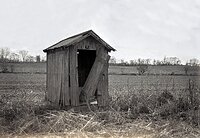
Here is one I did with a low contrast enlarging lens which I like:
Tree1.jpg
 

chip j

Member
Allowing Ads
Joined
Oct 26, 2012
Messages
2,193
Location
NE Ohio
Format
35mm
NICE picture. Most old "DOOGS" will have many fine scratches on them.
 

Hilo

Subscriber
Allowing Ads
Joined
Apr 19, 2011
Messages
922
Format
35mm
Before using this enlarger I would not get any other lens. With a new-to-you enlarger things will be different from what you are used to. It always is. Just try this enlarger to see where it gets you. Also, going up in size like you describe will work in your favour as generally you would need a higher grade contrast filter. Just use low contrast filters.

After that, yes, later lenses tend to give more contrast. So, Chip's suggestion to get a much older but reasonable quality lens is a good suggestion. But it remains to be seen if an older lens would solve your problem (if you have a problem). Often the differences between lenses are minimal.

I wonder if, since you push film, you should just accept your negatives have a higher contrast and it will show in your prints. Nothing wrong with that.
 
Last edited:

MattKing

Moderator
Moderator
Allowing Ads
Joined
Apr 24, 2005
Messages
55,100
Location
Delta, BC Canada
Format
Medium Format
Interesting... When I enlarged MF with my Rodenstock 80 (I don't remember which model: it's inside a big moving box yet) I got less contrasty prints (same enlarger, same paper, same filter, same developer and same complete paper development) than when I enlarged same contrast 35mm negatives with my Nikkor 50.
That appearance of lower contrast may be due to a number of factors, and may not represent an actual difference in contrast.
Different cameras, different lenses, different films, different development and different magnification.
 

jjphoto

Member
Allowing Ads
Joined
Oct 9, 2010
Messages
402
Location
Melbourne, A
Format
Multi Format
Coatings on EL's have been pretty good for a long time, so you might have to use a lens from the 50-60's or so to get a softer lens (because of greater internal flare), without loosing too much in the way of resolution. Also, a six element lens will naturally flare more than a 3 or 4 element lens. The Kodak Enlarging Ektar from the 40's is (reputedly) an excellent lens but with very early coatings, it might be worth a shot as they are abundant and cheap.
 

Bill Burk

Subscriber
Allowing Ads
Joined
Feb 9, 2010
Messages
9,461
Format
4x5 Format
You already have a great lens don’t look for another. If you want a “better” lens you might find one but the one you have is going to work.

To reduce contrast you could put a translucent sheet or opal glass under the condenser.

You could reduce contrast by “filing” your negative carrier for black borders.

To make murals from 35mm you might want a better lens like APO Rodagon-N but I think you’ll be ok with what you have.
 
OP
OP

Juan Valdenebro

Member
Allowing Ads
Joined
Jan 26, 2010
Messages
1,286
Location
South America
Format
Multi Format
That appearance of lower contrast may be due to a number of factors, and may not represent an actual difference in contrast.
Different cameras, different lenses, different films, different development and different magnification.
Hello Matt, perhaps magnification... When I compared both of them, both were films I had calibrated already: exposed and developed (kodak´s gray card included in the frames) for the same negative contrast... I thought the difference in contrast on prints was because my MF Rodenstock lens wasn´t as contrasty as my Nikkor... But maybe magnification was relevant...
 
OP
OP

Juan Valdenebro

Member
Allowing Ads
Joined
Jan 26, 2010
Messages
1,286
Location
South America
Format
Multi Format
Hilo, Bill, I agree: why think anything before working with the new enlarger?... I'll wait and see... Thanks again.
 

Svenedin

Member
Allowing Ads
Joined
Mar 19, 2016
Messages
1,191
Location
Surrey, United Kingdom
Format
Med. Format RF
@Juan Valdenebro I think you will love your new enlarger. It's very well made and solid. Logical, practical and modular. You can upgrade it in the future if you wish. Columns, baseboards, condensers and heads are interchangeable within the "System-V". Make sure you have the correct lens mounting rings. These are different for different focal lengths of enlarging lens. There is one for lenses less than 60mm focal length (part 4423) and another for lenses over 60mm (part 4424). Also make sure the lens mounting ring is attached to the enlarger the right way round (the markings face outwards). There is a quick release system so you can screw the lens into the mount and then mount on the enlarger. This also ensures the lens always has the aperture markings aligned at the front where you can see it. You will have tilt of both the head and the enlarging stage (Scheimpflug principle) so you can correct distortion due to camera lens tilt. There is a built in red filter and facilities for below or above lens filters (or dichroic continuously adjustable built in filters with a multigrade head).

If you don't have instructions they are here: http://www.kaiser-fototechnik.de/en/service/anleitungen/4_3_index.asp
 
Photrio.com contains affiliate links to products. We may receive a commission for purchases made through these links.
To read our full affiliate disclosure statement please click Here.

PHOTRIO PARTNERS EQUALLY FUNDING OUR COMMUNITY:


Ilford ADOX Freestyle Photographic Stearman Press Weldon Color Lab Blue Moon Camera & Machine
Top Bottom
