• Welcome to Photrio!
    Registration is fast and free. Join today to unlock search, see fewer ads, and access all forum features.
    Click here to sign up

I just don't get the 35mm vs bigger format thing.

Lutheran Cemetery Angel

H
Lutheran Cemetery Angel

  • 0
  • 0
  • 21
Dystopia

A
Dystopia

  • 1
  • 0
  • 40

Recent Classifieds

Forum statistics

Threads
202,944
Messages
2,847,935
Members
101,550
Latest member
Paris-Belle
Recent bookmarks
0
I didn't see any difference between 35mm and larger formats because mostly I just shot 35mm. Then about a year ago I got an 8x10 camera. The disappointment of seeing 8x10 prints from 35mm and 8x10 on the same wall has resulted in me not running more than two rolls of 35mm in the last year. However, if you don't see the difference, then there's no difference for you.
mdarnton,

I know exactly what you mean. Exactly!

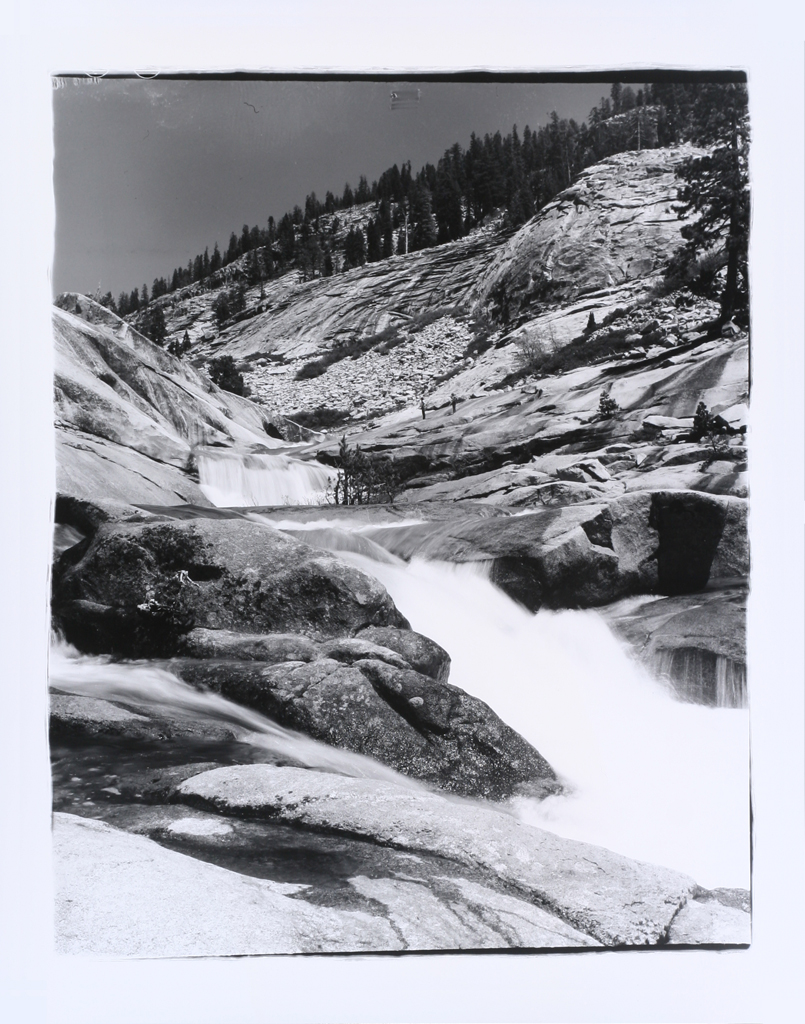
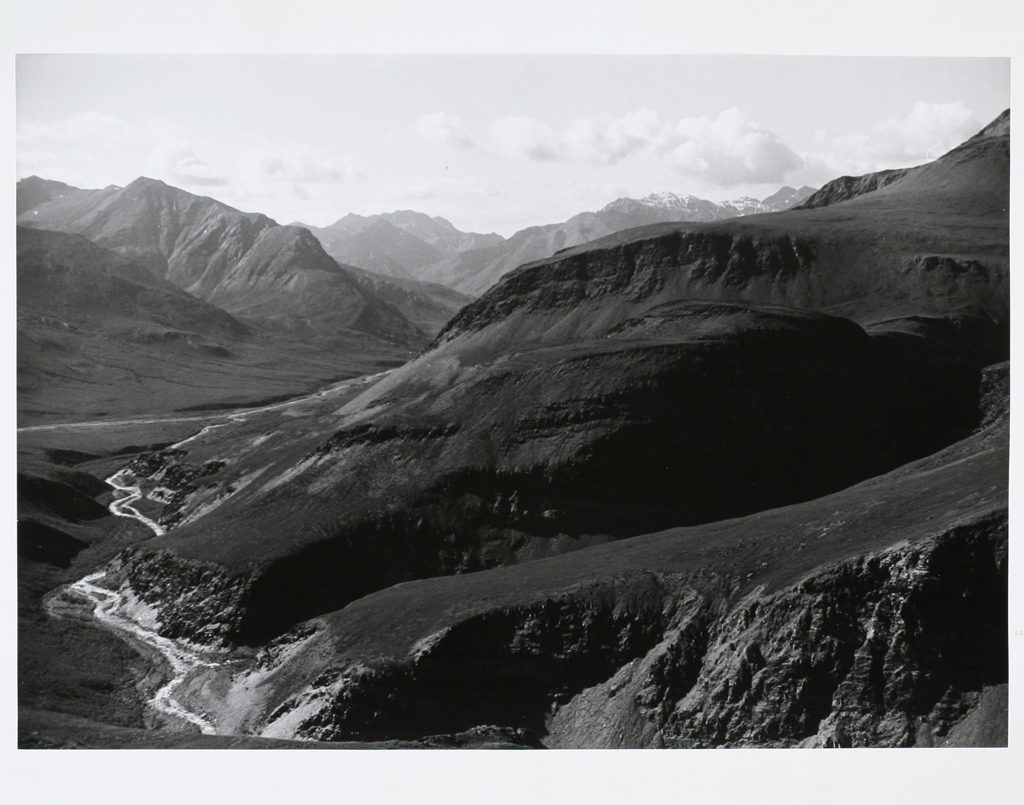
This pair of photographs cemented my determination to move up to 4x5 despite frustrations from my first foray into large format.

They were displayed in my hallway side-by-side. They were my best display-worthy photographs for many years.

The 4x5 shot of Dinkey Creek is from the same fabled trip where I brought both Minox and 4x5.

The shot from Brooks Range in Alaska was taken on 35mm. I don't know why I didn't take this on the 6x6 TLR camera I had with me on the trip. I have B&W shots taken near this part of the trip on the 6x6 that are not as interesting. I assume I ran out of black and white in the TLR while I was out near a cliff's edge. Taking the shots was thrilling at the time but the film just didn't capture the thrill. The next 6x6 shots were on Kodachrome so I assume I made a conscious decision to leave the TLR empty and shoot 35mm until we got to camp.

Every time I walked down the hall to look at them, I was left with the impression that I would have liked the Brooks Range shot to have similar detail as the Dinkey Creek shot. The Dinkey Creek shot more reflected what I wanted my future prints to look like.

So I get it. Sometimes, side-by-side, when you want to see detail. 4x5 is a better size negative to take the photographs on.

dinkey_ck.jpg

Dinkey Creek (4x5)
High Resolution Close-Up


brooks_35.jpg

Brooks Range (35mm)
High Resolution
 
...But something went wrong when I took the 4x5 shot. I lost my cable release earlier in the day so I found myself improvising and tugging at the shutter release with a grass lasso. The tug caused camera shake...

Re-thinking the error. No. I used a grass lasso on Russian River with my Super Ikonta because the self-timer would not function. True I had lost the cable release on the Black Diamond Mines trip, but the 4x5 camera has a working self-timer so I would have used it.

I used a piece of grass on the Pocket Instamatic 20 to jam down the flash socket to force that camera to use its slower shutter speed.

The problem with the 4x5... Must have been, I can imagine no other error... I must have not brought the front standard fully forward to the clips. That would mean the camera is focused past infinity. I should have noticed that putting the camera away. I have caught that mistake before.
 
Nice to see your photos, Bill.

Hopefully you're still using your Minox as well? I'm hoping for nice results with mine.
 
Nice to see your photos, Bill.

Hopefully you're still using your Minox as well? I'm hoping for nice results with mine.

Thanks. I was out with it today, sure felt silly putting it on a tripod... But that's what I think it will take to get pleasing results from it.
 
bill
those minox prints beautiful !
(so do the images from the other formats )

thanks for helping show that small formats are not
as inferrior as larger format folks claim they are ...
and that smaller formats can hold their own ...

john
 
Last edited by a moderator:
For me the answer is 'it depends'. I shoot HP5, FP4, velvia, provia and Portra 160 and 400 in both 35mm (Nikon) and 120 (RB67). If I take Portra 160 and send it off to the lab, then I see no real difference in 5"x7" prints between 35mm and 120, so the extra convenience of a smaller camera, faster lenses wins out. If I get enlargements made of transparency, then there is no real difference for 10"x8" prints I hang on the wall when viewed at normal distance. When close up there is. By 12"x16" prints the difference is very obvious even at normal viewing distances. For monochrome, it's rather different. There is something about a print made from 120 that is obvious even at 6"x4" prints, it looks like sharpness but it isn't, it's the way the tones spread into one another. I'm sure others are better at describing this than me. So when I can, it's MF for monochrome and MF for big enlargements and 35mm for standard prints up to 10"x8". Of course, sometimes grain is good, so it's 35mm again. The trouble is, it's too damn heavy to take both 35mm and MF kit out at the same time, so I have to decide what I want before I go, but I confess that more and more it's the RB67 that gets taken out, especially now that I've found a good backpack for taking it.
 
For me the answer is 'it depends'. I shoot HP5, FP4, velvia, provia and Portra 160 and 400 in both 35mm (Nikon) and 120 (RB67). If I take Portra 160 and send it off to the lab, then I see no real difference in 5"x7" prints between 35mm and 120, so the extra convenience of a smaller camera, faster lenses wins out. If I get enlargements made of transparency, then there is no real difference for 10"x8" prints I hang on the wall when viewed at normal distance. When close up there is. By 12"x16" prints the difference is very obvious even at normal viewing distances. For monochrome, it's rather different. There is something about a print made from 120 that is obvious even at 6"x4" prints, it looks like sharpness but it isn't, it's the way the tones spread into one another. I'm sure others are better at describing this than me. So when I can, it's MF for monochrome and MF for big enlargements and 35mm for standard prints up to 10"x8". Of course, sometimes grain is good, so it's 35mm again. The trouble is, it's too damn heavy to take both 35mm and MF kit out at the same time, so I have to decide what I want before I go, but I confess that more and more it's the RB67 that gets taken out, especially now that I've found a good backpack for taking it.

Great post. Your experience is same as mine; with color negative the 35mm prints (to 8x11") are pretty good anyways, and sharp.

I salute you in bringing out the RB67. I also take it out for a long walk from time to time. There are many people who believe that the RB67 is a big beast that should only be confined to the studio, but I find it a very handholdable, easy to operate camera that wants to be taken outside.
 
Great post. Your experience is same as mine; with color negative the 35mm prints (to 8x11") are pretty good anyways, and sharp.

I salute you in bringing out the RB67. I also take it out for a long walk from time to time. There are many people who believe that the RB67 is a big beast that should only be confined to the studio, but I find it a very handholdable, easy to operate camera that wants to be taken outside.

my friend has one,he loved it and I thought it was better suited as a boat anchor but he made great images with it!:smile:
 
I allowed this thread to lie low because I hit my monthly bandwidth limit... But the website limit is reset now so if we want to pick up where we left off...

I had hoped my examples in this thread might kick of a wandering discussion of the relative merits of trying to achieve high resolution results in everyday photography.
 
Isn't the horse dead yet? For me, it's as simple as: if you wish to have a technically "high definition" look in your photo, (rendering of fine detail and rich tonality) the easiest and best way to achieve this look is with medium format film as opposed to 135 format.
 
Isn't the horse dead yet? For me, it's as simple as: if you wish to have a technically "high definition" look in your photo, (rendering of fine detail and rich tonality) the easiest and best way to achieve this look is with medium format film as opposed to 135 format.

My serious [sirius] work is done in MF, 135 is for shooting on the fly lesser photographs.

Take that you dead horse!
 
This week I hope to be making prints from recent half frame 35mm negs.
Using HP5+ and Tri-X, I expect them to be wonderfully grainy and full of gorgeous texture. :smile: Attached is an example, on Tri-X. Looks nothing like medium format or large format, but I argue it has a charm of its own.
 

Attachments

  • plate_1.jpg
    plate_1.jpg
    313.5 KB · Views: 179
For my eyes there's no contest. Years ago I had a Leica M3 and the 50 f/2 Summicron as well as the 90 and 35 lens. I also had(and have) several Nikons. I wanted to do studio work-portraits/bridal shoots and weddings and after attending one of Ed Pierce's Wedding seminars determined the MF was the only way to go.

I had shot portraits and weddings with the Nikons using both color and B&W but didn't like the results that much-especially when someone wanted an 11x14. I ended up trading the Leica for a Pentax 6x7 and several LS lens. I never looked back. The color and sharpness was far and away light years better than even the Leica. Even the 8x10 prints were superb and I found I could go to 16x20 prints and they looked as good or better that 35mm would with a 5x7.

Love the 35mm obviously as I have five of them but for quality enlargements a 6x7 negative is going to win out every time...larger negative, less grain, more sharpness.
 
For my eyes there's no contest. Years ago I had a Leica M3 and the 50 f/2 Summicron as well as the 90 and 35 lens. I also had(and have) several Nikons. I wanted to do studio work-portraits/bridal shoots and weddings and after attending one of Ed Pierce's Wedding seminars determined the MF was the only way to go.

I had shot portraits and weddings with the Nikons using both color and B&W but didn't like the results that much-especially when someone wanted an 11x14. I ended up trading the Leica for a Pentax 6x7 and several LS lens. I never looked back. The color and sharpness was far and away light years better than even the Leica. Even the 8x10 prints were superb and I found I could go to 16x20 prints and they looked as good or better that 35mm would with a 5x7.

Love the 35mm obviously as I have five of them but for quality enlargements a 6x7 negative is going to win out every time...larger negative, less grain, more sharpness.

I have 35mm for speed and easy when I want to record. Sometimes I will enlarge a worthy 35mm negative, but for serious work I use the 6x6 negatives. 4"x5" is still for playing around and experimenting until and if I get better with it.
 
...wandering discussion of the relative merits of trying to achieve high resolution results in everyday photography.

Aren't there a limited number of steps one could take towards this end, such as:

Slower film for smaller grain for given format
Larger format for less enlargement for given print size
Tripod for less camera movement
Lenses with conservative apertures or designs given towards high res/sharpness rather than speed
Stopping down to optimum apertures for the taking lens
Developer optimized towards resolution/sharpness/acutance rather than speed

Or is this oversimplifying things? Obviously one would have to choose how large of a format is acceptable for them (or their back!) to carry every day.
 
For my eyes there's no contest. Years ago I had a Leica M3 and the 50 f/2 Summicron as well as the 90 and 35 lens. I also had(and have) several Nikons. I wanted to do studio work-portraits/bridal shoots and weddings and after attending one of Ed Pierce's Wedding seminars determined the MF was the only way to go.

I had shot portraits and weddings with the Nikons using both color and B&W but didn't like the results that much-especially when someone wanted an 11x14. I ended up trading the Leica for a Pentax 6x7 and several LS lens. I never looked back. The color and sharpness was far and away light years better than even the Leica. Even the 8x10 prints were superb and I found I could go to 16x20 prints and they looked as good or better that 35mm would with a 5x7.

Love the 35mm obviously as I have five of them but for quality enlargements a 6x7 negative is going to win out every time...larger negative, less grain, more sharpness.

I expect that the difference in quality you observed "years ago" when you changed formats would be similar to the difference in quality arising because of the improvements in films.

The modern colour negative films are spectacularly better than thd films of even 30 years ago.
 
Shhh... Please stop trying to be logical. You're fanning the flames again.:tongue:

Aren't there a limited number of steps one could take towards this end, such as:

Slower film for smaller grain for given format
Larger format for less enlargement for given print size
Tripod for less camera movement
Lenses with conservative apertures or designs given towards high res/sharpness rather than speed
Stopping down to optimum apertures for the taking lens
Developer optimized towards resolution/sharpness/acutance rather than speed

Or is this oversimplifying things? Obviously one would have to choose how large of a format is acceptable for them (or their back!) to carry every day.
 
Aren't there a limited number of steps one could take towards this end, such as:

Slower film for smaller grain for given format
Larger format for less enlargement for given print size
Tripod for less camera movement
Lenses with conservative apertures or designs given towards high res/sharpness rather than speed
Stopping down to optimum apertures for the taking lens
Developer optimized towards resolution/sharpness/acutance rather than speed

Or is this oversimplifying things? Obviously one would have to choose how large of a format is acceptable for them (or their back!) to carry every day.

I think the list could be fairly short... of thing that destroy critical definition in a print.

Your list is a start because these things all count.

I know of two good lists. One in An Introduction to the Science of Photography, Katherine Chamberlain, 1951 and the other is in Zeiss newsletters (RobC... I can't locate the post where you shared this, can you help me pinpoint the Zeiss list of 10 things you must do for critical resolution?).

Once you get the list... You can decide which things to try to do (or deliberately and defiantly NOT do) in your day to day photography.
 
The modern colour negative films are spectacularly better than thd films of even 30 years ago.

I haven't shot color negative 35mm film in about 15 years and that may be true but, either way one looks at it 35mm will never surpass 6x6 or 6x7 in quality and sharpness. I've shot them all, developed negatives for them and made enlargements for all. I've always loved the cameras for 35mm but they just can't surpass the larger negative.

I've recently bought some Portra 160 for the F2A mostly and can't imagine it being any better than it was back in the mid 90's.
 
technical image quality undoubtidlyincreases with formatand the jump from 35mm to MF was most significant for me.The jump from MF to LF on the other hand left things to be desired.I think LF is best left for contact prints,ehere its quality really shines.
 
Here's the list from An Introduction to the Science of Photography, Katherine Chamberlain, 1951

Factors influencing critical definition

1. Steadiness of camera during exposure
2. Accuracy of camera focus
3. Lighting of subject
4. Size of film
5. Resolving power of film and lens
6. Quality of lens
7. Stop a. For maximum depth of field b. For maximum resolving power
8. Contrast obtained during development
9. Cleanliness of lens surfaces
10. Stray light
11. Atmospheric haze
12. Enlarger a. Optics b. Negative carrier c. Accuracy of focus d. Steadiness
13. Character of the film and processing
 
Photrio.com contains affiliate links to products. We may receive a commission for purchases made through these links.
To read our full affiliate disclosure statement please click Here.

PHOTRIO PARTNERS EQUALLY FUNDING OUR COMMUNITY:



Ilford ADOX Freestyle Photographic Stearman Press Weldon Color Lab Blue Moon Camera & Machine
Top Bottom