• Welcome to Photrio!
    Registration is fast and free. Join today to unlock search, see fewer ads, and access all forum features.
    Click here to sign up

HP5+, what ISO should I set it at for this ?

Arya dog at play 2

A
Arya dog at play 2

  • 1
  • 0
  • 11
Arya dog at play

A
Arya dog at play

  • 0
  • 0
  • 13

Recent Classifieds

Forum statistics

Threads
201,974
Messages
2,833,078
Members
101,039
Latest member
juanfarrias888@gmail
Recent bookmarks
0
OP
OP

dreamingartemis

Member
Allowing Ads
Joined
Apr 22, 2009
Messages
316
Format
Multi Format
Ilford HP 5 @ 200, developed in Moersch Tanol 1+1+100 or PMK 1+2 +100 for time of ISO 400. Makes for excellent negatives

Thanks, where can I get that? I only have access to Ilford HC and LC29, though I do have my own supply of HC-110
 
OP
OP

dreamingartemis

Member
Allowing Ads
Joined
Apr 22, 2009
Messages
316
Format
Multi Format
What film speed do you like your prints best at? That's the speed you should be shooting at.

Making negatives that work well with the rest of your work flow will remove a ton of frustration in the darkroom come printing time. And to make such negatives, some testing is required.

You are probably unique in what your situation is, and if you think about it, all of these factors play into what speed you should expose HP5 at to give YOU pleasing results:
- Your lighting conditions / quality of light where you live and photograph
- Your metering technique
- Your meter accuracy
- Your lens
- Your shutter accuracy
- Your water supply
- Your film developer
- Darkroom thermometer precision and accuracy
- Your film developer dilution
- Your agitation technique
- Your printing paper
- Your paper developer
- How long you develop your paper for
- Paper developer dilution
- Darkroom 'safety level' (how dark is it really, and is your safelight safe?)
- Are you going to tone your prints or not?

There are a zillion factors that play into how you should expose your film!

Now go shoot some film, have fun, and figure out what you must do to get the results you want.

- Thomas

Thanks! I'm still learning, I decided to stick with HP5+ for now. At least until I have a good handle on it before going to other types.
 
OP
OP

dreamingartemis

Member
Allowing Ads
Joined
Apr 22, 2009
Messages
316
Format
Multi Format
Well, you have some advice to sieve through here! Technically, Thomas covers a great many things that you should consider, but if you are like me and have limited time juggling family life, a professional career and a few other interests, then you would want to take a few short cuts with the least risk of losing something important. So think about the following:

Change one thing at a time, until you are sure you understand how that affects you. The most important things are (in my view): Choice of developer and dilution; agitation (do not underestimate this!); developing time; temperature; exposure (including any bias/fault on your camera or lightmeter). If you add filtration, that will change a few things, especially how skin and sky are rendered. If you do not have a densitometer, and cannot make darkroom prints, it will be quite difficult to benchmark. So if you could maybe borrow a densitometer, or mail your test negs to somebody who can print or measure them for you, that would help.

The following is an easy (but tedious) way to get to more or less understand the materials you are working with. You want to know how to expose and develop while being able to maintain detail in both the shadows and highlights into the zones that are important to you. The technique I use comes from John Blakemore's Black and White Photography Workshop. You have to take something like a single-tone towel or coarse fabric - something that has texture. Flat and smooth objects like white walls and paper do not give you any means to gauge whether detail is visible or not. Colour patterns won't help either. So you take your towel, and using the zone system designation, photograph it at zones 0 through X. Develop and print (or scan) for zone V, then print all frames at the same exposure, and assess where you are in terms of visible detail. That will then give you an indication of how to expose. You could force the contrast up or down by changing the developing time, but only if you know what you are doing, and having exhausted your tests at the standard developing time. You will do this once for every film/developer combination, which is why almost all the experienced guys advocate sticking to as few as possible. Three films and three different developers already give you 9 tests to run. It grows exponentially if you have more. It might surprise you, but after having done this with FP4+, HP5+, Acros and TMax 400, I am back to exposing at box speed and developing at standard times with Rodinal 1:50, with agitation once a minute as two gentle inversions. This gives me more than enough in the negatives to work with in terms of dynamic range, and the negatives have punch and accutance when printed close to Grade 2, assuming average lighting and subject contrast. There is one important caveat: I expose for a zone, rather than averaging with the camera lightmeter. That is usually zone IV, the "high shadows", sometimes zone III. I almost never bother about the highlights, but if the contrast is high and the highlights are very important, I might meter them and reduce the developing time. Since I shoot roll film, that is the exception and not the rule. BTW, you are lost without a spot meter, either in camera or handheld.

Since there is an aversion to zeroes and ones on this forum, I will not delve into your scanning methodology. Suffice it to say that some scanners (and/or software) fare less well with black and white negatives than others. You might want to solicit advice in the appropriate forum on that topic. It took me a while to figure it out, and I am still not nearly as happy with scans than with my darkroom prints from the same negative. The upshot of this is that it motivates me to make darkroom prints, since I absolutely want to see what the negatives are capable of.

EDIT: Drew makes it sound as if it is easy to use printing techniques to salvage a negative. While experienced printers make it look easy, in reality it is not so simple. At the very least, it is time consuming. There are some scenes that are nigh impossible to expose optimally for the entire dynamic range, and then such techniques are very useful to get a quality print. But they are for most of us the exception and not the rule. You should not expose and develop your film in such a way that special techniques are required for every subject. Then you are definitely doing something wrong.


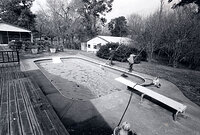
Thanks everyone for the great advice! Its so much more fun when there is so much more to learn. The possible premutation may drive some people crazy but I just love this kind of stuff!
 
Joined
Jan 21, 2003
Messages
15,715
Location
Switzerland
Format
Multi Format
Well, my point is not that each of those items have to be individually accounted for.

The point is that they cumulatively can make a big difference.

And that's precisely why we need to figure out for ourselves how to rate our film.

Sure, somebody else can tell us to start at 250, but then if we are interested in the best results, which I presume the OP is, (or they wouldn't be here asking), then you have to go see for yourself ANYWAY.

The idea is to save ourselves the trouble and just go do a fairly rudimentary speed test, and be done with it.
 

Nuff

Member
Allowing Ads
Joined
Feb 16, 2013
Messages
581
Location
Tokyo, Japan
Format
Multi Format
Thanks, where can I get that? I only have access to Ilford HC and LC29, though I do have my own supply of HC-110

I'm not sure if you are aware of it, but all 3 are the same developer. There might be slight difference between kodak and ilford. LC29 is a more diluted version of HC.
 

dorff

Member
Allowing Ads
Joined
May 31, 2011
Messages
443
Location
South Africa
Format
Multi Format
Well, my point is not that each of those items have to be individually accounted for.

The point is that they cumulatively can make a big difference.

And that's precisely why we need to figure out for ourselves how to rate our film.

Sure, somebody else can tell us to start at 250, but then if we are interested in the best results, which I presume the OP is, (or they wouldn't be here asking), then you have to go see for yourself ANYWAY.

The idea is to save ourselves the trouble and just go do a fairly rudimentary speed test, and be done with it.

Yes, you are quite correct. I misunderstood your initial post - apology for that. Somehow I think the OP was expecting the film and development to do it all for him, to get the result he wanted. Reality check later, I think he realises that the final image will take some work from the negative. As Ansel said: The negative is the score, the print the performance. One still has to perform it, somehow.
 

MattKing

Moderator
Moderator
Joined
Apr 24, 2005
Messages
55,290
Location
Delta, BC Canada
Format
Medium Format
That's why I asked what is the ISO when I shot at 320 but the EV is plus 1.

As for why I was unhappy, well honestly, the contrast was low and lacked the sparkle I always want.

For clarity, the ISO ("box") speed of a film is a measurement of how the film responds to certain conditions that can be replicated in a laboratory. They have a reasonable relationship with some real world conditions.

The Exposure Index ("EI") speed you use when metering is the speed you choose to take into account your real world circumstances. For many people, their personal EI is either the same as or close to the ISO speed of the film.

If your contrast is low and the film lacks sparkle, it sounds to me like the film is under-developed, not under-exposed. Try modifying your development time.
 

NedL

Subscriber
Allowing Ads
Joined
Aug 23, 2012
Messages
3,423
Location
Sonoma County, California
Format
Multi Format
Why not shoot at box speed and develop to what you find best?

I'm still a beginner, but this is what I've done over the past ~year with the two film types I use most. The best thing that happened to me was overdeveloping my FP4+ and seeing what happened... I liked printing them MORE. So instead of creeping up on the right amount of development, I went a too far and then backed off until it was "just right". It gives a feel for the whole set of things that happen when is overdeveloped: grain, contrast, separation in the highlights and shadows, overall density, etc. I'm glad I printed some under and over developed negatives because it gave me an overall feel for what's happening. And got me to negatives I'm happy with and are (usually) easy to print.

Reading this thread is really great. Matt and Thomas really lay out all the different things that make differences. I suspect metering technique is really a big factor, and might largely explain why we have to find our development times personally rather than just straight from the manufacturer's recommendations.
 

StoneNYC

Member
Allowing Ads
Joined
Aug 5, 2012
Messages
8,345
Location
Antarctica
Format
8x10 Format
The big boys here don't like you talking about scanning because it is in the traditional process and would prefer that you go over to DPUG for those issues, and I'm thinking that this is in fact the scanner issue.

I went through something similar trying to get TMY-2 to look good and also to shoot at 400 and I really couldn't do it for the longest time until I realized that my scanner wasn't interpreting the scene correctly for 400 speed films. And in fact the images were exposed properly and were exciting, it's just that the scanner wasn't working properly on auto mode and I had to do some manual adjustments, because the negatives looks fine, but the scan didn't seem to work right.

As a side point, scanners tend to read a negative differently then optically printing them, and often times like A thinner negative, which actually kind of contradicts what you did here. So I'm not sure about that whole thing.

I last point is, if you're shooting at 160 but using a 400 speed film, why not try something like FP4+ since that's closer to that ASA, it seems a little pointless to shoot a 400 speed film at 160...

Instead of driving yourself nuts, take a roll, shoot the entire thing, 15 shots at 400, and 15 shots at 160 with four shots in between of blanks (use your lens cap). Then in the dark cut the film and half, set-aside one half, well working with the other half cut that into three sections then develop each section with a different developing time one at standard listed time, and The other 2 at plus and minus the normal development listing times.

Then do the same thing with the second half cut it in three and develop each piece at a different time.

Daniel have examples of the film shot at what seems to be your preferred speed, and also at box speed with different development times. Perhaps then you'll have a better idea of what speed you prefer to shoot at and what development time you prefer to shoot at.

I know this is boring and tedious, but for four or five dollars and a few hours of your time, you could really get exact information on what you like to shoot and wouldn't have to worry about thinking about it anymore.

I dictated this using Siri on my iPhone, so if there's any strange wording that's probably why and I apologize.
 

Regular Rod

Member
Allowing Ads
Joined
Aug 6, 2012
Messages
665
Location
Derbyshire
Format
Medium Format
Well, I usually metered on area just above the shadows so I guess Zone 2


I'm sorry I missed your reply and have only just spotted it. If by "just above the shadows" you mean where you can see shadow detail then Zone 2 will be underexposing and will explain quite a lot of why you are not getting the results you are seeking. Try Zone 3 or even Zone 4 on those areas you have been metering, stick with ILFORD's box speed of 400 ISO and develop "normally". In other words keep everything standard but alter the Zone you are positioning your shadow detail on.

RR
 
Photrio.com contains affiliate links to products. We may receive a commission for purchases made through these links.
To read our full affiliate disclosure statement please click Here.

PHOTRIO PARTNERS EQUALLY FUNDING OUR COMMUNITY:


Ilford ADOX Freestyle Photographic Stearman Press Weldon Color Lab Blue Moon Camera & Machine
Top Bottom
