that last post of mine wasn't my best ever. If the range is comletely accounted for then there is not z10 -z12 to burn in
I still wonder if the clouds will become gritty upon burning in -not they NEED to be burned in- but for artistic reasons
If grain shows mostly in the darker tones and you darken some tones within in a cloud and the overexposure has already increased grain quite a bit it would seem to make for very grainy skies
The "Nuclear" highlights seen in many movies stem from overesposure of hard highlights causing halation with as little as 5 stops and with some form of diffusion on the lens
I was wondering when halation could begin to occur
if 5 stops over guarantees it then it may be seen slightly earlier in lesser form
and any error along the way from variable seen or unseen might push the overexposure into that range
but there was wiggle room given that should absorb any of this
still
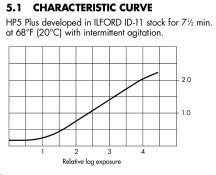
this "practical shoulder" I don't understand. There is the true shoulder of the film and this one of imortance in actual photography that acts as if a shouldering
don't know
and while ansel certainly did use d23 and knew it's strengths before moonrise
i don't believe he stood there while calculating the moons luminance or whatever that he's use d23 in the development
only afterards in order to save any overexposure of the moon
He knew what he had and used what he had judiciously
that is what is relevant
I've shortened the learning process by mentioning something that MIGHT work. no fiddling about with hudnreds of potential things ..just experimenting with one
and so while OP might not be worried about "saving"
there is still the optimization of the image and if it were truly an "important" shot like ansel thought of moonrise
I'm sure ansel would be thinking hard of how to lessen the effects of overexposure
NOT just "well, throw away snapshot cameras rely on the latititude of film to produce something on paper"
..even if he had HP5+ back then
it does seem an awful lot like settling ..perhaps that's all that can be done
ansel may have had lots of time and practice with such things
but it's not hard for the OP to test for speed loss, either
"I don't believe there is anything could be done to improve"
nobody has as of yet said anything about the effect of restrainers on speed/development
everyone knows there is speed loss associated wit htheir use
maybe contrat increases
but nobody has said anything of it here
if you could reduce emulsion speed by even 2 stops and simply develop for less time to account for any contrast gain
wouldn't you do it? for such an important photograph you -know- is overexposed by -at least- 4 stops?
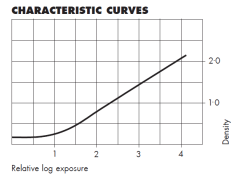
and I still don't buy the curve shape argument. compensated compressed highlights is one thing
but the rest
i don't think anyone truly cares when a different curve shape would rescue an image from nothingness
that's optimization talk
but again, nobody has yet disproven my idea for restrainer/speed loss for optimization
I was going to do a simplified test yesterday evening but my rear window shattered from a rock while out mowing the grass
and a little too windy
maybe this evening
looks like blue sky and clouds but might become too overcast