• Welcome to Photrio!
    Registration is fast and free. Join today to unlock search, see fewer ads, and access all forum features.
    Click here to sign up

Hoya X0 filter factor/compensation

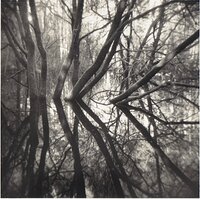
Flooded woodland

Flooded woodland

  • 4
  • 0
  • 29
Babylon

D
Babylon

  • 2
  • 1
  • 42

Recent Classifieds

Forum statistics

Threads
202,833
Messages
2,846,188
Members
101,556
Latest member
vk12
Recent bookmarks
0
In artificial light I checked my extra exposure needed with a Hoya XO on my P645N and it was one stop so a filter factor of 2 which is also what the camera says I need with a medium yellow filter so I'd conclude that a yellow -green XO Hoya filter needs at least a factor of 2 and possibly a little more

I'll have another try in daylight tomorrow and this time with both my P645N and MZ7

pentaxuser
 
That description replicates the old Wratten advice to use an 11 filter to correct "skintones" to a more natural look. Likewise, foliage in nature. That is due to the fact that pan films are slightly depressed in green sensitivity. The yellow component overcomes the excess blue sensitivity of most films.

As I mentioned earlier, TMax 100 is a little better balanced in both these respects, so a filter factor of only 2X (one stop compensation) seems to work best for an X0 filter in its case.
 
Last edited:
Comparing the values for "ND number (filter factor)" and "EV correction" for other filters on the Hoyafilter.com website makes it clear that the "ND filter factor" is the linear factor of light absorption or increase in exposure time, and the EV correction is the same thing in f-stops (logarithmic). For example, the yellow filter at https://hoyafilter.com/product/y2_pro_yellow/#specifications
is listed at filter factor 2x, EV correction 1 stop.

This is a normal way these terms are used, and there is no need to assume some complicated wavelength dependence or similar. It's just that the numbers on that website for the X0 filter are wrong. Which is too bad, but when one pair of numbers on a website differs from everything else known about filter factors, common sense suggests that there was a transcription error.
 
I just got an email reply from Hoya answering my question about their posted exposure factor of 1.2 for their X0 yellow-green filter. Or I should say "non-answer."

All Hoya would say is that the characteristics are very approximate and depend on the measurement conditions, and therefore may differ significantly from one manufacturer to another.

So if the specifications shown on their webpage are a mistake, they are not going to admit it. It might be interesting to check that page again in a few weeks and see if they correct it.
 
I just got an email reply from Hoya answering my question about their posted exposure factor of 1.2 for their X0 yellow-green filter. Or I should say "non-answer."

All Hoya would say is that the characteristics are very approximate and depend on the measurement conditions, and therefore may differ significantly from one manufacturer to another.
Maybe Hoya has a lot of retired politicians in their ranks of customer service and one of them cannot help reverting to type. Habits of a lifetime are difficult to shake off. Apparently Al Capone even when in prison had difficultly stopping himself reaching for an imaginary gun in his imaginary inside pocket šŸ˜„

pentaxuser
 
Disappointing reply but not unexpected. Many times customer service representatives really don’t know much about their product and give simplified responses that may not really answer the question or resolve the issue. The good news is that few will likely be seeking information on that specific filter.
 
Maybe Hoya has a lot of retired politicians in their ranks of customer service and one of them cannot help reverting to type. Habits of a lifetime are difficult to shake off. Apparently Al Capone even when in prison had difficultly stopping himself reaching for an imaginary gun in his imaginary inside pocket šŸ˜„

pentaxuser

That, or it's cheaper not to train people and not to maintain documentation.
 
Hoya has top notch quality control, no doubt with all their relevant internal standards documented; and if the X0 wasn't popular, they wouldn't have included it all these years in their rather limited selection of basic b&w contrast filters. Sadly, customer service in MOST corporations is an entry level phone pick-up position, or quickie web reply role, not requiring any real experience. You often have to get beyond that initial hurdle to get accurate answers from real engineers. Don't necessarily expect a "nuisance" question to get followed up, however.
 
Sadly, customer service in MOST corporations is an entry level phone pick-up position, or quickie web reply role, not requiring any real experience. You often have to get beyond that initial hurdle to get accurate answers from real engineers. Don't necessarily expect a "nuisance" question to get followed up, however.

Increasingly, it's a bot replying. They can really be ignorant (lacking knowledge or awareness in general; uneducated or unsophisticated).

Nuisance question or "nuanced" question? Both are likely true. :smile:
 
I tested my Hoya X0 filter with my Sekonic L-508 meter. I tried it with and without the filter over the 5Āŗ spot lens in reflected-light mode. I also tested it with the diffuser retracted in incident mode. I used it with the diffuser retracted so that the light falling on the sensor had to pass through the filter for the readings taken with the filter.

I found that the filtered readings varied from 0.5 stops to 0.7 stops less than the unfiltered readings. I suppose that the variation in readings is due to the range of different colors of light measured. For example, the filtered/unfiltered difference in reading green grass was different that the variation when reading light reflected from the wood of a weathered barn.

Regarding the Hoya data given in the following link,

https://hoyafilterusa.com/products/hoya-x0-yellow-green

The top line says

ā€œFilter Factor: 1.5 stops.ā€

This is a contradiction. Filter factors are not given in stops. A filter factor is a time multiplication factor to compensate for the light absorbed by the filter.

It should read ā€œFilter Factor: 1.5, 2/3 stops,ā€ or something like that, as a filter factor of 1.5 is approximately equivalent to 2/3 stops. That is consistent with the filtered/unfiltered differences I measured with my meter.

The data listed on the Hoya page in post #20 is confusing. It reads

ā€œND Number (Filter Factor) 1.2ā€

ND generally means neutral density. ND is not a filter factor. A neutral density number of 1.2 is equivalent to holding back 4 stops.

I’ve no idea what ā€œTransmittance EV correction 1/4-stopā€ means.
 
It would have been better if they had said, "filter correction" of 1-1/2 stops. Only 2/3 of a stop is unrealistic.

Meanwhile, neutral density is factored in logarithm mode. Every increment of .30 equates to one more stop (or EV). So that obviously can't correspond to that typo or whatever of 1.2 in the case of an X0 filter.

I've tested the X0 not only very carefully outdoors using a 1 degree spotmeter, gray card, and final bracketing comparison versus an unfiltered shot measuring the density of the developed film - I've also very critically used an expensive easel densitometer in the lab designed to be color neutral to measure projected 5000K light through the X0. It accurately reads within .01 density! The reading is taken at a specific dead-on focused angle, free of the sort of flare and cosine error one might get using casual metering. With TMax100 film, it's very close to a 1 EV shift (.30 density), with FP4, reasonably 1-1/3 EV, with Delta 100, 1-1/2 EV. I have several of these HMC X0 filters, all well cared for and unfaded, and the variation between them is negligible - only a few CC points.

Actual transmission might vary a few percent between the single-coated versus the multi-coated HMC version - again negligible when the lens is shaded.

But I still don't understand what all the confusion is about. For many years they've stated on lists accompanying the filter, or even on the plastic container, that the exposure offset for X0 is within that same very range. Why make a wild goose chase out of it?
 
Last edited:
Photrio.com contains affiliate links to products. We may receive a commission for purchases made through these links.
To read our full affiliate disclosure statement please click Here.

PHOTRIO PARTNERS EQUALLY FUNDING OUR COMMUNITY:


Ilford ADOX Freestyle Photographic Stearman Press Weldon Color Lab Blue Moon Camera & Machine
Top Bottom