• Welcome to Photrio!
    Registration is fast and free. Join today to unlock search, see fewer ads, and access all forum features.
    Click here to sign up

How to meter for flash when shooting a portrait or still life when using a old camera without hot shoe?

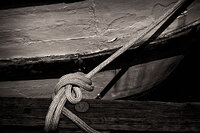
Tied to the dock

D
Tied to the dock

  • 4
  • 0
  • 51
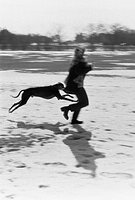
Running in the Snow

H
Running in the Snow

  • 1
  • 2
  • 61

Recent Classifieds

Forum statistics

Threads
203,081
Messages
2,849,591
Members
101,649
Latest member
fat-totoro-cat
Recent bookmarks
1
I hope I saw this earlier. I bought the wrong jack, 3.5mm, I am going to exchange it tomorrow for a 3.5mm.

Sorry, to clarify - the cable I use on my wireless sync has a generic "x-contact' plug on one end and 3.5mm jack on the other. The 2.5mm is what the wireless trigger needs, so I'm using a 3.5mm to 2.5mm adapter (which sucks, but it works most of the time at least). This is the whole 'setup':
1715150482127.png

X-sync contact to the left, the cable ends in a 3.5mm jack (90 degree angle), the thick stub is a 3.5mm female to 2.5mm male converter that plugs into the 'NiceFoto' (ain't that nice) generic wireless trigger.
 
Just a suggestion… it might be worth reading the manual for the flash under discussion. It long but quite informative and not as confusing as this thread.
 
Just a suggestion… it might be worth reading the manual for the flash under discussion. It long but quite informative and not as confusing as this thread.

I couldn't find the manual for the Godox V860II only the V860III. In the manual for the V860III I couldn't find the GN chart for each zoom settings.
 
I couldn't find the manual for the Godox V860II only the V860III. In the manual for the V860III I couldn't find the GN chart for each zoom settings.


Scroll down to "manuals".

I'm not sure if the information you cite is in there or not. I never understood the marketing of this brand of strobe, but I'm quite old skool in my usage/selection of strobes. I think part of the issue in this thread is a basic lack of knowledge of old skool flash techniques/options, and a strobe that only supports manual mode as an afterthought. Tehre are lots and lots of options available. But not always the basics, it seems. In skimming, I cannot find any information about connecting the strobe to a camera via pc cord, and the 2.5mm jack seems only described in the layout diagram. Definitely an opportunity for learning.

EDIT: Apparently this is all they think one needs to know about guide numbers - "GN60 (m ISO 100, @200mm). 22 steps from 1/1 to 1/128."

But with a flash meter, it really doesn't matter much in many situations.
 
Last edited:
Jason,
Your last response in post 25 still sounds a bit confused, in part due to assumption about some very old-time flash knowledge, so let me provide a bit of clarification...
  1. M-sync vs. FL-sync or X-sync..'synchronization' of flash: an electronic flash in synchronized to the opening of the shutter, no delay period is necessary for electronic flash, while M-sync bulbs and FL-synch bulbs need built-in timing considerations
  2. 'M' vs. Auto vs. nTTL ... deals with Exposure Automation of flash output:
    1. 'Manual' flash has no exposure automation at all, you need to set aperture of lens per some computation done by user;
    2. 'Auto' uses photosensor in the flash to stop light output when enough light has been reflected back from the subject.
    3. nTTL uses in-camera flash metering;
  • Bullet 1 mostly has no direct association with Bullet 2. nTTL flash automation is normally done via hotshoe with multiple electrical contacts in the shoe; but there are hotshoes with only 2-3 contacts, which are not camera TTL metered at all.
  • A camera can have a single flash sync socket, with a choice of M or X or FP sync setting via that contact; some cameras have a contact for one type of sync, and a different contract for another type of sync.
  • A sync cord like PC cord usually is for triggering a Manual power flash, or an Auto power flash, but cannot trigger a TTL-controlled flash with exposure automation.
At the camera side your cord will have a PC connector, and on the flash side the cord can have
  1. a hotshoe, into which the Godox hotfoot is inserted, or
  2. it can have the male end that fits into the Godox flash connector socket, or
  3. it can be connected to a radio remote flash trigger transmitter which triggers the Godox via radio signal
...but regardless, the Godox will only fire in Manual output setting because the camera has no flash automation control capability and the flash has no Auto mode photosensor.

The Guide Number for a zoom head is ordinarily stated (for marketing boasting) at the Longest FL setting of the zoom head, so knowing the GN does nothing for the user when the zoom head is used at any other zoom position, since Godox provides no table of GN values at different zoom FL (nor any table of GN values for fractional power settings in Manual output mode).

 
Last edited:
Yep.

At least it’s easy to verify and build a GN table with a flashmeter. If one really wants to use GN computation, that is.
 
Just a suggestion… it might be worth reading the manual for the flash under discussion. It long but quite informative and not as confusing as this thread.

Right. If the flash has a NON-CORD setting -- like mine does -- and the flash has a TEST button -- like mine does -- you don't need a camera or a cord. Just set the flash at 10 feet distance, fire the flash, and it will tell you the f-stop. Multiply by 10 and you have the GN for the ISO.
 
Yes MattKing & Chan Tran, that's why I think this question kind of borders with hybrid discussion a little since my flash is a modern one.

On Photrio, "hybrid" means part digital, and part non-digital.
How your flash works and connects on manual is the exact same question, whatever the capture technology. There isn't a hybrid issue here.
I would guess that everyone who has responded to this thread has worked with all three of manual exposure flashes, camera controlled automatic exposure flashes, and the now slightly more rare flash circuitry controlled automatic exposure flashes.
And for at least some, the experience with manual exposure flashes included experience with flash bulbs!
This site might give you a sense about how varied the world of connecting flashes to cameras has been in the past: https://paramountcords.com/product-category/sync-cords/standard-sync/
And the selection on that Paramount Cord site is greatly reduced from what it once was.
 
Jason,
Your last response in post 25 still sounds a bit confused, in part due to assumption about some very old-time flash knowledge, so let me provide a bit of clarification...
  1. M-sync vs. FL-sync or X-sync..'synchronization' of flash: an electronic flash in synchronized to the opening of the shutter, no delay period is necessary for electronic flash, while M-sync bulbs and FL-synch bulbs need built-in timing considerations
  2. 'M' vs. Auto vs. nTTL ... deals with Exposure Automation of flash output:
    1. 'Manual' flash has no exposure automation at all, you need to set aperture of lens per some computation done by user;
    2. 'Auto' uses photosensor in the flash to stop light output when enough light has been reflected back from the subject.
    3. nTTL uses in-camera flash metering;
  • Bullet 1 mostly has no direct association with Bullet 2. nTTL flash automation is normally done via hotshoe with multiple electrical contacts in the shoe; but there are hotshoes with only 2-3 contacts, which are not camera TTL metered at all.
  • A camera can have a single flash sync socket, with a choice of M or X or FP sync setting via that contact; some cameras have a contact for one type of sync, and a different contract for another type of sync.
  • A sync cord like PC cord usually is for triggering a Manual power flash, or an Auto power flash, but cannot trigger a TTL-controlled flash with exposure automation.
At the camera side your cord will have a PC connector, and on the flash side the cord can have
  1. a hotshoe, into which the Godox hotfoot is inserted, or
  2. it can have the male end that fits into the Godox flash connector socket, or
  3. it can be connected to a radio remote flash trigger transmitter which triggers the Godox via radio signal
...but regardless, the Godox will only fire in Manual output setting because the camera has no flash automation control capability and the flash has no Auto mode photosensor.

The Guide Number for a zoom head is ordinarily stated (for marketing boasting) at the Longest FL setting of the zoom head, so knowing the GN does nothing for the user when the zoom head is used at any other zoom position, since Godox provides no table of GN values at different zoom FL (nor any table of GN values for fractional power settings in Manual output mode).

Thank you so much for clarifying. I was indeed confused but your answer really sums it up well and thank you so much.
 

Scroll down to "manuals".

I'm not sure if the information you cite is in there or not. I never understood the marketing of this brand of strobe, but I'm quite old skool in my usage/selection of strobes. I think part of the issue in this thread is a basic lack of knowledge of old skool flash techniques/options, and a strobe that only supports manual mode as an afterthought. Tehre are lots and lots of options available. But not always the basics, it seems. In skimming, I cannot find any information about connecting the strobe to a camera via pc cord, and the 2.5mm jack seems only described in the layout diagram. Definitely an opportunity for learning.

EDIT: Apparently this is all they think one needs to know about guide numbers - "GN60 (m ISO 100, @200mm). 22 steps from 1/1 to 1/128."

But with a flash meter, it really doesn't matter much in many situations.

So the guide number is 60. and Thanks for the Godox manual links!
 
So the guide number is 60. and Thanks for the Godox manual links!

And that is a GN for distance measured in Meters...the equivalent for distance in Feet = 196
and both apply ONLY when the Godox zoom head is set for the longest FL lens.
 
Well the GN was for the time when a flash meter is a rarity.

Yes, and having a flash meter -- or ANY hand held meter -- still is a relative rarity for all but pro shooters or serious amateurs, because of reliance upon nTTL flash metering taking care of exposure for the typical person. and even those who wish to understand flash is an equally rare beast these days,exemplified with the amount of discussion on forums having fallen off a cliff since the 2000-2010 decade.
 
And that is a GN for distance measured in Meters...the equivalent for distance in Feet = 196
and both apply ONLY when the Godox zoom head is set for the longest FL lens.

And when you use it for the GW690 you don't set the flash at that zoom setting and thus the GN 60/196 is useless information for the OP.
 
And when you use it for the GW690 you don't set the flash at that zoom setting and thus the GN 60/196 is useless information for the OP.

And IF the OP attempted to set the zoom head FL to match what is on the GW690, using the 'same number' would be WRONG...
24mm on the flash zoom head would only be useful for 56mm FL lens on the GW690...a wide angle lens for both formats.
50mm on the flash zoom head would only be useful for about 110mm FL on the GW690...a 'normal' angle lens for both formats.
 
And IF the OP attempted to set the zoom head FL to match what is on the GW690, using the 'same number' would be WRONG...
24mm on the flash zoom head would only be useful for 56mm FL lens on the GW690...a wide angle lens for both formats.
50mm on the flash zoom head would only be useful for about 110mm FL on the GW690...a 'normal' angle lens for both formats.

And I couldn't find the GN for 50mm listed. Not so useful manual for the purpose.
 
GN hasn’t really been an extremely useful concept since the days of flash bulbs. Only a very few of us seem to still use them.
 
And IF the OP attempted to set the zoom head FL to match what is on the GW690, using the 'same number' would be WRONG...
24mm on the flash zoom head would only be useful for 56mm FL lens on the GW690...a wide angle lens for both formats.
50mm on the flash zoom head would only be useful for about 110mm FL on the GW690...a 'normal' angle lens for both formats.

24mm setting would be perfectly useful, it just wastes some light outside the angle of view.
 
GN hasn’t really been an extremely useful concept since the days of flash bulbs. Only a very few of us seem to still use them.

I don't use the GN any more since I was a kid. I did use it back when I was like 10 or 11. I can estimate the setting pretty well with my flashes intutively without doing any calculation even with bounce flash. However, if I were to use the GW690 I would certainly use the flash meter as I can't readjust and reshoot like a digital. I wouldn't trust the published GN any way.
 
I wouldn't trust the published GN any way.

That's your choice. I've tested my Vivitar 283 flashes and they all are very slightly above the stated GN. It's a good idea for anyone, who has a flash meter, to test their flash units to see how powerful their flashes really are. You might be surprised. Of course, that assumes that your flash meter is accurate, and used correctly.
 
Before you go too far down this rabbit hole, you should clarify how you intend to use the flash.

If you intend to use the flash on the camera for taking quick shots on the go, then this setup won't work at all. The problem is that flash meters need to be held at your subject position to take a reading, which requires that both the camera and flash unit need to be on a tripod or stand. This is fine for studio work, but isn't useful for taking pictures hand held while you're moving around. This is because the flash meter reading with incident meters must be taken at the subject distance from the flash. These meters don't take reflected light readings for flash, so you can't really shoot quickly.

If you do want to have the flash mounted on the camera while you're moving around, then your best bet would be to buy an older used flash that has an automatic mode, and a sync cable. Older flashes that have an automatic mode achieve this by having a light sensor in the flash unit. That sensor reads the light that's reflected from the subject, and then cuts the output when the correct exposure is achieved. You set the f stop on the lens at a fixed setting depending on film speed. This allows you to take quick candid or rapid shots. It's more complicated than that, but that's the basic difference.
 
My Sekonic 308X-U, likely the most common recent flash meter due to it's price has both incident and reflected readings.
 
Photrio.com contains affiliate links to products. We may receive a commission for purchases made through these links.
To read our full affiliate disclosure statement please click Here.

PHOTRIO PARTNERS EQUALLY FUNDING OUR COMMUNITY:


Ilford ADOX Freestyle Photographic Stearman Press Weldon Color Lab Blue Moon Camera & Machine
Top Bottom