


As I’m just starting out in photography as a hobby, one of the first things people here on the site recommended that I learn was the infamous photographic composition. On my first roll of film, I couldn’t get away from the famous rule of thirds I used it for practically everything, even portraits and stuff like that. But I know photographic composition goes far beyond that. For example, whenever I ask for examples here on the site or browse through this forum, I see countless photos and almost never manage to identify the composition the person used. Sometimes I even feel like there wasn’t much effort put into composition at all the photo already looks beautiful the way it was taken... I’d like to know how I can train this skill and become good at it, move beyond the rule of thirds, understand when and how to use different compositions, and avoid making ‘boring’ photos like the ones I feel I’m making, you know? I’d also like to know if it’s possible to look at a scene and instinctively know what the best composition would be. Recommendations for books, videos, articles, or study materials would be incredibly valuable for helping me start learning, and of course, hearing about everyone’s experiences helps even more.
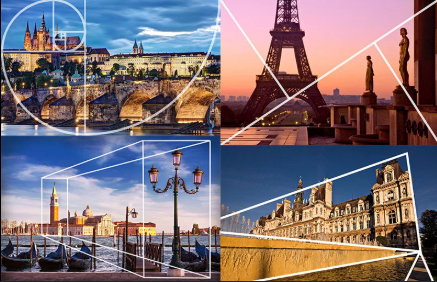
-
Welcome to Photrio!Registration is fast and free. Join today to unlock search, see fewer ads, and access all forum features.Click here to sign up
You are using an out of date browser. It may not display this or other websites correctly.
You should upgrade or use an alternative browser.
You should upgrade or use an alternative browser.
How to improve in photographic composition?
-
A
- Thread starter Pedroga
- Start date
Recent Classifieds
-
For Sale Hasselblad X Pan w/ 45mm/f4 Lens
- Started by eftones
-
For Sale 6 antique French pneumatic shutters _ Guerry
- Started by Manual Camera
-
For Sale Voigtländer Nokton Classic 35mm/1.4 with Leica M-mount
- Started by Klaus Mähring
-
For Sale Voigtländer Bessa R2 Special Edition Olive Green
- Started by Klaus Mähring
-
For Sale FS: Horseman Cable Release
- Started by B.S.Kumar
Forum statistics
agentlossing
Member
Maybe it's just me, but these compositional overlays make me queasy whenever I see them. I think the best thing you can do is to buy photobooks (or check them out from the library) and find which images impact you, then try to figure out why they do. Sometimes it'll be compositional, other times it'll be the content. And, like all communication (a photo is a communication), the intent of the speaker and the resulting understanding of the hearer are different, due to the imperfection of language. This holds true for visuals, too. What you see is influenced by your experiences and history. In fact, good art means different things to different people, and it's hard to predict what an image will mean to anyone else. The photographers and photobooks which have stood the test of time often do so because their photos can be interpreted multiple ways.
A couple of my favorites are Frank's The Americans and Evans's American Photographs. They exist in a dialogue with each other (or, Frank's was partly inspired by Evans's), so I like to think they go hand in hand.
A couple of my favorites are Frank's The Americans and Evans's American Photographs. They exist in a dialogue with each other (or, Frank's was partly inspired by Evans's), so I like to think they go hand in hand.
Last edited:

Pieter12
Member
Look at good art, look at good photos--a lot. You will gradually absorb what makes compositions good, it will become second nature. The go break the rules.
Last edited:

When I talk to people about "rules" of composition, I like to stress that those so-called rules:
1) are best thought of as guides, not rules; and
2) are the result of an inductive, not deductive process.
By the latter, I mean that they came into being after many people, over a long period of time, looking at a lot of photographs, noticed patterns of arrangements that seemed to frequently be examples of satisfying arrangements.
So from that, In suggest to people that if they are struggling with a scene, see if any of those familiar types of patterns can be found in your scene, and if the result is a satisfying presentation for you - does it match your intention and vision.
Don't hesitate to learn those rules/guides, and then see what happens if you intentionally break them.
It is also interesting to examine other cultures and geographical areas, where the rules can be different!
1) are best thought of as guides, not rules; and
2) are the result of an inductive, not deductive process.
By the latter, I mean that they came into being after many people, over a long period of time, looking at a lot of photographs, noticed patterns of arrangements that seemed to frequently be examples of satisfying arrangements.
So from that, In suggest to people that if they are struggling with a scene, see if any of those familiar types of patterns can be found in your scene, and if the result is a satisfying presentation for you - does it match your intention and vision.
Don't hesitate to learn those rules/guides, and then see what happens if you intentionally break them.
It is also interesting to examine other cultures and geographical areas, where the rules can be different!

Franswa
Subscriber
It's good to understand that the combination of our eyes and brain do not at all work like the combination of a camera and its respective lenses. If you are visually drawn to a particular subject or scene you can stop to observe why and take those observations and try to apply them in a photographic way. You are essentially taking a 3 dimensional subject and transforming it into a 2 dimensional medium. The image has to coax the eyes and brain to do more work to get the same satisfaction as viewing it with your eyes in real life.
Pieter12
Member
It's good to understand that the combination of our eyes and brain do not at all work like the combination of a camera and its respective lenses. If you are visually drawn to a particular subject or scene you can stop to observe why and take those observations and try to apply them in a photographic way. You are essentially taking a 3 dimensional subject and transforming it into a 2 dimensional medium. The image has to coax the eyes and brain to do more work to get the same satisfaction as viewing it with your eyes in real life.
That is why it is best to compose looking through the camera viewfinder. There you will be restricted to a single-eye point of view, plus the borders or edges that delineate the composition. Alternatively, you can use a pice of cardboard that is the same dimension as your film, closing one eye. Looking at the scene through your hands will work, too.

cliveh
Subscriber
- Joined
- Oct 9, 2010
- Messages
- 8,001
- Format
- 35mm RF
As Matt points out you should not think in terms of rules of composition, but as guides. I would like to think that after taking many photographs, good composition becomes an intuitive skill. It can also help to view the image upside down. When looking at a print, if you think the composition works, turn it upside down and if it still works, then usually the general composition has something going for it.
Mike Lopez
Member
- Joined
- Jan 30, 2005
- Messages
- 693
- Format
- Multi Format
That is why it is best to compose looking through the camera viewfinder. There you will be restricted to a single-eye point of view, plus the borders or edges that delineate the composition. Alternatively, you can use a pice of cardboard that is the same dimension as your film, closing one eye. Looking at the scene through your hands will work, too.
Do you also look at the finished photograph with one eye closed? A waist-level finder (or ground glass) allows one to compose with both eyes open, which I prefer by far. It’s subtle, but the differences are there.

snusmumriken
Subscriber
This. Also get in the habit of taking the same photo with varying compositions, and decide later which one you prefer. You don't need to be able to analyze the geometry or explain why it works in words: you will just recognise that it does (or doesn't!).Look at good art, look at good photos--a lot. You will gradually absorb what makes compositions good, it will become second nature.
Pieter12
Member
Do you also look at the finished photograph with one eye closed? A waist-level finder (or ground glass) allows one to compose with both eyes open, which I prefer by far. It’s subtle, but the differences are there.
No need to. It is already seen as a 2-dimensional image. And looking at the ground glass, you are seeing a 2-dimensional image, same as the resulting photo. Both points of view eliminate the 3-D, steroescoping view that the camera doesn't capture. Needless to say stereoscopic cameras are another thing entirely.

I started photography to improve my painting composition and got severely distracted.
The main thing I do to improve composition is to try and ask myself why I don't like bits of my photos (and less often, why I do).
What I would say though, in photography especially, I find formal composition rules largely pointless. Our eyes find patterns everywhere. You'll find golden ratios, and rules of thirds everywhere if you search hard enough, and they rarely add much for me.
The only "rule" I find useful is that if you have a specific subject in mind for a given xcene, do *something* to separate it. Can be DoF, placement, extreme focal lengths, colours, light. We have lots of options, but the goal, sometimes is to highlight the subject (sometimes including context, sometimes not).
But not every photo needs a subject.
I guess for ne the formal rules don't help, but learning to trust my gut reaction works better.
The main thing I do to improve composition is to try and ask myself why I don't like bits of my photos (and less often, why I do).
What I would say though, in photography especially, I find formal composition rules largely pointless. Our eyes find patterns everywhere. You'll find golden ratios, and rules of thirds everywhere if you search hard enough, and they rarely add much for me.
The only "rule" I find useful is that if you have a specific subject in mind for a given xcene, do *something* to separate it. Can be DoF, placement, extreme focal lengths, colours, light. We have lots of options, but the goal, sometimes is to highlight the subject (sometimes including context, sometimes not).
But not every photo needs a subject.
I guess for ne the formal rules don't help, but learning to trust my gut reaction works better.

Excellent question and excellent responses! I agree with pretty much everything that's been said so far.
There's one thing I'd like to add: if you can, find a tutor of some sort. Someone who is willing to give you honest feedback and guidance. It's also practically the most difficult bit of advice, I admit.
There's one thing I'd like to add: if you can, find a tutor of some sort. Someone who is willing to give you honest feedback and guidance. It's also practically the most difficult bit of advice, I admit.
Mike Lopez
Member
- Joined
- Jan 30, 2005
- Messages
- 693
- Format
- Multi Format
No need to. It is already seen as a 2-dimensional image. And looking at the ground glass, you are seeing a 2-dimensional image, same as the resulting photo. Both points of view eliminate the 3-D, steroescoping view that the camera doesn't capture. Needless to say stereoscopic cameras are another thing entirely.
I'm not talking about 2-D vs. 3-D, stereoscopes, or any of that. Try this experiment. Look at something out in front of you, ideally a scene with at least two or more vertical elements. Look at it with one eye closed. Now close the open eye, and open the other. Do this back and forth several times. You will (or should) notice that the spatial relationship between the vertical elements oscillates, as rapidly as you can toggle your eyes opening and closing. Which perspective is correct?
Now look at the same scene with both eyes open. Try it!
Pieter12
Member
I'm not talking about 2-D vs. 3-D, stereoscopes, or any of that. Try this experiment. Look at something out in front of you, ideally a scene with at least two or more vertical elements. Look at it with one eye closed. Now close the open eye, and open the other. Do this back and forth several times. You will (or should) notice that the spatial relationship between the vertical elements oscillates, as rapidly as you can toggle your eyes opening and closing. Which perspective is correct?
Now look at the same scene with both eyes open. Try it!
Both are "correct." Looking with just one eye robs you of depth perception, effectively making the scene 2-D, as the camera sees. As far as the change in relative perspective between the eyes, that is due to the distance between your eyes. Moving the camera that same amount will give you the same views.

Vaughn
Subscriber
Learn from one's mistakes. Look at one's own photographs, especially the ones that did not work. Figure out why they don't work. Not always easy as we carry the memories of making the image, and/or are tied emotionally to the subject.
When the subject becomes primary, composition can falter if it does not support the subject.
When the subject becomes primary, composition can falter if it does not support the subject.

4season
Member
- Joined
- Jul 13, 2015
- Messages
- 2,240
- Format
- Plastic Cameras
I make a lot of boring photographs, and I think it's an unavoidable part of becoming a better photographer. I can understand matters of composition at a superficial level pretty quickly, but true understanding can take a lot longer. Sometimes I have an image in my mind, and it can take many attempts (years, even) before I'm able to express it to my satisfaction.
BTW, is it just me, or do the OP's examples of composition seem odd? The only one which really makes sense to me is the one in the lower right hand corner, while the Golden Spiral example in particular feels forced.
BTW, is it just me, or do the OP's examples of composition seem odd? The only one which really makes sense to me is the one in the lower right hand corner, while the Golden Spiral example in particular feels forced.
agentlossing
Member
feels forced.
Those overlays always feel forced to me.
Mike Lopez
Member
- Joined
- Jan 30, 2005
- Messages
- 693
- Format
- Multi Format
Both are "correct." Looking with just one eye robs you of depth perception, effectively making the scene 2-D, as the camera sees. As far as the change in relative perspective between the eyes, that is due to the distance between your eyes. Moving the camera that same amount will give you the same views.
Then which of the two “correct” views corresponds to what the camera sees? Neither one does.
I suspect we aren’t going to agree on the distinction here, and that’s fine.
Pieter12
Member
Then which of the two “correct” views corresponds to what the camera sees? Neither one does.
I suspect we aren’t going to agree on the distinction here, and that’s fine.
The camera sees what you do when looking through the viewfinder.

oneeyedpainter
Member
Agree with most of the comments in this interesting thread. I would also suggest to the OP to consider that most of the most famous, acclaimed and studied photographers had shot 100, 200 or 500 times more pictures than their few dozens or few hundreds that became immortal. So practicing shooting (and wasting film) and criticising your own work is an essential part of the journey.
I guess the other good ingredient is humility, and the ability to analyse some truly honest feedback from more experienced photographers (which is normally harsh, and could hurt a bit, if it is truly honest and constructive), and take it on board. I think the Critique forum in here is a good venue for that, provided that the OP is ready to see their pictures shredded to pieces (both figuratively and practically ). It's a great exercise, TBH.
I would probably avoid strict rules, but having some basic grasp of light, tones/colours, contrast, focus, DOF, shapes, space, lines, balance, movement, etc. is somehow essential, as composition in photography ultimately results from the interplay of those elements.
Oh, and do not forget to keep it FUN!
OneEyedPainter
I guess the other good ingredient is humility, and the ability to analyse some truly honest feedback from more experienced photographers (which is normally harsh, and could hurt a bit, if it is truly honest and constructive), and take it on board. I think the Critique forum in here is a good venue for that, provided that the OP is ready to see their pictures shredded to pieces (both figuratively and practically
). It's a great exercise, TBH.I would probably avoid strict rules, but having some basic grasp of light, tones/colours, contrast, focus, DOF, shapes, space, lines, balance, movement, etc. is somehow essential, as composition in photography ultimately results from the interplay of those elements.
Oh, and do not forget to keep it FUN!
OneEyedPainter
Paul Howell
Subscriber
My wife graduated from a very good art school in the late 60s, she has the intuitive eye, had it before she started art school, while in middle and high school had school she understood composition. Art school allowed her to explain it. I minored in photojournalism which did offer much in way of advanced composition, not all that important when covering braking news. When I met my wife she had me take a class in art history which helped me understand landscapes (travel) portraits then cubism expressionism, and abstract expressionism when to brake the rules.

What I reckon.
Pick your subject.
Bend your knees or raise your height, taking pictures at eye level is too restricted.
Avoid square on shots unless it's necessary. Angles work better.
Work your foreground, mid ground and background into the shot.
Check your corners in the frame lines, work out what should be there and what shouldn't.
Move around, your initial view can always be improved on.
Take lots of pictures, practice.
Like what you do and you'll probably find others like it to.
Pick your subject.
Bend your knees or raise your height, taking pictures at eye level is too restricted.
Avoid square on shots unless it's necessary. Angles work better.
Work your foreground, mid ground and background into the shot.
Check your corners in the frame lines, work out what should be there and what shouldn't.
Move around, your initial view can always be improved on.
Take lots of pictures, practice.
Like what you do and you'll probably find others like it to.

Alan Edward Klein
Member
Our brains remove the clutter and assemble the 3D picture to look just right in our minds. That process is lost in the camera in 2D. Slow down, and see the view in the viewfinder from different angles to get the right one. Later, post your picture for honest critique, letting people crop and change and make recommendations.
Mike Lopez
Member
- Joined
- Jan 30, 2005
- Messages
- 693
- Format
- Multi Format
The camera sees what you do when looking through the viewfinder.
Except for when it doesn’t. Here’s an example I found while eating dinner at a food cart patio tonight. See that rock peeking out between the legs of this stool, with the little triangle of light above it? The camera (my phone) saw it. I saw it when looking at the phone with both eyes open, and of course I saw it without the phone in hand. But when I closed my left eye, the space between the legs appeared to be reduced and the rock/triangle vanished from view. Had I looked through a traditional viewfinder with my right eye only and taken this picture, I would have had no idea the rock/triangle were there until I found them on the negative. As I’ve said, this is subtle, but the distinction is there. And I don’t like finding surprises on my negatives, which is why I like using both eyes to compose. YMMV.

Hassasin
Member
There are no rules in composition, these are for authors to make up books and profit from, or schools to make up their curriculums (without which they could not function) To put it another way - for every "rule" there are multiple examples of it broken.
Rules don't help - they restrict.
Successful photograph is one that leaves lasting impact, regardless of how it "complied" with any supposed compositional rule.
Look at photographs (web is all you need these days), can start looking up some key names in photography of whichever genre you're interested in (but preferably of every kind), and see what you appeals to you - these are all the "rules" you will ever need - the direct visual impact a photograph has on you. This is how you will develop your own photographer's eye. It takes time, which is helped immensely in this digital age of instant results.
Having said all that - rule of thirds always works. Meaning - if in doubt - use it. If you examine many of the existing and well known photographs you will indeed have noticed that the thirds are rather universally applied in lots of them. With time the use of it becomes automatic and hardly part of deliberations.
Rules don't help - they restrict.
Successful photograph is one that leaves lasting impact, regardless of how it "complied" with any supposed compositional rule.
Look at photographs (web is all you need these days), can start looking up some key names in photography of whichever genre you're interested in (but preferably of every kind), and see what you appeals to you - these are all the "rules" you will ever need - the direct visual impact a photograph has on you. This is how you will develop your own photographer's eye. It takes time, which is helped immensely in this digital age of instant results.
Having said all that - rule of thirds always works. Meaning - if in doubt - use it. If you examine many of the existing and well known photographs you will indeed have noticed that the thirds are rather universally applied in lots of them. With time the use of it becomes automatic and hardly part of deliberations.
| Photrio.com contains affiliate links to products. We may receive a commission for purchases made through these links. To read our full affiliate disclosure statement please click Here. |
PHOTRIO PARTNERS EQUALLY FUNDING OUR COMMUNITY:  |