• Welcome to Photrio!
    Registration is fast and free. Join today to unlock search, see fewer ads, and access all forum features.
    Click here to sign up

How to get grain-free black and white negatives?

Emi on Fomapan 400

A
Emi on Fomapan 400

  • 1
  • 0
  • 8
Venice

A
Venice

  • 0
  • 0
  • 55

Recent Classifieds

Forum statistics

Threads
201,795
Messages
2,830,262
Members
100,952
Latest member
pcwelch
Recent bookmarks
0

Ian Grant

Subscriber
Allowing Ads
Joined
Aug 2, 2004
Messages
23,409
Location
West Midland
Format
Multi Format
The response will probably be something like "that's what I meant all along". Yeah sure. Among the other statements made earlier: The real speeds of the TMax films are lower than their ISO ratings (as opposed to other films), etc.

Not so predictable.

My response is that people like Stephen Benskin and Bill Burk accept that there are variations between personal EI's and the box ISO speeds. As Bill points out a slight change in development leads to a significant drop in speed.

When Kodak released Tmax 100 & 400 they were fully aware that at box ISO shadow detail could be lacking, they went so far as to announce from the outset that they were introducing new developers that would significantly improve this, Tmax developer was the first and then Xtol. You use the word conspiracy but that would mean hiding facts away from the public which Kodak never did, they were quite open about it, there was no secrecy..

Tmax 100 & 400 are great films, that's why I used them for about 20 years, however they need more careful controls than conventional films because they are far more responsive to slight variations in development times, temperature, agitation etc than conventional films like Tri-X, FP5, HP5 etc.

On the subject of ZS EIs differing from ISO speeds by predictable amounts, I'd have to ask why you think that would/should not be the case. If one compares the speed measurement criteria of the two methods, it makes sense there should be a relatively constant difference between the ISO speed and ZS EI.

On more than one occasion I've pointed out to you that there's no predictable differences between Zone system EI's and box ISO speeds, in theory you might expect a correlation between the two but it doesn't exist.

The answer is very simple, despite there being a current ISO standard not all films have been tested the same way by the manufacturers to determine box ISO.. Agfa always used the DIN methodology which was also part of the ISO standard when their films were released. EFKE probably used the DIN method as well but put the Tungsten ISO on the boxes rather than the higher Daylight ISO. Kodak use the ASA standard which was changed to allow the manufacturers to choose what developer they used for their tests. That in itself introduces a significant variable factor.

Ian
 
Joined
Jan 7, 2005
Messages
2,739
Location
Los Angeles
Format
4x5 Format
On more than one occasion I've pointed out to you that there's no predictable differences between Zone system EI's and box ISO speeds, in theory you might expect a correlation between the two but it doesn't exist.

I'm going to have to disagree with you on this. Not that I'm questioning your personal results, but most Zone System practitioners find their EIs fall between 1/2 to 1 stop below the ISO speed. It's so common that there's even a manta of "half the box speed". This correlates with what one would expect from the differing methodologies and explains why there was much more agreement between the two methods prior to the 1960 change in the standard.

The answer is very simple, despite there being a current ISO standard not all films have been tested the same way by the manufacturers to determine box ISO.. Agfa always used the DIN methodology which was also part of the ISO standard when their films were released. EFKE probably used the DIN method as well but put the Tungsten ISO on the boxes rather than the higher Daylight ISO. Kodak use the ASA standard which was changed to allow the manufacturers to choose what developer they used for their tests. That in itself introduces a significant variable factor.

I agree that not using a single developer for the standard reduces the ability to do a direct comparison between films, but the situation with the T-Max films illustrated the shortcomings of this approach and facilitated the re-evaluation of the standard. The advantages of the change is that the test results better reflect usage.

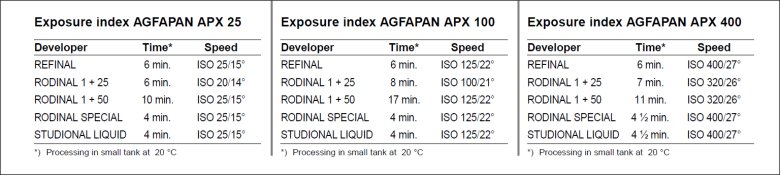
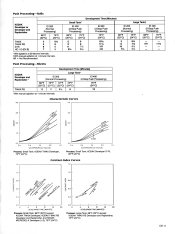
Two of the purposes of the standards is communication and standardization. If the ISO prefix is used, the film was tested under the conditions stated in the standard. So we know what's in the standard and the manufacturer tells us that they adhered to the standard. This should eliminate any conspiracy theories. When the ISO isn't used is when you need to read the fine print (as with TMZ and Delta 3200). The following example is from an Agfa datasheet.

Agfapan ISO Speeds.jpg

It looks like Agfa did ISO testing using a number of different developers. The type of developer is stated as well as the processing method: small tank at 20 degrees C. The ISO prefix means they are not using the old DIN. DIN was never part of the ISO standard. The logarithmic speed indication is not DIN. It's there for meters that use logarithmic speeds. There was a time when manufacturers would include both ASA and DIN speeds, but these had the ASA and DIN prefixes.

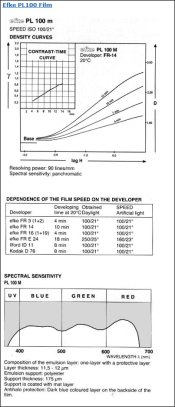
Efke PL100 ISO Data.jpg

Here Efke PL 100 has an ISO 100. They do have a chart with daylight and artificial light speeds for different developers, but they don't include the ISO prefix so I assume they followed the standard with the film testing but not the degree of sampling necessary to use ISO. I was somewhat surprised at the lack of red sensitivity in some of their films (although not the PL 100). They were almost orthochromatic. For these films, an EI chart for artificial light would be very useful.
 

Ian Grant

Subscriber
Allowing Ads
Joined
Aug 2, 2004
Messages
23,409
Location
West Midland
Format
Multi Format
Stephen, the ISO tests allowed manufacturers to use either the ASA, BS or DIN tests, and has done since 1974. Where the confusion arises is the DIN methods are not valid the US or the UK which have to use the ASA/BS component of the ISO standard for testing film speed.

Just checking and my films are all marked with the ISO speed as you say but that is marked as ISO 400 / 27º, ISO 200 / 24º, ISO100 / 21º etc

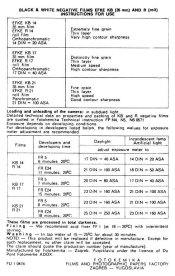
EFKE improved their films slightly, I've not used the PL100 although I have some I bought last year, they may have improved the red sensitivity . This is the datasheet from the first EFKE films I used back around 1975, before they changed the names to the ASA equivalents:

attachment.php


Ian
 

Attachments

  • adox-Efke.jpg
    adox-Efke.jpg
    93.5 KB · Views: 273

Ian Grant

Subscriber
Allowing Ads
Joined
Aug 2, 2004
Messages
23,409
Location
West Midland
Format
Multi Format
Michael, the ISO and EI are both film speed, ISO is the one on the box and the other the Exposure Index is the actual speed rating that the user has determined or in some cases recommended by the film or developer manufacturer.

Nobody has presented any evidence supporting the assertion the TMax films in particular perform better when rated lower than ISO speed, in comparison to other films with the same ISO speeds. When I plot curves for the TMax films relative to Tri-X, FP4 Plus, Delta 100 and Acros, I see no sensitometric evidence of the TMax films being slower.

Read the articles by John Sexton, Howard Bond and many others, highly respected photographers an authors. It's also important to remember that films change and evolve. I've not bought any Kodak films since 2007 when I switched back to Ilford, I didn't particularly want to switch but I had problems getting any Kodak B&W films while living & traveling abroad, Ilford and Foma are/were easy to find.

So my comments on using Tmax 100 & 400 are based on usage between 1986 and 2007, if I used them again I would re-test them for my personal EI as both films have changed, particularly TMax 400 - TMY-2 which I've never used.

No matter who makes the films you use it's important to do your own testing to determine what EI works best for you in your chosen developer. If you don't do tests it's still possible to fine tune your EI as suggested by Kodak themselves in the original 1986 and current 2007 datasheets.

Ian
 

Bill Burk

Subscriber
Allowing Ads
Joined
Feb 9, 2010
Messages
9,463
Format
4x5 Format
...but what drops when development is reduced is an EI, not speed. When an EI is determined using a fixed density criterion (Zone System for example), it will always vary directly with development. Develop to lower contrast, and EI declines. This is not necessarily the case when it comes to "speed". Speed has to do with the 'shadow' gradient in relation to the overall gradient...

Yes that's right. EI as judged by the 0.1 speed point is what falls in my graph from 100 "almost 125" to 50 "almost 64" with 60% of normal development.

What I like most about graphs is that any discussion of speed related to that graph, is an interpretation of that graph. You can project the graph on a whiteboard and draw shadow points and highlight points on it as you discuss what speed you might propose to use and what development you might give it... to get the kind of negatives you like. During that discussion when you decide on your EI... the curves don't change as you talk about them. At the end of the discussion, the graphs go back into the lab notebook unchanged.

The graph is what the film does. It's locked down. EI is where you want to put your exposures on the film. It can move around.

Speed, as you've described Stephen, relates to the "Minimum Useful Gradient" (0.3 times the average gradient between two points separated buy 1.5 log exposure units). I know you prefer to use Delta-X to find this point. And this definition of speed was found to correlate to the print studies. As a gauge of the fastest speed you can shoot a scene to get an excellent print... it's the definitive standard because it ties sensitometry to prints judged by viewers.

Ian, we can easily predict two-thirds stops difference between "Minimum Useful Gradient" and "Zone System". What we can't predict about "Zone System" speeds... is the impact of the spectrum of light chosen and the shutter performance in traditional tests.

And if you choose to place exposures above the minimum, because you want to have better shadow separation, then you are applying a different quality standard... And a lower EI will make your negatives better in that respect.
 
Joined
Jan 7, 2005
Messages
2,739
Location
Los Angeles
Format
4x5 Format
Stephen, the ISO tests allowed manufacturers to use either the ASA, BS or DIN tests, and has done since 1974. Where the confusion arises is the DIN methods are not valid the US or the UK which have to use the ASA/BS component of the ISO standard for testing film speed.

Just checking and my films are all marked with the ISO speed as you say but that is marked as ISO 400 / 27º, ISO 200 / 24º, ISO100 / 21º etc

EFKE improved their films slightly, I've not used the PL100 although I have some I bought last year, they may have improved the red sensitivity . This is the datasheet from the first EFKE films I used back around 1975, before they changed the names to the ASA equivalents:

So they used both DIN and ASA speeds. The prefix says it all, or strangely in this case the suffix. According to Wikipedia, DIN was "effectively superseded in the 1980s by ISO 6:1974." I don't have any of the DIN standards, but I do have ISO 6:1993 and ANSI PH2.5-1979. One from the old and one from the new.

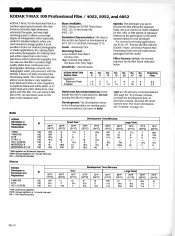
I'm curious to see the 1986 TMX datasheet F-32 if you have it. All I could find was the Kodak Professional Black and White Films publication from 1990. It's still before the change in the ISO standard and Kodak was using EIs. Something I didn't remember was how Kodak suggested no change in processing at EIs of 200 and 800 with TMX and TMY respectively when processed in T-Max RS.

Many Kodak films didn't have ISO speeds: Technical Pan and Infrared, as well as most of the specialty films (TechPan and HIE are basically specialty films).

TMX Datasheet.jpg TMX Datasheet p2.jpg
 

Ian Grant

Subscriber
Allowing Ads
Joined
Aug 2, 2004
Messages
23,409
Location
West Midland
Format
Multi Format
I can scan the 1986 datasheet, it's locked up now in the darkroom again and I don't think I'll get a chance though before I go away on Monday. I think that was the first Kodak publication I saw using the term EI. When I get back I'll try and find the other Tmax publication suggesting using 50EI as well.

The Wikipedia bit about the DIN standard isn't quite correct, the 1974 ISO standard encompasses both ASA and DIN standards, so technically both ASA and DIN speeds disappeared but in practice films are labelled still with both and either methodology can be used.

Ian
 
Joined
Jan 7, 2005
Messages
2,739
Location
Los Angeles
Format
4x5 Format
the 1974 ISO standard encompasses both ASA and DIN standards, so technically both ASA and DIN speeds disappeared but in practice films are labelled still with both and either methodology can be used.

I highly doubt that. It's much more likely that the ISO standard hadn't been universally adopted and that ASA and DIN were still being used. The only way to prove it one way or the other is to have a copy of the 1974 ISO standard. It is still available and I have found it in the New Zealand Standards website. It's around $60 US. I'm debating.
 
Joined
Jan 7, 2005
Messages
2,739
Location
Los Angeles
Format
4x5 Format
Speed has to do with the 'shadow' gradient in relation to the overall gradient.

Michael, one of my favorite Jones quotes comes from The Evaluation of Negative Films Speeds in Terms of Print Quality, "From the standpoint of tone reproduction theory there seems to be no justification for the adoption of any value of density as a significant criterion of the speed of a photographic negative material. The primary function of the negative material is to record brightness (luminance) differences existing in the scene. Density, per se, has no significance as an indication of the ability of the photographic material to perform this function. The value of negative density by which any particular object brightness is rendered, as, for instance, the deepest shadow, is of no consequence except insofar as it may have some bearing on the exposure time required to make a print from the negative."

Sure, you probably won't see the quote reproduced on a t-shirt, but it does speak directly to the point.
 

Ian Grant

Subscriber
Allowing Ads
Joined
Aug 2, 2004
Messages
23,409
Location
West Midland
Format
Multi Format
I highly doubt that. It's much more likely that the ISO standard hadn't been universally adopted and that ASA and DIN were still being used. The only way to prove it one way or the other is to have a copy of the 1974 ISO standard. It is still available and I have found it in the New Zealand Standards website. It's around $60 US. I'm debating.

The problem is some of the ISO standards are inter-related and cross reference each other. So a 1993 ISO for B&W films cross references 6 others.

I know that there was a detailed article in the BJP about the ISO testing methods comparing the ASA system to the DIN system, if it was also in the yearly Annual I should have a copy. What complicates things further though is that there are also DIN ISO standards relating to film speed. When I first subscribed to the BJP in the mid 1970's it was a weekly publication and often included technical articles and precis of technical papers often written by experts from within the industry (inc Kodak & Ilford).

It's entirely possible the 1974 standard we both refer to on testing the speed of B&W does not actually contain both methodologies because there's a separate standard that agrees the relationship between ASA and DIN and the scales used on cameras and meters.

Ian
 

Nr90

Member
Allowing Ads
Joined
Feb 9, 2015
Messages
16
Location
Netherlands
Format
Multi Format
I highly doubt that. It's much more likely that the ISO standard hadn't been universally adopted and that ASA and DIN were still being used. The only way to prove it one way or the other is to have a copy of the 1974 ISO standard. It is still available and I have found it in the New Zealand Standards website. It's around $60 US. I'm debating.
Did a search as well. You can indeed buy the standard, for example http://www.iso.org/iso/iso_catalogue/catalogue_tc/catalogue_detail.htm?csnumber=7690

Could only find the first page for free:
attachment.php
 

Attachments

  • BFvyMnOCUAA2miV.jpg
    BFvyMnOCUAA2miV.jpg
    93.2 KB · Views: 599

haziz

Member
Allowing Ads
Joined
Jul 3, 2004
Messages
243
Location
Massachusetts
Format
Multi Format
If you want grain free, then shoot a larger format!

How large will depend on how big you intend to enlarge. At least go to medium format, or preferably 4x5.
 

Sirius Glass

Subscriber
Joined
Jan 18, 2007
Messages
50,814
Location
Southern California
Format
Multi Format
Shoot Large Format, Very Large Format and Ultra Large Format tabular grained film.
 

mindthemix

Member
Allowing Ads
Joined
Jun 14, 2012
Messages
178
Location
Miami
Format
Multi Format
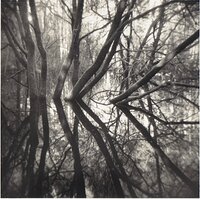
This looks excellent for a film that is underexposed by two stops

pentaxuser

It was my first exploration with Acros @400 with stand develop. You don't suppose to underexposed Acros but I tried and I'm very pleased wit the results. I'm not saying I'll be shooting that way but it was a good exercise.
 

TheFlyingCamera

Membership Council
Advertiser
Allowing Ads
Joined
May 24, 2005
Messages
11,599
Location
Washington DC
Format
Multi Format
If you want it grain free, then don't let it drink liquor, keep it out of the sand and feed it a gluten-free diet.

In all seriousness, use cooler temperatures for longer times (68-75 F is good - if you run hotter, you'll really punch up the grain). Use more dilute developer solutions. Use fine-grain and grain-masking developers, like Pyrocat HD. And as mentioned before, use bigger negatives or print smaller. Expecting a 16x20 print from a 35mm negative to be grainless is like expecting an elephant to fit in the trunk of a VW Beetle.
 

RalphLambrecht

Subscriber
Allowing Ads
Joined
Sep 19, 2003
Messages
14,922
Location
K,Germany
Format
Medium Format
I'm surprised this hasn't been stickied yet.
But can we put together a guide for getting beautiful black and white negatives with no hassle?

So far, I know enough to use a fast film. I like fp4 , but tmax 100, apx 100, and delta 100 are all great. Though I dislike tmax because the color stain is hard to get out.
But what developer and what actual ISO?

Also, what other tips can you give? Use fresh film. Keep the film cool.
Does temperature control during development really matter?
What about agitation?
First of all;the color stain easily disappears with HCA and added washing.2nd learn to love the film grain; It's great and digital folks add it in PS to fake the real film look.
 
Photrio.com contains affiliate links to products. We may receive a commission for purchases made through these links.
To read our full affiliate disclosure statement please click Here.

PHOTRIO PARTNERS EQUALLY FUNDING OUR COMMUNITY:


Ilford ADOX Freestyle Photographic Stearman Press Weldon Color Lab Blue Moon Camera & Machine
Top Bottom