• Welcome to Photrio!
    Registration is fast and free. Join today to unlock search, see fewer ads, and access all forum features.
    Click here to sign up

How to achieve this look?

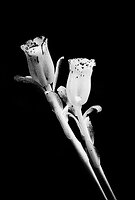
Indian ghost pipe plant.

H
Indian ghost pipe plant.

  • 0
  • 0
  • 15
2026-01-136.jpg

A
2026-01-136.jpg

  • 0
  • 0
  • 19

Forum statistics

Threads
202,930
Messages
2,847,731
Members
101,542
Latest member
Obrian29
Recent bookmarks
0

avidfilmuser10

Member
Allowing Ads
Joined
Feb 4, 2015
Messages
2
Format
35mm
hello,

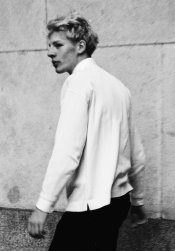
I'm not sure if this is the right thread but I am wondering how to achieve the look in this photo.
attachment.php
 

Attachments

  • filmlook.jpg
    filmlook.jpg
    615 KB · Views: 591
Can you tell us what is it about this look that you like in particular? What aspects of this photograph are you after?
 
This appears to be reticulation.

It's something you used to have to be careful to avoid by keeping developer temperatures reasonably close to 68-degrees F and keeping wash and fix temperatures within 5 degrees of that.

And if you messed up the temperatures this was supposed to happen.

But I've always been too careful to get this to happen, and I also think the film you can get now doesn't do this easily.

So exaggerated hot water and then chill, maybe even freeze while the film is wet "might" give you this kind of look.
 
i got something like that look when i developed some Minox negatives in Rodinol and then blew them up to 8 by 10.

Grain? Wow. But very sharp.

You used to be able to buy screens to put over the negative when you enlarged it to produce this sort of look, or many other looks.
 
Its quite high contrast with loads of grain. I would suggest using small format camera (35mm), old style film like HP5 and develop in Ilford Microphen which will give you plenty of grain. It is a high activity developer which gives approx 1 stop increased film speed and a lot of grain.
You could even use Ilford Delta 3200 which also gives loads of grain, especialy when developed in microphen.
 
I agree with Bill Burk. It looks like reticulation. I've had it happen once or twice, many years ago. Try a hot developer and cool acid stop, and that should get it there. I suppose you could try to refine it with different developers. I'd guess something like Dektol would give you a very pronounced effect, and a solvent developer, like D-76 1:1 would be a little softer.
 
Get yourself a floppy but formal-ish shirt, a bad haircut, practice a disdainful expression and throwing that over your left shoulder...

(Sorry, couldn't resist.)

:D

Yeah, probably reticulated. It's hard to get modern films to reticulate even on purpose. I've never tried it but if I wanted to do that I'd shoot Foma film. It's not as pre-hardened as other films and the wet emulsion is softer, which makes it scratch easier and should, I think anyway, maybe, make it more prone to reticulation. It's also fairly grainy if you shoot the 400 and develop generously (but be careful, it responds with big contrast increases) so that might help with this too.

For grain, I'd try Delta 3200 and maybe develop in Rodinal. That ought to give you a bumper crop of grain.
 
This appears to be reticulation.

It's something you used to have to be careful to avoid by keeping developer temperatures reasonably close to 68-degrees F and keeping wash and fix temperatures within 5 degrees of that.

And if you messed up the temperatures this was supposed to happen.

But I've always been too careful to get this to happen, and I also think the film you can get now doesn't do this easily.

So exaggerated hot water and then chill, maybe even freeze while the film is wet "might" give you this kind of look.
Closest signature

Foma 400 in Rodinal 1:25 at 800 ISO.
If you want to take risks neat wine vinegar stop.

Microphen is a fine grain developer comparable with D76.
 
Have inadvertently managed to do this with Agfapan 100 back in 1998; was processing in a hotel bathroom and seems the cold (wash) water was indeed "cold" - I just didn't realise how cold. :blink:

One and only time I've ever had this happen - has nice effect on some of the images on the film, but not all. Was pretty devastated at the time as it was a couple of rolls from a world trip, however I at least learned to check the temp for the next batch I processed. (Perfect temp, so must have been a glitch at the then new, hotel.)
 
Classic reticulation paired with bad focus and some camera shake voila. As previous poster said use a warmer dev and throw in a cold stop bath or use a colder developer and use a hotter stop bath. Reticulation was most often the result of temperature shock but there are chemical means to achieve it as well. Most modern films a la t-max etc are more immune to it so use something along the line of Fomapan.
 
Good shot Roger. Very funny (and true).

I concur, it's a great look, and 99% of it is the subject himself, who looks very familiar. He appears to be from another era. People don't look like that anymore, and then there's the clothes and the hair. The reticulation is probably true too. It's a photographic look that I would love to emulate myself, but today's films make it quite difficult. It looks like the stuff I looked at in old photo magazines, newspapers and books ages ago. Darkosaric's idea might get you in the ballpark. Maybe use a Leica lens and do something to accentuate the grain. Tri-X? But today's Tri-X is not the same, so maybe a film that is more of an old school emulsion.
 
Based on the lack of detail and generally bad quality, I'd say it's simply a crop from a tiny bit of a larger neg made with a fast and relatively grainy film, but nothing special, with the soft clumpiness coming from having scanned the neg with a flatbed scanner.
 
Based on the lack of detail and generally bad quality, I'd say it's simply a crop from a tiny bit of a larger neg made with a fast and relatively grainy film, but nothing special, with the soft clumpiness coming from having scanned the neg with a flatbed scanner.

You forgot about being out-of-focus and suffering from some sort of motion blur or camera shake, then being enlarged too much.
 
http://sashaveber.tumblr.com/post/102475449862

Looks like you can ask them?

Welcome to Apug.

You will find that trying to copy someones work or style is controversial especially when it comes to a professional photographer's work.

I would also add that its bad form to take copies of someone else's work and post them onto a forum's servers, no matter how benign your intention. Technically, that is a copyright infringement. (I doubt you sought the photographers permission to save and re-publish a copy?)

That said, this isn't any great mystery: its fast film (400 ASA or greater), probably 35mm and its been cropped a lot to emphasize grain and lack of sharpness. I suspect it was also shot at twice (or more) the rated speed and pushed, since you can see where some of the shadowy face details quickly rush off to detail-less black. So, buy some 400 ASA film for your 35mm camera, shoot it as 1600 ASA and push it a bunch, then crop out 3/4 of the frame and voila!
 
Or is it all photoshop filters ?
 
Get yourself a floppy but formal-ish shirt, a bad haircut, practice a disdainful expression and throwing that over your left shoulder...

(Sorry, couldn't resist.)

:D

How about adding a fast foreign sports car and turning the clock back to 1955 as well. I had exactly the same kind thoughts as you, Roger, when I first saw the picture.

pentaxuser
 
I think reticulation too, but don't forget the film is under exposed with motion blur too. I think the highlights look dirty so I would think it's printed on fogged paper.
 
Reticulation produces a very distinctive pattern sort of like looking at a pan of worms. There is an excellent example in Grant Haist's Monobath Manual. It is the photograph of the seagull. Hard to tell in the example given as the enlarged example was also printed out of focus. So maybe yes, maybe no. Seems to me that if you have bad technique like that of the represented photographer you should be getting results like this all the time. :smile:
 
Last edited by a moderator:
I agree that reticulation has a very distinct pattern, unlike a grainy pushed negative. I had this happen at photography school 30+ years ago using Tri-X and D-76 1:1. My instructor made an example out of my print, launching into a tirade about process temperature control, not using contaminated development tanks, mixing chemicals as suggested by the manufacturer, ect, ect. There was no artsy interpretation of my image at all. Just a second rant concerning the topic of "what if you were on assignment and produced this crap for your editor?" I guess he was right, back then.
 
Get yourself a floppy but formal-ish shirt, a bad haircut, practice a disdainful expression and throwing that over your left shoulder...

(Sorry, couldn't resist.)

:D

Yeah, probably reticulated. It's hard to get modern films to reticulate even on purpose. I've never tried it but if I wanted to do that I'd shoot Foma film. It's not as pre-hardened as other films and the wet emulsion is softer, which makes it scratch easier and should, I think anyway, maybe, make it more prone to reticulation. It's also fairly grainy if you shoot the 400 and develop generously (but be careful, it responds with big contrast increases) so that might help with this too.

For grain, I'd try Delta 3200 and maybe develop in Rodinal. That ought to give you a bumper crop of grain.

You beat me to it as your initial comment was my first thought and I would also agree with the rest of your post.
 
hello,

I'm not sure if this is the right thread but I am wondering how to achieve the look in this photo.
attachment.php

Looks like about 1/30 second, flat light, then max out the contrast and add a butt load of grain on a soft light layer. Yeah, it's digital. Not complicated at all. I don't see the reticulation.
 
Welcome to APUG
 
Photrio.com contains affiliate links to products. We may receive a commission for purchases made through these links.
To read our full affiliate disclosure statement please click Here.

PHOTRIO PARTNERS EQUALLY FUNDING OUR COMMUNITY:



Ilford ADOX Freestyle Photographic Stearman Press Weldon Color Lab Blue Moon Camera & Machine
Top Bottom