• Welcome to Photrio!
    Registration is fast and free. Join today to unlock search, see fewer ads, and access all forum features.
    Click here to sign up

How remove drying marks?

ptloboscarmelEIR3.jpg

A
ptloboscarmelEIR3.jpg

  • jhw
  • Dec 15, 2025
  • 0
  • 0
  • 12
Tree Farm

H
Tree Farm

  • 1
  • 0
  • 39

Forum statistics

Threads
201,212
Messages
2,820,523
Members
100,589
Latest member
rando
Recent bookmarks
0

philipus

Member
Allowing Ads
Joined
Feb 6, 2012
Messages
211
Format
Medium Format
Hello everyone,

I had drying marks on my PanF (135) this morning and I am wondering what I can do - now that the film has dried - to remove them.

I suspect I could re-wash the film but that would in all likelihood just result in other marks. Could I use a very thin dilution of, say, water-alcohol or such to clean the negs? Are there other options?

Thank you kindly in advance for your suggestions
Philip
 

Dali

Member
Allowing Ads
Joined
Jun 17, 2009
Messages
1,871
Location
Philadelphia
Format
Multi Format
Cotton swab + distilled water.
 

Ben 4

Member
Allowing Ads
Joined
Sep 20, 2005
Messages
277
Location
Lancaster, P
Format
Medium Format
I just encountered this problem last week for the first time in many years. I'm not sure why. Searches here and elsewhere turned up varied advice, including a link to this Kodak page, which recommends using 98 percent isopropyl alcohol for general film cleaning:

http://www.kodak.com/global/en/consumer/products/techInfo/cis145/cis145.shtml

This worked for me. I used cotton balls, lightly moistened with alcohol, wrapped in a bit of Kimwipe. (I don't think the Kimwipes were necessary, but I happened to have them on hand.) My marks seem to have come from photoflo, not minerals, as my final rinse had been in distilled water.
 

Jim Jones

Subscriber
Allowing Ads
Joined
Jan 16, 2006
Messages
3,740
Location
Chillicothe MO
Format
Multi Format
Some photographers report that the suggested dilution of Photoflo can result in drying marks. I've always diluted it more, and rarely have problems. It may help to shake off as much of the Photoflo bath as possible before hanging the film up to dry.
 

Patrick Robert James

Member
Allowing Ads
Joined
Jul 31, 2012
Messages
3,406
Format
35mm RF
I don't even use LFN or PhotoFlo anymore. I simply wipe the film's glossy (non emulsion) side gently with a paper towel to remove the water from it after I hang it up. If you cringe at the paper towel idea, you can use a Kimwipe, which is what I used to use until I realized a paper towel was just as good. Use a good brand though, like Bounty.

If you have water spots, they can be removed with alcohol as previously suggested, or you can breath on the neg and use a clean micro fiber cloth to wipe (in one direction) the water spots off the film.
 
OP
OP
philipus

philipus

Member
Allowing Ads
Joined
Feb 6, 2012
Messages
211
Format
Medium Format
Thank you very much for the creative (and quick) suggestions.

I used cotton, water and kitchen towel this morning on PanF and Rollei Retro 80 (only on the non-emulsion side). It worked very well on the PanF but i noticed that the Retro got a bit "soft" by the water; it felt as if the paper got stuck to the film when I tried to wipe off the water (I stopped immediately of course). Perhaps that film is different because of the very thin base? Then I tried with a microfiber cloth and water and that worked better.

I'm curios about the alcohol and kimwipes so I'll get that. Even with good(ish) kitchen towel (the "Plenty" brand here in NL) I did notice some residue after wiping.

best and thanks again
Philip
 

Rick A

Subscriber
Allowing Ads
Joined
Mar 31, 2009
Messages
10,006
Location
Laurel Highlands
Format
8x10 Format
NEVER paper products with film. At most, a clean cellulose sponge, and gentle wipe, not a squeegee either, to great a chance of scratching the emulsion. Soak the film in distilled water for a couple of minutes, mixed with LFN and 91% alcohol is better, then shake the excess water from the film while it's still in the reel before hanging to dry.
 

cliveh

Subscriber
Allowing Ads
Joined
Oct 9, 2010
Messages
7,709
Format
35mm RF
When the film is dry, lay it on clean negative page emulsion side down, shiny side up (drying marks only form on the shiny side). Then breathe on the film as though you are misting up a mirror and wipe with a clean spectacle lens cloth. Hey presto drying marks gone.
 

charlemagne

Member
Allowing Ads
Joined
Sep 16, 2006
Messages
61
Location
the netherlands
Format
Multi Format
I use 5 drops of kodak photo flo to 1 litre of water. Works great.

If i do have drying marks (I mostly find them on old negatives from my student years:smile: ) I breathe a little on it and wipe it off with a clean chamois leather (one that never has been wet)
 

JunkyardJesse

Member
Allowing Ads
Joined
Aug 17, 2016
Messages
7
Location
Palmer, Alaska
Format
35mm
I've avoided buying a wetting agent for as long as possible, and my tap water is really mineral-rich groundwater. So I have some trial and error in this area.

If you touch the emulsion side of the film with any type of paper while it's wet, you may get fibers or scraps of paper stuck all over it.

Some people suggest using a dish detergent because it's similar to a wetting agent, but in my experience this hasn't helped much.

One thing that did seem to help was to make a solution of isopropyl alcohol and water, and pour a final rinse of this solution down the hanging negatives (I hang mine in the shower so it just goes down the drain). That seems kind of expensive though.

I am not above trying to make do with what's on hand or DIY something, because I'm frequently too broke/lazy/stubborn to run to the store and get one more thing I could theoretically get by without. That said, after a friendly lecture from the photographers who scan my film, I bit the bullet and now use what seems to be the "correct" method: wetting agent and water final rinse.
 

TareqPhoto

Member
Allowing Ads
Joined
Nov 19, 2009
Messages
1,171
Location
Ajman - UAE
Format
Multi Format
I just Photo Flo as last step or rinse and immediate hang to dry and i never see any marks, many films, so i don't need to worry about so much stories and words here and there about what to do, if it didn't work for me many times then i won't keep using it.
 

Pioneer

Member
Joined
May 29, 2010
Messages
3,974
Location
Elko, Nevada
Format
Multi Format
Just mist it down with a spray bottle of distilled water. Works fine. You can put a couple drops of Photo Flo in the bottle if you want but I quit doing that about a year ago when I ran out. Still seems to work.

If I do get a water spot, usually found on my older negatives, I just lay them on a printfile page emulsion down, fog them a bit with my own breath and wipe it off with a micro fiber cloth. Always seems to work.

Back when I was using Photo Flo in the final rinse there were times when I would get to much in the rinse and then I had problems with a soapy sheen on the negative that was difficult to get cleaned off if I did end up with a spot or two. Haven't had that problem since I moved to distilled water.

If you live in a moist environment then it may be useful to use Photo Flo or other wetting agents as much for their anti fungus properties as much for their drying properties. Since I don't seem to have that problem I don't worry about it too much.

Ron probably can tell us all about this if he is interested.
 

Ashfaque

Member
Allowing Ads
Joined
May 4, 2013
Messages
382
Location
Bangladesh & UK
Format
35mm
I do exactly what Clive described.

If the marks are still there I use a slightly isopropyl alcohol (100%) soaked micro fibre fabric, wiping in one direction. I then use alcohol free area of the mic.fib to wipe off the remaining alcohol. I keep a dedicated micro fibre cloth for negatives only and ensure that it is clean.

As usual I never 'treat' the emulsion side.

Bests,
Ashfaque

PS: Follow what Bob does. I don't know about others reels/tank combo, but Jobo explicitly mention in its instruction manual to do the wetting agent step outside their tank and without reel. IIRC, Matt pointed me about it when I 1st started. Apart from reducing the risk of more bubbles and water drying spots, this method has the additional benefit of less gooey stuffs in your reels and less cleaning time (for reels). Jobo reels are quite narrow and have sophisticated channel design.
 
Last edited:

Europan

Member
Allowing Ads
Joined
May 21, 2009
Messages
643
Location
Äsch, Switzerland
Format
Multi Format
I should rewash the film for a minute, distilled water is not necessary but a shot of an acid to the water to dissolve the scale. Formic acid is the best but expensive. Acetic acid is second best and cheaper. Then I should pull the film through a damp viscose sponge cloth, folded in twice. Hardly any pressure
 
OP
OP
philipus

philipus

Member
Allowing Ads
Joined
Feb 6, 2012
Messages
211
Format
Medium Format
Thank you for the further replies. I don't know why I don't get notifications of new messages.

I use Ilfotol in the final wash (without distilled water). Is this the same as Photo-Flo?

I've cut down on the amount of Ilfotol because it foams like mad and the bubbles leave marks too. But perhaps I need to tweak the amount further.

I like the idea of isopropyl alcohol and a micorfiber cloth. I'll look into where I can find this.

br
philip
 

Sirius Glass

Subscriber
Joined
Jan 18, 2007
Messages
50,717
Location
Southern California
Format
Multi Format
Thank you for the further replies. I don't know why I don't get notifications of new messages.

I use Ilfotol in the final wash (without distilled water). Is this the same as Photo-Flo?

I've cut down on the amount of Ilfotol because it foams like mad and the bubbles leave marks too. But perhaps I need to tweak the amount further.

I like the idea of isopropyl alcohol and a micorfiber cloth. I'll look into where I can find this.

br
philip

Yes Ilfotol and PhotoFlo are equivalent. Follow the instructions on the bottles and you will not have the excess foaming that comes from blindly pour unmeasured amount into the container.
 
OP
OP
philipus

philipus

Member
Allowing Ads
Joined
Feb 6, 2012
Messages
211
Format
Medium Format
Thank you. Well, to be honest, if I do follow the instrux on Ilfotol - which I did for the longest time - there is very much, excessive foam. What I have done is to use a syringe to apply 2ml per litre instead of the instrux's 5ml, but perhaps I need to up that a tiny bit.

Yes Ilfotol and PhotoFlo are equivalent. Follow the instructions on the bottles and you will not have the excess foaming that comes from blindly pour unmeasured amount into the container.
 

rpavich

Member
Allowing Ads
Joined
Aug 24, 2015
Messages
1,520
Location
West virginia, USA
Format
35mm
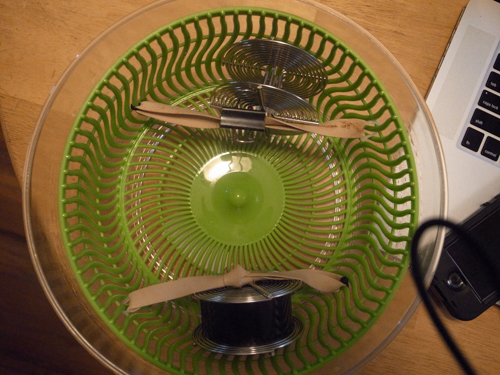
I found this method and never went back; after developing i take the reel and put it into a salad spinner and spin fast for 30 seconds...result: no water on any negative, so never a water spot!

Then i put the reel into a film dryer and its comes put 50 minutes later dry, clean, and dust free.

Ive never had great luck trying to take spots off of negatives after the fact.

post-34470-0-50408700-1462998074.jpg
 
Last edited:

mnemosyne

Member
Allowing Ads
Joined
Jan 19, 2011
Messages
759
Location
Europe
Format
Multi Format
Philip,
the manufacturer's dilution are only recommendations. The optimum dilution (strong enough to break the surface tension of water, but not so strong that it causes foaming) depends on the quality of your tap water. The easisest way (and the one which I would recommend) ist the use of demineralized water instead of tap water for the final rinse and to cut the dilution in half. In my case (Kodak Photo Flo) I use 0.5 ml to prepare a bath of 200 ml (that is 1:400 instead of the "recommended" 1:200). The film sits in the solution for a minute or two and then I simply hang it up for drying. I get very clean negatives.
 
OP
OP
philipus

philipus

Member
Allowing Ads
Joined
Feb 6, 2012
Messages
211
Format
Medium Format
I like this creative solution, thanks for posting the picture, RP.

By film dryer, do you mean one of those large cabinets or?

Btw, we miss you over at the LUF I like film thread :smile:

br
Philip


I found this method and never went back; after developing i take the reel and put it into a salad spinner and spin fast for 30 seconds...result: no water on any negative, so never a water spot!

Then i put the reel into a film dryer and its comes put 50 minutes later dry, clean, and dust free.

Ive never had great luck trying to take spots off of negatives after the fact.

post-34470-0-50408700-1462998074.jpg
 
OP
OP
philipus

philipus

Member
Allowing Ads
Joined
Feb 6, 2012
Messages
211
Format
Medium Format
Thank you for the reply. Yes I know, I need to tweak the amount further. I will also try to leave the film longer in the Ilfotol bath. I normally just dip the reel and hold it under water 5-10 sec and then shake or rap the reel against something.

Philip,
the manufacturer's dilution are only recommendations. The optimum dilution (strong enough to break the surface tension of water, but not so strong that it causes foaming) depends on the quality of your tap water. The easisest way (and the one which I would recommend) ist the use of demineralized water instead of tap water for the final rinse and to cut the dilution in half. In my case (Kodak Photo Flo) I use 0.5 ml to prepare a bath of 200 ml (that is 1:400 instead of the "recommended" 1:200). The film sits in the solution for a minute or two and then I simply hang it up for drying. I get very clean negatives.
 
Photrio.com contains affiliate links to products. We may receive a commission for purchases made through these links.
To read our full affiliate disclosure statement please click Here.

PHOTRIO PARTNERS EQUALLY FUNDING OUR COMMUNITY:


Ilford ADOX Freestyle Photographic Stearman Press Weldon Color Lab Blue Moon Camera & Machine
Top Bottom