
-
Welcome to Photrio!Registration is fast and free. Join today to unlock search, see fewer ads, and access all forum features.Click here to sign up
You are using an out of date browser. It may not display this or other websites correctly.
You should upgrade or use an alternative browser.
You should upgrade or use an alternative browser.
How did they print with non AN glass carriers back in the day?
-
A
- Thread starter John51
- Start date
Recent Classifieds
-
For Sale Ilex Oscillo-Paragon no. 3X universal shutter (CLA'd)
- Started by OAPOli
-
For Sale Stainless Developing Tank with 2 35mm Reels, Japan
- Started by Jon Shiu
-
For Sale Kodak Medalist II camera case
- Started by campy51
-
Want to Buy Lomo UPB-1 - 16mm cine film processing tank
- Started by blee1996
-
For Sale Really Right Stuff RRS BH-55 Ball Head
- Started by samuelphoto
Forum statistics

Newton rings don't happen all the time and as I recall reading in old books they would ofter dust the top of the negative with something to put a tiny bit of space between the glossy top of the film and the glass, AN glass does the same thing with it's pebbled surface. And Tetenal more recently made an anti-Newton Ring spray for drum scanners.
- Joined
- Jun 21, 2003
- Messages
- 29,810
- Format
- Hybrid
hi john51
i used to use a burke and james(?) solar enlarger
it had a negative carrier like yours (?) 2 sheets of
regular, NON-AN-glass. you just cleaned the glass put the negative in there
and i never had newton rings ( thousands of enlargements ).
i used to use a burke and james(?) solar enlarger
it had a negative carrier like yours (?) 2 sheets of
regular, NON-AN-glass. you just cleaned the glass put the negative in there
and i never had newton rings ( thousands of enlargements ).

some people used a soft dusting of anti newton powder.
-

- Nodda Duma
- Deleted

- Joined
- Jul 31, 2012
- Messages
- 3,454
- Format
- 35mm RF
Corn starch.....
I've had newton rings with the emulsion side of Acros 120 (non AN side of carrier). Corn starch worked great.
You could also wet mount the neg.
I've had newton rings with the emulsion side of Acros 120 (non AN side of carrier). Corn starch worked great.
You could also wet mount the neg.
some people used a soft dusting of anti newton powder.
Anti Newton Ring capability is designed into some emulsion coating.

I've just got a quarter plate Gnome enlarger with a glass carrier and also have a Kodak Precision glass carrier. Neither seem to be AN glass.
How did old time printers manage to avoid Newton Rings while using non AN glass?
I, as an 'old -timer' still use the glass that came with my Durst 4x5 enlarger some 30 years ago.... it has never given me any problem with Newton rings at any time..
ken
The retouching surface once put on some films functioned as anti Newton material.Anti Newton Ring capability is designed into some emulsion coating.
- Joined
- Apr 19, 2011
- Messages
- 922
- Format
- 35mm
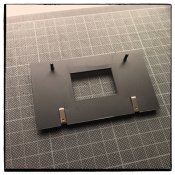
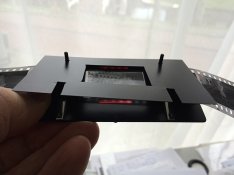
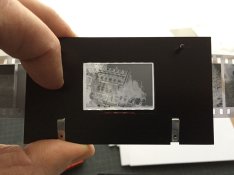
Your do not want the glossy side of the film to touch the glass. So you cut a small mask from black carton or black pvc sheet and cut out your negative size plus a little more. This you place on your negative and then you close your negative carrier.
Attached pictures show such a mask that I made for the negative holders of the Focomat 1c and the Valoy II.
That is how many printers dit it and still do.
Attached pictures show such a mask that I made for the negative holders of the Focomat 1c and the Valoy II.
That is how many printers dit it and still do.
Attachments


GRHazelton
Subscriber
Chatting with another old-timer at Wings Camera in Atlanta somehow that topic came up. He said that they used a dusting of corn starch on glass carriers to prevent Newton's Rings. So Bob Carnie wasn't just blowing smoke! 
BTW, Wings Camera has been in business over one hundred years! They have a large selection of used gear, from 35mm up to 8 x 10 view cameras, and dark room gear. They also carry film, chemicals, paper, etc. Good people!
BTW, Wings Camera has been in business over one hundred years! They have a large selection of used gear, from 35mm up to 8 x 10 view cameras, and dark room gear. They also carry film, chemicals, paper, etc. Good people!
-

- GRHazelton
- Deleted
- Reason: duplicate post
And I said the same thing three whole minutes before Bob did. A lot of us old timers on Photrio today.Chatting with another old-timer at Wings Camera in Atlanta somehow that topic came up. He said that they used a dusting of corn starch on glass carriers to prevent Newton's Rings. So Bob Carnie wasn't just blowing smoke!
BTW, Wings Camera has been in business over one hundred years! They have a large selection of used gear, from 35mm up to 8 x 10 view cameras, and dark room gear. They also carry film, chemicals, paper, etc. Good people!
Both Plus-X Pan Prof. PXP-120 and Tri-X Pan Professional TXP also had a retouching "tooth".But a retouching surface was more rough. Howewer that was no issue as it was applied only at sheet films for portraits anyways.

Back in the day....Old time printers...ouch!

Never had any problems, thank you.
some people used a soft dusting of anti newton powder.
I assume it was applied in similar ways, that is with a similar brush, as it is done with cosmetic powder or soot powder.
So that was what that black piece of paper cut to 4x5 was for that came with my Beseler 4x5 glass neg carrier.Your do not want the glossy side of the film to touch the glass. So you cut a small mask from black carton or black pvc sheet and cut out your negative size plus a little more. This you place on your negative and then you close your negative carrier.
Attached pictures show such a mask that I made for the negative holders of the Focomat 1c and the Valoy II.
That is how many printers dit it and still do.

But using a spacer frame would not be that effective as a glass sandwich.
It only has to keep it flat within the depth of field

I never had newton rings when laying negatives emulsion side down on plain glass in a 5x7 Elwood.
Yes, but still the industry (e.g.Kaiser) offer both, pairs of format mask that act like such a spacer and combos of a mask and an AN glass.[The mask] only has to keep [the negative] flat within the depth of field
So, in case where there actually is a modular film stage with masks, instead of just two glass panes in max. size, there still is the offer of glass.
The Focal Encyclopedia of Photography mentioned a thin dusting of corn starch powder on the base side. I used that for years. When I bought my 1c, the Leica dealer said using a hair dryer 1 ft away from the base side for 30-60 secs worked, and it does! Very well. Also gives a sharper print than AN glass.
Last edited:
- Joined
- May 18, 2014
- Messages
- 797
- Format
- 35mm
Your do not want the glossy side of the film to touch the glass. So you cut a small mask from black carton or black pvc sheet and cut out your negative size plus a little more. This you place on your negative and then you close your negative carrier.
Attached pictures show such a mask that I made for the negative holders of the Focomat 1c and the Valoy II.
That is how many printers dit it and still do.
Just had a look at the Gnome carrier. The studs for using medium format film holds the top glass one sixteenth of an inch above the bottom glass. Along with using masks, it seems to me that the top plate is only there in case the neg bends too much.
A set of Kodaloid masks was included in the job lot, so I'll use them once the Kodak Precision is set up.
I used the powder for years on the Lisle Camera to place trans or negs onto clear vacuum glass.. very tricky procedure to just put enough powder down without it showing up in the montage and enough to stop the dreaded Newton Rings... as we were using vacuum to hold the images to the glass it was a very tricky balance.Chatting with another old-timer at Wings Camera in Atlanta somehow that topic came up. He said that they used a dusting of corn starch on glass carriers to prevent Newton's Rings. So Bob Carnie wasn't just blowing smoke!
BTW, Wings Camera has been in business over one hundred years! They have a large selection of used gear, from 35mm up to 8 x 10 view cameras, and dark room gear. They also carry film, chemicals, paper, etc. Good people!
I found the concept off at first but it worked.
| Photrio.com contains affiliate links to products. We may receive a commission for purchases made through these links. To read our full affiliate disclosure statement please click Here. |
PHOTRIO PARTNERS EQUALLY FUNDING OUR COMMUNITY:  |