
• Welcome to Photrio!
    Registration is fast and free. Join today to unlock search, see fewer ads, and access all forum features.
    Click here to sign up

How are intentional hazey effects used?

Recent Classifieds

Forum statistics

Threads
203,204
Messages
2,851,278
Members
101,721
Latest member
rptn
Recent bookmarks
0
In the 70s, one of the Photographers I knew, Mike Carmicle, who had a studio in Sacramento he took an Kodak 3 element 80 or 75mm and used a light, very light sand paper, maybe an Emory pad and in very light moves treated the front element. From I recall he treated the out side so it had more of a diffusion effect. Not sure how many passes he made, he told he did a bit, then tested until he the effect he wanted. I have a still life he did stashed in storage, I'll see if I can pull it and scan it.

Oh wow yeah, would love to see that. I think I might try less destructive measures first but I could always get another lens..

I’ve created something similar printing in B&W by split grading and using a homemade black stocking diffuser for just the G5 exposure.

Nice! I've only ever worked in RA-4, what is G5 exposure?
 
Split grading is a technique that uses exposures of both a soft grade(G0) and a hard grade (G5) to make a B&W print.

Ah, of course - thank you. I can see how gaining experience in black and white printing would help my colour printing skills.. So much to do, so little time!
 
It's difficult to reverse engineer a photograph from an online image (might be impossible), so I have no idea how those images were made. I'd try and contact the photographer and ask them how they did it if that's the look you're after. Most of it seemed to be from creative lighting, the odd colors may have come from cross development, but I don't even know for sure if those shots are from a film camera.
 
Oh wow yeah, would love to see that. I think I might try less destructive measures first but I could always get another lens..

He used a cheap 3 element lens, look online for a 3 element lens such as a Kodak Enlarging Ektanon 50 or 75mm. Maybe use polishing paste of some kind to give you more control. From I recall he did it step by step, a little abrasion tested little by little until he got the effect he wanted. I think it was the combo of a 3 element lens and the softing of the abrasion that gave him the look he wanted. I will be going to my storage unit later this week and will look to see if I can find the print Mike gave me.
 
He used a cheap 3 element lens, look online for a 3 element lens such as a Kodak Enlarging Ektanon 50 or 75mm. Maybe use polishing paste of some kind to give you more control. From I recall he did it step by step, a little abrasion tested little by little until he got the effect he wanted. I think it was the combo of a 3 element lens and the softing of the abrasion that gave him the look he wanted. I will be going to my storage unit later this week and will look to see if I can find the print Mike gave me.

Good idea, thanks Paul. I've added this to my darkroom to-do list and will get to it but yeah would love to see the print!
 
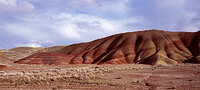
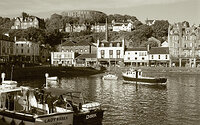
I like this look which I believe is created in the enlarging stage and I see a different photographers utilising.

It's almost like a soft filter (but I know that these images did not use an on-camera soft filter) and was told it was done in the dark room.

Can anyone explain or point me towards resources (or the correct term) for this effect? Thanks!

View attachment 301926

View attachment 301927

View attachment 301928

Definitely a matter of taste but for me the correct term is: 'terrible' or 'junk'
 
Not sure how easy to find, I found one of books that has many techs, Kodak Creative Darkroom Techniques date 1975. Examples of using textured glass laid on top of a print, using various textures under the lens including lens cleaning tissue, painting a clear sheet of glass with nail polish.
 
Not sure how easy to find, I found one of books that has many techs, Kodak Creative Darkroom Techniques date 1975. Examples of using textured glass laid on top of a print, using various textures under the lens including lens cleaning tissue, painting a clear sheet of glass with nail polish.

Hey Paul, I've ordered a copy - a few are available second hand here. Thanks for the tip!
 
Not sure how easy to find, I found one of books that has many techs, Kodak Creative Darkroom Techniques date 1975. Examples of using textured glass laid on top of a print, using various textures under the lens including lens cleaning tissue, painting a clear sheet of glass with nail polish.

Further, Paul: I found the book is available at archive.org and I believe the relevant pages are:

Screenshot 2022-04-05 at 16.39.11.png


Screenshot 2022-04-05 at 16.39.18.png
 
Photrio.com contains affiliate links to products. We may receive a commission for purchases made through these links.
To read our full affiliate disclosure statement please click Here.

PHOTRIO PARTNERS EQUALLY FUNDING OUR COMMUNITY:


Ilford ADOX Freestyle Photographic Stearman Press Weldon Color Lab Blue Moon Camera & Machine
Top Bottom
