
• Welcome to Photrio!
    Registration is fast and free. Join today to unlock search, see fewer ads, and access all forum features.
    Click here to sign up

Help me guess what happened here, please.

High Street

A
High Street

  • 0
  • 0
  • 23
Plato's Philosophy.

A
Plato's Philosophy.

  • 2
  • 2
  • 91

Recent Classifieds

Forum statistics

Threads
201,869
Messages
2,831,471
Members
100,993
Latest member
DIY123
Recent bookmarks
0

Yamato

Member
Allowing Ads
Joined
Mar 21, 2015
Messages
8
Format
35mm
Developed two rolls of film with PaRodinal from the formula here (in Spanish): http://www.drlux.cl/2012/01/fabricar-rodinal-casero-paracetamol.html

Basically, 15 grams of Paracetamol (15x 1gram Paracetamol tablets), 15g of Sodium Hydroxide and Water up to 250ml. I used distilled water instead of tap water.

Time was 7 minutes with, 20ºC/68F with at 1:25. Film was Argenti PanX 100.
Agitation was gentle, continuous for the first minute, then 5 seconds each 30 seconds. Used a rotating barrel tank.


I got the next results:
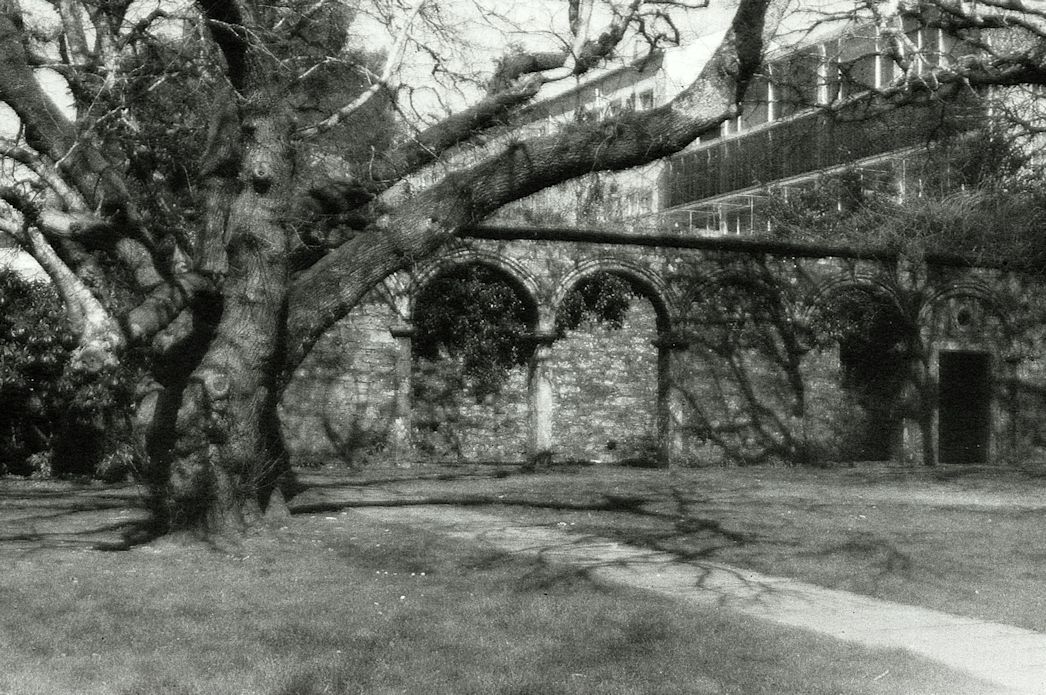
pXRya6M.jpg


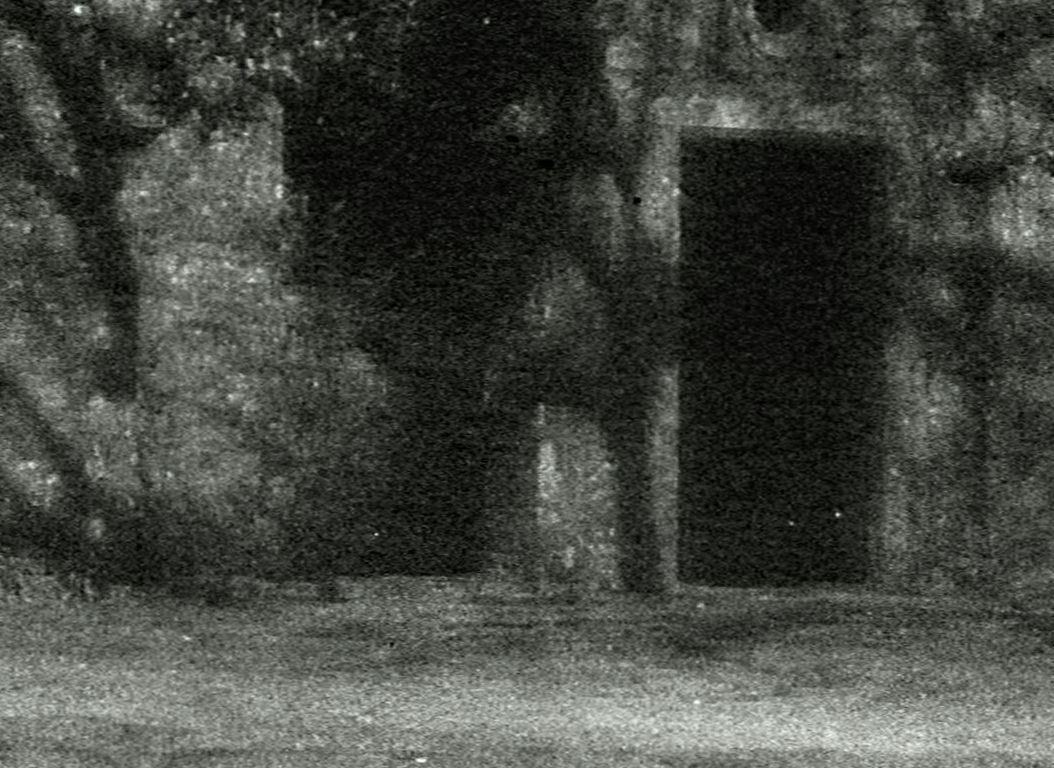
All of the shots have a kind of foggy thing that you can clearly see in this image in the door to the right.
A crop of that part will show you what I mean:
gffnzcn.jpg


The first thing that came to my mind was that the PaRodinal recipe I used is wrong. That recipe is using 15 grams of NaOH instad of the 20 gr recommended in digital truth, so that may be the cause?

I can't find any other cause since everything was measured with precission equipment. Most of the photographs were correctly exposed. It is possible some of them were a bit underexposed when taking the photograph, but all of them show the same kind of foggy thing.
Also, examining the negatives with a low-power microscope, I can see a lot of detail, but the grain is noticeable.

When scanning them, my scanner allows only 8bit per color channel at 3200 and also 4800 ppp. May the 8bit color depth scans be the cause of the problem?
Here is a link to the negative just directly from the scanner (Epson DX7450, 8bit per channel at 3200 ppp): http://i.imgur.com/cyckysr.jpg (~5000x4000)

Thanks.
 

MartinP

Member
Allowing Ads
Joined
Jun 23, 2007
Messages
1,569
Location
Netherlands
Format
Medium Format
It might be useful to see a photo of the negatives, against a lightbox or a piece of paper on a window for example.

Is a "rotating barrel tank" the usual style of tank, made for inversion agitation?

What colour are the negs - if they are a little bit brown or cream coloured it is possible that your fixer didn't quite do it's job. The scan doesn't look brown, but colour is tricky to tell and there may be a slight lack of fixing even with a non-obvious colour visually. Interesting that the film has cine-style perforations.

I have no experience with this sort of developer, but the fixer question is a more general possible process problem. Good luck!
 
Last edited by a moderator:

gone

Member
Allowing Ads
Joined
Jun 14, 2009
Messages
5,504
Location
gone
Format
Medium Format
I'm not sure what went wrong, and as mentioned it would better to look at the negs. You're giving it more agitation than I give Rodinal (but I doubt that's your issue here). I have to give regular Rodinal 45 seconds to 1 minute of GENTLE agitation the first minute, one gentle inversion every minute, and none the last minute. Otherwise the grain takes over. But then I use 1:25 for every format, even 35mm.

I wasn't aware of the health hazards associated w/ making up your own Rodinal developer. If this website below is giving the correct information, I would just buy it ready made.

http://www.brodie-tyrrell.org/wiki/index.php?Parodinal
 

Luis-F-S

Member
Allowing Ads
Joined
Sep 19, 2013
Messages
774
Location
Madisonville
Format
8x10 Format
Are you sure on the termperature? Almost looks reticulated. I'd try a different developer next time.
 
OP
OP
Yamato

Yamato

Member
Allowing Ads
Joined
Mar 21, 2015
Messages
8
Format
35mm
@momus: I think one of the problems was using 15grams of NaOH instead of 20gr recommended in your recipe, which is the same recipe as in digitaltruth and almost all over around www. I will make another batch of developer to test with it.

Anyway, I think that most of the problem can be the post-processing/digitising process.
I have been using a "normal" scanner/printer which seems doesn't have the necessary scanning quality for this kind of job.

For some reason, the scanner casts that kind of fog.
I used a DSLR with way better results.
In the next image, which is not a great image btw and it's slightly underexposed, I can't barely see that foggy thing. I reach a conclussion that I explain after the photograph. This was the result of using a DSLR instead of the scanner.

VMktGfg.jpg


The reason **may be** that the negative gets underexposed using that scanner (Epson DX7450). And when adjusting levels and sharpening in post-processing, a lot of artifacts and nasty things appear in the shadows and low lights in general
In the photographh above, taken with a DSLR a bit overexposed for the dark parts of the negative (like around +0.2 or +0.3 EV). The histogram of the digitised negative covers a way larger range than in the Epson scanner image.

Also I noticed that such scanner blurs the images randomly. Using a low-power microscope, all of the photographs are perfectly in focus and sharp, while the scanner shows sometimes them out of focus.
I will do more tests with the very first image of the tree in the first post.

The negatives photographed against different things:

on a window, against background building: http://i.imgur.com/zuiHEy8.jpg
on a windows against my hand and the building: http://i.imgur.com/hTaCPY0.jpg
against an incandescent bulb: http://i.imgur.com/HBCSybZ.jpg

I can also provide the DSLR RAW (Nikon .NEF) and/or a 16bit TIFF file in case someone wants to run tests. Just ask for it and I will post online.

Are you sure on the termperature? Almost looks reticulated. I'd try a different developer next time.

The temperature was correct. There was little variation on it. It was exactly 20ºC.
 
OP
OP
Yamato

Yamato

Member
Allowing Ads
Joined
Mar 21, 2015
Messages
8
Format
35mm
To be honest, you're whole strip of negative seems underexposed.

Is it possible that the underexposure was actually an underdeveloping or a developer recipe issue? How would affect the whole developing process using 15gr of NaOH instead of 20gr?

BTW, all these photographs were taken with a camera that has builtin light meter working flawlessly. I measured a scene with both the analog and a DSLR and both of them were giving me the same mettering with the same apperture, speed and ISO, so it is very improbable that all of the frames came underexposed.
 
Last edited by a moderator:

bdial

Subscriber
Joined
Jan 2, 2005
Messages
7,516
Location
North East U.S.
Format
Multi Format
Looks like it may be under-developed to me. The density of the edge markings look like they lack density.
If the camera generally produces good negatives, then the problem is most likely with the developer. If this is the first time you have used the formula, then there may be a problem in the mixing, or else the film you're working with just needs more time with that formula.
Have you worked with this film and camera developing it with fresh commercial developer?
 
OP
OP
Yamato

Yamato

Member
Allowing Ads
Joined
Mar 21, 2015
Messages
8
Format
35mm
Looks like it may be under-developed to me. The density of the edge markings look like they lack density.
If the camera generally produces good negatives, then the problem is most likely with the developer. If this is the first time you have used the formula, then there may be a problem in the mixing, or else the film you're working with just needs more time with that formula.
Have you worked with this film and camera developing it with fresh commercial developer?

I'm almost sure now that it is first due to the formula, using a lower concentration of NaOH, which leads to a lower concentration of p-aminophenol produced, that leads to a under-developed negative.
I used this same camera-film convination but with D76, giving me nice results when observing the negative under the view of a microscope.


The second part of the problem comes from the device used to digitalise the negatives which is not designed to scan negatives. But when digitalising with a DSLR, the result is noticeably better. Check the difference yourself:

4MELk74l.jpg
EC9TUKRl.jpg
 

Xmas

Member
Allowing Ads
Joined
Sep 4, 2006
Messages
6,398
Location
UK
Format
35mm RF
I thought the recipe included sulphite?

(there was a url link here which no longer exists)

But one needs to be able to look at back lit negative for faults.
Eg if a scan is mottled and the negative does not show mottle it is not the negatives fault.
 
OP
OP
Yamato

Yamato

Member
Allowing Ads
Joined
Mar 21, 2015
Messages
8
Format
35mm
I thought the recipe included sulphite?

(there was a url link here which no longer exists)

But one needs to be able to look at back lit negative for faults.
Eg if a scan is mottled and the negative does not show mottle it is not the negatives fault.

I read somewhere that sulphite was not necessary. I can't really tell you right now where I read that.

I have been using the recipe from here: http://www.drlux.cl/2012/01/fabricar-rodinal-casero-paracetamol.html

It is:

15 grams Paracetamol. I used 15x 1gram tablets.
15 grams Sodium Hydroxide.
Water up to 250 ml.

If you check out that page and scroll it down, you can see the results of such formula, which are really good.
But now, I think the guy mispelled 15gr NaOH and it should be 20 gr NaOH instead.

He explains the role of the Sodium Sulphite. Let me quote it:

"Debo detenerme a hablar mas en profundidad del sulfito de sodio, ya que la forma en la que interviene en el revelador es algo compleja. En los revelados de larga duración, o sea, cuando el revelado esta varias horas haciendo efecto sobre la emulsión, el sulfito de sodio va disolviendo la plata que se va formando y va generando sedimento que se pega en las paredes del tanque y del espiral. En casos donde se emplean películas como la T-max, este sedimento arruina la imagen ya que precipita y se pega de manera irregular sobre la emulsión."

If you don't know Spanish, it says: "I must stop to talk about Sodium Sulphite, since the way it intervenes within the developer is a bit complex. For long duration developing processes, that is, when the developer keeps taking effect over the emulsion for hours, the Sulphite keeps dissolving the silver that is formed and it starts to generate a sediment which sticks to the tanks and reels. In those cases where films like T-max is used, this sediment spoils the image because it precipitates and irregularly sticks to the emulsion."

You can see example of this effect in the first two images of the girls in that same page.

So what I understand is that Sulphite is used to avoid foggy negatives for long duration developings, but since I used a 7 minute process, it should be far from getting fog due to silver sediments. Using a microscope I couldn't see any kind of fog effect. Negatives are very clear and sharp, but as bdial suggested in his post before, and it is the same as I was suspecting, it is very possible that the negatives were underdeveloped. And the only reason I can find for this is the formula doesn't having enough NaOH to create enough p-aminophenol from Paracetamol, obtaining a Rodinal with lower concentration, so when I used the 1:25 dilution for 7 minutes, I was maybe having a 1:35 or even less concentration during the same amount of time, thus, finishing with underdeveloped negatives.

If I can manage to take a decent photograph of the microscope view, I will post it here.

But I will try next time with Digitaltruth's recipe.
 

Prof_Pixel

Member
Allowing Ads
Joined
Feb 17, 2012
Messages
1,917
Location
Penfield, NY
Format
35mm
We've talked about it before, but it sounds like you are seeing the typical kind of problem exhibited by low-end scanners when scanning B&W film. They are designed for color dye images and have problems with the scatter introduced by the silver grains in B&W film.
 

Xmas

Member
Allowing Ads
Joined
Sep 4, 2006
Messages
6,398
Location
UK
Format
35mm RF
I read somewhere that sulphite was not necessary. I can't really tell you right now where I read that.

I have been using the recipe from here: http://www.drlux.cl/2012/01/fabricar-rodinal-casero-paracetamol.html

It is:

15 grams Paracetamol. I used 15x 1gram tablets.
15 grams Sodium Hydroxide.
Water up to 250 ml.

If you check out that page and scroll it down, you can see the results of such formula, which are really good.
But now, I think the guy mispelled 15gr NaOH and it should be 20 gr NaOH instead.

He explains the role of the Sodium Sulphite. Let me quote it:

"Debo detenerme a hablar mas en profundidad del sulfito de sodio, ya que la forma en la que interviene en el revelador es algo compleja. En los revelados de larga duración, o sea, cuando el revelado esta varias horas haciendo efecto sobre la emulsión, el sulfito de sodio va disolviendo la plata que se va formando y va generando sedimento que se pega en las paredes del tanque y del espiral. En casos donde se emplean películas como la T-max, este sedimento arruina la imagen ya que precipita y se pega de manera irregular sobre la emulsión."

If you don't know Spanish, it says: "I must stop to talk about Sodium Sulphite, since the way it intervenes within the developer is a bit complex. For long duration developing processes, that is, when the developer keeps taking effect over the emulsion for hours, the Sulphite keeps dissolving the silver that is formed and it starts to generate a sediment which sticks to the tanks and reels. In those cases where films like T-max is used, this sediment spoils the image because it precipitates and irregularly sticks to the emulsion."

You can see example of this effect in the first two images of the girls in that same page.

So what I understand is that Sulphite is used to avoid foggy negatives for long duration developings, but since I used a 7 minute process, it should be far from getting fog due to silver sediments. Using a microscope I couldn't see any kind of fog effect. Negatives are very clear and sharp, but as bdial suggested in his post before, and it is the same as I was suspecting, it is very possible that the negatives were underdeveloped. And the only reason I can find for this is the formula doesn't having enough NaOH to create enough p-aminophenol from Paracetamol, obtaining a Rodinal with lower concentration, so when I used the 1:25 dilution for 7 minutes, I was maybe having a 1:35 or even less concentration during the same amount of time, thus, finishing with underdeveloped negatives.

If I can manage to take a decent photograph of the microscope view, I will post it here.

But I will try next time with Digitaltruth's recipe.
rodinal was a generic developer every one else cloned it with very little variation.
I used the same times with Azol...
The sulphite is the preservative at 1:25 it has limited effect during development.
There is a lot more sulphite in stock d76.
Rodinal is a clean working developer.
At 1:100 for 2hours you will get impressive large grain even with the sulphite.
Look at the back lit negative.
Buy enlarger.
Buy safety googles.
 
Photrio.com contains affiliate links to products. We may receive a commission for purchases made through these links.
To read our full affiliate disclosure statement please click Here.

PHOTRIO PARTNERS EQUALLY FUNDING OUR COMMUNITY:


Ilford ADOX Freestyle Photographic Stearman Press Weldon Color Lab Blue Moon Camera & Machine
Top Bottom