


Alex Benjamin
Subscriber
How better to represent the philosopher who wrote "Being and Nothingness" than to have his being surrounded by urban landscape fading into nothingness...

How better to represent the philosopher who wrote "Being and Nothingness" than to have his being surrounded by urban landscape fading into nothingness...

Alex again hits the nail on the head. Alex you should write photographic critique articles for magazines.
Clive, do you really believe HCB planned that “fading into nothingness”? I suspect he recognised Sartre on the bridge looking thoughtful and grabbed a snap portrait. He may have had time to choose a wide aperture, maybe not. But to suppose that he thought it would be fitting for a philosopher to have such a background stretches my credulity too far.
I also suspect that @Alex Benjamin was just being whimsical, not implying that HCB had followed such a thought process.
PS - I am a huge admirer of HCB’s portraits, by the way.
My comment about "nothingness" was indeed in jest, but only partly. It was a humorous way to point out an interesting aspect of Carter-Bresson's art, the only one, I think, in which his twin vocations, photography and painting, seem to merge.
Cartier-Bresson stated that when on assignment (or just wandering around) he would always leave his aperture at either f/8 or f/11. This would give him enough depth of field to capture his subject and give enough clarity to its environment (i.e., context).
His approach to portraiture is different. The pattern is often to have very shallow depth of field. Not only indoors—where it might have been necessary because of lack of light and the slower films of the times (Tri-X was considered a 200 ISO film back then)—but also outside.
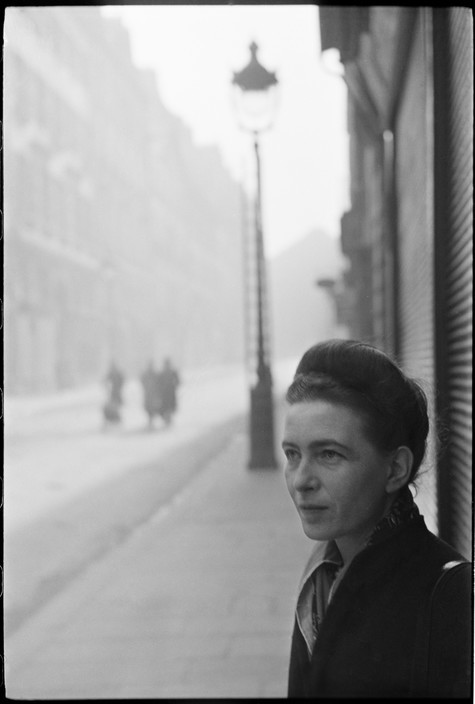
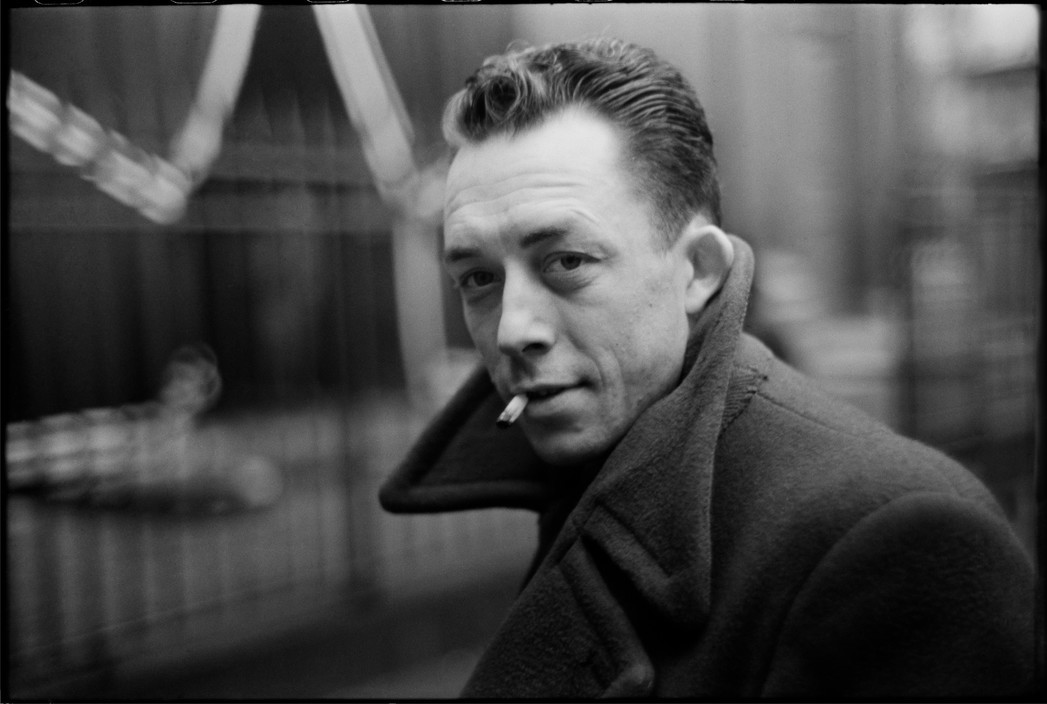
In many portraits, the background is no longer treated as photographed objects (or people), but almost as if painted in watercolours—shapes and contours that are no longer there to give context but are chosen for their tonal qualities and variety, and act almost as an impressionistic backdrop. The wide aperture, I believe, is thus a deliberate choice.
This is a photo portraiture technique we take for granted today (that has become a chiché, unfortunately), but that Cartier-Bresson was one of the first, if not the first, to employ, and in such a beautifully artistic manner. It takes the eye of a painter to do it this well (and also takes a great printer, but that's another story). He did it a lot in his early portraits, and seems to have moved away from it later.
This is most obvious in the portraits of two other Frech philosopers, that of Simone de Beauvoir, Sartre's life companion (and its interesting to notice how similar these two portraits are), and of Albert Camus.
but he used shallow DOF for almost all his portraits, not just philosophers.
Sometimes nothing is sharply in focus, as in this beautiful portrait of Marie-Claude Vaillant Couturier. Maybe some would argue that was deliberate, but I tend to think he managed to get a wonderful portrait despite a wide aperture and very slow shutter speed.
Suggested reading: Susan Sontag's "Against Interpretation."Who says the photo needs to be explained?
Yes but the title is not there to "explain" the photo. We, as viewers do not really need it, right?
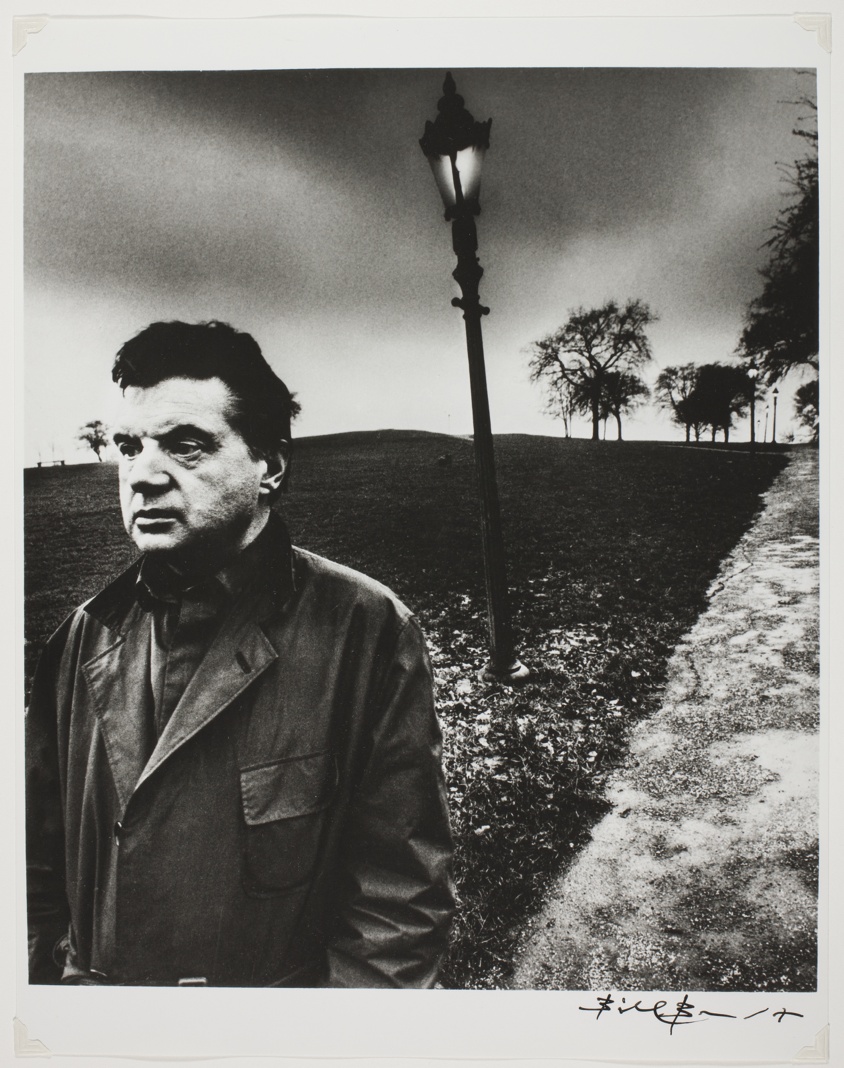
I know that Bill Brandt when he did a portrait of Francis Bacon he deliberately chose the setting and atmosphere to mimic his paintings
That quote can be found in the book Interviews and conversations 1951-1998.Another interesting aspect of Cartier-Bresson's photography that we don't talk much about is how flat the light is—in portraits, but also elsewhere. I read a quote of his where he says that he always prefered photographing on cloudy, gray days because he hated to deal with the hightened contrast of sunny days. I can't remember where I read that. I'll check to see later if I can find it.
In journalism they say every photograph needs a caption.
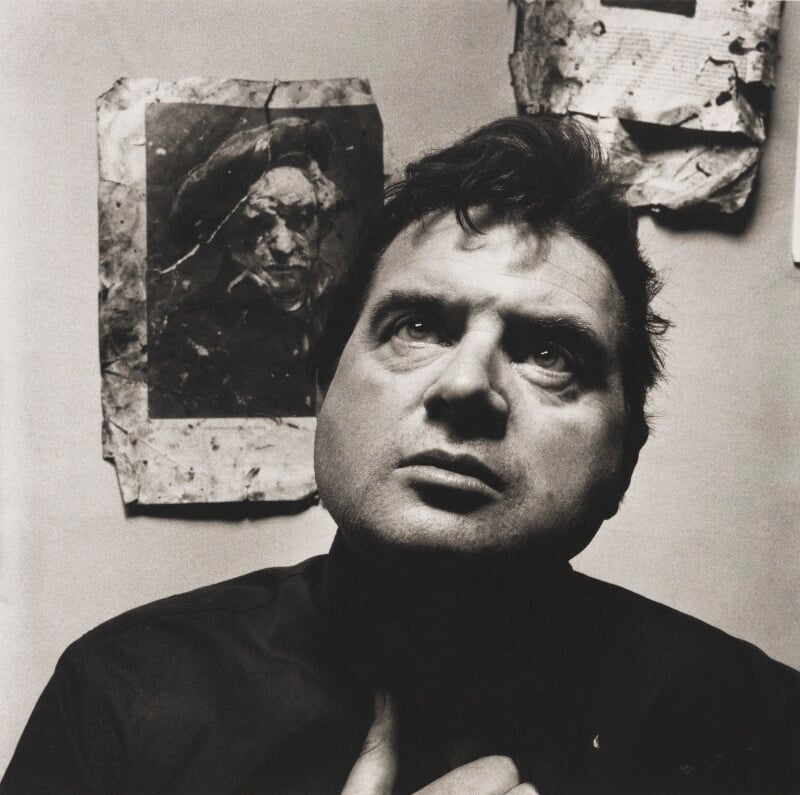
I appreciate them all, but I was also thinking it’s time we had an Irving Penn appreciation thread.Easily the best of those pictures.

In journalism they say every photograph needs a caption.
Captions sometimes explain, but always identify.But Elliot Erwitt said, “The whole point of taking pictures is so that you don't have to explain things with words.”
My comment about "nothingness" was indeed in jest, but only partly. It was a humorous way to point out an interesting aspect of Carter-Bresson's art, the only one, I think, in which his twin vocations, photography and painting, seem to merge.
Cartier-Bresson stated that when on assignment (or just wandering around) he would always leave his aperture at either f/8 or f/11. This would give him enough depth of field to capture his subject and give enough clarity to its environment (i.e., context).
His approach to portraiture is different. The pattern is often to have very shallow depth of field. Not only indoors—where it might have been necessary because of lack of light and the slower films of the times (Tri-X was considered a 200 ISO film back then)—but also outside.
In many portraits, the background is no longer treated as photographed objects (or people), but almost as if painted in watercolours—shapes and contours that are no longer there to give context but are chosen for their tonal qualities and variety, and act almost as an impressionistic backdrop. The wide aperture, I believe, is thus a deliberate choice.
This is a photo portraiture technique we take for granted today (that has become a chiché, unfortunately), but that Cartier-Bresson was one of the first, if not the first, to employ, and in such a beautifully artistic manner. It takes the eye of a painter to do it this well (and also takes a great printer, but that's another story). He did it a lot in his early portraits, and seems to have moved away from it later.
This is most obvious in the portraits of two other Frech philosopers, that of Simone de Beauvoir, Sartre's life companion (and its interesting to notice how similar these two portraits are), and of Albert Camus.

Suggested reading: Susan Sontag's "Against Interpretation."
What does Susan Sontag know about photography?
I doubt if she ever picked up a camera to feel the intricacies and real difficulties of photography
The most highly respected art critics may not paint or sculpt. Film critics aren't Fellini..... music critics are master musicians....
Picking up a camera doesn't necessarily make you an expert at anything....
I agree for all the other arts but photography.
I believe in photography it is so simple and yet so difficult that you really NEED to use at least a camera a few times to understand what you are talking about
| Photrio.com contains affiliate links to products. We may receive a commission for purchases made through these links. To read our full affiliate disclosure statement please click Here. |
PHOTRIO PARTNERS EQUALLY FUNDING OUR COMMUNITY:  |


