
Four of the best HCB photos in my opinion:
-
Welcome to Photrio!Registration is fast and free. Join today to unlock search, see fewer ads, and access all forum features.Click here to sign up
You are using an out of date browser. It may not display this or other websites correctly.
You should upgrade or use an alternative browser.
You should upgrade or use an alternative browser.
HCB Appreciation
-
A
- Thread starter cliveh
- Start date

Recent Classifieds
-
For Sale FS: Canon 1984 Olympic (new) F1 w/ AE Finder motodrive and 50mm f/1.2
- Started by dirkfletcher
-
For Sale Bessa L with Voigtlander grip and 21mm f/2.8 Avenon, $559
- Started by dirkfletcher
-
For Sale Fuji GW670 III
- Started by campy51
-
For Sale Hasselblad X Pan w/ 45mm/f4 Lens
- Started by eftones
-
For Sale 6 antique French pneumatic shutters _ Guerry
- Started by Manual Camera
Forum statistics
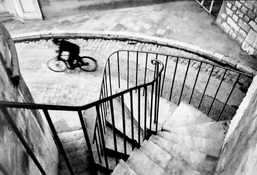
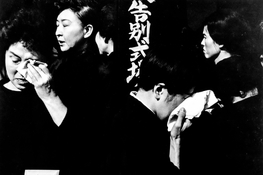
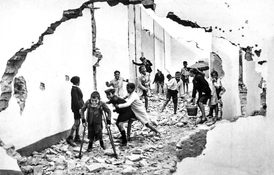
It represents a leap into the unknown, as is the entire history of the human race. But the photograph in the 20th century is probably the most graphic photographic representation of this fact, recorded on the physical integrity of film.
Very poetic

The lines and how they converge remind me of another HCB photo of two people staring above the train lines

snusmumriken
Subscriber
This image is not just about superb timing, but the tonal relationship of the composition.
And the Cubist vibe.
My personal test of any photo is ‘Does it bear repeated viewing?’. This one has perhaps become over-familiar to me, but still I find it visually fascinating.
It seems like you're backtracking on your position.
Nah i have always liked HCB. Not for all of his photos though. For some of his photos where he obviously tries hard to "create" a photograph i am ruthless against him

pentaxuser
Member
I'm afraid you misunderstand.
I was saying that prints are different from screen images, and that one does create things when they make prints from and through their efforts.
No comment was made about how prints originating from two different sources might differ.
Thanks Matt so you were not referring to differences in prints.
Yes there is no denying that a print is a physical thing which a screen image is not. What do you create however when you make a print other than a physical picture and what does the effort involved in making a print do to create things that I assume you are saying are not there in a screen image such as a transparency which you screen for the convenience of yourself and possible others in terms of ease of viewing?
Still genuinely puzzled
Thanks
pentaxuser

Prints look like prints. They are more than just the image in them. They have physical characteristics in addition to the image included in them. They respond to and are dependent on the light they are viewed with. Some have texture, while others have gloss. They have a physical weight. If made sensitively, they are printed to take advantage of all those physical characteristics, and are printed with them in mind.
Screen images look like screen images - your photography looks pretty well the same as the cat that someone shared with you on social media.
Screen images look like screen images - your photography looks pretty well the same as the cat that someone shared with you on social media.
pentaxuser
Member
Prints look like prints. They are more than just the image in them. They have physical characteristics in addition to the image included in them. They respond to and are dependent on the light they are viewed with. Some have texture, while others have gloss. They have a physical weight. If made sensitively, they are printed to take advantage of all those physical characteristics, and are printed with them in mind.
Screen images look like screen images - your photography looks pretty well the same as the cat that someone shared with you on social media.
Thanks but when I read this, it is to my mind a simple description of a print's physical characteristics only. I don't even know what the last sentence in your first paragraph means. Every time I or anyone else takes a picture it is taken carefully to reflect as best as they are able what they saw and it is then printed as best as they are able so others looking at the print can see what the photographer took or so I would assume
If that if what you meant when saying "If made sensitively etc means that then fine. If it means something else then I'll have to conclude that out two brains work quite differently On this subject we effectively think and speak in two different languages
We may even see the world completely differently in terms of what we see and how we explain what we see
That's just the way we are and all remains fine but I feel we have largely exhausted any more useful discussion so I'll withdraw
pentaxuser .
OP
OP

cliveh
Subscriber
- Joined
- Oct 9, 2010
- Messages
- 8,002
- Format
- 35mm RF
Prints look like prints. They are more than just the image in them. They have physical characteristics in addition to the image included in them. They respond to and are dependent on the light they are viewed with. Some have texture, while others have gloss. They have a physical weight. If made sensitively, they are printed to take advantage of all those physical characteristics, and are printed with them in mind.
Screen images look like screen images - your photography looks pretty well the same as the cat that someone shared with you on social media.
Yes, but isn’t that just visual semantics. A pig weighed in 15 different ways is still a pig. The image whether viewed in a book on screen or as a print is still the same image.
Garry Winogrand: “I photograph to see what the world looks like in photographs.”
When he said that, of course, he was speaking of prints (or prints reproduced in books.
Experiencing a print is a substantially different thing than experiencing an image on a screen.
When he said that, of course, he was speaking of prints (or prints reproduced in books.
Experiencing a print is a substantially different thing than experiencing an image on a screen.

A pig weighed in 15 different ways is still a pig. The image whether viewed in a book on screen or as a print is still the same image.
They're all different instances. So, not a pig weighed 15 different ways but 15 different pigs that all weigh the same.
OP
OP
cliveh
Subscriber
- Joined
- Oct 9, 2010
- Messages
- 8,002
- Format
- 35mm RF
They're all different instances. So, not a pig weighed 15 different ways but 15 different pigs that all weigh the same.
I rest my case.
Mike Lopez
Member
- Joined
- Jan 30, 2005
- Messages
- 693
- Format
- Multi Format
I rest my case.
But what is your case?

Pieter12
Member
All photos are pigs.
I rest my case.
Do you like sandwiches?
snusmumriken
Subscriber
Yes, but isn’t that just visual semantics. A pig weighed in 15 different ways is still a pig. The image whether viewed in a book on screen or as a print is still the same image.
I completely agree. When you look at all the different versions of an HCB image (say) online and in books, the essential admirable qualities remain the same no matter how badly the image is treated.
snusmumriken
Subscriber
joho
Member
- Joined
- May 13, 2011
- Messages
- 240
- Format
- Large Format
HCB did not come to a Zen moment and said "I most photograph M.L.K.jr"
he was paid...
Bob Henriques’ image depicts Henri Cartier-Bresson pausing, camera in hand, in front of Martin Luther King Jr during the Prayer Pilgrimage for Freedom demonstration in 1957.
one way weighed.
he was paid...
Bob Henriques’ image depicts Henri Cartier-Bresson pausing, camera in hand, in front of Martin Luther King Jr during the Prayer Pilgrimage for Freedom demonstration in 1957.
one way weighed.
snusmumriken
Subscriber
HCB did not come to a Zen moment and said "I most photograph M.L.K.jr"
he was paid...
Bob Henriques’ image depicts Henri Cartier-Bresson pausing, camera in hand, in front of Martin Luther King Jr during the Prayer Pilgrimage for Freedom demonstration in 1957.
one way weighed.
So if I take a work-related photo and it turns out to be a good one, it doesn’t count?
Garry Winogrand: “I photograph to see what the world looks like in photographs.”
When he said that, of course, he was speaking of prints (or prints reproduced in books.
Experiencing a print is a substantially different thing than experiencing an image on a screen.
Why? What do you exactly experience on the print that you cannot in screen, the quality of the paper or texture of it as you said? Is it really that important? It is not painting where the paint has a material texture. And I am saying it me who love prints that is why I buy so many photography books. But I dont believe they are superior to an image in any other form. An image has no material identity it exists in many forms. Maybe like a musical score. And the prints or edits are interpretations

Alan Edward Klein
Member
Garry Winogrand: “I photograph to see what the world looks like in photographs.”
When he said that, of course, he was speaking of prints (or prints reproduced in books.
Experiencing a print is a substantially different thing than experiencing an image on a screen.
But liking one over the other is just a personal preference.
But liking one over the other is just a personal preference.
Kind of the debate OVF vs EVF
An image has no material identity
Where can I see an image that has no material identity?
| Photrio.com contains affiliate links to products. We may receive a commission for purchases made through these links. To read our full affiliate disclosure statement please click Here. |
PHOTRIO PARTNERS EQUALLY FUNDING OUR COMMUNITY:  |