• Welcome to Photrio!
    Registration is fast and free. Join today to unlock search, see fewer ads, and access all forum features.
    Click here to sign up

HC-110; Your Favorite Dilution?

Cut

D
Cut

  • 0
  • 0
  • 3
The Kite Surfer

A
The Kite Surfer

  • 3
  • 0
  • 27

Recent Classifieds

Forum statistics

Threads
201,949
Messages
2,832,523
Members
101,030
Latest member
kkiippyy
Recent bookmarks
0

StoneNYC

Member
Allowing Ads
Joined
Aug 5, 2012
Messages
8,345
Location
Antarctica
Format
8x10 Format
I used to think dilution S was the best (for Stone) which is 1:25 but now that ok doing rotary, I might try 1:50
 

PhotoBob

Subscriber
Allowing Ads
Joined
Feb 16, 2006
Messages
592
Location
Abbotsford, BC
Format
Multi Format
my 2 bits worth

I have traditionally used dilution B. And like the fact that I can develop in 5 minutes. Now about reading several posts on this thread, I might give 1:49 a try. Saving money while achieving the same results seems copacetic to me.
With the CombiPlan tanks, I got those too for sheet film, but also purchased the version I and II of the Mod 54 and really like the convenience and they only use about 200 ml less chemistry.
 

Mark Crabtree

Member
Allowing Ads
Joined
Apr 21, 2009
Messages
782
Format
Large Format
Although dilution H has been my most common and my "go-to" dilution for ordinary developments, if I had to pick a favorite then I would have to go with dilution A. That is because I use it only for developing found film, which is just so much fun to do. :smile: My process for this involves reduced temperatures (as low as 40F) which explains how the development times still tend to come out in a usable range. I can tell you that the larger volumes required for "A" just seem wrong at first, especially when you are accustomed to much higher dilutions.

It sounds interesting, but what is the purpose of your low temp development with high concentration developer?
 

Denverdad

Member
Allowing Ads
Joined
Apr 20, 2009
Messages
316
Location
Superior, Co
Format
Medium Format
It sounds interesting, but what is the purpose of your low temp development with high concentration developer?

The claim is that the lower temperature and higher concentration tend to reduce the fog level - something to which old film is susceptible.
 

Mark Crabtree

Member
Allowing Ads
Joined
Apr 21, 2009
Messages
782
Format
Large Format
The claim is that the lower temperature and higher concentration tend to reduce the fog level - something to which old film is susceptible.

Interesting. Thanks.

I use HC110 mostly for that characteristic anyway. I might have given that a try, but am just using my last really out of date stuff right now to season some Acufine.

BTW, in case anyone is interested, I think I finally had some HC110 go off. I'd been using an ancient bottle I got from a friend and it had been open on my shelf for well over 5 years. It was fine, though I didn't compare to fresh. I just started a "new" bottle that was unopened and does look newer than the last one, and it sure seems off. These were both the old rectangular bottles. The one I just finished had a glued on paper label, and the current one has a silkscreened label.

Sort of back on topic, I do actually find the 1:49 dilution more confusing for some odd reason, but am fairly certain I didn't screw that up. I did Tri-X for 7 1/2 minutes at 75 degrees at 1:49. That seemed like a generous time, but was erring that way because of the untested bottle, and outdated film. Just to double check myself, I'll do some more tests with Dilution B when I get a chance, but was surprised because I've never seen HC110 go off like that. No problem since it was just fooling around test shots, or I wouldn't have risked it.
 

Vaughn

Subscriber
Allowing Ads
Joined
Dec 13, 2006
Messages
10,285
Location
Humboldt Co.
Format
Large Format
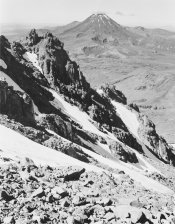
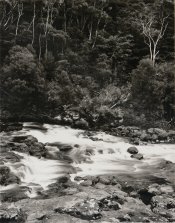
Like Stone I had my special dilution, Dil. V, of course. 1:60 for 10 minutes in a tray for TMax100 if I remember right, which I may not. Whatever it was I liked the negatives and how they printed on Portriga Rapid 111, Grade 3 and Ilford Gallerie Glossy grade 3.

One on each type of paper,
Both from New Zealand
 

Attachments

  • Mt Nueakahouphe, NZ_16x20.jpg
    Mt Nueakahouphe, NZ_16x20.jpg
    620.9 KB · Views: 190
  • Fairey Pools, Keri Keri, NZ_16x20.jpg
    Fairey Pools, Keri Keri, NZ_16x20.jpg
    1 MB · Views: 190

StoneNYC

Member
Allowing Ads
Joined
Aug 5, 2012
Messages
8,345
Location
Antarctica
Format
8x10 Format
Like Stone I had my special dilution, Dil. V, of course. 1:60 for 10 minutes in a tray for TMax100 if I remember right, which I may not. Whatever it was I liked the negatives and how they printed on Portriga Rapid 111, Grade 3 and Ilford Gallerie Glossy grade 3.

One on each type of paper,
Both from New Zealand

Great depth in that first one, and nice blacks in the second.
 
Joined
Jan 21, 2003
Messages
15,715
Location
Switzerland
Format
Multi Format
Like Stone I had my special dilution, Dil. V, of course. 1:60 for 10 minutes in a tray for TMax100 if I remember right, which I may not. Whatever it was I liked the negatives and how they printed on Portriga Rapid 111, Grade 3 and Ilford Gallerie Glossy grade 3.

One on each type of paper,
Both from New Zealand

See, my 1+59 dilution mentioned earlier is the 1:60 that Vaughn uses in Dil. V. :smile:
 

erikg

Member
Allowing Ads
Joined
Feb 10, 2003
Messages
1,444
Location
pawtucket rh
Format
Multi Format
I've always found it interesting how people use such a wide variety of dilutions when it comes to HC-110, as opposed to any other general purpose solvent developer. Choose any other developer, say D-76, and people will say they use it 1+0, or 1+1 for slightly more sharpness, or 1+3 for high sharpness/more grain. But with HC-110, nobody seems to talk about any of that stuff. They just dilute it any number of random ways.

For a while I was using the method I learned from Arnold Gassan in which time and temp. are held to a constant and it's the dilution of HC-110 that changes. We worked out through testing a system that covered expansion and contraction for a few films. It was his opinion that HC-110 was very consistent in it's behavior over a range of dilutions. This seemed to match up with what I experienced. Keeping the time the same seemed to be a contributing factor as well. It was a good system. I wrote it up here years ago. Later when I was running film in an ATL machine I used 1:50 pretty regularly, and we tested 1:75 as well. The Jobo ATLs run at 75F so the higher dilution was helpful in keeping the processing time from being too short.

I agree, Michael, I don't recall anyone saying anything about how they were going with this or that dilution of HC-110 because of perceived differences in sharpness etc. Not in the way that people speak of Rodinal or as you say D-76. It is interesting.
 

StoneNYC

Member
Allowing Ads
Joined
Aug 5, 2012
Messages
8,345
Location
Antarctica
Format
8x10 Format
I think it's also the amount of dilution you can do, HC-110 and Rodinal are extremely concentrated developers, which enables people to use a number of different solutions and still have it not be too dilute to develop film properly, but something like DD-X is a 100+400 standard dilution, is a very "thin" developer so your choice of development dilutions is less before you have noticeable "failure" or at least serious degradation...
 

NedL

Subscriber
Allowing Ads
Joined
Aug 23, 2012
Messages
3,421
Location
Sonoma County, California
Format
Multi Format
I have wondered the same.... reading about other developers, people usually give a reason for the dilution they are using. I chose the HC-110 dilutions that included at least 6 ml of syrup in my tanks... now that my development times are dialed in there is a strong incentive not to change anything! That was not a very logical way to come to the dilution...
 

erikg

Member
Allowing Ads
Joined
Feb 10, 2003
Messages
1,444
Location
pawtucket rh
Format
Multi Format
Maybe those differences aren't visible or maybe people just aren't that logical. It is curious.
 

NB23

Member
Allowing Ads
Joined
Jul 26, 2009
Messages
4,307
Format
35mm
Like stand development.
People praise stand development because they can leave their film for 1 hour and do other things in the mean time. But they don't want to use Dilution A for 3 minutes because it can cause uneven development. If you ask me, a quick 3 minutes and get uneven development, or 1 hour and get uneven development AND shitty contrast, I prefer dilution A and get over it in three quick minutes.
There, you see, I was talking about time more then development properties.

I really agree with your observations. Maybe it's because there is really no difference between dilution B and H. I haven't seen one in real life. I like Dilution A because it seems to give a better contrast but that's subjective as I haven't tested it deeply enough.
D76 1:3 is staggeringly different then 1:0. It shows right away. Just as Ilfosol-3 shows right away if I compare it to D76. But HC-110 B or H or E has never really shown me a difference. I tend to stick to B. Dilution A when I need a faster development (not for better contrast. Dilution B is plenty satisfactory in that regard). Dilution H when I prefer open shadows... But I fear this too is more my imagination then real life results.

Of course, I religiously shake 5 inversion per 30 seconds with all my developers. The idea being that fresh developer constantly has to be in contact with the emulsion. I don't believe in "gentle agitation" or "one slow inversion". That's a load of BS.
 

StoneNYC

Member
Allowing Ads
Joined
Aug 5, 2012
Messages
8,345
Location
Antarctica
Format
8x10 Format
Like stand development.
People praise stand development because they can leave their film for 1 hour and do other things in the mean time. But they don't want to use Dilution A for 3 minutes because it can cause uneven development. If you ask me, a quick 3 minutes and get uneven development, or 1 hour and get uneven development AND shitty contrast, I prefer dilution A and get over it in three quick minutes.
There, you see, I was talking about time more then development properties.

I really agree with your observations. Maybe it's because there is really no difference between dilution B and H. I haven't seen one in real life. I like Dilution A because it seems to give a better contrast but that's subjective as I haven't tested it deeply enough.
D76 1:3 is staggeringly different then 1:0. It shows right away. Just as Ilfosol-3 shows right away if I compare it to D76. But HC-110 B or H or E has never really shown me a difference. I tend to stick to B. Dilution A when I need a faster development (not for better contrast. Dilution B is plenty satisfactory in that regard). Dilution H when I prefer open shadows... But I fear this too is more my imagination then real life results.

Of course, I religiously shake 5 inversion per 30 seconds with all my developers. The idea being that fresh developer constantly has to be in contact with the emulsion. I don't believe in "gentle agitation" or "one slow inversion". That's a load of BS.

Your speaking very objectively and making those opinions sound like facts.

"Better" contrast should probably say "stronger contrast" because better is an opinion on what you like.

Also saying "I've never been able to have even development with stand and I don't like the low contrast I get with it" rather than saying it always gives uneven development, because I've certainly never had uneven development from it, so again, just from your experience you don't enjoy it and haven't found it to work for you.

Also, the "load of BS" about agitation schemes, again, this is more a "I personally haven't found that by agitating gently I get the results I want so I agitate vigorously every 30 seconds"

Personally when I do that my negatives look very bad to me and the edge effects seem softened and to me I don't like that look, but I'm glad it works for you.
 

NB23

Member
Allowing Ads
Joined
Jul 26, 2009
Messages
4,307
Format
35mm
Shooting TMAX 100 and having to print it on grade 5, thanks to poor development techniques is not what Kodak aimed when they created that particular film or when they came to conclusions about strongly recomending HC110 Dilution B and VIGOROUS inversions for this or that film.

Yes, there is a concept of BETTER contrast. It's called "Instructions" and they have been formulated by scientists... Not by some dude in pajamas lecturing other folks on internet forums.

What is this new fashion about doing exactly the opposite of what manufacturers recomend on their own products?
 

DWThomas

Subscriber
Joined
Jun 13, 2006
Messages
4,623
Location
SE Pennsylvania
Format
Multi Format
Heh, now we need a seven page thread on what constitutes "vigorous agitation!" :munch: I do a fairly rapid inversion and rotate the tank 50 or 60º between each inversion. I also ensure the tank is filled enough to cover the film but not right to the top. I have found better (more even) results that way.

I'd think, depending on the film and tank, if one really shakes things up one might dislodge the film and screw something up. I subscribe to careful experimenting and being consistent. There could be two dozen ways to get there; using the same one every time should deliver the same results.

I use dilution H direct from stock as a one shot because my episodes of developing are quite variable in when they occur and I feel stock solutions may not hold up reliably. Using dilution H minimizes the developer consumption.
 
Joined
Jan 21, 2003
Messages
15,715
Location
Switzerland
Format
Multi Format
Shooting TMAX 100 and having to print it on grade 5, thanks to poor development techniques is not what Kodak aimed when they created that particular film or when they came to conclusions about strongly recomending HC110 Dilution B and VIGOROUS inversions for this or that film.

Yes, there is a concept of BETTER contrast. It's called "Instructions" and they have been formulated by scientists... Not by some dude in pajamas lecturing other folks on internet forums.

What is this new fashion about doing exactly the opposite of what manufacturers recomend on their own products?

Because many of us are not scientists. We are artists, and are inclined to experiment, and love to see what's on the other side of the fence.
I learn a lot more by breaking rules than following them.

My prints aren't some freaking ANSI or ISO standard. They are documents of emotions; pain, happiness, and melancholy. They are pictures that I wish to reveal something that I find important with. They are so much more than a test chart. Perfect grayscale tones with 'text book' tonality do nothing for me, so I often don't do what manufacturers recommend.

But, you have to learn what normal is before you can learn what isn't normal. Standard process is helpful to begin with, and make good, solid average negatives. Then you move beyond.
 
Last edited by a moderator:

NB23

Member
Allowing Ads
Joined
Jul 26, 2009
Messages
4,307
Format
35mm
Imagine Kodak selling packs of Ektar 1000 that expired in 1986 and telling us that the colors are nice and who are we to judge, anyways. That contrast and colors are subjective, therefore the film is "perfect as is".

Would you accept this? You wouldn't because you know what is good and bad. Good colors look good. Good contrast looks good. And to achieve optimal results there's only one way: fresh film and process as recomended. Any deviation becomes a subjective matter. Unless you're an expert and you csn measure scientifically.



Because many of us are not scientists. We are artists, and are inclined to experiment, and love to see what's on the other side of the fence.
I learn a lot more by breaking rules than following them.

My prints aren't some freaking ANSI or ISO standard. They are documents of emotions; pain, happiness, and melancholy. They are pictures that I wish to reveal something that I find important with. They are so much more than a test chart. Perfect grayscale tones with 'text book' tonality do nothing for me, so I often don't do what manufacturers recommend.

But, you have to learn what normal is before you can learn what isn't normal. Standard process is helpful to begin with, and make good, solid average negatives. Then you move beyond.
 
Last edited by a moderator:
Joined
Jan 21, 2003
Messages
15,715
Location
Switzerland
Format
Multi Format
Imagine Kodak selling packs of Ektar 1000 that expired in 1986 and telling us that the colors are nice and who are we to judge, anyways. That contrast and colors are subjective, therefore the film is "perfect as is".

Would you accept this?

I don't understand how this is relevant.

Kodak and Ilford are companies full of engineers who make film according to specification. Kind of like how somebody makes tin foil and paper towels to specification.

Just because they recommend using it a certain way doesn't mean you have to use it that way. It's called creativity, curiosity, and working with our tools until they do what we want them to do.

It's their job to supply product that is consistent and within the specification. Kind of like paint of a certain color should always be the same. Then the painter puts yellow, white, or green next to it on their palette, and mix them freely until they have the color they need and want.
Why should photography be any different?
 

Vaughn

Subscriber
Allowing Ads
Joined
Dec 13, 2006
Messages
10,285
Location
Humboldt Co.
Format
Large Format
...And to achieve optimal results there's only one way: fresh film and process as recomended. Any deviation becomes a subjective matter. Unless you're an expert and you csn measure scientifically.

"Optimal results" is also an subjective measure. What is "optimal" for you (or the engineers at Kodak or Ilford) is a poor negative for me.
 

StoneNYC

Member
Allowing Ads
Joined
Aug 5, 2012
Messages
8,345
Location
Antarctica
Format
8x10 Format
Imagine Kodak selling packs of Ektar 1000 that expired in 1986 and telling us that the colors are nice and who are we to judge, anyways. That contrast and colors are subjective, therefore the film is "perfect as is".

Would you accept this? You wouldn't because you know what is good and bad. Good colors look good. Good contrast looks good. And to achieve optimal results there's only one way: fresh film and process as recomended. Any deviation becomes a subjective matter. Unless you're an expert and you csn measure scientifically.
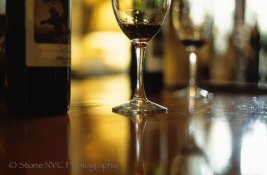
Your example would lead us to believe that there is just one specific pallet that is proper and all others are no good, if so then why does kodak produce both Portra and Ektar, two different contrast films, two different color pallets, saturation points, etc, even the base tone is different (ektar is more pink and portra is more orange). What about manufacturers like Lomography who sell film specifically to be cross processed to produce strange colors and tones, I'm not saying they are the best example of a good film company, but they wouldn't have customers who buy things if they didn't essentially do exactly what you stated, sell old film as new that has color shifts...

which of these are good images and which are bad?

Portra400-Lab-2400002.jpg
Provia100f-Lab-2400009.jpg
Provia-Beach-Pano-1.jpg
Provia100f-pano-Starbucks-1.jpg
Provia100F-AristaE6-3200005.jpg
Provia100f-pano-2400-ep016.jpg
20120822-Scan10016.jpg
95610015 as Smart Object-1.jpg

it's all subjective...

And none of this is cross processed, but some is specifically under exposed and others were pulled from their color development stage early to give a more muted experience... because it's art...
 

BradS

Member
Allowing Ads
Joined
Sep 28, 2004
Messages
8,130
Location
Soulsbyville, California
Format
35mm
I alway use HC-110 diluted 1+39....because it's easy to mix up 400ml that way. (I see that the conversation has diverged significantly from the original topic...hmmmm :smile: )
 

eddie

Member
Allowing Ads
Joined
Jul 24, 2005
Messages
3,259
Location
Northern Vir
Format
Multi Format
I think it all comes down to:
1- Following the manufacturer's recommendations will give you acceptable results.
2- Adapting the manufacturer's recommendations to your own techniques will give you improved results.
3- In order to achieve #2's improved results, you need to put in the time, and effort, to explore the particular film/developer combination you choose.
4- Once you've achieved #3, you will be free to concentrate on the important stuff (the final result you envisioned when pressing the shutter), without the need to worry about the technical side of things.
 
Photrio.com contains affiliate links to products. We may receive a commission for purchases made through these links.
To read our full affiliate disclosure statement please click Here.

PHOTRIO PARTNERS EQUALLY FUNDING OUR COMMUNITY:



Ilford ADOX Freestyle Photographic Stearman Press Weldon Color Lab Blue Moon Camera & Machine
Top Bottom