• Welcome to Photrio!
    Registration is fast and free. Join today to unlock search, see fewer ads, and access all forum features.
    Click here to sign up

Have You Been shooting With Ektachrome - Because You Can't Get Ahold Of Any Velvia?

Valencia

A
Valencia

  • 0
  • 0
  • 11
Tied to the dock

D
Tied to the dock

  • 4
  • 0
  • 75

Recent Classifieds

Forum statistics

Threads
203,085
Messages
2,849,665
Members
101,652
Latest member
Mayorbeez
Recent bookmarks
2
Yep.
It may take time. The organisation running the Residency has first dibs at viewing all of the results, and what they will print and exhibit – in a very posh, historic and of course, arty-farty venue. So...nothing can be put up for a perve until their sortie has wrapped up.

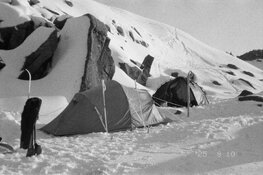
If you're curious, you can Google QUE RIVER TASMANIA and see a Waratah local (a small town and our rendezvous point) has a few unfortunately not very good quality pics of the general environment; scant few people go there really – it is very wild, cold, wet and remote, with the rainforest in darkness at 3.30pm (Daylight Savings time finishes on the east coast here on 7th April).

The icky Google pics though give a rough idea of how thick, dark and dim the rainforest is there – much darker than my usual softly-illuminated haunts of the mainland!
 
it is very wild, cold, wet and remote, with the rainforest in darkness at 3.30pm (Daylight Savings time finishes on the east coast here on 7th April).

It's a brave soul indeed who wanders into the Tasmanian wilderness after the Autumn Equinox.

Too nasty for the likes of me - I'll stick to the Tropics thank you. I can handle mosquitos better than icicles.
 
It's a brave soul indeed who wanders into the Tasmanian wilderness after the Autumn Equinox.

Too nasty for the likes of me - I'll stick to the Tropics thank you. I can handle mosquitos better than icicles.

It's going to be much more of a shock to a few of the other artists who have never set foot in a rainforest before. The organisers have factored in the possibility of a few 'tapping out' – leaving because the nature of the environment plays hauntingly on their mind. Fancy too, Tasmanian Devils often investigate very still, sleeping people in tents as assumed roadkill, and may nip an ear or finger (you'll know all about a nip in the night, never mind a more adventurous crunch...). Some people have music playing all night (even Nessun Dorma) to ward off foraging Devils.

I am not so keen on the tropics, save for bewitching Whitehaven Beach. 🏖️ ⛵
 
It's a brave soul indeed who wanders into the Tasmanian wilderness after the Autumn Equinox.

That, my friend, is when the magic absolutely happens.
Super exciting to see Hotham/Perisher get their first serious snow of the year. Sadly the front wasn't quite as spicy this far south, just windy ;-)
 

Attachments

  • IMG_4051.jpg
    IMG_4051.jpg
    327.9 KB · Views: 54
  • IMG_4050.jpg
    IMG_4050.jpg
    321.8 KB · Views: 50
  • IMG_4049.jpg
    IMG_4049.jpg
    159.2 KB · Views: 51
  • P9060194.JPG
    P9060194.JPG
    751.1 KB · Views: 43
  • IMG_6144.JPG
    IMG_6144.JPG
    584.2 KB · Views: 52
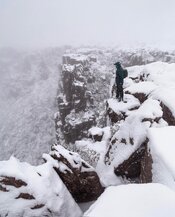
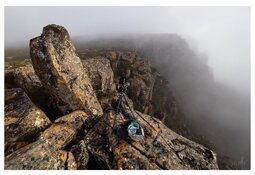
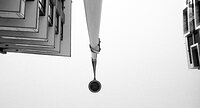
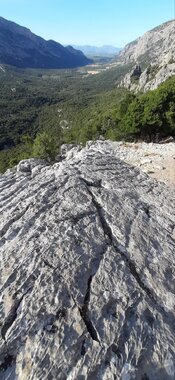
Re photo #2: This lofty perch atop mist-shrouded Mount Wellington looks very familiar. I'm sure that leaning tor at left, snow-covered in wither or providing a splendid panorama of Hobart below in summer, has appeared in photographic form, possibly by Grant Dixon (?), along with Dombrovskis.

Hopefully the camera + tripod was weighted down/anchored as you stepped away to get the snap. Many a horrifying disaster has unfolded before my eyes with friends who have left their camera only to find it in battered bits on the ground (or sinking into the river) when their attention resumed. One such incident occurred at Lake Vera en route Frenchman's Cap more than a decade ago, the fall destroying a Chamonix 45F-N. The tears flowed freely.
 
Re photo #2: This lofty perch atop mist-shrouded Mount Wellington looks very familiar. I'm sure that leaning tor at left, snow-covered in wither or providing a splendid panorama of Hobart below in summer, has appeared in photographic form, possibly by Grant Dixon (?), along with Dombrovskis.

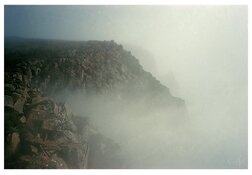
#2 is on the plateau of Mt Olympus, taken last year during the turning of the 'fagus. For my efforts in dragging it all the way up there through offtrack rainforest (about 700m elevation gain in a couple of kms) my RB decided to throw a light seal and generally marr a few rolls of Portra 800 amongst others. The #3 shot was one of the few images that didn't suffer from light leaks.

Thankfully it wasn't Ektachrome! (brings the thread neatly back on topic)
 
For me it's the lack of Provia.
Comparing the two - Ektachrome does tend to give stronger blue cast. I prefer Provia's more 'neutral' colour.
I suppose it is workable replacement should Fuji just stop coating transparencies.

What developer do you used. I do not have any problem with „blue” I check by densytometrem. When I try Bellini chemistry there are bad colors balance. On Jobo and Fuji everything is ok :smile:
 
What developer do you used. I do not have any problem with „blue” I check by densytometrem. When I try Bellini chemistry there are bad colors balance. On Jobo and Fuji everything is ok :smile:

The tendency of Ektachrome to overemphasize blue is very well known. It's not an issue with the developer. It's because shade is naturally blue and Ektrachrome is technically color accurate. But really it's just annoying, and a film that naturally biases a little warmer is nicer to shoot. I rarely shoot Ektachrome because I don't like it's propensity to go blue, but when I do, I use a Tiffen 812 filter and like the results much better. I would love it if Kodak came out with a warm version of Ektachrome. I have exactly zero interest in precise, technical color accuracy when shooting film. I just want end results that look nice to my eye.

For what it's worth, I have my E-6 developed by a lab running well controlled chemistry in dip and dunk machines.
 
  • paddycook
  • paddycook
  • Deleted
  • Reason: Mistake
What developer do you used. I do not have any problem with „blue” I check by densytometrem. When I try Bellini chemistry there are bad colors balance. On Jobo and Fuji everything is ok :smile:

I use my local lab for E-6 and do not know their exact developer.

Same with comment above I have been using a warming filter for my E100 rolls. I am more content with the results with the filter on that not.
 
armadsen - "Very well known" is just a set of inaccurate amateur rumors. The olden Ektachrome 64 might have overemphasized blue, but none of the recent versions, including current E100, are blue biased at all. If you run careful OBJECTIVE tests, they're quite accurate and neutral in terms of actual scene color temp balance, but not artificially warmed like some films. What you see is basically what you get. If you don't like the result, then just add your own warming filter when appropriate. Also realize that Kodak's "daylight" color temp standard is officially 5500K. Fuji's standard seems to be warmer, more like 5200K; so that needs to be taken into account as well.

A Tiffen 812 filter is more like taking a sledgehammer to it; but they make them for a reason, and one can test for themselves if it's a helpful filter to them or not.

Unlike chrome films, most color neg films are artificially warmed in order to produce "pleasing skintones" (at the expense of other hue categories). An exception would be Kodak Ektar, which comes closest to the look of chrome films, more than any other color neg film at least.

Warmed versions of "Daylight" Ektachrome did once exist, but sold poorly. It's easier to warm these films via filtration than it is to neutrally cool them if they are too warm to begin with.
 
Last edited:
armadsen - "Very well known" is just a set of inaccurate amateur rumors. The olden Ektachrome 64 might have overemphasized blue, but none of the recent versions, including current E100, are blue biased at all. If you run careful OBJECTIVE tests, they're quite accurate and neutral in terms of actual scene color temp balance, but not artificially warmed like some films. What you see is basically what you get. If you don't like the result, then just add your own warming filter when appropriate. Also realize that Kodak's "daylight" color temp standard is officially 5500K. Fuji's standard seems to be warmer, more like 5200K; so that needs to be taken into account as well.

A Tiffen 812 filter is more like taking a sledgehammer to it; but they make them for a reason, and one can test for themselves if it's a helpful filter to them or not.

Unlike chrome films, most color neg films are artificially warmed in order to produce "pleasing skintones" (at the expense of other hue categories). An exception would be Kodak Ektar, which comes closest to the look of chrome films, more than any other color neg film at least.

Warmed versions of "Daylight" Ektachrome did once exist, but sold poorly. It's easier to warm these films via filtration than it is to neutrally cool them if they are too warm to begin with.

You’ve essentially reiterated what I said. Your perspective is that objective color accuracy is desirable. My perspective is that it is not necessarily desirable. In any case, “objective” tests are of no interest to me when it comes to film. I make my living writing (digital) video, audio, and image editing, analysis, and processing software and get quite my fill of objective, precise, deeply technical work there.

A Tiffen 812 may be a sledgehammer, but it’s a sledgehammer that makes my photographs on Ektachrome look good to me. I don’t care about *any* other measure or performance than whether I like the way the result looks. I take photographs so I can look at them. If I need technical color accuracy for some particular application I use digital.
 
This has nothing to do with my or your personal preferences. To a film manufacturer, which has to have established standards, hard objectivity is essential if they hope to stay in business. I don't make film, I merely use it, just like the rest of us. But I have to know what any given film will predictably do, and which is most versatile for me, or else fills a given niche predictably.

I happen to look at my own color prints framed on walls. The end result is under my own control and own esthetic decisions, and is not necessarily a precise reproduction of "nature" - is any photograph? Digital photography has its own idiosyncrasies and bottlenecks, including the fact you're limited to digital printing and its own gamut limitations in most cases. No sense going down that rabbit hole, except that it's another myth if you think darkroom results are less precise than digital. Either way, to obtain optimized results, one has to have the right equipment and real experience.

Given the fact that Fuji Astia is out of production, along with tungsten-balanced chrome films, current Ektachrome is the best overall balanced chrome film left. I have tons of experience with the various Fujichromes going right back to the first of them, and with some Agfa products too. Wish they were all still around, including Kodachrome. But they aren't; and Kodak has done a great job keeping the Ektachrome lineage still alive in probably its best rendition yet.

I have an excellent selection of warming filters myself. I rarely used them on chrome film (pretty much essential with Ektar color neg film under certain common lighting situations). But like I said earlier - it's more efficient to warm a film you find too cool, than to cool one you find too warm. "Why" is a bit too much of a discussion for this thread.
 
This has nothing to do with my or your personal preferences. To a film manufacturer, which has to have established standards, hard objectivity is essential if they hope to stay in business. I don't make film, I merely use it, just like the rest of us. But I have to know what any given film will predictably do, and which is most versatile for me, or else fills a given niche predictably.
Oh, but it very much does! I buy very little Ektachrome. It produces results I find displeasing even frankly ugly in many cases. I’d spend more money on Kodak film if they made slide film that I liked. Consistency in manufacturing is one thing. But Ektachromian color balance isn’t some hard standard that a company has to meet in order to stay in business! After all Fuji sells all the Velvia and Provia they make.
I happen to look at my own color prints framed on walls. The end result is under my own control and own esthetic decisions, and is not necessarily a precise reproduction of "nature" - is any photograph? Digital photography has its own idiosyncrasies and bottlenecks, including the fact you're limited to digital printing and its own gamut limitations in most cases. No sense going down that rabbit hole, except that it's another myth if you think darkroom results are less precise than digital. Either way, to obtain optimized results, one has to have the right equipment and real experience.
I never said anything about the precision of darkroom work…
Given the fact that Fuji Astia is out of production, along with tungsten-balanced chrome films, current Ektachrome is the best overall balanced chrome film left. I have tons of experience with the various Fujichromes going right back to the first of them, and with some Agfa products too. Wish they were all still around, including Kodachrome. But they aren't; and Kodak has done a great job keeping the Ektachrome lineage still alive in probably its best rendition yet.
“Best” is subjective and depends on your criteria. Ektachrome’s color balance may meet some accuracy to reality standard best, but it meets my own “produces nice results” standard worst out of the three slide films currently available in the US. You like it best, and that’s fine too.
I have an excellent selection of warming filters myself. I rarely used them on chrome film (pretty much essential with Ektar color neg film under certain common lighting situations). But like I said earlier - it's more efficient to warm a film you find too cool, than to cool one you find too warm. "Why" is a bit too much of a discussion for this thread.
I’ve never needed to cool a film I found too warm, so that’s of no concern to me. But I can understand why if someone had had that experience they might prefer leaning toward a relatively cooler film. All else being equal if film A requires me to buy and carry a filter to get results I like, and film B doesn’t, of course I’m going to prefer film B.

The point is that in every discussion where I or someone else expresses the opinion that Ektachrome is too easy to get bluer results than I prefer, someone swoops in to imply that I’m just misunderstanding the problem, that I’m an “amateur”, and seems to think that if that they merely explain that it’s actually “objectively” the best available slide film that I’ll realize the error of my ways. When in fact I understand the argument perfectly! It doesn’t change the fact that my own subjective preference is for the look of Provia (and in more limited circumstances Velvia) regardless of how accurate Ektachrome is.

If we were talking about some application where perfect color accuracy was the most important consideration, that would be a different matter. In my day job it’s vitally important. I work on (among other things) the low level image processing parts of color correction software used by professionals! On the other hand, I take photographs for my own enjoyment. I have no other goal. Explaining why my preference for the color rendition of a particular film is actually wrong is basically nonsensical.
 
How much of this have you actually printed? Provia is not one product, but an entire lineage of them, likewise with Velvia, as well as Ektachrome. Which Provia are you talking about? Some of them have more purplish undertones or overtones than others, and that can be affected by development variables. There have been various flavors of each product line. I've used nearly all of them in 4x5 at least, and most in 8x10, including the tungsten and duplicating varieties. That's quite an investment in time as well as money. What works best for one kind of setting might not be the best for another. Personal work can go all kinds of places in terms of esthetic outcome, but if going from Point A to Point B in printing requires intermediate duplicate or internegative work, that it something defined by very narrow objective boundaries.

No film ever has had, or ever will have, "perfect" color accuracy. Each has their own signature palette. But you might be painting yourself into a corner if you insist on one particular product from a company which seems less and less interested in making film. Fuji is making a lot of color paper; but their current film selection is just a ghost of what it once was, with even that seemingly fading away.

Software can only correct color so far. Certain repro idiosyncrasies are "baked in" - more so with color neg films than chromes; more so with inkjet colorants than dye-based color photography. I was involved with the color industry for decades in my own day job. It's all fascinating, juggling all the variables. I taught color matching pros, and was used as a trial Guinea pig for new color spectrophotometer innovations. Lots of fun times, but long hours too - plus my own darkroom and color consulting income on the side. Too old for all of that now. Glad to be retired.

Just have fun with what you're doing. In this part of the world, I run into digital color pros all the time on the trails, even CEO's. They see me standing beside a big view camera and ask to look through it, and express the wish they could get into darkroom work too. Who wants to make a hobby out of what they have to do all week long making a living?
I certainly understand that.
 
Last edited:
I’m really only talking about the current Velvia 50, Provia 100F, and Ektachrome 100D. I’ve shot Velvia 100 too (still have a few rolls in the freezer), but didn’t like it too much and of course it’s no longer available in the US. I never really shot slide film until about 2008. I shot some Provia 400 back then, and some Ektachrome though I don’t remember the exact variants anymore. I also shot a decent amount of Astia, which I quite liked too. But Provia 100F has been my favorite since I first tried it.

I both project and print (some of) the photos I take. But I’ve only ever had slide film printed from scans. I do my own B&W printing in the darkroom, but don’t have a color enlarger (and Cibachrome is gone for slides). I also sometimes like to look at my slides in a little slider viewer I inherited, but the quality isn’t great.

I’ve scanned some of my dad’s and grandparents’ slides and the Kodachrome ones sure do stand out as beautiful! Unfortunately most of the Ektachrome (E4 and E6) ones are pretty degraded and require a lot of digital restoration, though I understand that modern E-6 films are less prone to that deterioration.
 
The choice of colour slide film is surely a personal one based on the "look" we individually prefer. I use Provia 100f (about 30 120 rolls a year, for slides, no digital anywhere) because I prefer the look ... and in the EU Fuji films are still significantly cheaper than Ektachrome. If Provia becomes unavailable, I'll go with Ektachrome and a warming filter. I tried Velvia 50 once and did not like the look, rather bold colours for me, but i'm thinking I might try Velvia 100 at some point if I can get hold of some.

Whether film A is objectively "more accurate" than film B is honestly irrelevant to me, and I suspect to the vast majority. It's what you prefer that matters and at least we still have a choice.

By the way, it's a small point, but Fujifilm have also put a lot of thought into their packaging. The frame numbers on the backing paper are bold (highly visible) and the spools are cleverly designed, both in the slot and the end pieces. I'm impressed with their attention to this detail. Kodak spools are an almost impossibly tight fit in my DaYi 6x12 back.
 
I;m a fan of Velvia 50. Unfortunately, Fuji stopped making it in large format size, and it's very hard to find in medium format when I shoot that format. Velvia 100 has been declared illegal in the US because of a certain chemical in its formulation. I don't care for the look anyway.

I compared Provia 100 and Ektachrome 100 below. Provia has an orangy red, while Ektachrome has a darker red. Ektachrome's greens are greener.

4x5s adjusted in LR after scanning with Epson V850.
Provia ektachrome dual from V850 scan and LR.jpg


4x5 Chromes shot with a cellphone and adjusted to match colors in the slides.
Provia ektachrome dual taken with S7 cell of actual film adjusted in Irfan to match colors of ...jpg
 
Last edited:
As something of a Cibachrome specialist in the past, my main objection to Provia was that is never was on dimensionally stable polyester base, but only on triacetate, which shrinks. That made it difficult to keep the originals in register with their necessary contrast masks for very long. Try to reprint it six months or a year later, and misregister might be evident, and you have to start all over again with a new mask.

Eventually I ended up making master duplicates on 8x10 Astia 100F sheet film, with all the necessary contrast and hue corrections built in, which was polyester, and a superb duplicating film. That sort of protocol would be cost prohibitive today; but I still use some of those master duplicates to generate precision contact Portra 160 interpositives for sake of RA4 printing. But now that's getting miserably expensive too, but nowhere near as bad if it involves 4X5 instead of 8x10 film.

Most of the time, I just print from original C41 negatives instead. Will have a mix of both in the upcoming months of printing - multiple formats - a little bit of 35mm, quite a bit of 6X7 and 6X9, a number of 4x5's, but a priority on the 8X10 images. Very limited quantities of each chosen image, only one or two prints in most cases.
 
The tendency of Ektachrome to overemphasize blue is very well known.

Certain scenes/lighting situations can definitely benefit from a bias towards warm or cool. It's fair to say Ektachrome isn't warm-biased but I'm not so sure it's as cool/blue as people make out.

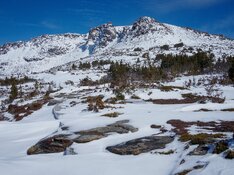
I shot a bit of E100 over summer bushwalking and honestly the slides came out pretty darn colour accurate. Now granted, bright summer conditions in Tasmania are fairly "blue" to the eye anyway, so maybe that's in its favour.

Interestingly, the times I did attempt to "compensate" for E100's cool-bias, either through filters or using warm light when scanning, the results looked worse - neither accurate nor flattering.
 
One thing that probably colors my perception is that I live at a highish altitude and often shoot in the mountains at even higher altitude. But I’ve shot Ektachrome at sea level and been displeased with its blueness, so that’s not all there is to it.
 
Did you use a UV filter? That can be important at high altitude or along the beach. With later Ektachromes, including the current version, I got my best results with a nearly colorless (barely amber) Hoya "0" multicoated UV filter. I've been on hundreds of backpacking trips at high altitude, not with 35mm in the last 50 yrs, but mainly 4x5.
With Provia and Velvia, the Hoya 1B skylight filter works better for UV control. It's a different issue than color temperature balance, but does lead to a bit of unnatural blueness, since that's in the shorter wavelength sensitivity range in common with UV.

Deep blue shadows under open blue skies is a natural phenomenon. The color temp in the mtns can sometimes be over 6500K in the shadows. You can nuke them with a Tiffen 812; but I prefer something more subtle, like a B&W KR1.5 or KR3. Today I used a Hoya 81A to balance out the effect of overcast gray-blue skies.
 
Roberts Camera gave me a notification that Velvia 50 in 120 is back in stock. I ordered only 1 box because their shipping cost to Canada is outragious, being half the cost of the actual film itself. And I still have to pay duty on it later too.
 
Roberts Camera gave me a notification that Velvia 50 in 120 is back in stock. I ordered only 1 box because their shipping cost to Canada is outragious, being half the cost of the actual film itself. And I still have to pay duty on it later too.

I don't think there is much, if any, duty when you import Japanese manufactured film into Canada.
GST and PST yes, but duty?
 
Photrio.com contains affiliate links to products. We may receive a commission for purchases made through these links.
To read our full affiliate disclosure statement please click Here.

PHOTRIO PARTNERS EQUALLY FUNDING OUR COMMUNITY:


Ilford ADOX Freestyle Photographic Stearman Press Weldon Color Lab Blue Moon Camera & Machine
Top Bottom