Hi!
Occasionally I scan internet for inspiration in general and lith prints in specific.
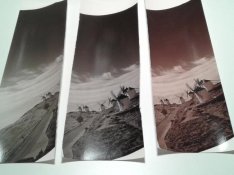
My current favourite paper is Fomatone MG Classics 131 with extreme possibilities and a wide range of achievable colors. But, I can´t find these colors in the pictures on the internet. Why?
There are more or less only the linear yellow-reddish nuances from an untoned or short toned print but really far from what is possible to get.
Don´t if it is news for you but there is a procedure that really get Fomatone into bloom. The secret is Selenium. Eh? Ye, Selenium but during looong time in the bath which create an extended range of colors and even the lith grains develop and change their characteristics. A lot!
I ususally fix in Ilford Hypam 1+4 for two minutes which might make sense and affect the outcome from Selenium toner.
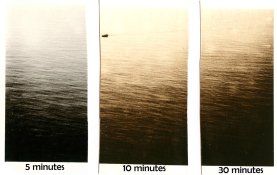
Most pictures seen are toned in dilute Selenium for conventional prints and archival purpose and mainly the recommended 2-6 minutes, but try else. Dilute 1:9-1:14 somewhere (or even stronger) and put the print in for 15 minutes or more. You will discover a journey in changed characteristics and it is really possible to see the change in real time.
For instance, a typical warm yellowish Fomatone print will cool off after approx 2 minutes and turn into a tri-split cold print with grey, purplish and/or greenblue tones.
Suddely this change again around 5 minutes and a warming up will occur with color shift towards coffee. Patience pays off and further development is to be expected. After 10-12 minutes even the grain will start to change and it will get more accentuated. Kind of...grainer but still soft. Waiting even longer and the tone will shift again and end up in a sweet sweet ginger color that is to kill for.
In general, a softer high key print will benefit the most of this method but even a dark print will change.
The Selenium will eventually decrease the contrast which happens in long toning sessions as well. Dark black areas will come out in a warm reddish tone but highlights will remain as llight as initially. So DON´T TOSS POOR OVERDEVELOPED PRINTS AWAY!!! It is possible to recover bad prints and you will be surprised what is achievable with Selenium.
Note, I usually use Kodak Rapid Selenium toner and i believe there might be different compunds from different brands that affect the toning effect on lith prints. Don´t know. Don´t dare to try...hehe.
Get into the dark room and try it! As the Master himself once stated in one of his books: "You are hereby warned!" ;-)
Good luck!





 I have some darkroom experience but I am new to toning. I tried before just the (Japaneses) tea toning. But since some time I started working with lith (and I enjoy every minute of it) I was advice to try the selenium toning.