

• Welcome to Photrio!
    Registration is fast and free. Join today to unlock search, see fewer ads, and access all forum features.
    Click here to sign up

First Time Using 120 Gold 200, Portra 160, & Ektar 100

Valencia

A
Valencia

  • 0
  • 0
  • 30
Tied to the dock

D
Tied to the dock

  • 4
  • 0
  • 82

Recent Classifieds

Forum statistics

Threads
203,087
Messages
2,849,689
Members
101,652
Latest member
Mayorbeez
Recent bookmarks
0
Ektar is rather unique among CN films in being capable of something close to a chrome look, with its higher contrast and richer purer color saturation. But one has to be aware of its tighter boundaries too, compared to the wider latitude of other CN products.
I've chimed in on many past threads on how to best handle it, some posts going clear back to discussions with PE, who was quite familiar with both its evolution from Ektar 25 as well as its remaining idiosyncrasies.
Ektar 100 evolved from Ektar 125, not Ektar 25. The latter had unique structure and components not shared with any other Ektar.
 
  • BrianShaw
  • Deleted
  • Reason: Too naive of a question to let remain in the thread history.
Hi - jm - What gives you that idea? Go back to earlier threads, where Ron Mowrey discussed this, relative to his own days at Kodak. Ektar 25 was the earlier prototype, with some of the same blue-cyan repro issues, but considerably worse. I did try it. But I admittedly can't speak about whatever performance distinction there might have been in the intermediate 125 version, and never in fact ever saw a roll of it for sale here. Except for curiosity testing purposes, neither of them would have been of any value to me anyway, because during those years I exclusively shot large format sheet film. Another transient mini dinosaur I've never seen for sale was Ektar 1000.
 
Last edited:
Thanks @koraks for the clear explanation and instruction video! I agree with you that this is the best way to get consistent images from color negative film.

My only difference in workflow from yours, is that I use negative labs pro in Adobe Lightroom for the inversion. I am a bit lazy. 😄

In my office work, I do use gimp for image processing.
 
Hi - jm - What gives you that idea? Go back to earlier threads, where Ron Mowrey discussed this, relative to his own days at Kodak. Ektar 25 was the earlier prototype, with some of the same blue-cyan repro issues, but considerably worse. I did try it. But I admittedly can't speak about whatever performance distinction there might have been in the intermediate 125 version, and never in fact ever saw a roll of it for sale here. Except for curiosity testing purposes, neither of them would have been of any value to me anyway, because during those years I exclusively shot large format sheet film. Another transient mini dinosaur I've never seen for sale was Ektar 1000.

Drew,
I was involved with the design and/or development of EK color neg films for about fifteen years beginning with Ektar 25. Ektar 125 was developed at the same time but was distinctly different from a compositional point of view. Because of some issues Ektar 125 was quickly succeeded by Ektar 100. During the period that I was involved with color neg I don't recall Ron ever being on a development team. And Ektar 1000 was not memorable.
 
What you're comparing is not so much Gold 200 vs. Gold 200 + 1...it's more "Something the Epson software does with Gold 200 vs. something else the Epson software throws me if the negative happens to be overall a little more dense."

In all fairness, this point is understood only by maybe 6-7 people on the Internet.
 
Thank you for that clarification, jm. I can't find an iota in my own literature about either Ektar 125 or 1000. No specs sheets on the web either. My personal evolution towards Ektar 100 had the helpful stepping stone of Portra 160VC. Once the inevitable demise of Cibachrome was becoming increasingly apparent, I knew I had to find some kind of reasonable color neg substitute for chrome film
performance. Ektar 100 gives me the cleanest hue substitute yet, and fortunately is available in multiple sizes. But what a learning curve it has been to iron out the dye curves! Quite an investment too, since 8X10 was the primary format I used during those years. At least RA4 printing itself is quite a bit more economical than Ciba was. ... (not however, if I have to go the full route from a masked chrome to an 8x10 Portra 160 contact interneg to a large scale Fuji Supergloss print. That does add up fast, but replicates the Ciba look even better than Ciba itself did).
 
Last edited:
I do like the Ektar 100, but I'm also grooving Phoenix 200...and I might just stick with the latter, as it's much more affordable.
Gold 200 is a good choice in terms of affordability, latitude and colour response. Phoenix is very likely to change or be replaced with the next generation film. It seems a bit risky to base your process on it.
 
Kodak films are too pricey, especially since I will be retiring soon. Phoenix 200 improved over the first generation. I imagine, it will continue to do so. This whole colour film thing is just an experiment with me anyway to see if I really want to make tri-colour gums (or just use my dslr) but... I am quite liking using black and white film and shooting them through red, green, blue filters and making tri-colour gums that way. 🙂
 
Kodak films are too pricey, especially since I will be retiring soon. Phoenix 200 improved over the first generation. I imagine, it will continue to do so. This whole colour film thing is just an experiment with me anyway to see if I really want to make tri-colour gums (or just use my dslr) but... I am quite liking using black and white film and shooting them through red, green, blue filters and making tri-colour gums that way. 🙂

Must be an issue in Canada. Down here Gold 120 is around $8.5 and Phoenix 120 is around $13 (but currently out of stock).
 
In Australia Kodak Gold is $15 and Phoenix is $17.50 compared to $24.50 and $27.50 for Ektar 100 and Portra 400.
Reflx Lab Pro 100 (Aerocolor IV) is another inexpensive option ($21.90, you can get it cheaper if you by in bulk from Reflx Lab).
 
During the period that I was involved with color neg I don't recall Ron ever being on a development team.

That's consistent with Ron always having been quite clear on not being directly involved in emulsion/film development. He often referred to colleagues; some of whom have posted online about their work, especially on Photo.net. Joe Manthey comes to mind: https://www.photo.net/profile/324525-joe_manthey1/content/?type=forums_topic_post
Btw, I'm very happy that you chose to join us here, @jmrochester. I hope you'll stick around for a while; we're kind of lean on concrete knowledge about color film emulsions, which isn't quite in keeping with our collective interest in the topic!
 
Ektar 100 evolved from Ektar 125, not Ektar 25. The latter had unique structure and components not shared with any other Ektar.

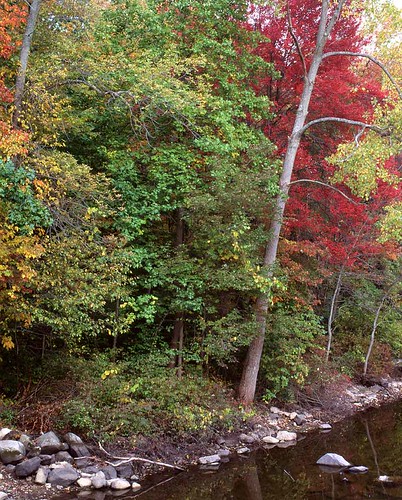
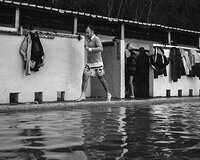
For whatever its worth, I shot Ektar 25 30 years ago. Here're some shots on 120 6x7. The resolution and details were pretty amazing.
 
Do you remember the brief interlude of Kodachrome 64 120 roll film too? What I covet is the revival of 5X7 Kodachrome sheet film. I've seen quite a number of those. Of course each sheet with processing would probably cost as much as a VW bus if it were available today. I don't know about the accessory tie-dyed curtains, however.
 
Photrio.com contains affiliate links to products. We may receive a commission for purchases made through these links.
To read our full affiliate disclosure statement please click Here.

PHOTRIO PARTNERS EQUALLY FUNDING OUR COMMUNITY:


Ilford ADOX Freestyle Photographic Stearman Press Weldon Color Lab Blue Moon Camera & Machine
Top Bottom