• Welcome to Photrio!
    Registration is fast and free. Join today to unlock search, see fewer ads, and access all forum features.
    Click here to sign up

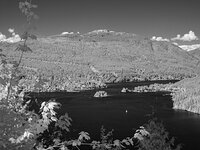
Filters on b/w film

Cone and Hoop

A
Cone and Hoop

  • 0
  • 0
  • 14
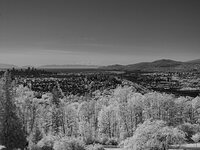
Snow on Willoughby

A
Snow on Willoughby

  • 0
  • 0
  • 17

Forum statistics

Threads
202,758
Messages
2,845,205
Members
101,511
Latest member
hkoepke
Recent bookmarks
0
The "specific effect" of a filter is dependant

not only on
-) the spectral transmission of the filter

but also on
-) the spectral compostion of the illumiating lighting
-) the spectral reflection op the object
-) the spectral sensitivity of the emulsion

All these make it quite complicated to visualize precisely the effects of a filter in real world and there is always going to be a tradeoff between the intended effect and the unintended effect.
 
Last edited:
...
huge thanks Jens!

is pan F your main film or have you done this with other films you use regularly as well ?
John

Hi John,

fine, indeed PanF+ is my most used slow speed film in 120. It has it's known issues being contrasty (the two bath Moersch MZB or a Pyrocat variant help here...) and to be developed soon.
Anyway, I would suggest to do such a test yourself with the dearest film. Even FP4+ has a different spectral responce, as has TMX...
No, I haven't tested other films yet.

Best
Jens
 
Last edited:
The "specific effect" of a filter is dependant

not only on
-) the spectral transmission of the filter

but also on
-) the spectral compostion of the illumiating lighting
-) the spectral reflection op the object
-) the spectral sensitivity of the emulsion

+1 to all aspects.

Best wishes
Jens
 
I don't use filters very often but there are a zillion filters and ways to use them.
is there a resource somewhere that shows specific effects of specific filters
( maybe before and after images ). is there a definitive resource for this sort of thing?
some BW filter manufacturer's catalogs show befoe and after shots.
 
The short version:
  • Polarizers take out reflections and glints, but the position relative to the Sun has an effect. Darkens skies, but with wide angle lenses it can make the sky look funny.
  • Yellow, Orange and Red darken skies in that order. Using Red 25 too often will make you look like Ansel Adams, so use the Red 23 instead.
  • The color of the filter lightens that color and darkens the opposite color on the color wheel. That is, lighten a red rose with a red filter and it will darken the leaves.
  • Yellow-Green and Green lighten leaves.
  • Green removes pimples [it cuts back on the redness].
See even I will help you if you ask. Enjoy.
tome,green highlights pimples and freckles for the reasons you state; due to cutting back on the redness, they appear lighter on the negative and darker on the print.
 
I used iPhone app called "Camera1" which has pretty nice realtime display of effect of all main color filters. It is the most easiest way to understand the filters as you can see directly how the world around looks. Easy to pick correct filter that way.

For example the claim "red darkens the sky". Yes, if the sky is blue. Sky isn't just always that strongly blue even it is clear weather. This I have found out with the app myself..
 
Remember when using a filter there is an exposure filter factor. I use filters for a specific affect and most often take an additional frame without the filter.

I consider Exposure Filter Factor the most misunderstood Exposure Correction Factor. Whether to apply a Filter Factor depends on the intended effect. The common belief though is, that the moment one attaches a filter the stated factor is to be applied.
 
I consider Exposure Filter Factor the most misunderstood Exposure Correction Factor. Whether to apply a Filter Factor depends on the intended effect. The common belief though is, that the moment one attaches a filter the stated factor is to be applied.
Can you explain further, with examples of when filter factors do not apply.
 
Can you explain further, with examples of when filter factors do not apply.
Filter factors are generalizations. Different films react differently to certain wavelengths of light and the filter factor for that particular combination may not be what the manufacturer has determined.
 
Brian, have you thought about what Filter Factor actually means, on what exposure it is referenced ? Think about this first, because only then you can consider to apply it or not.
 
I agree: my orange filters (+2 by manufacturer) and my deep yellow ones (+1 officially), both produce slight overexposure if I just give that compensation... In general I use 1/2 or 2/3 for deep yellow, and 1 1/2 or 1 2/3 for orange.
Apart, red ones can fool camera meters too. Best idea is testing those levels of exposure compensation for the film or films we use.
 
Brian, have you thought about what Filter Factor actually means, on what exposure it is referenced ? Think about this first, because only then you can consider to apply it or not.
I completely understand what Pieter wrote - filter factors are approximations. But you seem to imply ignoring them entirely. Is this too literal a reading or are you saying what Pieter said (and I completely understood)?

I may just be having “one of those days” when I’m being excessively literal about things said and written.
 
When I go out, I usually have a red, yellow, light green, and a couple of IR filters. I've got a ton more, but never use them.
That combo -- actually without the IR filters -- covers close to 100% of my B/W filter needs also.
 
I completely understand what Pieter wrote - filter factors are approximations. But you seem to imply ignoring them entirely. Is this too literal a reading or are you saying what Pieter said (and I completely understood)?

I may just be having “one of those days” when I’m being excessively literal about things said and written.

Forget about what is commonly written, but try to understand the effect of filters. A Filter Factor should have been established for a neutral grey. If however you do not bother about neutral gray but on the rendition of a certain colour, you have to contemplate on the effect the very filter will have on that certain colour. And be it by approximation. This even may lead to not applying any factor at all.
 
I used iPhone app called "Camera1" which has pretty nice realtime display of effect of all main color filters. It is the most easiest way to understand the filters as you can see directly how the world around looks. Easy to pick correct filter that way.

For example the claim "red darkens the sky". Yes, if the sky is blue. Sky isn't just always that strongly blue even it is clear weather. This I have found out with the app myself..
fantastic !!
thank you :smile:
John
 
That's odd. I was under the impression that filters, due to their nature, block light-- even in the frequencies they allow-- and that the filter factor was to compensate for the amount of light lost for using that filter. I don't care that a green filter is blocking magenta wavelengths-- I want that to happen. But the green (and other colors) will also take a hit, and that, I need to compensate for.

Having said that, I recently purchased a #25, a #47 and a #58 filter, and rather than using the listed filter factors, metered through all 3 with my antique spot meter, and used 2.5 stops more exposure for all three. The end result was surprisingly good.
 
Filter factors are not well defined, as far as I know.

I never wondered about that specific aspect and always assumed that there is a standard. In a very quick search did not find a standard but found a Bureau of Standards report on the topic. It’s as old as dirt but seems like it might be an interesting read:

https://nvlpubs.nist.gov/nistpubs/ScientificPapers/nbsscientificpaper409vol17p79_A2b.pdf

… and for John there are some examples of how different B&W contrast filters render!
 
Musings about filter factors:

The logical "standard" for a factor for a given filter would be the extra exposure needed to render a mid-tone neutral gray the same density on the film with and without the filter. Other colors would have more or less density on the negative depending on the degree to which they are transmitted (blocked) by the filter. E.g., a red filter, which transmits mostly red light, would need enough extra exposure to transmit enough of the red in the neutral gray to achieve the same density in the negative as there would be without a filter. Other colors would fall where they may.

This factor, of necessity, would vary to differing degrees from film to film, depending on the spectral response of the films, as well from meter to meter, for the same reason. Furthermore, the color content of the light source would make a significant difference in determining factors. (Black-and-white films used to come with tech sheets giving factors for both daylight and tungsten, for example).

So, already, it seems apparent that you can only have an accurate filter factor for a given meter, film and light source. Now take into account the reality of metering in the field. Sure, we can take a gray card with us and use that, but many don't and it would often be impractical. So, we end up metering things that aren't neutral (i.e., don't have an even spectral reflectance). That can easily wreak havoc with filter factors; just try metering that deep blue shadow in an alpine scene to base your exposure on and then add a red filter and the published filter factor. You've just based your exposure on mostly blue light and then blocked all of that out with the red filter and only given an extra three stops to retain some detail in the shadow. Featureless, disappointing shadows are sure to be the result. Or vice-versa; take a reading off that red barn illuminated by the setting sun and then add your red filter. Oops, overexposure! (Which, however, isn't so bad as underexposure).

And, even if we can arrive at a factor that renders spectral-neutral objects at the desired density on the film, determining how much densities from colored objects will be affected is a crap shoot. Usually, we're just guessing: "darker" blue sky (how much darker?). Lighter foliage? How much? (and do we even take into account that although leaves often appear green, that there is a lot of red in there too?)

It would be technically possible to make a meter that had the same spectral response as a given film. Then a simple reading through the filter would suffice for both determining exposure and knowing how colored objects would be rendered. That was the idea behind Zone VI modified meters. I don't think it worked that well though, for whatever reason (I've had two Zone VI modified meters over the years and simply reading through the filters, especially the stronger ones, didn't work as advertised.)

Add to all this the fact that film emulsions react to different colors of light with varying sensitivity and contrast and the plot thickens even more. A deep red filter might end up making one film contrastier and another less contrasty when developed to "normal."

Published filter factors are the manufacturers' best recommendation for getting good results, but they are, of necessity, approximations based on general conditions and (hopefully) a safety factor. One can do all the necessary tests to arrive at better filter factors for the conditions, equipment and materials they use regularly. Many do this (I have). However, the results of such tests are also just guidelines/approximations/educated guesses for compensation, even if more refined.

The best we can do is understand how filters work and how the system reacts to them and be aware of what conditions might require modifying the factor (and how much in which way). We can go down that rabbit hole as far as we like. We can also bracket in questionable situations, not only exposure, but using different filters too. This is especially important when learning in order to gain the experience in using filters that will help us to refine our filter choice and to modify the factors we use.

Best,

Doremus

 
We can also bracket in questionable situations, not only exposure, but using different filters too. This is especially important when learning in order to gain the experience in using filters that will help us to refine our filter choice and to modify the factors we use.

I'd agree with that and go so far as to say that WE SHOULD...

:smile:
 
Sometimes you want to use filters to make clouds stand out in the sky and bracketing may not be practical to get the optimum cloud look or composition. I have tested the filters and emulsion I use the most and come up with filter factors that gives me the look I want. Plus, black and white film has so much latitude that minor variations can easily be compensated for while printing.
 
Sometimes you want to use filters to make clouds stand out in the sky and bracketing may not be practical to get the optimum cloud look or composition. I have tested the filters and emulsion I use the most and come up with filter factors that gives me the look I want. Plus, black and white film has so much latitude that minor variations can easily be compensated for while printing.

I have never gone wrong using the manufacturer's published filter factors. I have trouble with filters that are not labelled with the filter factor and I cannot find any publications. I just compare it with know filters.
 
Photrio.com contains affiliate links to products. We may receive a commission for purchases made through these links.
To read our full affiliate disclosure statement please click Here.

PHOTRIO PARTNERS EQUALLY FUNDING OUR COMMUNITY:


Ilford ADOX Freestyle Photographic Stearman Press Weldon Color Lab Blue Moon Camera & Machine
Top Bottom