• Welcome to Photrio!
    Registration is fast and free. Join today to unlock search, see fewer ads, and access all forum features.
    Click here to sign up

Film scanning with APS-C sensor DSLR - worth the bother?

Street photo Nashville

A
Street photo Nashville

  • 2
  • 0
  • 47
Rome

A
Rome

  • 2
  • 2
  • 63

Recent Classifieds

Forum statistics

Threads
202,545
Messages
2,842,158
Members
101,374
Latest member
winterwood
Recent bookmarks
0

Horatio

Member
Allowing Ads
Joined
Mar 13, 2020
Messages
979
Location
South Carolina
Format
Multi Format
Has anyone had success with a APS-C sensor camera? I have a Canon 60D DSLR I'd like to use for scanning 35mm and 120 film, but before investing in a copying system I'd like to know if the resolution of 18MP is sufficient, as I'm not sure I can obtain 1:1 macro with my existing lenses.
 
A fair bit more resolution than a lot of labs supply:
"Effective pixels: Approx. 18.0 megapixels: 5200 (H) x 3462 (V) pixels"
 
I digitize with an old Sony NEX-5T, a 16MP mirrorless APS-C sensor camera. When digitizing 35mm film, I lose a bit resolution because I'm not able to "fill the frame", so I end up with about 11-12MP. For 120 format, I take two or three shots (for 6x6 and 6x7 respectively) and stitch using Panorama Merge in Lightroom 6.4. If you wander over to my Flickr you can see whether that's sufficient for your needs/standards. Like @MattKing says, 18MP should be plenty of resolution.
 
Has anyone had success with a APS-C sensor camera? I have a Canon 60D DSLR I'd like to use for scanning 35mm and 120 film, but before investing in a copying system I'd like to know if the resolution of 18MP is sufficient, as I'm not sure I can obtain 1:1 macro with my existing lenses.

Yes. I started DLSR scanning with a Canon T5i, moved to a Canon 80D and ran that for quite a long time, then moved to a Canon 90D when it was released. APS-C is better if you're primarily scanning 35mm film as it doesn't require a macro lens that can go all the way to 1:1 reproduction. If you primarily scan 120 roll film or sheet film, a full frame digital camera can be better simply because it can get to higher resolutions, but at that point, you're spending some good cash to get there, and you really need to have a really stellar lens that is sharp all the way into the corners to fully realize all the quality you can get there.
 
"Sufficient" for what? That is, what do you hope to do with these digital files?

I have been satisfied with the camera-copies I've made of my 135 and 120 film using a 16MP APS-C Fuji mirrorless camera. I use an enlarging lens mounted on a bellows, usually one shot (no stitching). The files are adequate for my purposes: posting online and making photo books where the photos are printed up to a little less than 8"x10" - your needs may be different.

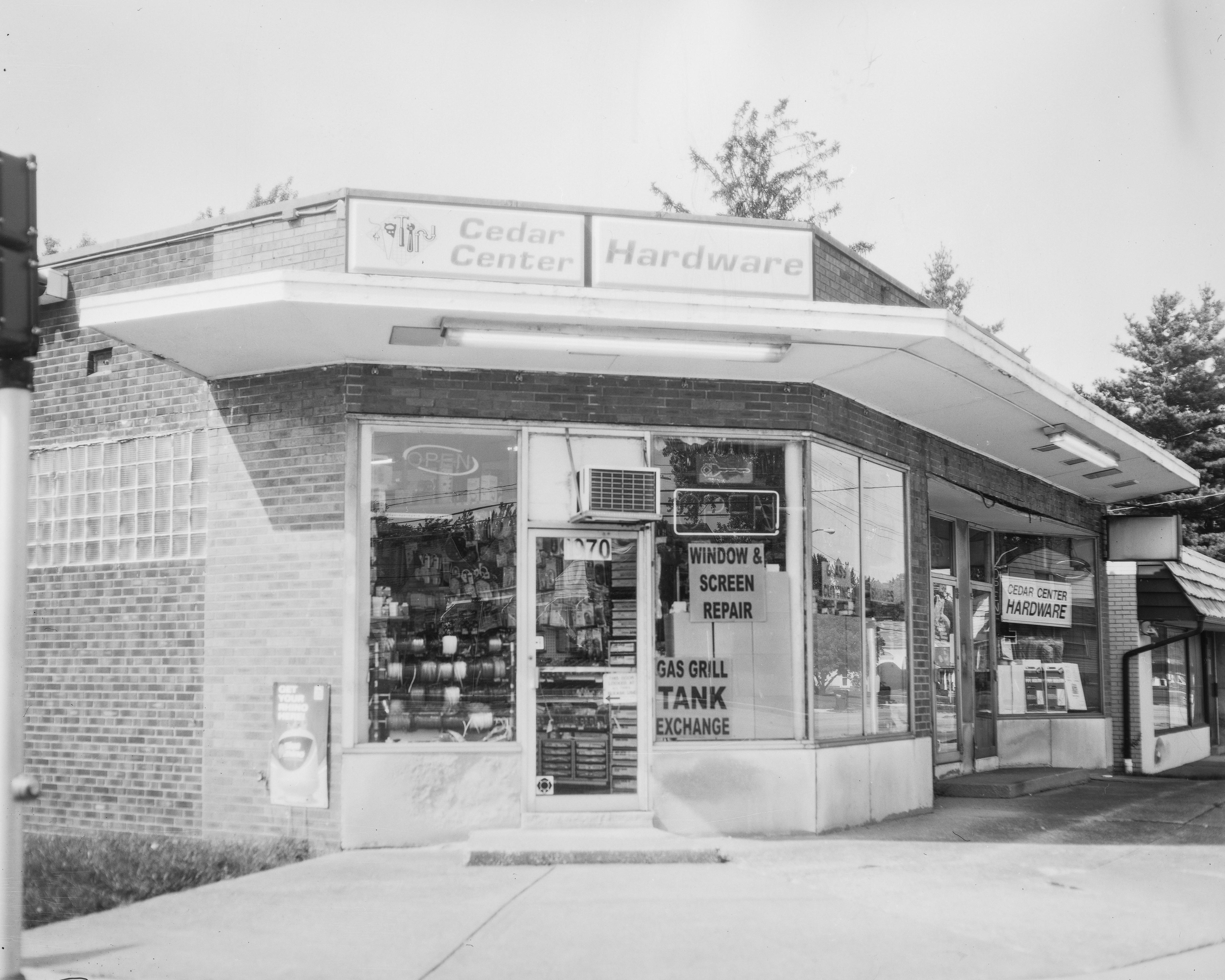
My current copy rig can be seen <here> - and you can see some sample shots of 35mm T-Max 400 film digitized with that rig <here>

BTW, if copying 35mm to APS-C, you don't quite need 100% magnification (1:1), but you do need more than 50% (1:2).

 
Last edited:
Canon 550D (T2i) is what I use, with a 100 2.8 macro. It's worked well, my computer is going to get replaced before the camera.


wnTQeIB.jpg
 
You can always get some extension rings or a bellows. You have plenty of time for exposure, as long as you can keep the rig still.
 
"Sufficient" for what? That is, what do you hope to do with these digital files?

I have been satisfied with the camera-copies I've made of my 135 and 120 film using a 16MP APS-C Fuji mirrorless camera. I use an enlarging lens mounted on a bellows, usually one shot (no stitching). The files are adequate for my purposes: posting online and making photo books where the photos are printed up to a little less than 8"x10" - your needs may be different.

My current copy rig can be seen <here> - and you can see some sample shots of 35mm T-Max 400 film digitized with that rig <here>

BTW, if copying 35mm to APS-C, you don't quite need 100% magnification (1:1), but you do need more than 50% (1:2).

Your demonstration pages are interesting — the ability to move left and right over an image to see the differences between scanner vs an APS-C macro rig. There are visible differences, but that raises the question: which is more faithful to reality? Take the photo of the farm machinery — is the can this shade of green, or that shade of green? Is the machine this red, or that red? Did the scene have this contrast, or that contrast? Of course this is true of the entire photographic process, that it replicates reality in a malleable sense, as the final image is an interpretation of reality. I swipe one direction and the image looks nice, I swipe the other direction and that one has its own enjoyable aspects. So I’m interested to know how you are deciding which process is preferable?

I like your copy rig — very nice how you attached the bellows to what appears to be an enlarger column.
 
Your demonstration pages are interesting — the ability to move left and right over an image to see the differences between scanner vs an APS-C macro rig. There are visible differences, but that raises the question: which is more faithful to reality? Take the photo of the farm machinery — is the can this shade of green, or that shade of green? Is the machine this red, or that red? Did the scene have this contrast, or that contrast? Of course this is true of the entire photographic process, that it replicates reality in a malleable sense, as the final image is an interpretation of reality. I swipe one direction and the image looks nice, I swipe the other direction and that one has its own enjoyable aspects. So I’m interested to know how you are deciding which process is preferable?

I like your copy rig — very nice how you attached the bellows to what appears to be an enlarger column.

I really try to avoid the word "reality" when discussing photography. As I perceive it, reality stretches to infinity in three dimensions, is constantly changing with time, and includes the sound of birdsong, the smell of damp earth, and the feelings of sun and summer breeze on my skin. It is futile to try to represent all that in a static 16"x22" two-dimensional medium.

In the case of the farm machinery, the colors I got from the film scanner were more like the way I remember them on that summer day. But I should emphasize that all of the methods I have used to digitize color negative film require considerable software adjustments to color and contrast before they are presentable. So any comparisons are unavoidably as much (or more) about the post processing than they are about the hardware used.

My approach to photography is more like that of a painter - that is, I feel like it is my artistic privilege to represent the colors and contrast of the scene any way I like. For me, it is usually desirable that the colors be believable to the viewer, but beyond that, there is no need for me to try to keep them accurate. In my opinion, photographs do not really represent reality - rather they are a code of sorts, providing clues which the viewer uses to decode and reconstruct the scene based on their own prejudices and experiences. I believe color provides significant clues that influence the viewers' feelings about a photograph. When I make color adjustments, I am more concerned about the "feel" of the photograph than I am about (so-called) objective reality.

BTW my present copy rig is supported by a copy stand - not an enlarger column, but that would be a very good choice for anyone who has one. The copy stand I use is the ALZO brand <details here>. It is far from perfect, but it is more convenient to set up, and more stable to use, than a tripod (with the center column reversed) which is what I was using before.
 
Last edited:
Has anyone had success with a APS-C sensor camera? I have a Canon 60D DSLR I'd like to use for scanning 35mm and 120 film, but before investing in a copying system I'd like to know if the resolution of 18MP is sufficient, as I'm not sure I can obtain 1:1 macro with my existing lenses.

Unless you're setting up for a pan-and-stitch style multiple photograph scanning method, then you don't need 1:1 macro focus with an APS-C sensor to scan standard 35mm or 120 film - Your sensor is smaller than the film, so at 1:1 you'll be cutting things off.

Throw a lens on your camera, tape a negative to a window, and check if you can get the whole frame into clear focus on your camera.
 
Thanks for all the replies and insights. I was thinking the effective resolution might not be that good unless the frame is mostly filled. I have several lenses available. One should be satisfactory. As to the purpose, the scans would be for online display and maybe printing. I’ve been using a V600 so far, but I’d like to have better scans.
 
Thanks for all the replies and insights. I was thinking the effective resolution might not be that good unless the frame is mostly filled. I have several lenses available. One should be satisfactory. As to the purpose, the scans would be for online display and maybe printing. I’ve been using a V600 so far, but I’d like to have better scans.
I believe learning to copy your negatives with an APS-C digital camera should be well worth your time, especially for b&w negs and color slides. Color negatives can be more complicated, depending on what software you use to make the inversion to positive color. If your scanner software has been doing a satisfactory job of inverting color negatives for you, then keep in mind, your camera-copy workflow is going to requiire a new solution. Also, for color work, your light source becomes more important, so do a little homework.

Good luck and enjoy.
 
For 35mm, it's fine. I'd still recommend a macro lens, simply because it's got less distortion (although DPP4 can correct that distortion if it's a Canon lens). A typical 35mm frame of film is going be around 13-15 MP anyway.

For 120, yes, you can do better by stitching-- the question is, do you need to?

With stitching, I turned a 6x6 negative into a 12,000x12,000 digital file. That's probably best described as "gross overkill".

You might look into a used macro-- APS-C means you can use EF-S lenses such as the 60mm f/2.8 or the newer 35mm f/2.8.
 
Thanks for all the replies and insights. I was thinking the effective resolution might not be that good unless the frame is mostly filled. I have several lenses available. One should be satisfactory. As to the purpose, the scans would be for online display and maybe printing. I’ve been using a V600 so far, but I’d like to have better scans.

I am using my Fujifilm XT-2 on an old Durst slide copier to scan mainly 35mm and half-frame B&W negs. Tried some color, but not satisfied with the overall process. I just did some tests last night, and it looks I can scan my 6x6 negs also (start with B&W). I am mainly using enlarging lenses.
 
I use a 12mp Nikon D700 with a 55 mm macro lens. Perfectly adequate most of the time, and stitching is always an option for larger images.
 
I use a 12mp Nikon D700 with a 55 mm macro lens. Perfectly adequate most of the time, and stitching is always an option for larger images.
That is particularly interesting to me as I own the same camera and considering buying a macro lens to give DSLR scanning a go. What particular lens do you use (AI vs AF, etc...)? I seem to remember that 55mm has a 1:2 ratio, are you able get reasonably close to the negative for 35mm work?
 
That is particularly interesting to me as I own the same camera and considering buying a macro lens to give DSLR scanning a go. What particular lens do you use (AI vs AF, etc...)? I seem to remember that 55mm has a 1:2 ratio, are you able get reasonably close to the negative for 35mm work?

The way I calculate it for my 16MP Fuji APS-C mirrorless, to fill the height of my 23.6mm x 15.6mm sensor with a 36mm x 24mm film frame, the required magnification is (15.6/24 =) 0.65x magnification, or 1:1.5.

If your lens reproduces the 36x24mm film frame at 1:2 (0.50x or 50%) magnification, then the size of the image will be 18mm x 12mm, right? So if your APS-C sensor is the same size as mine, there would be (23.6-18mm =) about 5.6mm of unused sensor width, and (15.6-12mm =) 3.6mm of unused sensor height.

Calculating the areas: my APS-C is about 368 sq.mm, and the half-size film image would measure 216 sq.mm. So, at 1:2 magnification you would be using about 58-59% of your sensor's available area.

Put another way, if the image of the film frame fills the sensor of my 16MP Fuji APS-C sensor, the digital image will have dimensions of about 4896 x 3264 pixels. But at 1:2, a digital capture of the film frame will be closer to something like 3734 x 2560 pixels, or about 9.6MP (I think; someone should probably check my math.)

Only you can decide if that is "reasonably close" for your intended use of the digital files.

My advice would be to get the thinnest extension ring you can find for your 1:2 macro lens, which should give you enough magnification to fill the area of the sensor (I'm guessing).

If you want to digitize more than a few frames, it takes a lot of time - so I would want to get as much resolution as practical. Otherwise, you may wish you had more resolution later, which will require doing it all over again.
 
Last edited:
So if your APS-C sensor is the same size as mine, there would be (23.6-18mm =) about 5.6mm of unused sensor width, and (15.6-12mm =) 3.6mm of unused sensor height.

Thank you this was useful. My D700 is a full frame with "only" 12MP so it is possible that throwing away more than 50% of the frame will make land in the 5MP territory.

Extension tubes could be the right option.
 
Thank you this was useful. My D700 is a full frame with "only" 12MP so it is possible that throwing away more than 50% of the frame will make land in the 5MP territory.

Extension tubes could be the right option.
Well, most of what I posted will be incorrect for full-frame, but you get the idea. You DO need 1:1 magnification if copying 35mm film, so be sure whatever extension ring you get will provide 1:1 with your lens. That way, your digital copies will have about the same resolution as your sensor, and very few pixels will be wasted.
 
Last edited:
What do you use for stitching? I've done it manually and have no desire to do that. Also tried Hugin but could never get it right.

Shoot tethered into lightroom5 and export from LR and stitch automatically in Photoshop Cs6. It gets it right most of the time although I need to reshoot the negative occasionally.
 
Photrio.com contains affiliate links to products. We may receive a commission for purchases made through these links.
To read our full affiliate disclosure statement please click Here.

PHOTRIO PARTNERS EQUALLY FUNDING OUR COMMUNITY:


Ilford ADOX Freestyle Photographic Stearman Press Weldon Color Lab Blue Moon Camera & Machine
Top Bottom