Hey Everyone,
Having grown bored of cross processing my slide films in C-41 I have recently jumped into "accelerating" them - some more information on this process is here: https://www.flickr.com/groups/begreataccelerate/
This process worked with a roll of Velvia 50 expired in 2003; gave me some wonkier colors than a typical cross process but still the same sort of results - purple negative base.
I recently dug out some Fujichrome 50 (probably expired late 80's - early 90's) that I had stand developed in Rodinal and figured I'd try the acceleration process to get some more info out of the negatives.
These Fujichrome 50 negatives were dark gray and hard to work with. For comparison - my Velvia had been milky white and the positive images were sort of clear to see (even had some faint colors) coming out the BW fixer (before bleaching and running thru C41).
I can't recall if I read that one can do the acceleration process in room light after the initial BW process or if I made that information up. This is crucial here as I bleached, washed, and ran the Fujichrome 50 through C41 in open trays in room light, whereas the Velvia was mostly in a Patterson tank besides some brief checks in room light to make sure things were moving along.
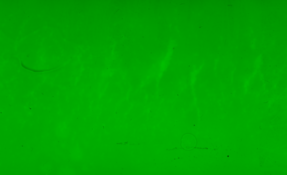
During initial bleaching, I watched the film turn from dark gray to white and my exposures slowly disappeared. During C41 development and bleaching the film turned blue. When I put it in the fixer I watched my images appear in vibrant colors and very quickly disappear - maybe in a matter of 20-30 seconds. Now I'm left with some dark green negatives that are mostly blank. Is this a result of room light exposure? Should future acceleration experiments be carried out with film entirely in darkness?
For some context on the film, I purchased 4 rolls of this exact stock and they have given me nothing but issues.
- First test run I shot at box speed and developed in standard E6, which yielded an almost entirely clear roll with very faint pieces of images that required lots of computer editing to view. Notably, a picture of a neon sign came out with the most detail.
- Second test run I shot in a rinky dink point n shoot and cross processed in C41. The roll came out almost entirely dark green (a bit darker than my acceleration experiment), except for one frame where a part of a reflective traffic sign was visible. I am assuming this is from the flash and was probably the most light that hit any part of the roll. This also raises another question - I thought that slides were better off underexposed than overexposed, even if expired. Should I be compensating for heavy base fog and overexposing this film?
I've got one roll left from this batch and another roll of Fujichrome that expired in the late 70s. Any advice for shooting and processing them going forward? I don't particularly care if my colors are whacked out, I would just like to get some sort of usable images for scanning and RA4 printing.
Having grown bored of cross processing my slide films in C-41 I have recently jumped into "accelerating" them - some more information on this process is here: https://www.flickr.com/groups/begreataccelerate/
This process worked with a roll of Velvia 50 expired in 2003; gave me some wonkier colors than a typical cross process but still the same sort of results - purple negative base.
I recently dug out some Fujichrome 50 (probably expired late 80's - early 90's) that I had stand developed in Rodinal and figured I'd try the acceleration process to get some more info out of the negatives.
These Fujichrome 50 negatives were dark gray and hard to work with. For comparison - my Velvia had been milky white and the positive images were sort of clear to see (even had some faint colors) coming out the BW fixer (before bleaching and running thru C41).
I can't recall if I read that one can do the acceleration process in room light after the initial BW process or if I made that information up. This is crucial here as I bleached, washed, and ran the Fujichrome 50 through C41 in open trays in room light, whereas the Velvia was mostly in a Patterson tank besides some brief checks in room light to make sure things were moving along.
During initial bleaching, I watched the film turn from dark gray to white and my exposures slowly disappeared. During C41 development and bleaching the film turned blue. When I put it in the fixer I watched my images appear in vibrant colors and very quickly disappear - maybe in a matter of 20-30 seconds. Now I'm left with some dark green negatives that are mostly blank. Is this a result of room light exposure? Should future acceleration experiments be carried out with film entirely in darkness?
For some context on the film, I purchased 4 rolls of this exact stock and they have given me nothing but issues.
- First test run I shot at box speed and developed in standard E6, which yielded an almost entirely clear roll with very faint pieces of images that required lots of computer editing to view. Notably, a picture of a neon sign came out with the most detail.
- Second test run I shot in a rinky dink point n shoot and cross processed in C41. The roll came out almost entirely dark green (a bit darker than my acceleration experiment), except for one frame where a part of a reflective traffic sign was visible. I am assuming this is from the flash and was probably the most light that hit any part of the roll. This also raises another question - I thought that slides were better off underexposed than overexposed, even if expired. Should I be compensating for heavy base fog and overexposing this film?
I've got one roll left from this batch and another roll of Fujichrome that expired in the late 70s. Any advice for shooting and processing them going forward? I don't particularly care if my colors are whacked out, I would just like to get some sort of usable images for scanning and RA4 printing.