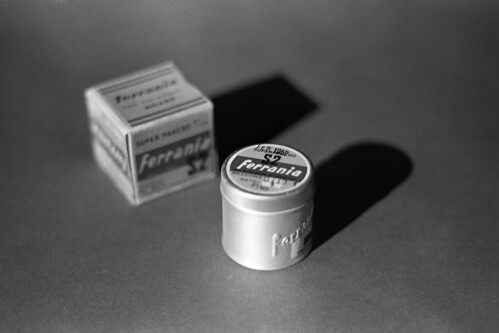

Hi,
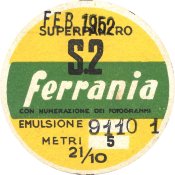
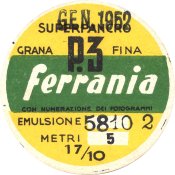
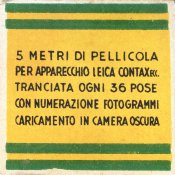
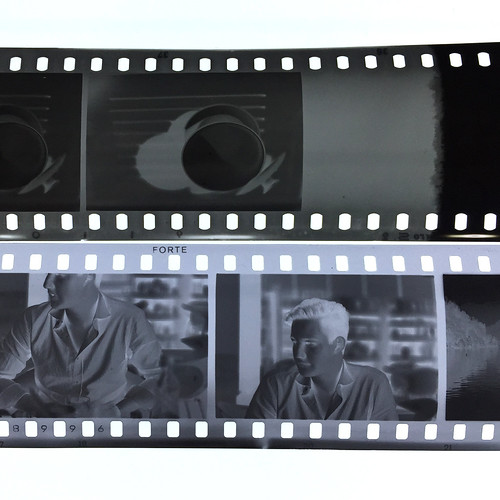
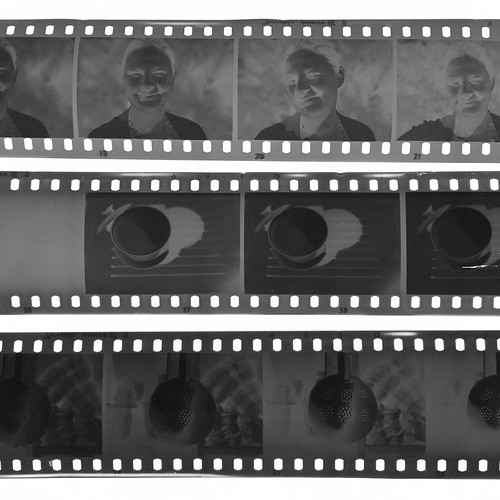
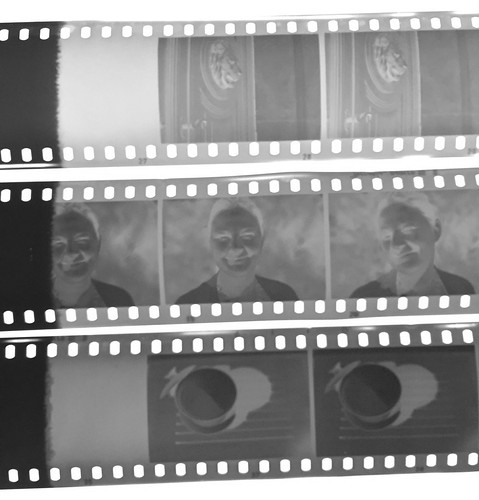
can anyone help me with any info on these films? I bought 5-5 meters of them, apparently refills. What I could deduct based on the labels and the boxes are the following.


- SUPERPANCHRO means that they are sensitive for more-or-less the whole color spectrum. - Expired in the beginning of 1952. That was 65 years ago. So they must been manufactured around the end of ’40s.
- P.3 is fine grain – if GRANA FINA means that. This means that it is most probably less sensitive than S.2.
- Each is 5 meter long.
- According to Google Translate, they have numbered frames and they are cut to 36 frame pieces.
- Probably motion picture films for test shots. (They have emulsion ID and the ordinary S.2 had no such thing on the label.)
Sensitivity: I had to do some readings on this subject as I didn't know much on how they measured film speed in the '40s. Here is what I've found.
In the end of the '40s the DIN system was in use in Europe. DIN sensitivity was usually written as a degree (same notation as temperature). But in the beginning of its application, the N/10 form was also used. So 21/10 and 17/10 mean DIN sensitivity on the labels.
DIN->ASA conversion table says that 21 DIN = 100 ASA and 17 DIN = 40 ASA. There was a revision of the DIN and ASA standards around 1960. They simply doubled the indicated film speed on the boxes. 100 ASA became 200 and 40 ASA became ISO 80. So we can say, that the ISO sensitivity of these emulsions at the time of their production was:
ISO 200 for the S.2 and ISO 80 for the P.3
But 65 years passed by and these sensitivities decreased over time. We can use the thumb rule of halving speed with every 10 years. The estimated sensitivities of these films are:
ISO 2 for the S.2
ISO 1 for the P.3
Any comment on the above? Does anybody have any info on these films? I wrote to the recently resurrected Ferrania factory but they were not able to help.
Thanks a lot!
can anyone help me with any info on these films? I bought 5-5 meters of them, apparently refills. What I could deduct based on the labels and the boxes are the following.
- SUPERPANCHRO means that they are sensitive for more-or-less the whole color spectrum. - Expired in the beginning of 1952. That was 65 years ago. So they must been manufactured around the end of ’40s.
- P.3 is fine grain – if GRANA FINA means that. This means that it is most probably less sensitive than S.2.
- Each is 5 meter long.
- According to Google Translate, they have numbered frames and they are cut to 36 frame pieces.
- Probably motion picture films for test shots. (They have emulsion ID and the ordinary S.2 had no such thing on the label.)
Sensitivity: I had to do some readings on this subject as I didn't know much on how they measured film speed in the '40s. Here is what I've found.
In the end of the '40s the DIN system was in use in Europe. DIN sensitivity was usually written as a degree (same notation as temperature). But in the beginning of its application, the N/10 form was also used. So 21/10 and 17/10 mean DIN sensitivity on the labels.
DIN->ASA conversion table says that 21 DIN = 100 ASA and 17 DIN = 40 ASA. There was a revision of the DIN and ASA standards around 1960. They simply doubled the indicated film speed on the boxes. 100 ASA became 200 and 40 ASA became ISO 80. So we can say, that the ISO sensitivity of these emulsions at the time of their production was:
ISO 200 for the S.2 and ISO 80 for the P.3
But 65 years passed by and these sensitivities decreased over time. We can use the thumb rule of halving speed with every 10 years. The estimated sensitivities of these films are:
ISO 2 for the S.2
ISO 1 for the P.3
Any comment on the above? Does anybody have any info on these films? I wrote to the recently resurrected Ferrania factory but they were not able to help.
Thanks a lot!