• Welcome to Photrio!
    Registration is fast and free. Join today to unlock search, see fewer ads, and access all forum features.
    Click here to sign up

Favorite wood for a wooden camera?

Forum statistics

Threads
203,519
Messages
2,855,918
Members
101,884
Latest member
Nighthawk Studio
Recent bookmarks
0

What wood would you choose for your next camera?

  • Walnut

    Votes: 8 9.1%
  • Cherry

    Votes: 37 42.0%
  • Ebony

    Votes: 6 6.8%
  • Mahogany

    Votes: 19 21.6%
  • Rosewood

    Votes: 6 6.8%
  • Cocobolo

    Votes: 3 3.4%
  • Other (post it in a reply)

    Votes: 9 10.2%

  • Total voters
    88
For a kit-camera, I think Walnut may be the most forgiving in terms of expense, workability, sustainability, and finishing by the end-user.
My $0.02.
 
As an ex woodworker I'm missing Oak on the list, one of the most durable wood, its the best wood for many things.
But for a camera maybe I would take Walnut or Ashwood.

Cherrs Armin
 
As an ex woodworker I'm missing Oak on the list

That's the one I wanted to see on the list too as my current camera is oak.


Steve.
 
European Pear

One of the most stable woods in the world(if not the most). Absolutely stunning under many finishes, almost as light as mahogany, works like a dream with hand and machine tools. Used in the creation of musical instruments, especially Violin tail pieces, pegs, fingerboards (baroque), inlays, lute staves, bridges and guitar backs/sides. Bends easily and turns on a lathe, like butter. Makes the best jack slides in a harpsichord because of its stability. That's what I'd use.... made a guitar for the guitarist of the Metropolitan Opera with it, rosewood as the secondary wood. Don't know why camera's aren't made of Swiss or European Pear. On the expensive side, but less than rosewood and ebony.
 
"Don't know why camera's aren't made of Swiss or European Pear. On the expensive side, but less than rosewood and ebony."

Nice choice, I think Zone VI made a few in French pear, rather special.

I have some marvelous Black Ash and lovely brown White Oak, now to find the time.
 
Not that this would really help anyone, but I knew a guy who was an expert at making one off medical machinery (prototypes) and he was going to make a ULF camera out of honeycombed aluminum. He showed me the material and it was incredibly light and ultra stiff. I don't know what happened to the project though as I lost touch with him. He was definitely a dreamer. And a material to think about.

Patrick
 
As an ex woodworker I'm missing Oak on the list, one of the most durable wood, its the best wood for many things.
But for a camera maybe I would take Walnut or Ashwood.

Cherrs Armin

I used Oak for my first DIY camera, but found it hard to machine (I'm not an experienced woodworker), and prone to splitting. But I like it's "look and feel".
 
Don't know why camera's aren't made of Swiss or European Pear. On the expensive side, but less than rosewood and ebony.

It was also used for the bearing surfaces and cog gears for windmills because it resists wear so well.


Steve.
 
To answer some of the questions, oak is not on the list because it seems prone to warping. My guess European Pear is not used because it doesn't look interesting. The carbon suggestions are interesting, but not for a DIY kit, certainly not for an inexpensive one. I am concerned about the dust machining would cause on CF. As far as wood combination, inlays, etc I will leave that to the builder :wink: since my taste might not be necessarily the same as others ...
 
If it is a kit for the masses, then it probably should be some kind of wood for the masses, Hickory, Ash, or some other common hardwood.

I've often thought that a DIY kit that uses an RB or RZ 6x7 back. Maybe a mono rail with only a little bit of movement in the front and rear standards. Just something that wouldn't be too expensive to get into a view type camera that would take "common" film backs and lenses. Basically a starter view camera that might allow someone to get their feet wet and decide if they wanted to go bigger or get out.
 
Basically a starter view camera that might allow someone to get their feet wet and decide if they wanted to go bigger or get out.

The plan is to have options, from an absolute basic kit to something (a lot more) elaborate, with some options to upgrade at a later time. I'm trying to avoid the concept of a "throw away" camera, even though the "masses" seem to like it. I finalized for the most part the "full feature camera" design, now I'm working on the more inexpensive versions. I'll be traveling for the next 2 month so with no access to a shop, I'll be doing the CAD work.
 
I've always liked working with Walnut, machines nicely, smells good, looks good, not to dense so not to heavy. Another thought would be Sitka spruce, good for aircraft and musical instruments, would it be good for camera's?
Roger
 
Well if I was to have a REALLY nice camera made from wood I think Cherry with a nice clear polyurethane coating would be my choice. For a basic camera Ash would probably be fine and if left in the sun for a while it darkens up really nicely. Walnut and Mahogany are really nice too, but I think the reds in Cherry would be my preference.

If you feeling like doing a freebee and have some time to design it, throw together a billet aluminum 6x7 that will take an RB or RZ back and I might give that a go on my milling machine. It's all hand crank so nothing too complex.
 
Roger, you ask about the suitability of sitka spruce for a camera. Not a good choice, in my opinion. It is very stiff for its weight, which is good. But it vibrates very readily, which is the reason why it is used for the soundboards of string instruments. Just tripping the shutter could cause it to vibrate....
Several people here seem to be picking different woods more or less because they look nice, or ,even worse, because they just happen to have some lying around. Since different woods have different qualities, I would much prefer to choose wood type on the basis of qualities desirable in a camera, such as
1 Stability.
2 High bend strength for weight.
3 Hard wearing.
4 Tendancy to vibrate.

There is also a good case for choosing different woods for different parts of a camera.

Alan Clark
 
To follow up on this discussion, I made some renders on some of the woods mentioned here. Please feel free to comment on your preferences. The renders are here : http://www.diycamerakit.com/renders/.
 
I just found this thread and wonder if anyone thinks Oregon pine would be good.

I have an 80 year old ladder which I thought I might try to make a camera with .... the ladder is probably unsafe and I would like to find a use for the timber. It should produce a very light camera.

And the wood is certainly seasoned enough !

Does anyone think this wood might be good for making cameras ?

Many Thanks.
 
I would avoid pine for camera building. For a start, it vibrates very freely, which is why it is used for soundboards of string instruments; the last quality you want in a wooden camera. And it is not very hard or robust.

You say it should be seasoned as it is 80 years old. But if it lives outside or in a non- heated building, then it won't actually be very dry, and timber cut from it would probably shrink when brought into a centrally-heated house.
 
What difference does it make? Can one tell a negative taken with a specific kind of wood?
 
Thanks AlanC ....

I'll find another use for the Oregon pine.

I think I was seduced by the idea of how light the camera could be.
 
No way to know until you cut it and try it out. It could be stable or once you start cutting into my warp like crazy. I dont know oregon pine but white pine or "sugar pine" is extremely stabile and has been used to make metal casting patterns for decades. Its not sturdy like mahogany or ebony.


Typos made on a tiny phone...
 
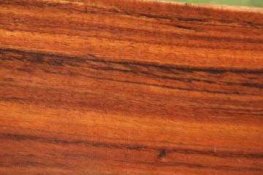
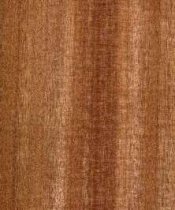
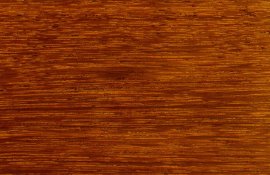
I've made a large format pinhole camera from Afzelia, an African wood.

attachment.php
attachment.php
attachment.php


It becomes more redish when finished.
 

Attachments

  • afzelia-wood-001.jpg
    afzelia-wood-001.jpg
    12.3 KB · Views: 184
  • afzelia-wood-002.jpg
    afzelia-wood-002.jpg
    10.7 KB · Views: 182
  • 006 afzelia(1).jpg
    006 afzelia(1).jpg
    193.4 KB · Views: 188
No way to know until you cut it and try it out. It could be stable or once you start cutting into my warp like crazy. I dont know oregon pine but white pine or "sugar pine" is extremely stabile and has been used to make metal casting patterns for decades. Its not sturdy like mahogany or ebony.


Typos made on a tiny phone...

Not sure I follow what you are saying here. All species of wood have the potential to warp "like crazy" when cut, even when seasoned. This happens when tension is built into the grain structure as the tree grows, typically, on a slope. I believe such wood is called "reaction wood" in the US. This can occur with just about any species, even ones that are generally regarded as stable. By "stable" most woodworkers generally mean wood that doesn't expand or shrink much when subjected to changes in atmospheric moisture.

Alan
 
Some wood even with straight grain warps from the heat of cutting like soft maple, was what I was thinking.

String Instrument makers tend to used very straight grain, quarter sawn spruce, while xylophones are made from very dense woods and they both vibrate very well when cut to harmonically specific lengths or have bridges at focal points of vibration. I doubt your ladder is made of anything special that would cause harmonics even if it was somehow assembled in a way that would resonate.

If your not using it as a ladder use it for a camera, or a pattern for one.


Typos made on a tiny phone...
 
I owned and used one of the most marvelous cameras ever made for over 25 years. It was a 8x10 Szabad. Made of Ebony and Ironwood in Sweden during the 1960's, it was a all black behemoth with a purpose. The uprights and controls for shift and swing were of a soft finished shiny alloy and very large and prominent. You could easily manipulate it wearing gloves.The front rise and fall were geared and of a blackened brass. They had to be geared because of the weight. A lens package as heavy as a 300mm 4.5 Voightlander Apo-Lanthar in Compur Electronic 5 was too much for a Deardorf or most other wooden or strained metal cameras like my Sinar, hardly phased the Szabad. The locking system was brilliant. It could apply as little or as much tension as you needed. Locked down, was absolute. Nothing moved.

Even though I have no idea what I would do with it now, I really do miss the beast. It was a terrific camera to use and despite its bulk it was very responsive and stronger than almost anything else. With it and my Sinar Norma, and for location work a Horseman 450 and a Technika V, even though I had little awareness of it, I lived in large format bliss.

Production of the camera was voluntarily stopped by Szabad because of South African politics and in support of the efforts of Nelson Mandela and the ANC.

Szilárd Szabad and his cameras http://prittsel.googlepages.com/szilardszabad

Fred

i have the same camera, and couldn't agree more with what you said, its a wonderful piece of engineering, and beauty !
 
Photrio.com contains affiliate links to products. We may receive a commission for purchases made through these links.
To read our full affiliate disclosure statement please click Here.

PHOTRIO PARTNERS EQUALLY FUNDING OUR COMMUNITY:



Ilford ADOX Freestyle Photographic Stearman Press Weldon Color Lab Blue Moon Camera & Machine
Top Bottom