
-
Welcome to Photrio!Registration is fast and free. Join today to unlock search, see fewer ads, and access all forum features.Click here to sign up
- Home
- Forums
- Analog Workflow Forums (100% Analog/Traditional)
- Analog Equipment
- 35mm Cameras and Accessories
You are using an out of date browser. It may not display this or other websites correctly.
You should upgrade or use an alternative browser.
You should upgrade or use an alternative browser.
F-1/New battery
-
A
- Thread starter CMoore
- Start date


Recent Classifieds
-
Want to Buy Arca swiss plate for Mamiya RZ67
- Started by blee1996
-
For Sale Hi-Con IR film
- Started by MCB18
-
Want to Buy Hasselblad tripod quick release plate... level
- Started by eli griggs
-
For Sale Fotodiox Pronto AF adapter
- Started by OAPOli
-
Sold 612 Holga modded body
- Started by OAPOli
Forum statistics
They should be either PX 28 Silver Oxide or PX 28L Lithium batteries Chip according to the camera manual. I've had a Lithium one in one of my New F1s for more than ten years so " Don't spoil the ship for a ha'porth of tar "
Last edited:

- Joined
- Dec 10, 2009
- Messages
- 6,295
- Format
- Multi Format
I have the new one and its 4LR44. Those used in dog shock collars.Does the F-1/New handle Alkaline batteries pretty well, or is this camera a good case for using Silver Oxide.?
What are you guys using in your F-1/New.?
Thank You
I wouldn't count on that Chip, but Silver Oxide batteries were what the meters were designed for.The Alkaline are so cheap, i had been using and then changing them Very Frequently.
I ordered some Silv/Ox from Amazon just now......see if that helps to get some of my snap-shots into The Louvre.
Your right.....my photos are too good for the likes of The LouvreI wouldn't count on that Chip, but Silver Oxide batteries were what the meters were designed for.

I wouldn't count on that Chip, but Silver Oxide batteries were what the meters were designed for.
Not quite. As mercury cells the silver-oxide ones deliver a quite stable voltage and thus were kind of substitute for the Mercury ones.
Once the device has a voltage control stage the primary stability of a cell no longer is of utmost importance. Then issues as
-) size (format)
-) price per sample
-) price per life-cycle (per usable capacity)
-) leakage risk
-) temperature dependancy of capacity
-) storage time
-) life-time once started (Zn-air)
may be considered instead.
Not quite. As mercury cells the silver-oxide ones deliver a quite stable voltage and thus were kind of substitute for the Mercury ones
Read the Canon New F1 manual, it was designed for the PX 28 Silver Oxide battery.
Once the device has a voltage control stage the primary stability of a cell no longer is of utmost importance. Then issues as
-) size (format)
-) price per sample
-) price per life-cycle (per usable capacity)
-) leakage risk
-) temperature dependancy of capacity
-) storage time
-) life-time once started (Zn-air)
may be considered instead.
So where does that leave the F-1/New.......does it benefit from the use of Silv/Ox batteries.?Not quite. As mercury cells the silver-oxide ones deliver a quite stable voltage and thus were kind of substitute for the Mercury ones.
Once the device has a voltage control stage the primary stability of a cell no longer is of utmost importance. Then issues as
-) size (format)
-) price per sample
-) price per life-cycle (per usable capacity)
-) leakage risk
-) temperature dependancy of capacity
-) storage time
-) life-time once started (Zn-air)
may be considered instead.
Read the Canon New F1 manual, it was designed for the PX 28 Silver Oxide battery.
(taken from an original New F-1 manual)
Definitely yes, I have been using them in my three New F1,s for more than 25 yearsSo where does that leave the F-1/New.......does it benefit from the use of Silv/Ox batteries.?

The Canon new F-1 and the Canon A-series cameras have very good voltage regulation and can use the alkaline batteries but you will not get the battery life from these that you do with the lithium and silver oxide batteries. As I recall the lithium batteries became popular when silver prices went up thanks to the Hunt brothers manipulation of silver prices in the 80's. Lithium batteries work well with lower temperatures and silver oxide batteries are recommended for longest life in camera. But of course remove all batteries when the camera is not being used.
That's right in my experience, Mike and I particularly appreciate how much lighter the AA Lithium cells are than the Alkaline ones are in the Motor Drive FN for the New F1 that takes 12 of them!The Canon new F-1 and the Canon A-series cameras have very good voltage regulation and can use the alkaline batteries but you will not get the battery life from these that you do with the lithium and silver oxide batteries. As I recall the lithium batteries became popular when silver prices went up thanks to the Hunt brothers manipulation of silver prices in the 80's. Lithium batteries work well with lower temperatures and silver oxide batteries are recommended for longest life in camera. But of course remove all batteries when the camera is not being used.
Any of you guys that were a Professional Photographer "Back Then" how often did you see a guy with a Canon F-1 or Nikon F2/F3 using one of those giant battery attachments.?
You would think that they almost made the camera "unusable".
I realize there would have been times when it was important to have that ability, but.......
The fastest motor i eve used were those Smell/Thin units that just added an inch or so to the bottom of the body. They basically saved you from making the motion of winding the film and allowed you to keep looking through the viewfinder and not having to move the camera to advance the film.
You would think that they almost made the camera "unusable".
I realize there would have been times when it was important to have that ability, but.......
The fastest motor i eve used were those Smell/Thin units that just added an inch or so to the bottom of the body. They basically saved you from making the motion of winding the film and allowed you to keep looking through the viewfinder and not having to move the camera to advance the film.

If you paid any attention to the photographers at any of the big sporting events - Olympics, World Series, Super Bowl, World Cup - you would definitely see those big motor drives and power packs.Any of you guys that were a Professional Photographer "Back Then" how often did you see a guy with a Canon F-1 or Nikon F2/F3 using one of those giant battery attachments.?
You would think that they almost made the camera "unusable".
I realize there would have been times when it was important to have that ability, but.......
The fastest motor i eve used were those Smell/Thin units that just added an inch or so to the bottom of the body. They basically saved you from making the motion of winding the film and allowed you to keep looking through the viewfinder and not having to move the camera to advance the film.
Not to mention silly expensive big lenses.
Yeah...i understand. I guess i never paid much attention to it. I would think, as they became available, motor drives were just standard. Sports photographers might live or die from being able to do 4-5 frames a second.
Just a sign of the times i suppose.
And yes, those super expensive 300-500 lens. Cannot imagine what a 500/2.8 lens sells for.
Just a sign of the times i suppose.
And yes, those super expensive 300-500 lens. Cannot imagine what a 500/2.8 lens sells for.
Pocket changeAnd yes, those super expensive 300-500 lens. Cannot imagine what a 500/2.8 lens sells for.
https://www.bhphotovideo.com/c/product/551435-REG/Sigma_597101_200_500mm_f_2_8_EX_DG.html

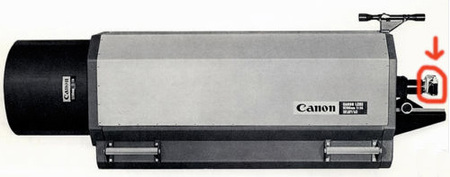
Not only the motor drives and long lenses Chip, but also 250 exposure bulk film backs they used with New F1s in the 1984 LA OlympicsYeah...i understand. I guess i never paid much attention to it. I would think, as they became available, motor drives were just standard. Sports photographers might live or die from being able to do 4-5 frames a second.
Just a sign of the times i suppose.
And yes, those super expensive 300-500 lens. Cannot imagine what a 500/2.8 lens sells for.
I have one of those big ol' Canon Motor Drives "Motor Drive Unit" aka Motor MD for the original style F1. It was rathe inconvenient but had a lot of neat features. (Still have it----somewhere.) There is a remote battery cord which makes just a little less ridiculous, you can stick the battery case on your belt. I got it in a trade, took it out once, hiking, once was enough.Any of you guys that were a Professional Photographer "Back Then" how often did you see a guy with a Canon F-1 or Nikon F2/F3 using one of those giant battery attachments.?
You would think that they almost made the camera "unusable".
I realize there would have been times when it was important to have that ability, but.......
The fastest motor i eve used were those Smell/Thin units that just added an inch or so to the bottom of the body. They basically saved you from making the motion of winding the film and allowed you to keep looking through the viewfinder and not having to move the camera to advance the film.
-

- Dennis S
- Deleted
- Reason: off topic
I have the Motor Winder F for my F1n's its much lighter than the Motor Drive F and only needs 4 AA batteries.I have one of those big ol' Canon Motor Drives "Motor Drive Unit" aka Motor MD for the original style F1. It was rathe inconvenient but had a lot of neat features. (Still have it----somewhere.) There is a remote battery cord which makes just a little less ridiculous, you can stick the battery case on your belt. I got it in a trade, took it out once, hiking, once was enough.
| Photrio.com contains affiliate links to products. We may receive a commission for purchases made through these links. To read our full affiliate disclosure statement please click Here. |
PHOTRIO PARTNERS EQUALLY FUNDING OUR COMMUNITY:  |