• Welcome to Photrio!
    Registration is fast and free. Join today to unlock search, see fewer ads, and access all forum features.
    Click here to sign up

Experimental techniques to emphasise the aliveness of film itself?

Paper Birch.jpg

H
Paper Birch.jpg

  • 0
  • 0
  • 9
Krause 4

H
Krause 4

  • 4
  • 0
  • 48

Recent Classifieds

Forum statistics

Threads
203,058
Messages
2,849,240
Members
101,626
Latest member
Rick_P
Recent bookmarks
0
But what the heck do you mean by “indexicality of photography”?

indexicality means something existed and reflected back into the camera and film registered or indexed it the indexical nature of photography roots it into reality cause things do not magically appear on the negative that did not exist in front of the camera unlike digital files not indexical so are they photography?
 
One way to emphasize grain is to overexpose heavily, e.g. Ilford HP5 on 35mm exposed +2 or +3....
Cross-processing (developing E6 film in C41) is also a great way to 'let the film speak'. Again, overexposure usually helps.

Shock-treating film with very cold and very hot water/chemistry during developement also might turn out some nice structure on your negatives.
 
indexicality means something existed and reflected back into the camera and film registered or indexed it the indexical nature of photography roots it into reality cause things do not magically appear on the negative that did not exist in front of the camera unlike digital files not indexical so are they photography?

Any chance of explaining the above again in as simple a way as possible. I could your words quite clearly but I am afraid none of it make any sense to me. Put it down to my age. Pretend you are explaining it to your grandad🙂

Thanks

pentaxuser
 
Any chance of explaining the above again in as simple a way as possible. I could your words quite clearly but I am afraid none of it make any sense to me. Put it down to my age. Pretend you are explaining it to your grandad🙂

Thanks

pentaxuser


the camera records / indexes onto the film. the index I think means it physically exists as a record of reality. There is no chemical latent image that is a digital file, the image file through a different process and they say it makes a difference. I am not a philosopher and to be honest they seem the same to me, but if you ask a philosopher they might attempt to change your mind.
 
the camera records / indexes onto the film. the index I think means it physically exists as a record of reality.
I don't think the nature of the sign needs to be physical, or that a digital index would be any less of an index than one on film. Maybe you're thinking of materiality, which can be understood to refer to the physical nature of something and the relevance of that physicality. Perhaps at that observation we should also abandon the tangent of the digital vs. analog comparison, since OP very specifically inquires into the medium of film, which makes it not very relevant to dive too deeply into this issue of indexicality as it pertains to the film/digital distinction. A discussion of this would be interesting, but I'd invite those interested in it to start a new thread on it.
 
  • BrianShaw
  • Deleted
  • Reason: Removed from vision
the camera records / indexes onto the film. the index I think means it physically exists as a record of reality. There is no chemical latent image that is a digital file, the image file through a different process and they say it makes a difference. I am not a philosopher and to be honest they seem the same to me, but if you ask a philosopher they might attempt to change your mind.

Thanks I had never heard of "index" in this context, nor its extension of "indexicality" I didn't even know they were real words

I can't say I understand what this point of philosophy is even about nor its practical application to analogue photography so I'll just have to wallow in my ignorance but thanks for trying to explain it

pentaxuser
 
Thanks I had never heard of "index" in this context, nor its extension of "indexicality" I didn't even know they were real words

I can't say I understand what this point of philosophy is even about nor its practical application to analogue photography so I'll just have to wallow in my ignorance but thanks for trying to explain it

pentaxuser
Don't lose any sleep worrying about this. There is a parallel language called academese filled with made-up words only pertinent to the denizens of the place called academe. "Indexicality" is one, like "conflation" for example. After 30 years in that profession, I'm actively trying to unlearn the lingo. In short, just load up your camera and go out and shoot: that's all the understanding you really need!
 
Thanks I had never heard of "index" in this context, nor its extension of "indexicality" I didn't even know they were real words

I can't say I understand what this point of philosophy is even about nor its practical application to analogue photography so I'll just have to wallow in my ignorance but thanks for trying to explain it

pentaxuser

I agree it's a "dumpster fire"
 
ICRacer: I like this photo a lot! Guessing it began as a long exposure through the windscreen of a car as you were driving down a highway at night....
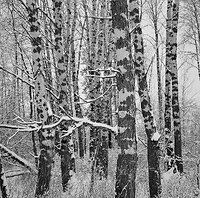
Yes. Minox LX on ‘auto’ it can expose up to 15 seconds.

Another ’secret,’ the posted image is a 4x5” print. A lot of the grain is actually from the paper.
 
All I previously knew about "index" was that:
"You've got to stay cool on Wall Street when your index is low
Dow Jones ain't got time for the bums"
They wind up on Skid Row with holes in their pockets etc

There's a whole tutorial on this aspect of economics by that fine group of economists from Manchester who called themselves collectively "10cc"

pentaxuser
 
Indexicality has been a well discussed topic in photography for decades. At a basic level it is accepted that a man had his shoes shined in 1838 on the Boulevard du Temple because there exists evidence that the light reflecting from this physical object left its chemical marks ( that is an image) resulting in the daguerreotype. One leads to the other in only one way, it indicates the other.
Here is a quite good discussion of the concept and its implication.
https://aestheticsofphotography.com/exploring-indexicality-in-photography/
 
Indexicality has been a well discussed topic in photography for decades. At a basic level it is accepted that a man had his shoes shined in 1838 on the Boulevard du Temple because there exists evidence that the light reflecting from this physical object left its chemical marks ( that is an image) resulting in the daguerreotype. One leads to the other in only one way, it indicates the other.
Here is a quite good discussion of the concept and its implication.
https://aestheticsofphotography.com/exploring-indexicality-in-photography/

Thanks for that article. I enjoyed it.
 
The whole world boycotts cinema until the producers bring back mechanical projectors and film. That would change something to the better. Cinema needs film.
 
I spent much time cross processing in the early aughts with similar mindset about film. The images referenced below (there are more if you page forward in time) were all about 1 minute exposures at f2 and cross processed Kodak 160T. I calculated 1 minute was about 3x normal exposure, but mostly it was trial and error, Mostly I waited for the right atmospheric conditions which included a good moon and fast moving clouds. After 9/11 this work had to stop...a guy on the street after midnight with a tripod was peculiar even in Brooklyn. The negatives are all faded to nothing and only the prints remain.

 
Although an old thread, this is interesting to me. Film is alive in simlar ways as the maculas on our restinas of our eyes are alive. Both are covered with photo sensors of random sizes, shapes, and positions, unlike digital image sensors that are covered by a matrix of identical sizes and shapes of sensors. Both film and maculas have a limited life that is almost similar. Human eyes last almost as long as people, although often failing well before end of life. Film can also live for about the same amount of time, but often lives for a shorter period. As film enters old age it loses contrast and becomes mottled, similar to human eyes. Film can only be used once for a short time and then it dies a death in the fixer frozen as a memory forever, much like a person. Film is organic in these ways and likely more.
 
Photrio.com contains affiliate links to products. We may receive a commission for purchases made through these links.
To read our full affiliate disclosure statement please click Here.

PHOTRIO PARTNERS EQUALLY FUNDING OUR COMMUNITY:



Ilford ADOX Freestyle Photographic Stearman Press Weldon Color Lab Blue Moon Camera & Machine
Top Bottom