
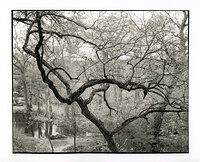
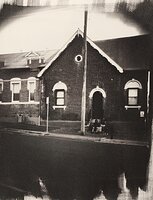
Experimental techniques to emphasise the aliveness of film itself?

Banana

H
Banana

  • 0
  • 0
  • 18
Higher ups

D
Higher ups

  • 3
  • 0
  • 64

Forum statistics

Threads
200,590
Messages
2,810,586
Members
100,308
Latest member
Sverre gjesdal
Recent bookmarks
1

AHiggz

Member
Joined
Nov 5, 2025
Messages
15
Location
Falmouth
Format
Analog
Hello!
I am no professional in the field of photochemical processes but I have been self teaching for the past couple years so forgive me if I say something silly. I am currently doing a project exploring film as something alive, the collaboration between me (the photographer or filmmaker) and the grain of the film and the reactions necessary to create an interesting texture; I’m hoping to create work that will highlight this aliveness of film and I was hoping to achieve this by exaggerating the grain of film In some way?
I often use massively expired film and try to focus on the less chemical based processing as it’s just me doing this in my bedroom.
I was wondering if there’s any major ways to do this through experimental techniques with camera settings (do certain camera settings leave space for the film to create something interesting rather than focusing too much on the outcome of a perfect in focus image?), or with the processing stage- can I add anything to the processing with caffenol or seaweed or change temperature to create interesting results?
I want to be playful but not accidentally create something dangerous haha

I am trying not to do too much to film after it’s already been processed and fixed as that doesn’t really feel like the film doing something but more me, as a human, going in afterwards and creating interesting textures- which isn’t really what I want.
in summary, what can I do to film in the stages between being placed in a camera and it being processed to achieve this ‘aliveness’
anyways, sorry for waffling, and I hope this makes some kind of sense. I honestly just want to play around and get some really cool examples of how incredible film can be (both stills and cine film)

anything you can offer me I’ll accept! Thanku :smile:
 

loccdor

Subscriber
Joined
Jan 12, 2024
Messages
2,127
Location
USA
Format
Multi Format
While it's contrary to what a lot of the members of this forum are interested in, I believe the easiest way to emphasize the "filmness" of film is to either go down to a smaller format or crop. The grain will become enlarged and a more prominent element of your picture.

Another way is to use an acutance developer like Rodinal, especially diluted 1+100 or more, with stand or semi-stand development. You will get edge effects and Rodinal is famous for increasing both sharpness and grain.

do certain camera settings leave space for the film to create something interesting rather than focusing too much on the outcome of a perfect in focus image?

Using expired film often gives similar results to underexposing film, as it tends to have lost film speed. But additional effects can come from it like backing paper offset in 120, oxidization of the edges, emulsion flaking off and leaving tiny holes, fogging, etc. So setting your camera to -2 exposure may make things more interesting to you.

Another thing you can do is use simple or very old lens designs. Like a single element plastic holga lens, a petzval lens, some other 1800s lens designs. Many of these lenses are valued for their imperfection. Or, you can try using your lenses at their widest aperture where you will probably get effects like ghosting and other aberrations.

Some of what you can do to make film feel "filmy" can really be a result of the printing you choose as well. There are countless options in that regard.

Welcome to Photrio.
 

BrianShaw

Member
Joined
Nov 30, 2005
Messages
16,849
Location
La-la-land
Format
Multi Format
It would help if you could more clearly express the desired end goal, specifically what you mean by “aliveness of film”. That’s a new concept to me (and I’ve been around film and photography for quite some time). With that knowledge it might be easier to make suggestions.

As far as exaggerating grain, which I don't think makes film "alive", there are historical techniques to do that... and the effect can be quite artistic and interesting:

 
Last edited:

Truzi

Member
Joined
Mar 18, 2012
Messages
2,671
Format
Multi Format
Does it have to involve grain? You could try "Light Painting."
wikipedia.org/wiki/Light_painting
 

Jan de Jong

Subscriber
Joined
Jul 20, 2022
Messages
104
Location
Germany
Format
Analog
You could explore the toe and the shoulder of the film ie under-expose and over-develop, or over expose, develop normal and bleach, with Farmer`s reducer. Just a thought after reading your post.
 

Bill Burk

Subscriber
Joined
Feb 9, 2010
Messages
9,434
Format
4x5 Format
You could try Lith printing. It is easy (some may disagree) and effectively creates grain of its own.
 

ic-racer

Member
Joined
Feb 25, 2007
Messages
16,664
Location
USA
Format
Multi Format
Minox + Lith printing works for me.

highway at night minox.jpg
 

cliveh

Subscriber
Joined
Oct 9, 2010
Messages
7,643
Format
35mm RF
Sorry to disapoint you, but film is not alive. It is not organic, merely a base with a chemical compound.
 

ic-racer

Member
Joined
Feb 25, 2007
Messages
16,664
Location
USA
Format
Multi Format
Gelatin is composed of organic molecules. Other agents, like metol, are organic compounds.
 
OP
OP
AHiggz

AHiggz

Member
Joined
Nov 5, 2025
Messages
15
Location
Falmouth
Format
Analog
While it's contrary to what a lot of the members of this forum are interested in, I believe the easiest way to emphasize the "filmness" of film is to either go down to a smaller format or crop. The grain will become enlarged and a more prominent element of your picture.

Another way is to use an acutance developer like Rodinal, especially diluted 1+100 or more, with stand or semi-stand development. You will get edge effects and Rodinal is famous for increasing both sharpness and grain.


Using expired film often gives similar results to underexposing film, as it tends to have lost film speed. But additional effects can come from it like backing paper offset in 120, oxidization of the edges, emulsion flaking off and leaving tiny holes, fogging, etc. So setting your camera to -2 exposure may make things more interesting to you.

Another thing you can do is use simple or very old lens designs. Like a single element plastic holga lens, a petzval lens, some other 1800s lens designs. Many of these lenses are valued for their imperfection. Or, you can try using your lenses at their widest aperture where you will probably get effects like ghosting and other aberrations.

Some of what you can do to make film feel "filmy" can really be a result of the printing you choose as well. There are countless options in that regard.

Welcome to Photrio.

Wow thank you so much for all the recommendation! I really appreciate it. I love working with expired film and seeing all the unplanned effects that come from it. I will definitely be trying out lowering the exposure when using the expired film, and I’ll have a look at some of the lenses you mentioned too!
there’s so many different options to experiment with but having some small amount of direction is massively helpful to me.
 
OP
OP
AHiggz

AHiggz

Member
Joined
Nov 5, 2025
Messages
15
Location
Falmouth
Format
Analog
It would help if you could more clearly express the desired end goal, specifically what you mean by “aliveness of film”. That’s a new concept to me (and I’ve been around film and photography for quite some time). With that knowledge it might be easier to make suggestions.

As far as exaggerating grain, which I don't think makes film "alive", there are historical techniques to do that... and the effect can be quite artistic and interesting:


It’s quite difficult for me to explain all my ideas and thoughts but I can try my best! I study fine art so I apologise if this sounds utterly crazy but it’s part of the course to research something so stupidly in depth that myself and others start losing their grasp of reality hahah.
I have had a very short relationship with film as I only started a couple years ago and everything I’ve done is pretty much self taught through a lot of confusion and failure- I think because the amount of failure I’ve endured I began to see film as something of its own, I am unable to fully control the outcomes of the film I am trying to produce. The indexicality of photography is challenged by this medium called film. I can do things the ‘right’ way to produce an image I want, I can use film for my own personal purposes but I feel as though film is something in itself, it has its own unique existence that can age, decay, reproduce and honestly the whole process of using film just feels incredibly alive to me. I think the grain in particular showcases this evidence of films existence as it’s not something we as humans intended to produce but something the film made in collaboration with us.
I am so sorry for babbling and waffling but that’s pretty much a very summarised version of my research project at the moment and I’m just trying to find ways to feed and embrace this alive thing that I sense from film, and I am trying to capture it without me going in and trying to reproduce things that look similar to what film does naturally; for example expired film distorts the colours by its without me having to go in and add stuff afterward.
im not sure if this makes sense but there it is.

so basically I just want some really wacky ways to get the weirdest results from film and find out it’s boundaries and potentials as a medium without focusing on the outcome of a good image or movie.
 
OP
OP
AHiggz

AHiggz

Member
Joined
Nov 5, 2025
Messages
15
Location
Falmouth
Format
Analog
You could explore the toe and the shoulder of the film ie under-expose and over-develop, or over expose, develop normal and bleach, with Farmer`s reducer. Just a thought after reading your post.

Yeah that’s what I was thinking, gonna try under and over exposing some expired 120 film and see what comes from that :smile: thanks for the suggestionssss
 
OP
OP
AHiggz

AHiggz

Member
Joined
Nov 5, 2025
Messages
15
Location
Falmouth
Format
Analog
You could try Lith printing. It is easy (some may disagree) and effectively creates grain of its own.

Oooh okay, I had never come across this before but it looks like a cool way to experiment some more with the grain of film, thanks so much!
 
OP
OP
AHiggz

AHiggz

Member
Joined
Nov 5, 2025
Messages
15
Location
Falmouth
Format
Analog
Maybe by allowing your negatives and prints degrade and die this will show they once alive

Yessss decaying and aging is such good evidence of once being alive, I think that’s why I like to use film and equipment that’s considered unusable or expired. it still has much life in it! It just doesn’t do the job that humans want it to do, as well as it did before. But it’s still very much usable, and if anything it is more authentically itself- it’s not ‘performing’ for human use anymore.
 
Joined
Oct 30, 2025
Messages
51
Location
lalaland
Format
Hybrid
Yessss decaying and aging is such good evidence of once being alive, I think that’s why I like to use film and equipment that’s considered unusable or expired. it still has much life in it! It just doesn’t do the job that humans want it to do, as well as it did before. But it’s still very much usable, and if anything it is more authentically itself- it’s not ‘performing’ for human use anymore.

What do you mean by it is more authentically itself ? Some might quibble the opposite being true.
 

BrianShaw

Member
Joined
Nov 30, 2005
Messages
16,849
Location
La-la-land
Format
Multi Format
Anthropomorphism doesn’t seem to apply as it can’t be explained or understood very much. Too many words. Less is more, after all. Suggest finding other artsy term. Whatever you end up doing, good luck as an art student!

But what the heck do you mean by “indexicality of photography”?
 

Hassasin

Member
Joined
Feb 23, 2023
Messages
1,601
Location
Hassasstan
Format
Multi Format
Film is a mix of chemicals applied to a plastic substrate, which through processing can change its looks. It does not have a mind of its own. It is not alive at any stage of its existence, new nor old. FIlm is a thing, no version of gender applies.
 

Tel

Subscriber
Joined
May 9, 2011
Messages
1,012
Location
New Jersey
Format
Multi Format
Indexicality usually refers to literal representation. Given the enthusiastic response to ICRacer's Minox photo, I'm going to suggest you pursue liminality: finding images that live at the edges of reality...

Edit: If you want to take a deep dive, look at the work of the Polish filmmaker Krzysztof Kieslowski. Pick up a copy of Joe Kickasola's book on the subject of Kieslowski and the liminal image. Might cross over into your study. Of course you can do something similar with digital imaging, but the graininess, color shifting and other artifacts that routinely annoy film photographers might prove to be a rich vein to mine. I'm thinking especially of weird color artifacts you might get by souping C-41 films at the wrong temps or dev times, or by using long-expired film or found film that was exposed with the intent of indexicality maybe 30 years ago and has aged into something other than what was intended.

Further edit: I think what you're calling "aliveness" is really just about artifacts that happen outside the intentions of the photographer. And therein lies the anthropomorphism: we like to attribute unintended consequences to sentient forces outside our control, but that's just an excuse and not an explanation. Heat, fungus, mildew, dampness etc. produce some bizarre and interesting effects on film, but they're not alive in the sense of intent. (What does a fungus think about?)
 
Last edited:

loccdor

Subscriber
Joined
Jan 12, 2024
Messages
2,127
Location
USA
Format
Multi Format
Not that it really matters much to me, but the plastic and gelatin were certainly alive at some point, and they will serve as food for organisms at some point in the future.
 

koraks

Moderator
Moderator
Joined
Nov 29, 2018
Messages
25,276
Location
Europe
Format
Multi Format
Welcome to Photrio @AHiggz, and thanks for sharing this interesting question/project. I think it's interesting specifically in the context of this community because it involves two different perspectives on photography that rub against each other, and perhaps also clash. I see this happening in some of the responses, and I am personally triggered by the term 'research'. I'm probably not alone in approaching photography often (perhaps too much so) from a technical and positivist viewpoint: it's a controllable process using inanimate materials that can be harnessed to yield a predictable outcome. Such an approach is evidently fine if the objective is to reproduce something with a high degree of fidelity. Within this perspective, the term 'research' naturally involves a (more or less) scientific method, involving theoretical models, testable hypothesis and systematic collection and analysis of data - resulting in practical steps taken to improve (because objectively speaking, the result can be better or worse) the outcome.

In this case, however, the perspective you take is a very different one. I acknowledge that it's not a domain I'm very familiar with, and at the same time I also acknowledge that "to research" in an artistic sense involves a different kind of process, mindset and methodological requirements. It seems to place an even higher emphasis on e.g. reflexivity (the interaction between researcher and subject), the process can as a result be much more personal and perhaps also subjective, and at its core, it's highly explorative without a clear endpoint or objective criteria that the outcome must adhere to.

Hence, the distinction between these two archetypal perspectives also involves differences in how terminology is used and intended. This carries a potential for confusion and perhaps even strong emotional responses - and again, I see hints of that in some of the responses. Personally, I'd like to follow this discussion with the distinction outlined above in mind, and in the realization that the perspective adopted is a different one than the dominant logic that has shaped my own views.

Having said that, one project of a friend of mine comes to mind. She made color negatives and then allowed them to basically compost in a gutter on a rooftop for some time. The process was inherently uncontrollable, and I think strongly reflects this sense of the material "doing its own thing" in a way. The results, at least some of them, I found interesting in a visually pleasing way. I imagine the question revolves around something like this - how inherently uncontrollable processes work on the medium and amplify, accentuate or grow on top of the inherently present structure of the material in order to create something new. A bit like how bees can build a hive around an existing shape; cf. the recent work of Tomáš Libertíny. As such, it seems that any process that can act upon the silver gelatin emulsion is game, and I would certainly encourage exploration in particular outside the normal realms of photographic processing.

To pick up on the project of my friend that I mentioned: given that a silver halide film is essentially a thin layer of gelatin on a (fairly inert) plastic base, concepts involving some organism using the gelatin as a feedstock seem interesting to me. I bet that a host of bacteria and fungi will enthusiastically consume the gelatin, and if an image is already present in the form of silver grains and/or dye clouds, I can imagine that this can moderate the rate at which this process takes place and thus affect the outcome visually. Perhaps if that's combined with dyeing the remaining gelatin at a later stage (maybe even using some kind of biological process that creates a dye in situ?) the effect can be emphasized and taken into interesting directions.
 
Photrio.com contains affiliate links to products. We may receive a commission for purchases made through these links.
To read our full affiliate disclosure statement please click Here.

PHOTRIO PARTNERS EQUALLY FUNDING OUR COMMUNITY:


Ilford ADOX Freestyle Photographic Stearman Press Weldon Color Lab Blue Moon Camera & Machine
Top Bottom
