• Welcome to Photrio!
    Registration is fast and free. Join today to unlock search, see fewer ads, and access all forum features.
    Click here to sign up

Excessive grain in Delta 3200

Recent Classifieds

Forum statistics

Threads
201,946
Messages
2,832,482
Members
101,029
Latest member
5000Kelvin
Recent bookmarks
0
Joined
Jan 21, 2003
Messages
15,715
Location
Switzerland
Format
Multi Format
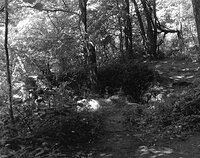
To me, it looks like the film was underexposed. Notice the dark tones that have no detail in them, even though they're not dark black...the scanner lightened the image to compensate, but since there's no detail, all you get is empty dark tones full of grain.

+1 on underexposed. But I would add that it also looks under-developed. Delta 3200 is a strange critter. I usually shoot at 1600 and develop 50% longer than Ilford recommends at that EI. This is something I do for this film only.

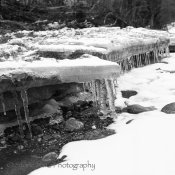
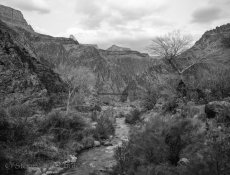
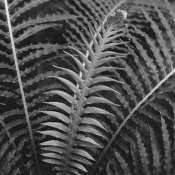
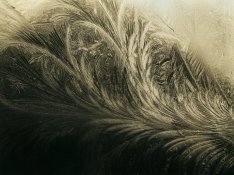
The fern is scanned 120 D3200, shot and processed as above, and the 'ice feather' is a scanned 9x12" print from 35mm D3200, actually a cropped negative.
 

Attachments

  • 2009-02-04-04.jpg
    2009-02-04-04.jpg
    182.9 KB · Views: 115
  • feather_001.jpg
    feather_001.jpg
    264.2 KB · Views: 118

StoneNYC

Member
Allowing Ads
Joined
Aug 5, 2012
Messages
8,345
Location
Antarctica
Format
8x10 Format
Just as a second comment, in the future, many I've seen have suggested that for D3200, you should develop at one stop higher than the recommended time for your EI.

So if you shoot at 3200, develop for 6400 times.

This is just a suggestion, I've been meaning to try this, but haven't yet.

If the scene calls for 3200 or less, I actually prefer HP5+ pushed to 3200, but anything higher and I'll use 3200 film.

That is all personal choice. YMMV as they say...
 

StoneNYC

Member
Allowing Ads
Joined
Aug 5, 2012
Messages
8,345
Location
Antarctica
Format
8x10 Format
+1 on underexposed. But I would add that it also looks under-developed. Delta 3200 is a strange critter. I usually shoot at 1600 and develop 50% longer than Ilford recommends at that EI. This is something I do for this film only.

The fern is scanned 120 D3200, shot and processed as above, and the 'ice feather' is a scanned 9x12" print from 35mm D3200, actually a cropped negative.

Beautiful greyscale, and 50% is almost more than I would think and might blow out the highlights, but obviously for you this didn't happen, might partially be the grade of paper you choose? But I'm not as familiar with all of that, but starting to learn it slowly as an abstract concept since I don't yet do it myself.

Thanks for sharing.
 

pentaxuser

Member
Joined
May 9, 2005
Messages
20,352
Location
Daventry, No
Format
35mm
Stone mentioned an out-of-focus scan, the negatives were very curled (currently flattening them), could that have made the problem worse?

Nonetheless, I'll try to find the time to make some silver prints from the negatives and report back.

I think you are the second person recently to mention D3200 curling or was it you in another thread? I wonder what is going on with D3200? I have never experienced any issue with curling and D3200. Is it simply very low humidity which we in the U.K. do not suffer from? What's normal humidity where you are?

pentaxuser
 

Roger Cole

Member
Allowing Ads
Joined
Jan 20, 2011
Messages
6,069
Location
Atlanta GA
Format
Multi Format
+1 on underexposed. But I would add that it also looks under-developed. Delta 3200 is a strange critter. I usually shoot at 1600 and develop 50% longer than Ilford recommends at that EI. This is something I do for this film only.

The fern is scanned 120 D3200, shot and processed as above, and the 'ice feather' is a scanned 9x12" print from 35mm D3200, actually a cropped negative.

Underexposed and underdeveloped, while normally rather distinct, get a bit murky when talking about pushing and, especially, pushing D3200 (or TMZ.) This film is deliberately optimized for pushing meaning it has low contrast unpushed. (I know you know this Thomas, for those who don't...) Increasing development does pick up some shadow detail in my experience, and the contrast build is more gradual so you get good midtone separation without blown out highlights. If it was shot at 3200 I would say to first try increasing development (as well as optical printing or at least scanning with a different black level or whatever it's called.)

Everyone I've ever heard from who likes and uses this film (and I have several rolls in the fridge to be developed soon) prefers more development than Ilford lists for a given speed.
 
Joined
Jan 21, 2003
Messages
15,715
Location
Switzerland
Format
Multi Format
Underexposed and underdeveloped, while normally rather distinct, get a bit murky when talking about pushing and, especially, pushing D3200 (or TMZ.) This film is deliberately optimized for pushing meaning it has low contrast unpushed. Increasing development does pick up some shadow detail in my experience, and the contrast build is more gradual so you get good midtone separation without blown out highlights. If it was shot at 3200 I would say to first try increasing development (as well as optical printing or at least scanning with a different black level or whatever it's called.)

Everyone I've ever heard from who likes and uses this film (and I have several rolls in the fridge to be developed soon) prefers more development than Ilford lists for a given speed.

It depends on how much shadow detail you want, I guess. I wish to remain objective, and judge the posted pictures as 'technically good' negatives, and those shadows have very little in them.
I find it isn't until D3200 has been properly exposed and processed that you get away from a very grainy result. But you get tremendously rewarded when you hit it just right. That's my experience anyway, and is based on shooting no more than 50 or 100 rolls of the stuff over the years.

To get it right, however, just get in there and see how far you can push you processing before the highlights block up. I know you'll find that you have to go really far before that happens.
 

Xmas

Member
Allowing Ads
Joined
Sep 4, 2006
Messages
6,398
Location
UK
Format
35mm RF
I think you are the second person recently to mention D3200 curling or was it you in another thread? I wonder what is going on with D3200? I have never experienced any issue with curling and D3200. Is it simply very low humidity which we in the U.K. do not suffer from? What's normal humidity where you are?

pentaxuser

(there was a url link here which no longer exists)
 
OP
OP

Cybertrash

Member
Joined
Nov 1, 2012
Messages
238
Location
Stockholm, Sweden
Format
Multi Format
I think you are the second person recently to mention D3200 curling or was it you in another thread? I wonder what is going on with D3200? I have never experienced any issue with curling and D3200. Is it simply very low humidity which we in the U.K. do not suffer from? What's normal humidity where you are?

pentaxuser

I saw the thread, but I didn't write in it. It's strange, I rarely have curling problems with other films (except Tri-X), and I didn't use to have issues with D3200.
 

StoneNYC

Member
Allowing Ads
Joined
Aug 5, 2012
Messages
8,345
Location
Antarctica
Format
8x10 Format
I think you are the second person recently to mention D3200 curling or was it you in another thread? I wonder what is going on with D3200? I have never experienced any issue with curling and D3200. Is it simply very low humidity which we in the U.K. do not suffer from? What's normal humidity where you are?

pentaxuser


I have very high humidity in Connecticut, USA and I have excessive curling with D3200 as well. Hmmm ... interesting. Perhaps its just the type of water or something.
 

StoneNYC

Member
Allowing Ads
Joined
Aug 5, 2012
Messages
8,345
Location
Antarctica
Format
8x10 Format
One of my favorite sets of images was shot on D3200 and developed for D3200 but it wasn't quite as contrasty of a scene as you have, but the grain and look is excellent. It's an Americana Series...

D3200at3200-DDXat5500or11min-3200-01.jpgD3200at3200-DDXat5500or11min-3200-05.jpgD3200at3200-DDXat5500or11min-3200-10.jpg

I've also shot outside with good grain results, although again this was daytime but just very low light, or long exposures on a tripod in dim light... as the last one following...

D3200at3200-DDXat5500or11min-3200-08.jpgD3200-DDX-Epson-3200-GC004.jpgD3200at3200-DDXat5500or11min-3200-12.jpg

Dusk 1(ish) minute exposure...

D3200-DDX-Epson-3200-GC005.jpg
 

Truzi

Member
Joined
Mar 18, 2012
Messages
2,685
Format
Multi Format
Stone, those are nice; and I'm not used to seeing that kind of contrast posted by you :smile:
 

StoneNYC

Member
Allowing Ads
Joined
Aug 5, 2012
Messages
8,345
Location
Antarctica
Format
8x10 Format
Stone, those are nice; and I'm not used to seeing that kind of contrast posted by you :smile:

Thanks, all depends on what I want from a scene.

Sometimes I actually like low contrast... Sometimes :smile:
 

Arctic amateur

Member
Allowing Ads
Joined
Oct 24, 2011
Messages
325
Location
Ringerike, Norway
Format
35mm
My guess is underexposure and scanning issues. The scanner software has set the black point to clip the lowest level pixels (of the inverted image), and that combined with noise can sometimes make the shadows contain completely black pixels like those you see. I see them often enough in my own scans of underexposed negatives.

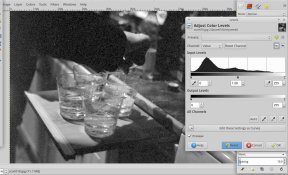
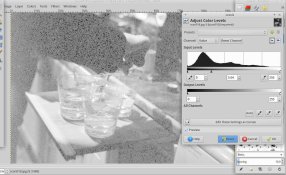
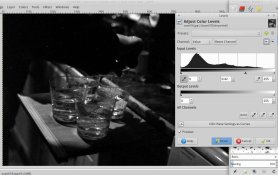
Here are some examples where I did a level adjustment in Gimp. I only moved the center point, not the cutoffs. This is roughly equivalent to raising/lowering the middle of the tonal curve.

First, your picture:

scanmod2.jpg

Then, the middle level pushed to the left, which leaves the completely black pixels unmoved but brightens the almost-black:

scanmod3.jpg

Then, I pushed the middle level towards the highlights, and suddenly the tones looked good on my terrible laptop screen:

scanmod4.jpg

You might be able to get a better digitalization by setting the scanner software to not clip either end of the histogram, and do the tonal adjustment in post.
 

pentaxuser

Member
Joined
May 9, 2005
Messages
20,352
Location
Daventry, No
Format
35mm
Stone, I agree with Truzi. If the negs from your scans are as good as your scans then D3200 exposed at 3200 and developed in DDX looks excellent and indicates that the OP may have problems unconnected to the film and his development process even accepting that his developer was Microphen.

pentaxuser
 

rubyfalls

Member
Allowing Ads
Joined
Aug 5, 2013
Messages
169
Location
USA
Format
Medium Format
Yup - I'm the curly d3200 chick. About to test out my new darkroom humidifier to see if that solves it.

OP - I've been working on d3200 for a few months now. I kinda take Stone's approach -- I shoot at ISO 1600 but give it an ever-so-slightly longer developer time; not quite a half-stop. I use DDX only on my d3200 and I fix for at least 8 minutes (ilford rapid fixer).

Here is one of mine, FYI:

qaqypepe.jpg


Sent from my iPhone using Tapatalk
 

StoneNYC

Member
Allowing Ads
Joined
Aug 5, 2012
Messages
8,345
Location
Antarctica
Format
8x10 Format
Stone, I agree with Truzi. If the negs from your scans are as good as your scans then D3200 exposed at 3200 and developed in DDX looks excellent and indicates that the OP may have problems unconnected to the film and his development process even accepting that his developer was Microphen.

pentaxuser

Thanks.

Based on what the previous user posted (using GIMP a free type photoshop program) I'm now convinced it must mostly be a scanner issue.

I truly try to get decent values from my negatives with good exposure and development.

I don't know what a "good" negative looks like for printing, but I assume that if I can see information on the entire negative, and nothing is ultra black, and nothing is totally see through, then my negative would have a lot of tonality and tons of greyscale with a traditional print, and someday I hope to find out. I also have worked on my high contrast negatives and low contrast negatives, I find that I prefer more contrast in most circumstances, but that's preference.

That said... I don't often have issues with my blacks, because I pre-visualize what I want from a scene and pick my exposure based on that idea, and 9 times out of 10 I don't actually have to adjust anything in the scanner settings, because the exposure and development came to the right points on their own. And usually when I do have to adjust, I obviously messed something up and I can see it in the negative... (One of these is not like the others...) :smile:
 

StoneNYC

Member
Allowing Ads
Joined
Aug 5, 2012
Messages
8,345
Location
Antarctica
Format
8x10 Format
Yup - I'm the curly d3200 chick. About to test out my new darkroom humidifier to see if that solves it.

OP - I've been working on d3200 for a few months now. I kinda take Stone's approach -- I shoot at ISO 1600 but give it an ever-so-slightly longer developer time; not quite a half-stop. I use DDX only on my d3200 and I fix for at least 8 minutes (ilford rapid fixer).

Here is one of mine, FYI:

qaqypepe.jpg


Sent from my iPhone using Tapatalk

:smile:

Lovely tones, terrible tripod! :smile:

One thing to mention... I've recently switched to rotary processing, and I'm finding it much more difficult to get down the proper times as they have changed and the grain seems often higher, I've yet to shoot and develop D3200 or HP5+(pushed) so I may be starting from scratch all over again... :/

It's certainly more difficult to get the right density with rotary, but I think once I've got it down, I'll be able to truly be consistent about it.

Anyway, let's hope the OP can figure it out.
 

rubyfalls

Member
Allowing Ads
Joined
Aug 5, 2013
Messages
169
Location
USA
Format
Medium Format
:smile:

Lovely tones, terrible tripod! :smile:

Ha ha ha - thanks. And not my tripod! I've got a mammoth old manfrotto that requires its own carriage for transport. Hence it stays in the make-shift studio.


Sent from my iPhone using Tapatalk
 

hgraf

Member
Allowing Ads
Joined
Jan 13, 2014
Messages
9
Format
35mm
Just as a second comment, in the future, many I've seen have suggested that for D3200, you should develop at one stop higher than the recommended time for your EI.

So if you shoot at 3200, develop for 6400 times.

This is just a suggestion, I've been meaning to try this, but haven't yet.

FWIW I haven't found that to be necessary for Ilfosol 3. I expose at 3200 and develop for 3200 and get results I'd expect.

TTYL
 

Attachments

  • hugs.jpg
    hugs.jpg
    52 KB · Views: 116
  • bulldog.jpg
    bulldog.jpg
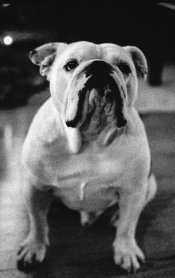
    61.6 KB · Views: 133
OP
OP

Cybertrash

Member
Joined
Nov 1, 2012
Messages
238
Location
Stockholm, Sweden
Format
Multi Format
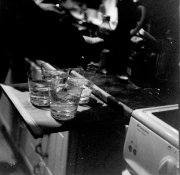
Here's a silver print (10x10cm) scanned. It was definitely underexposed, this is 14s @ f/32 and Grade 4 filter. I think I might reprint it a little darker and with slightly higher contrast (4½ or 5).
 

Attachments

  • Scan-140319-0002.jpg
    Scan-140319-0002.jpg
    567 KB · Views: 120

markbarendt

Member
Allowing Ads
Joined
May 18, 2008
Messages
9,422
Location
Beaverton, OR
Format
Multi Format
Looks better!
 
Joined
Jan 21, 2003
Messages
15,715
Location
Switzerland
Format
Multi Format
For what it's worth, here's a quick and dirty neg scan from my first test roll using Delta 3200 in 120, exposed at 1600 and processed in straight D76 for 11 minutes. Next roll will get 13 minutes as contrast is a bit low still.
 

Attachments

  • Test Roll 1 - 04.jpg
    Test Roll 1 - 04.jpg
    541.2 KB · Views: 115

Xmas

Member
Allowing Ads
Joined
Sep 4, 2006
Messages
6,398
Location
UK
Format
35mm RF
Stone, I agree with Truzi. If the negs from your scans are as good as your scans then D3200 exposed at 3200 and developed in DDX looks excellent and indicates that the OP may have problems unconnected to the film and his development process even accepting that his developer was Microphen.

pentaxuser

Microphen is as fine grained as D76 or not much different it was Ilfords best PQ derivative of ID11 it does have reduced sulphite but that was to optimise grain and speed.

So Id recommend to use Microphen as a standard developer indeed I do use...
 

pentaxuser

Member
Joined
May 9, 2005
Messages
20,352
Location
Daventry, No
Format
35mm
There's good news and bad news. The good news is that everyone else's scans of D3200 negs, including Thomas Bertilsson's suggests strongly that the problem lies with the scan and not the film or processing. The bad news is that unless he can change his scanner or settings then what he sees from the scan may not get any better.

It's a pity that he is deprived of seeing the full quality of D3200

pentaxuser
 
Photrio.com contains affiliate links to products. We may receive a commission for purchases made through these links.
To read our full affiliate disclosure statement please click Here.

PHOTRIO PARTNERS EQUALLY FUNDING OUR COMMUNITY:


Ilford ADOX Freestyle Photographic Stearman Press Weldon Color Lab Blue Moon Camera & Machine
Top Bottom