
• Welcome to Photrio!
    Registration is fast and free. Join today to unlock search, see fewer ads, and access all forum features.
    Click here to sign up

Excessive contrast with VC paper

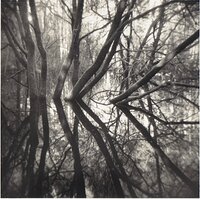
Flooded woodland

Flooded woodland

  • 14
  • 0
  • 96
Babylon

D
Babylon

  • 3
  • 1
  • 85

Recent Classifieds

Forum statistics

Threads
202,841
Messages
2,846,339
Members
101,559
Latest member
gnafin61
Recent bookmarks
0
This - plus the fact that if the photo ended up being printed on newsprint using a high volume and fast press, a photo that offered soft contrast and subtle tone transitions tended to lose detail and just lie whimpering on the page, while a contrasty and very graphically strong photo - which also lost some detail - otherwise tended to jump out and grab the customer/reader's attention.

Obviously it will depend on the press and the quality of the newsprint. But a contrasty print will only get more so when printed. A 65 line screen halftone or velox printed high-speed on less than prime newsprint generally suffers.
 
I have done the tests, that's what prompted the post. I'm getting grade 4 level contrast from the #2 filter. I expected the condenser head to produce more contrast, just wasn't expecting two grades. Especially given that I don't remember getting results this contrasty before.

I have condenser and cold light heads for my D3, the cold light is a Omega 50s vintage, florsesent, it prints a stop softer, I only use it with graded paper, I also have a diffusion head in a 50s vintage Federal, not a cold light, it prints about a 1/2 stop softer than my condenser head, the color head on my LP 6700 prints a full stop softer when using the equivalent of a grade 2 paper. I don't understand why you are getting grade 4 from a negative that in the past has printed grade 2 on a diffusion head. So if you print with grade 0 filter do you get what you think of as grade 2.
 
2 grades difference is about where most well controlled comparison tests end up. What may also be happening is that you are no longer producing the same sort of negatives as 20 years ago in terms of exposure to process relationships - and some paper curves have changed from MGIV, which could distort your previous outcomes if you were printing by perception rather than purely relying on densitometric analysis.

I’m printing a Stouffer step tablet.
 
I'm struggling with a contrast control problem in my printing I hope someone can help me with.

I'm currently printing with an Omega D6, the variable condenser head and Ilford contrast filters above the negative. When I test with a Stouffer step tablet I'm seeing each filter print between 1 and 2 grades higher contrast than what I'd expect (and what the sample data that ships with the BTZS WinPlotter shows.) It's consistent across Arista.EDU FB Glossy, RC Pearl, and Ilford MGRC Pearl, so I don't think it's just the paper. I'm developing in Formulary 130, 1+1, for 2 minutes but I see similar results with Ilford's Multigrade Developer. The printing of actual negatives is consistent with what I'm seeing in my test data. For reference, the #2 filter is printing with an exposure scale between 0.7 and 0.8 and the sample data seems to say I should expect 1.00 or a little greater.

I'm wondering how much switching to a diffusion light source might control my contrast and if there's something else I should try to tame things a little. I'm recently back from a 20 year break away from the darkroom and I don't remember having this problem back in the day...

Thanks!

as was mentioned already, a diffusion light source will print about a grade softer.
 
These are the curves I get using a #2 filter, printing a Stouffer 21 step tablet. The first is Ilford MGRC Pearl, the second is Arista.EDU Ultra FB Glossy.
Screenshot 2023-10-27 at 8.33.35 PM.png
Screenshot 2023-10-27 at 8.34.32 PM.png
 
Obviously it will depend on the press and the quality of the newsprint. But a contrasty print will only get more so when printed. A 65 line screen halftone or velox printed high-speed on less than prime newsprint generally suffers.

All my experience pre-dated anything I learned eventually about sensitometry and a reasonably scientific based approach to this.
But I do have a relatively small amount of experience making half tones and operating an offset press to print short run books and newsletters.
And in addition I did a fair amount of work over three plus years photographing for a three issues a week newspaper that was printed on high speed, medium volume offset presses.
As things progressed there, I became pretty good at tailoring my prints to suit how the halftone makers and press operators at the printing company worked. If I supplied them with prints that were about a grade more contrasty than my normal, the resulting newspaper images were more effective.
 
I have done the tests, that's what prompted the post. I'm getting grade 4 level contrast from the #2 filter. I expected the condenser head to produce more contrast, just wasn't expecting two grades. Especially given that I don't remember getting results this contrasty before.

I wonder if the bulb you have is not producing the correct color temperature for use with VC papers. Why not try using the 75 watt bulb and retesting one ore more of the papers and see if there is any change in the contrast. I admit it, I'm stumped. Are you able to mix developers fro formulas? I would also experiment with a D-72 type developer as well to see if that changes anything. Dektol, which is no longer available, was based on D-72. Freestyle sells a developer under the Flic Film brand called Quintol that I suspect is made from the D-72 formula in 1 and four liter sizes. What kind of water are you using to dilute your developer? If you're using tap water, you might want to try diluting your developer with distilled water and retesting your paper to see if that changes anything. There are so many variables that need to be taken into consideration. I hope you can solve this, and if so, please let us know what you did. Good luck.
 
Well, I feel the title is somewhat misleading as it appears to be a question/discussion about; "the difference in contrast between condenser vs diffuser enlargers?"

For Durst L1200's it's around 2 grades.
 
I’m printing a Stouffer step tablet.

In that case all you are finding out is the well known difference between diffusion and condenser enlargers. It's your past results that you need to be questioning, rather than your current ones - your current tests are producing the results they inherently should.
 
In that case all you are finding out is the well known difference between diffusion and condenser enlargers. It's your past results that you need to be questioning, rather than your current ones - your current tests are producing the results they inherently should.

👍
 
Could also be that the previous filter set was faded somewhat. Dyed filter sheets aren't as consistent over time as actual colorhead dichroic filters.
 
OP says currently printing with D6, is it the same enlarger he used 20 years ago? I have 2 condenser enlargers, main in D3, but I also have a Metopa that I use for 35mm and 6X6, the D3 prints with bit more contrast than the Metopa, not much maybe a 1/2 to a grade. The difference might be my 6X9 and 4X5 negatives are softer, or the condenser on the Metopa is optimized for 6X6 rather than 35mm.
 
In that case all you are finding out is the well known difference between diffusion and condenser enlargers. It's your past results that you need to be questioning, rather than your current ones - your current tests are producing the results they inherently should.

That was why one of my questions was "How much contrast difference should I expect." In this thread I think I've seen the answer be: "a little", "about one grade", and "about two grades." I'm going to try contact printing the step tablet and see how much difference that makes.
 
OP says currently printing with D6, is it the same enlarger he used 20 years ago? I have 2 condenser enlargers, main in D3, but I also have a Metopa that I use for 35mm and 6X6, the D3 prints with bit more contrast than the Metopa, not much maybe a 1/2 to a grade. The difference might be my 6X9 and 4X5 negatives are softer, or the condenser on the Metopa is optimized for 6X6 rather than 35mm.

Yup. Same enlarger, same bulb, same lens. Also both the same filters and a new set. We'll see what difference contact printing makes.
 
Photrio.com contains affiliate links to products. We may receive a commission for purchases made through these links.
To read our full affiliate disclosure statement please click Here.

PHOTRIO PARTNERS EQUALLY FUNDING OUR COMMUNITY:


Ilford ADOX Freestyle Photographic Stearman Press Weldon Color Lab Blue Moon Camera & Machine
Top Bottom
