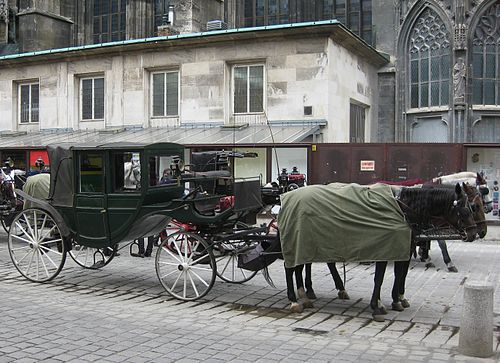
long thread but fast to read.
few points about Atget:
- there is no comprehensive dedicated biographic book about Atget in French, because he was a regular guy, not a celebrity with a timeline of contacts, events with other celebrities. He was not a professional photographer with a studio, doing picturialist work, portraits for the bourgeoisie and upper class, exhibitions. Known photographers of the time didn't know about him and had probably dismissed him.
- among several biographic summaries, a good one was a small text published in the local bulletin of Bièvre Photoclub. They publish a small magazine, La Pelloch'. Pelloch' or pelloche or péloche, is slang for pellicule ie. film.
https://www.photo-bievre.org/actualites/pelloch/ but there on their site oldest small bulletins ancestors of the magazine are missing. The one of 2000 about Atget attached here, pdf at the bottom - Another good biographic overview here:
https://sites.google.com/site/grandsphotographesdu20eme/atget-eugène
- he touched photography on the side of a try at becoming painter in 1887-88. Among illustrators, painters, architects he saw the need they had for documents and decided to photography landscapes, tree, architecture, monuments. That was a stream of revenue. Another one was trying to sell to shops owners, photographies of their fronts. Some of his customers among painters were Utrillo, Derain, Fujita, Vlaminck.
- he provided cultural institutions with views of disappearing street jobs, and then photographies of everything pre-Haussmann in the city, from 1897 to his death 1927. So city and state cultural institutions were another stream of revenue. Also real estate business and architects.
- the brothel's nudes photographies was an order for illustrator and painter André Dignimont, who had an erotic fetish
- reasons Atget became famous post-mortem. He lived in Montparnasse from 1899. The location is key.
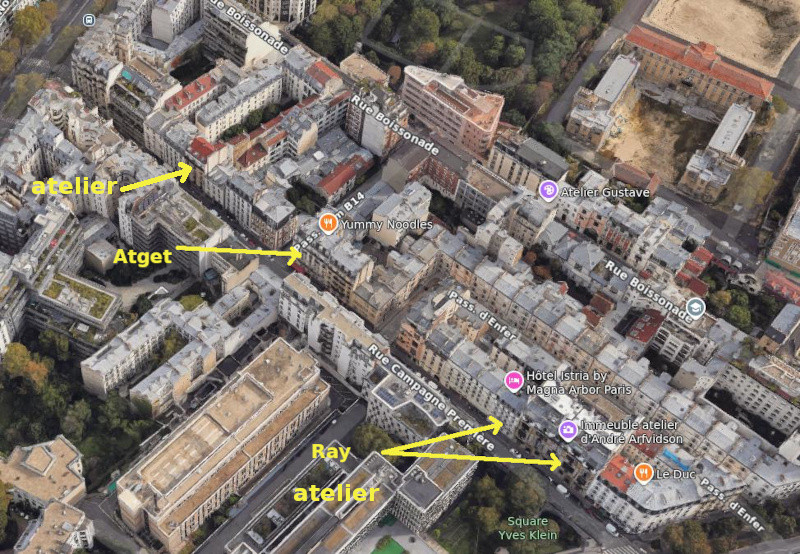
Rue Campagne Première, a small street. He lived at the
17bis until his death in 1927. Around the years 1910, Montparnasse became the area of several artists. At nr.
9 in the street a house with ateliers was set:
Situé rue Campagne-Première, cet exceptionnel ensemble d'ateliers fut une véritable pépinière d'artistes pendant l’âge d’or du quartier Montparnasse.

paris-promeneurs.com
another atelier was at nr.
31, and at nr
29, there is a hotel, Istria, where several artists and writers stood some time. The 31 was where
Man Ray had his atelier.
seen on a street panorama, left to right: 9, 17bis, 29, 31
Ray met Atget,
Abbott who worked with Ray was impressed. and overseas in New World, Atget photographies brought by Abbott may have been felt as views of an exotic past.
A French, an European in general, would feel nothing special because well any city in France (Italy, Spain, etc) has kept a Middle Age core and the older onion structure. For instance Saint-Jean in Lyon, or Lille or Dijon, or Angers, or Le Puy or Avignon or Béziers, or etc, that is something, but Paris, seriously?
Also Atget used dry plates, printed a lot, but not only, on albumine paper. Abbott met a guy from the past.
what was old in Paris was not so much some chunks and streets that survived Hausmann destructions, but the social structure of the population. There was still a proportion of pre-industrial street trades: wandering glass/windows repairers, rags pickers, cigar butts pickers, baskets repaired, knives sharpeners, chimneys sweepers, coal delivery, water delivery, etc.
As for Man Ray, he was the one who made Atget work known among the other surrealists, but just as artifacts among others in esthetic process of surrealists.
the link to the first publication with some Atget photographs. onm BNF site: "La Révolution surréaliste" nr. 7 1926:
La Révolution surréaliste
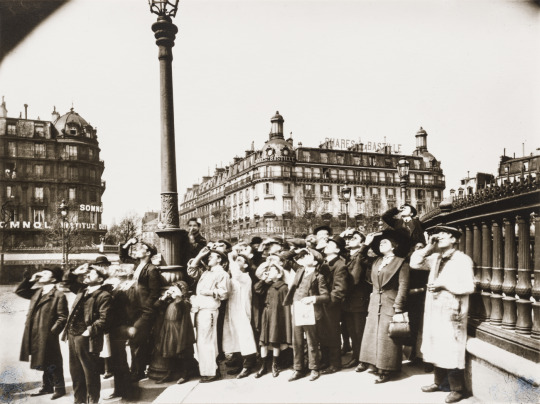
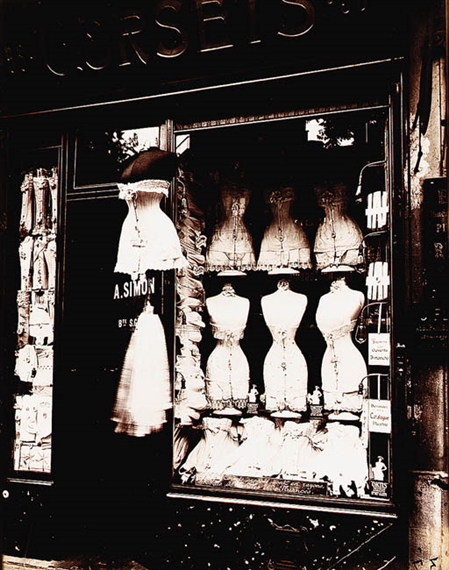
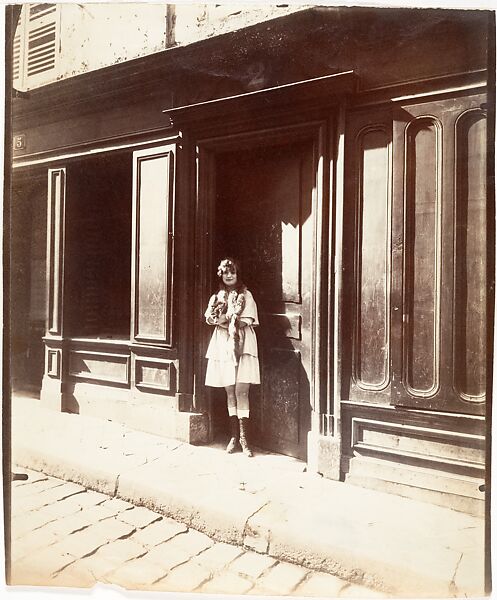
the cover picture (people gathered to observe an eclipse) , page 6 with the text of Marcel Noll (corset front shop), page 28 with the text of René Crevel (prostitute by entrance of brothel):
these photographies, contrary to all other works in the revue, have no author name. A letter was kept of Atget telling Man Ray that he didn't want to be cited, because these photographies were just documents, not artwork...
btw, it was Man Ray, who put in contact Atget with Dignimont, who ordered the serie about prostitutes nudes.
In this issue of Révolution surréaliste, photographies of Man Ray are composed, the ones of Atget are just used as random slices of life, as per the theory of random objects being able to trigger esthetic feelings, dream, unconscious associations. But Atget had nothing to do with surrealists, had no clues about their theories and works.
A staple in classes of literature, when in lycée, is (or was?), not in a mandatory way, but among several options, a book of André Breton, "Nadja". It uses several photographies. Typical of surrealist works of the 20's. First photographie (Hôtel des grands hommes) is not credited, so could be from Atget:
André Breton - Nadja
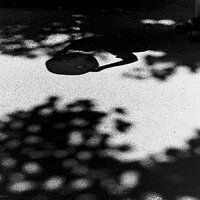
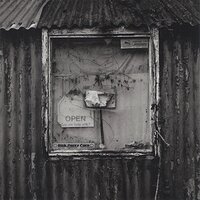



 a pitfall I guess for some machine translators. Carrosse is a full coach (roofed, doors). Wondering if English car derives also from the same latin word carrus, that makes carro in Italian and Spanish.