• Welcome to Photrio!
    Registration is fast and free. Join today to unlock search, see fewer ads, and access all forum features.
    Click here to sign up

Eugene Atget Appreciation

Filling In

H
Filling In

  • 1
  • 2
  • 49
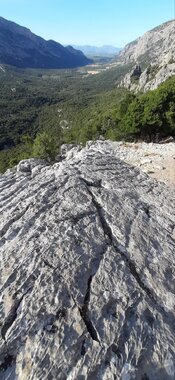
Painted Hills # 3.jpg

H
Painted Hills # 3.jpg

  • 4
  • 0
  • 92

Recent Classifieds

Forum statistics

Threads
203,211
Messages
2,851,503
Members
101,728
Latest member
BrickSandwich
Recent bookmarks
0
I just saw this today. It was a very nice presentation. I just wish some of his images had been printed larger. Now I want to find a nice book of his work.

Finally got to see it today. Beautiful prints and a nice presentation as you pointed out.
Apparently the ICP bookshop has a Eugene Atget book for sale but I missed it.
 
A good read? I still like Hambourg's 4-Volume MMA set. Superbly printed. I don't know what used bookstores might sell these for. Vol I has the most autobiographical information. Vol 4 has the most iconic images.

I have had that set on loan in the past, and I subsequently managed to buy Vol 1. But here in the UK they are rare to the point of unobtainable. I would really love to have ‘The Ancien Regime’ (Vol. 3, I think), but with shipping and duties from the USA it would cost about £150 for the one volume.

I thought you were implying earlier that there exist actual biographies of Atget’s life, which I was unaware of - but perhaps not?
 
Wishing now I had looked at more at Atget's work before my last Japan trip. Tho perhaps the direct influence would have been too much. There seems to be a touch of him in my images, anyway. Urban is not my usual location when photographing.

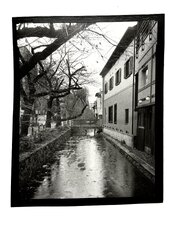
This a heavily manipulated iPhoto image of my first test print (single-transfer carbon print) from that trip, trying out a new pigment, which I will abandon and return to my usual pigments. The Sumi Ink created a fine grain. My watercolor pigments seem to give me a smoother tonality. I digitally messed with the image to see if I could get the values closer to what I will be aiming for when printing next.

Takasa River, Heron
Kyoto, Japan, 2026
4x5 Carbon print (Pigment: Sumi ink, a matt formula)

Gowland 4x5 PocketView, Caltar IIN 150mm/5.6
Ilford FP4+ at ISO 100
Exposure: f45 at 2 seconds
Ilford PQ Universal Developer 20:450, 71F for 6.5 minutes in Expert Drum
 

Attachments

  • TaksawaEgret.jpg
    TaksawaEgret.jpg
    513.2 KB · Views: 28
Last edited:
1775593765707.png
 
London_006-750px.jpg


I took this in 1968, when I was 13. I hadn't heard of Atget at that time. Like Old Paris, this part of London, between Lower Thames Street and the river, is now long gone.
 
Last edited:
Well, in terms of the last posted actual Atget, by Cliveh in #631, the vanishing point of its almost bulging bug-eyed view falls upon a tiny man way down the street, just before the whole scene dissipates into the haze. The rounded illumination falloff at the top contributes to the feel. Actually, there seems to be three people, but only one of them catches the eye. The foreground has quite a bit of interest on its own, but all that is like the hood ornament, so to speak. With great photographers, like Atget, you always want to study the details. Just look at the uplifted cart handles in the foreground; they virtually point to the center of the scene where the man is. And the management of atmosphere and flare is superb. How many people nowadays realize that lens flare can be part of composition too?

Then, upon closer inspection, there are the ghost images in front of the building, adding a surreal impression, as vaporous as the distant haze. These too draw the eye backward toward where the central figure is, in the distance.
 
I can believe that Atget asked the folk in the distance to stand still before retiring to his camera (or maybe he yelled at them?), but he clearly failed to control the foreground guy with the cart. To suggest that the resulting ghosts are part of the intended composition is just too much for me.
 
Accidentally walking by, or deliberately choreographed, ghost images occur in numerous Atget prints. You're not talking about super-slow Daguerrotypes or ambrotypes here. Anyone else would have tossed the neg and taken another shot. I am more than "suggesting" the composition was intended as such. He knew exactly what he was doing, and was a master at it. That's one of the reasons the Surrealists prized his work; he was basically one of them.
A considerable number of his known shots contain brilliantly employed ghost images. Doubtless, not all such attempts would have been successful, and perhaps even the majority were tossed; but the deliberateness of it is apparent in any overall survey of his work.

In the 70's, a number of Atget wannabees tried similar things, inspired by his images. The posted example was hardly unique. But the manner he incorporated all this at the same time into one of his "coin" street/architectural compositions is quite remarkable. Those ghost image passer-bys are staring back at him, no doubt in curiosity, but compositionally as if in fact haunting the scene, just like Atget's uncannily animated statues. If you think it's an accident, try it yourself - not so easy, if one expects anything resembling the same psychological impact. Even the man pulling the cart as a static object is himself a ghost. The more one looks at this picture, the more rewarding it becomes.

Structurally, look at the curved top of a building down the street replicating, and counter-balancing, the curve illumination falloff of his film. Perhaps that is what first tempted Atget to the overall shot to begin with, when the other accents started to congeal. Even Cartier Bresson couldn't have timed the "decisive moment" better. Everything about it is eerie. All kinds of strange things going on, but not in a distracting manner, but all truly revolving around a central focal point.

 
Last edited:
Accidentally walking by, or deliberately choreographed, ghost images occur in numerous Atget prints. You're not talking about super-slow Daguerrotypes or ambrotypes here. Anyone else would have tossed the neg and taken another shot. I am more than "suggesting" the composition was intended as such. He knew exactly what he was doing, and was a master at it. That's one of the reasons the Surrealists prized his work; he was basically one of them.
A considerable number of his known shots contain brilliantly employed ghost images. Doubtless, not all such attempts would have been successful, and perhaps even the majority were tossed; but the deliberateness of it is apparent in any overall survey of his work.

In the 70's, a number of Atget wannabees tried similar things, inspired by his images. The posted example was hardly unique. But the manner he incorporated all this at the same time into one of his "coin" street/architectural compositions is quite remarkable. Those ghost image passer-bys are staring back at him, no doubt in curiosity, but compositionally as if in fact haunting the scene, just like Atget's uncannily animated statues. If you think it's an accident, try it yourself - not so easy, if one expects anything resembling the same psychological impact. Even the man pulling the cart as a static object is himself a ghost. The more one looks at this picture, the more rewarding it becomes.

Structurally, look at the curved top of a building down the street replicating, and counter-balancing, the curve illumination falloff of his film. Perhaps that is what first tempted Atget to the overall shot to begin with, when the other accents started to congeal. Even Cartier Bresson couldn't have timed the "decisive moment" better. Everything about it is eerie. All kinds of strange things going on, but not in a distracting manner, but all truly revolving around a central focal point.

Drew, you have a superb grasp of the Genius of Atget and I could not have given a better description. It's good to know that others can recognise his lifetime aquired talent.
 
Just noticed yet another thing, the bas-relief knife-sharpener bicyclist atop the storefront himself seems alive and distinctly sinister. The downward dagger is accentuated by the vertical reflection on the rounded lower building corner itself. Luck obviously has to play into some of this; but it can't account for all of it in the same shot. Stephen King could write a whole novel based on this photograph alone.

I've only been able to pull off something this surrealistic maybe six 8x10 shots in my entire life; and none of them involved moving people - moving water, yes. Atget did it repeatedly, over and over again. Luck, yes, but not dumb luck. Opportunity favors the prepared. How are orchestra maestros able to hear and conduct all the different instruments and players at the same time? - there are rare individuals similarly skilled visually.
 
Last edited:
Just noticed yet another thing, the bas-relief knife-sharpener bicyclist atop the storefront himself seems alive and distinctly sinister. The downward dagger is accentuated by the vertical reflection on the rounded lower building corner itself. Luck obviously has to play into some of this; but it can't account for all of it in the same shot. Stephen King could write a whole novel based on this photograph alone.

I've only been able to pull off something this surrealistic maybe six 8x10 shots in my entire life; and none of them involved moving people - moving water, yes. Atget did it repeatedly, over and over again. Luck, yes, but not dumb luck. Opportunity favors the prepared. How are orchestra maestros able to hear and conduct all the different instruments and players at the same time? - there are rare individuals similarly skilled visually.

Or perhaps zen art.
 
1775851187459.png
 
Atget was much less psychologically forced in his older work, and could blend his inclinations almost seamlessly into what is sheer beauty. I'd never personally call it Zen, more his own style reaching a sublime endpoint. There's nothing busy in that image of two ships; everything is poised and seemingly timeless. In many of his older age Park and reflective pool images the surreal aspect is apparent in the seeming aliveness of statuary; but all that is subsumed to the sheer beauty of it, as if those statues are themselves spectators.

I don't have time at the moment to point out the sheer mastery of balance in the boat composition. It's both dynamic and calm at the same time. Study the verticals and the white boat lines. The development flaws make it seem ancient.
 
Or perhaps zen art.

Spend enough time in the light of a place seeing 'photographically' and it is amazing how these moments can come together. "Zenning it" comes close.

A photographer in the streets back then would be rare enough cause much attention.
 

I love the ghosts in that image.

For the readers out there, there is a new book called "The School of Night" by Karl Ole Knausgaard that has well researched and presented analog photography chops. The protagonist is a London based photography student in the 1980s and Knausgaard doesn't skimp on the descriptions of process and tech. There is a conversation and description of an early Daguerre image (1830s?) where a ghost/devil image of a stationary person is seen on the plate and it gives him lots of ideas that I won't spoil here.

Knausgaard is a difficult read and it's not a happy book by any stretch, but libraries are free after all. ;-)
 
Photrio.com contains affiliate links to products. We may receive a commission for purchases made through these links.
To read our full affiliate disclosure statement please click Here.

PHOTRIO PARTNERS EQUALLY FUNDING OUR COMMUNITY:


Ilford ADOX Freestyle Photographic Stearman Press Weldon Color Lab Blue Moon Camera & Machine
Top Bottom