• Welcome to Photrio!
    Registration is fast and free. Join today to unlock search, see fewer ads, and access all forum features.
    Click here to sign up

Efke Newbie

Recent Classifieds

Forum statistics

Threads
203,205
Messages
2,851,345
Members
101,721
Latest member
rptn
Recent bookmarks
0
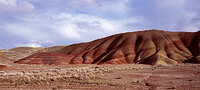
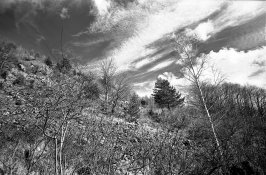
Also, here is one daytime shot using Adox CMS 20 + Yellow filter.
Wanna bet that with panchromatic film + Yellow filter it will look way too flat?
 

Attachments

  • Scan-101225-0031.jpg
    Scan-101225-0031.jpg
    741.3 KB · Views: 142
ortho-panchromatic is telling us that the manufacturer ran out of red sensitizing dye :D
Typical examples of ortho-panchromatic are Fuji Neopan Acros 100, Adox CMS 20 and whoever join :wink:
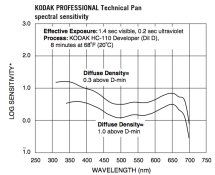
Let the attached spectral sensitivity curves comparison do rest of the talk :smile:

Thanks.

At Kodak we would be more precise using the terms short red pan sensitized or long green ortho, so that the term was clearer (I hope) than this one.

PE
 
You are welcome!
Yes, it might be clearer saying short red pan sensitized but orthopanchromatic is what those manufacturers decided to use.
I quoted what those folks at Fuji and Adox writes in their Tech data pdfs, the Kodak and Agfa curve graphs are there for the sake of comparison - if possible :wink:
However, I highly doubt that somebody tested all of those various films under same circumstances.
 
At Kodak we would be more precise using the terms short red pan sensitized or long green ortho, so that the term was clearer (I hope) than this one.

What did you call Technical Pan instead of "Superpanchromatic"?
 
I've always liked Adox/Efke films. The 50 and 100 speeds are all I've been shooting in 120 the past year. I pre-soak for a minute and use Rodinal 1+100. I use standard agitation. I don't use a hardening fix (I use TF-4). Just handle the wet film with extreme care as one should with any film. They produce great look prints. They don't recommend over exposing these films. I never could figure out why but I seem to do OK rating them at have the speed. How else am I going to get adequate shadow detail?

Now then for a couple of issues I don't care for. On a few of my rolls the first frame was so close to the end of the roll that I almost had to clip the film hanger into the image itself. I hope Adox have fixed this. I recall reading another user experienced the same thing. I've also seen what appears to be pin holes in a few images but I cannot be certain. I have not yet been able to get into a darkroom to print for awhile. Yet they appear to be tiny white specks. On one roll I took several frames of the same scene and there's a speck in one part on one frame but it's not there on the other three. Odd...

Pan F+ is a wonderful film...can't go wrong with it. I also rate this at 25 and soup in Rodinal. I find the Adox/Efke 50 to be a tad sharper. I never really like Fp4. After I ran out of Agfa APX 100 Adox 100 was the only medium speed film I liked.
 
Marc,
the so called white specks are from unfiltered water.
Everything should be crystal clear with filtered tap water or even better - distilled water.
 
What did you call Technical Pan instead of "Superpanchromatic"?

Not having a spectral sensitivity curve here to compare, I cannot say. Sorry.

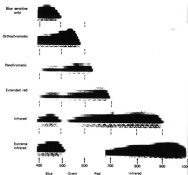
I can show the figure below. It is typical of Kodak sensitizations and naming.

PE
 

Attachments

  • dye types.jpg
    dye types.jpg
    36 KB · Views: 132
Thanks again. That looks to be close to normal panchromatic sensitization. The pan curve I show is closer to a daylight sensitization whereas the Tech Pan is rather poor IMHO. But, people loved it so who is to complain? Right?

PE
 
I confess - I love Technical Pan!
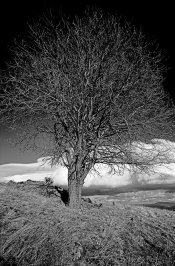
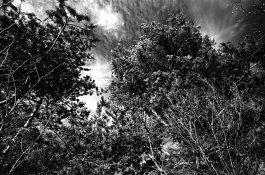
Here are 2 shots from the autumn of 2010, shot on a 35mm Technical Pan roll expired in 1985 (black colored canister, yellow lettering) :D
I used russian Zorki 1 rangefinder, 20mm wide angle lens, orange filter.
The roll was shot as 50 ASA, developed in Rodinal 1:100 for 15 min
 

Attachments

  • Scan-101121-0021.jpg
    Scan-101121-0021.jpg
    887 KB · Views: 144
  • rosebees.jpg
    rosebees.jpg
    821.9 KB · Views: 146
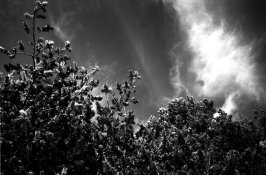
This one is from the same day, same place but on Adox CMS 20, shot as 10 or 12 ASA, again Rodinal 1:100, 15 min.
camera was Fed nkvd with its matching original uncoated lens 50mm f/3,5 closed just a single stop from wide open, light yellow filter
 

Attachments

  • Scan-101121-0019.jpg
    Scan-101121-0019.jpg
    590.7 KB · Views: 120
What is a shame is that I won't get a chance to see whether I like or hate Technical Pan...

I've added some Adox films to my list, along with that specialized developer for the CMS 20. In the meantime, I decided to try the Plus-X emulsion first, and then move on to the Efke after that.
 
Trying Plus-X emulsion first, and then move on to the Efke after that sounds like a wise decision, imho.. :wink:
The slow speed Efke, 50 asa and 25 asa are silver rich, boutique grade films. I can't comment on Kodak Plus-X in its current state, I hope it didn't turned out into one of those t-grain silver economy wonders.
Of course, one should respect the work of Kodak B&W film teams and I am sure the workers there put their hearts into making those products.
Kodak stopped manufacturing most of the films I liked... HIE, Technical Pan.

btw: Efke/Rollei/Maco have alternatives to:
HIE ~ Rollei Infrared 400, Efke IR 820, Efke IR 820 AURA
Technical Pan ~ Rollei ATP 1.1
Also, from slow speed pov and interesting look Rollei RETRO 80S is quite a ride.
I might scan some shots from those this coming week :cool:
 
Trying Plus-X emulsion first... I can't comment on Kodak Plus-X in its current state, I hope it didn't turned out into one of those t-grain silver economy wonders.

Someone mentioned seeing Plus-X on the Freestyle clearance page, but I couldn't find that. Was that a mistake, or is this just Freestyle's re-badged Arista Premium?

I know someone else a few weeks ago commented that Kodak had moved it from their main B&W films to "alternative" B&W film.

Anyone got anything besides rumors. The last thing we need is a bunch more rumors. Unfortunately you can't trust anything Kodak says about availability.
 
Last edited by a moderator:
Yep, all the emulsions I listed in the first post I got from going to Freestyle's b&w film page.
 
Thanks for the reply George16nik. I actually have been using distilled water for the past six years - as long as I've been developing. Every step of the process I use distilled water except for the wash which is my tap water. I haven't seen these occasional specks on the other films I use.
PS - anyone know why one is not to over expose these films. I've always been curious.
 
You are welcome!
Washing of the film is important to be done with filtered or distilled water.
Otherwise, the emulsion will soak with the dirt from the unfiltered tap water, at least that was in my case, a very long time ago, thou.

Good luck
 
To revive another topic in this thread, do NOT be afraid of Pyro developers. Respectful, but not afraid. If you're worried about it, just wear nitrile gloves you can get cheaply at the drugstore while processing. Especially with a film like Efke, a pyro developer will be a big help. With a pyro developer, use a non-hardening fixer (the hardening agent will remove some of the stain, and you want the stain) and a water stop.
 
Yes, Pyro + Efke is beautiful!
Wearing hand gloves + protection mask for your face is a must, no mater what kind of developer or chemistry You use.
Almost all the developers, fixers etc. could cause skin irritation, allergy symptoms etc.
If You can't drink it - its toxic :smile:
 
I guess you raise a question about Pyro - why is stain advantageous? And what are the sharpness characteristics of Pyro?

When shopping for Pyro, I assume I'm looking for "PMK"? Is it mixed from a powder or liquid?
 
The stain is proportional to the exposure, so the denser the silver, the denser the stain. When you first develop negatives in pyro, they'll actually LOOK grainier than you're used to, but when you print them, they'll actually be less grainy. The stain helps mask film grain, and it also provides additional contrast and tonal separation in your highlights. This highlight density boost is even more important when working with alternative processes, some of which need a contrast range beyond what a non-staining developer can produce.

PMK is one variety of pyro. I personally prefer Pyrocat HD for several reasons. PMK oxidizes very quickly and so it is not suitable for use with rotary processing machines. I develop my film in a Jobo CPP2+, because I can't for the life of me tray process film without scratching it, and I don't like mixing up 4.5 gallons of developer at a time to use my 8x10 deep tanks. If you really want to, you can buy pyro developer kits in powder form and mix it all yourself. PMK also has a greater speed loss than Pyrocat HD - PMK requires you to give at least one extra stop of exposure, whereas Pyrocat will actually give a slight speed increase in many cases (1/2 stop +/-). My preference is to buy the liquid concentrate (most pyro developers are a two-part developer) and then just mix enough working strength solution at the time of development. I'm very partial to the Bostick & Sullivan Pyrocat HD kits - the Part A solution comes already mixed, but dry, and the Part B is liquid. Just follow the directions for adding water to Part A when the kit arrives and then you're good to go. There are oodles of pyro developer formulas out there - if you're interested in trying one, I'd say start with Pyrocat HD because it's easy, economical, and there are a LOT of people using it now so if you need support it's easy to get. Once you get the hang of it, try some of the other formulas to see what they do differently.
 
Last edited by a moderator:
PMK is one variety of pyro. I personally prefer Pyrocat HD for several reasons. PMK oxidizes very quickly and so it is not suitable for use with rotary processing machines. I develop my film in a Jobo CPP2+, because I can't for the life of me tray process film without scratching it,.... PMK also has a greater speed loss than Pyrocat HD - PMK requires you to give at least one extra stop of exposure, whereas Pyrocat will actually give a slight speed increase in many cases (1/2 stop +/-). .... (directions deleted)

I use a rotary processor too, (Phototherm) and I have avoided Pyro in the past.

I take it from your descriptions that you find it not only acceptable, but actively use it? I too find tray processing impossible to pull off.
 
I use a rotary processor too, (Phototherm) and I have avoided Pyro in the past.

I take it from your descriptions that you find it not only acceptable, but actively use it? I too find tray processing impossible to pull off.

Yes, I use Pyrocat HD in my Jobo CPP2+ all the time with every size of film I shoot from 4x5 to 14x17. The trick is to run the processor at the slowest possible speed so as to not accelerate developer oxidation.
 
Is Pyro acceptable to use in your standard developing tank, such as a Paterson? What precautions should you take when working with it, and would I have to worry about it staining my sink or tub?
 
Photrio.com contains affiliate links to products. We may receive a commission for purchases made through these links.
To read our full affiliate disclosure statement please click Here.

PHOTRIO PARTNERS EQUALLY FUNDING OUR COMMUNITY:



Ilford ADOX Freestyle Photographic Stearman Press Weldon Color Lab Blue Moon Camera & Machine
Top Bottom