
• Welcome to Photrio!
    Registration is fast and free. Join today to unlock search, see fewer ads, and access all forum features.
    Click here to sign up

Edward Weston Nude #62 (dancer's Knees)

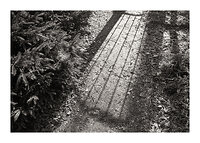
Grill

H
Grill

  • 0
  • 0
  • 9
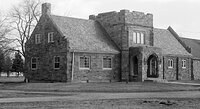
Cemetery Chapel

H
Cemetery Chapel

  • 2
  • 0
  • 39

Recent Classifieds

Forum statistics

Threads
202,773
Messages
2,845,357
Members
101,516
Latest member
DDX
Recent bookmarks
0
I have always loved this image of the knees, in fact one of my darkrooms had this image in reproduction on the wall for inspiration.

I do a lot of solarization's, and if it is one it is a negative solarization, using a metol only developer.
The black maki line only is produced this way , a white maki line is produced with a print solarization.
If you want both then one needs to flash the neg and flash the print.

I really doubt this is one , as I would think we would see much more of this kind of work from him, I believe as most here it is a specific lighting condition, that is really , really cool.
 
If it is sabattier, then I certainly agree with Bob that it was done on the film and not the paper. Perhaps he did it by accident while developing the film. I can’t see how he could achieve this using just axis lighting with daylight.
 
This image of the dancer Bertha Wardell was done with a brilliant light source directly behind the camera, producing the narrow, dark shadow. Probably with 3x4 Graflex/ 3 second exposure on tripod. The earlier in the series were made with 8x10 and long exposures (up to two minutes).

Weston understood lighting.The nudes of Charis at Oceano (I think mentioned in this thread) were done with morning sun directly behind him, slightly under-exposed negative.
 
This image of the dancer Bertha Wardell was done with a brilliant light source directly behind the camera, producing the narrow, dark shadow. Probably with 3x4 Graflex/ 3 second exposure on tripod. The earlier in the series were made with 8x10 and long exposures (up to two minutes).

Weston understood lighting.The nudes of Charis at Oceano (I think mentioned in this thread) were done with morning sun directly behind him, slightly under-exposed negative.

So no sabattier or pencil treatment and no shadow of the camera?
 
" I said I hoped I wasn't imposing, and she assured me that she never tired of seeing the prints herself. While she was getting them out, I surveyed the big, loftlike room. There were no prints on the walls and there was very little furniture--a low bed in one corner, a tall desk in another, a couch against the long side wall, and some scattered wooden chairs. We lamented the demise of the tourist trade as I wandered over to the front window and looked down on Ocean Avenue; Carmel's main street was empty and silent.
Sonya set a stack of mounted 8 X 10-inch prints on a wooden stand and rolled a tall painter's easel around to face the light from the high north windows, talking as she worked. As I saw more of her, I realized that our styles were similar, which helped me feel at ease--straight hair, no makeup or nail polish, unshaved bare legs, and flat comfortable shoes, a simple sweater and skirt. It was partly lack of business, she said, that had sent Edward off to Los Angeles, where he had numerous contacts and might sell some prints or land a sitting. There had also been an offer to take pictures for the Public Works of Art Project, whose Southern California director was Edward's friend Merle Armitage. Edward would have waited to go until after Sunday, Sonya said, but a ride was available, and since he didn't drive he had to take advantage of it."

taken from...

http://www.nytimes.com/books/first/w/wilson-lens.html


alluded to by others... if you read the whole story the graflex slr is mentioned further on.


Thanks for your great responses everyone.
 
I definitely wouldn't be surprised if this were purely just natural light. We've all seen some pretty interesting natural light that has made us double take. Ever seen the light during an eclipse? It's enough to make you sacrifice your fellow photographers and dance around the flames.
 
"he could have abraded the negative, and added graphite to the print"
"Were EW and Mortensen ever seen together? Hmmm..."
Mortensen was anathematic to Weston and similar photographers. On one occasion Mortensen was pointed out to Weston in a restaurant, but they didn't become acquainted.

Intended tongue-in-cheek. Like Clark Kent and Superman...

When this thread meandered off into negative and print manipulations (abrasion especially), it immediately brought to mind Mortensen with his "abrasion-tone" technique. Hence my comment.

Coincidentally, Mortensen was an advocate of what he called the "7D negative" which was exposed for the highlights and then given extended (total?) development. Essentially the opposite of the familiar photo adage "Expose for the shadows and develop for the highlights." When combined with on-axis lighting, it gave the effect also seen in the Weston image. Weston employed natural on-axis lighting very effectively as did Mortensen with studio lights. But then Mortensen may have continued with physical print manipulations which Adams and the rest of the f/64 group abhorred. Curiously, Fred Picker of Zone VI workshop fame eventually came around to Mortensen's thinking and advocated exposing for Zone VIII.

"Mortensen on the Negative" is an interesting read. A brief synopsis of Mortensen's method can be found on Ed Buffaloe's unblinkingeye.com site in the article "Mortenses Revisted:An Analysis of Mortensen's 7-Derivative Technique."
 
Photrio.com contains affiliate links to products. We may receive a commission for purchases made through these links.
To read our full affiliate disclosure statement please click Here.

PHOTRIO PARTNERS EQUALLY FUNDING OUR COMMUNITY:


Ilford ADOX Freestyle Photographic Stearman Press Weldon Color Lab Blue Moon Camera & Machine
Top Bottom
