
• Welcome to Photrio!
    Registration is fast and free. Join today to unlock search, see fewer ads, and access all forum features.
    Click here to sign up

Does the orange mask in C-41 films help to control highlights?

Recent Classifieds

Forum statistics

Threads
203,213
Messages
2,851,531
Members
101,729
Latest member
Luis Angel Baca
Recent bookmarks
0

jim appleyard

Subscriber
Allowing Ads
Joined
Nov 21, 2004
Messages
2,422
Location
glens falls, ny USA
Format
Multi Format
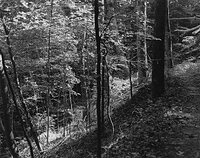
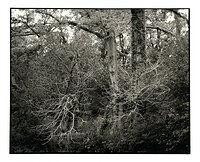
On a recent trip to the Plotterkill Preserve http://outdoors.webshots.com/album/554627680vugLgr (not my pics, but good ones; visit this place if you're nearby), I shot FP-4 and souped in Pyrocat HD with a time off the MDC. The highlights are burned out. However, the Portra 160 NC came back with the highlights more in control; still hot, but better.

I may have a million variables going on here; long shutter speeds (with reciprocity), over-agitation, metering technique, etc., etc., but I was wondering if the orange mask in C-41 films acts like the stain does in a pyro neg., controlling the highlights?
 
The orange color background has to do with color balance. To get the film to provide the proper color balance the orange color is added in, the during printing effectively the results of the added orange are partially removed. The result is the proper color balance. I know that what I said is almost as clear as mud but the details allude me. I believe this has been explained somewhere on APUG.

Steve
 
Steve, that was actually crystal clear, but I already knew that part of the purpose of the orange mask. :smile: My question was about a possible hidden purpose/ fringe benefit of the mask, a dampening of the highlights.
 
Steve, that was actually crystal clear, but I already knew that part of the purpose of the orange mask. :smile: My question was about a possible hidden purpose/ fringe benefit of the mask, a dampening of the highlights.

if it was going to do anything, it would boost shadows by adding density. In reality, no it does nothing just like the grey tint instead of crystal clear base on b/w film really doesn't do anything.
 
The orange mask is used for correction of the unwanted absorptions (impurities) in the dyes used in all color materials. Only color negative materials can correct completely for these errors in dyes. The correction is constant across the tone scale.

PE
 
The orange mask is used for correction of the unwanted absorptions (impurities) in the dyes used in all color materials. Only color negative materials can correct completely for these errors in dyes.

PE

Why is a simlar correction not necessary for color reversal ?
 
Why is a simlar correction not necessary for color reversal ?

It is necessary, and that is why reversal color fidelity is lower than negative color. Unfortunately, if they did do it, then your slides would be orange.

No one likes orange slides.

BTW, Kodak did make a masked reversal film as a camera original for motion picture, but the industry rejected it in favor of masked color negative.

PE
 
PE, can you qualify that comparison of reversal vs negative color fidelity by mentioning the Kodachrome 3-color process that gives the best fidelity, albeit at the expense of very complicated processing? Or we could mention Technicolor and its use of separation negatives. Everybody is amazed at the color fidelity of old Technicolor movies. Even if the movie is crap, it's worth watching in Technicolor.
 
Some color correction is introduced into reversal materials by means of interimage effects. This can correct some, but not all of the errors in color reproduction.

I would also add that the Technicolor movies were dye transfer based and could include color masking in the process of reproduction, but I'm afraid to add that Kodachrome is good by virtue of having high color saturation, and not necessarily due to good color reproduction.

So, Kodachrome, while being beautiful is not high fidelity. If you compare actual color patches, you will see the errors in the Kodachrome. We used to say that Kodachrome was built to overdo the color so that it could make a garbage dump look beautiful.

So, I propose an experiment....

Shoot an E6 film, Kodachrome and a color neg such as Portra NC, taking pictures of a color checker along with foliage and flesh. Scan the originals and look at them. Compare the neutral scales and the color patches. I've done that, and I can stand by what I say.

PE
 
Just how bad is a print from a maskless negative?

I think the quote "Kodachrome, while being beautiful is not high fidelity." captures what I wanted to say... many students have done those comparisons and seen the results... few however, felt the results knocked chrome out of "the race"... and there were, I would guess, millions of wonderful reversal images out there in stock agencies and museums etc., so does it really matter all that much to have that masking?

Would a maskless color film be able to produce just as beautiful an image as a reversal film (this includes being of similar fidelity to reversal film), and if so, why was masking so universially applied?


Some color correction is introduced into reversal materials by means of interimage effects. This can correct some, but not all of the errors in color reproduction.

I would also add that the Technicolor movies were dye transfer based and could include color masking in the process of reproduction, but I'm afraid to add that Kodachrome is good by virtue of having high color saturation, and not necessarily due to good color reproduction.

So, Kodachrome, while being beautiful is not high fidelity. If you compare actual color patches, you will see the errors in the Kodachrome. We used to say that Kodachrome was built to overdo the color so that it could make a garbage dump look beautiful.

So, I propose an experiment....

Shoot an E6 film, Kodachrome and a color neg such as Portra NC, taking pictures of a color checker along with foliage and flesh. Scan the originals and look at them. Compare the neutral scales and the color patches. I've done that, and I can stand by what I say.

PE
 
Ray;

You have forgotten the fact that all magazine reproductions from 'chromes were masked to correct color. This was a universal treatment necessitated by the reproduction errors of the films. Since masking is so expensive for film reproduction (cf motion picture), pos-pos fell out of favor. So, masking does matter.

Early color negative films were not masked and are still noted for their muted color unless masked. There are several textbooks on this subject out there.

PE
 
Ray;

You have forgotten the fact that all magazine reproductions from 'chromes were masked to correct color. This was a universal treatment necessitated by the reproduction errors of the films. Since masking is so expensive for film reproduction (cf motion picture), pos-pos fell out of favor.

Indeed.. it would be fair to say I was not aware of what happenen to the chromes (color reversal in general) once they left the photographers hands...

However, I have seen some breathtakinly good material on the light box -under the loupe... where masking was presumably totaly absent.

So, this seems to point towards inadequacies in the printing process as the real reason the use of masking, rather than problems with the inital recording...

Is this a fair interpretation?
---
Are the color print (positive/paper) emulsions also masked?

Had someone been so inclined, in a dedicated product family, could the paper have been masked instead of the film ?


Early color negative films were not masked and are still noted for their muted color unless masked.

PE

Yes, but dyes have also improved quite a bit since those early materials...
You don't believe a better unmasked film could be (or could have been) produced ?

(I don't have an opinion on this- I am just curious... Looking at the awful brownish-orange negatives was never something I really enjoyed; reverse processed E6 on the other hand was well, almost exciting in comparison.)
 
(I don't have an opinion on this- I am just curious... Looking at the awful brownish-orange negatives was never something I really enjoyed; reverse processed E6 on the other hand was well, almost exciting in comparison.)

I never thought much about the color of a negative as awful or wonderful. It was never meant to be looked at as a final object, but to be printed. Sure, if what you want is a final product that is to be looked at as a representation of nature a color transparency is the way to go. However, my experience in printing was that color negatives were much easier to print, and gave a more faithful rendition of colors and tonal values, than color transparencies. Color negatives are also much easier to scan, especially when working with consumer type flatbed scanners.

Sandy King
 
...
Yes, but dyes have also improved quite a bit since those early materials...
You don't believe a better unmasked film could be (or could have been) produced ?...

Rollei's Digibase CN200PRO is an unmasked C41 film that's currently available. I haven't seen any examples of photos taken on it online that looked promising, though.

Regards,
Philipp
 
..... I have seen some breathtakinly good material on the light box -under the loupe... where masking was presumably totaly absent.

So, this seems to point towards inadequacies in the printing process as the real reason the use of masking, rather than problems with the inital recording...

Is this a fair interpretation?
---
Are the color print (positive/paper) emulsions also masked?

Had someone been so inclined, in a dedicated product family, could the paper have been masked instead of the film ?


Yes, but dyes have also improved quite a bit since those early materials...
You don't believe a better unmasked film could be (or could have been) produced ?

Taking these in order;

If you look a a slide alone with no comparison, your judgment is subjective. If you were to compare a slide with a transparency made from a negative using the proper print material you might be surprised and stunned by the tonal range and color.

It is a problem with both the original and the print production. Masking can correct both.

You CANNOT mask a material intended for viewing. I hope I can make that point. If it is masked, it will be orange! So no print material intended for viewing can be masked.

Dyes have improved but are still not perfect. People comment on the changes in color of the masks in the various negative films. To the print material, the mask remains unchanged even though the eye sees shifts. What the print material sees is a varying level of correction. Even with all of the improvements, dyes remain imperfect and have unwanted absorptions which must be corrected so that the final viewable picture is as perfect as possible.

PE
 
To return to the original question of the OP, my own experience with color negative film is that there is a great deal of highlight compression with over-exposure. This flattens out the curve in this region, which results in loss of discrimination between tonal zones. For direct printing this does not work well for capturing scenes of high contrast. However, if you scan and then correct the file with curves it is possible to extend considerably the dynamic range of the film. However, B&W film is still superior to color negative film for capturing scenes of very contrast. In your original example you could have captured the range with the film in question by proper development time, and or development method. Ultimately there is more potential with B&W film, though I have been pretty impressed with the range one can pull out of C-41 film by scanning and curve adjustment.

Sandy King
 
If you look a a slide alone with no comparison, your judgment is subjective. If you were to compare a slide with a transparency made from a negative using the proper print material you might be surprised and stunned by the tonal range and color.
PE

first- terminology:
slide vs transparency... In the above, are you referring to color neg printed onto a color print film (eg 4109 iirc) being compared with say E-6 material?

You CANNOT mask a material intended for viewing. I hope I can make that point. If it is masked, it will be orange! So no print material intended for viewing can be masked.
PE

Couldn't decolorizeable dyes be made?
 
I never thought much about the color of a negative as awful or wonderful. It was never meant to be looked at as a final object, but to be printed....
Sandy King

That is interesting... everytime I looked at an image, neg or pos, I was always thinking "Is this beautiful?" "Do I enjoy looking at this?"

my experience in printing was that color negatives were much easier to print, and gave a more faithful rendition of colors and tonal values, than color transparencies.
Sandy King

Mine too, if I only used Kodak material... but I found the SDB process Cibachrome/Ilfochrome much easier than neg-pos printing... Contrast tended to be slightly hard, but there were special papers and other workarounds as well, so I found it quite nice to work with.
 
Last edited by a moderator:
...orange!

In general terms, how are the masks compounded?
I mean, how are they designed and implimented?
Are they simple dye mixtures that are just added to the... film/emulsion?
 
I am referring to an E6 transparency compared to a slide produced on a print film from a C-41 color negative. The latter will be far superior in color rendition and tonal range for a variety of reasons. One of these reasons is that an E6 product can only reach a dmax of about 3.0 while a print film can reach 4.0 or higher. This gives a huge tonal range advantage to the print film. Add to that the color correction of the mask and you really have something!

The essence of a mask is that it NOT be decolorizable. It must be present to do its job or there is no effect.

A cyan masking coupler is reddish colored in just the way that the coupler yields unwanted dye absorption when it forms a cyan dye + unwanted colors. The reddish colored component is destroyed forming a posiitive image overlapping the negative image in cyan + unwanted colors. The unwanted colors in a negative scale + reddish colored component in a posiitive image creates a non-image that cancels out both colors.

This is amply illustrated in several textbooks out there and hard to describe without extensive curves. I have posted the hand drawn curves here or on Photo Net but probably would have to recreate them to repost. Try the text books or prior posts. This was invented by W. T. Hanson and P. W. Vittum of EK.

PE
 
Mine too, if I only used Kodak material... but I found the SDB process Cibachrome/Ilfochrome much easier than neg-pos printing... Contrast tended to be slightly hard, but there were special papers and other workarounds as well, so I found it quite nice to work with.

Nope, my experience with Cibachrome was no better than with Kodak materials. Yes, there were workarounds, like busting your balls making contrast control masks to tame the high contrast of the slides.

No question some beautiful work was done with Cibachrome by speciality printing houses, and compared to the Kodak materials it appears to have fairly good permanence. But printing to get a good range of tones was very complicated, much more so than printing with negative film.

Sandy
 
Pos-Pos printing is very difficult, as the toes and shoulders of the original and print are being printed on top of one another. As such it is like compressing the data in a file. You lose highlight and shadow detail.

With Neg-Pos printing, only the toe and shoulder of the print material is being printed with, as the negative is a straight line (if the exposure is correct) and you get no data loss. Therefore, there is less of a dupey look to multigenerational prints.

PE
 
Nope, my experience with Cibachrome was no better than with Kodak materials. Yes, there were workarounds, like busting your balls making contrast control masks to tame the high contrast of the slides.
Sandy

Perhaps the same tools in different hands can lead to different results?

In general I agree with the sense or tendancy of your experience, but
for some reason I did find Cibachrome overall, significantly easier to work with than Kodak's pos-pos system(s).

Contrast control was an issue, but then most of my work was in the studio where I had much control. This, plus the fact that I prefer shadowless lighting methods anyway might account for some of the difference, I don't know. I also did all of the E6 processing myself as well...
 
I am referring to an E6 transparency compared to a slide produced on a print film from a C-41 color negative. The latter will be far superior in color rendition and tonal range for a variety of reasons. One of these reasons is that an E6 product can only reach a dmax of about 3.0 while a print film can reach 4.0 or higher. This gives a huge tonal range advantage to the print film. Add to that the color correction of the mask and you really have something!

The essence of a mask is that it NOT be decolorizable. It must be present to do its job or there is no effect.

A cyan masking coupler is reddish colored in just the way that the coupler yields unwanted dye absorption when it forms a cyan dye + unwanted colors. The reddish colored component is destroyed forming a posiitive image overlapping the negative image in cyan + unwanted colors. The unwanted colors in a negative scale + reddish colored component in a posiitive image creates a non-image that cancels out both colors.

This is amply illustrated in several textbooks out there and hard to describe without extensive curves. I have posted the hand drawn curves here or on Photo Net but probably would have to recreate them to repost. Try the text books or prior posts. This was invented by W. T. Hanson and P. W. Vittum of EK.

PE

One question, does anyone make a printing film for printing from C41? I know that they exist for the motion picture industry, and printing motion picture film which IIRC is a different process, but do they exist for personal darkroom use. In other words, is it possible today to make a 35mm slide from a negative?
 
Photrio.com contains affiliate links to products. We may receive a commission for purchases made through these links.
To read our full affiliate disclosure statement please click Here.

PHOTRIO PARTNERS EQUALLY FUNDING OUR COMMUNITY:


Ilford ADOX Freestyle Photographic Stearman Press Weldon Color Lab Blue Moon Camera & Machine
Top Bottom
