

• Welcome to Photrio!
    Registration is fast and free. Join today to unlock search, see fewer ads, and access all forum features.
    Click here to sign up

Does "no mirror" really = sharper negs?

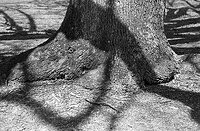
Tree with Big Shadows

Tree with Big Shadows

  • 2
  • 0
  • 67
Everal Barn

A
Everal Barn

  • 3
  • 1
  • 76

Forum statistics

Threads
203,455
Messages
2,855,016
Members
101,851
Latest member
Si_Voltage
Recent bookmarks
0
keithwms said:
When I went from the F5 to the F100 I thought MLU would be an issue... it has not been. The mirror damping on the F100 is very good

Thank you, just moved over to a F100 and enjoyed the damped sound of shutter/mirror
Was thinking of buying a F5 'cause it's MLU, but reading this doesn't encourage me anymore to do so

Anyone who can add to the list 35mm SLR's with MLU?

rhmimac
 
Anyone who can add to the list 35mm SLR's with MLU?

While not exactly MLU, the various Nikon FM/FE series cameras (and possibly others) raise the mirror and close the diaphragm when the self-timer is started.

This is effectively MLU, at least for subjects where catching the decisive moment isn't important...
 
MLU cameras:tongue:entax KX,LX(?) Nikon F/F2, Nikkormat FTN/FT2, Canon FTb/F1, Minolta SRT101.
Probably more but these are four commonly available cameras. I don't remember if the OM1 had MLU or not, but don't believe it did.
 
I don't remember if the OM1 had MLU or not, but don't believe it did.
The OM-1 was the only Olympus OM model with mirror lock up, which combined with its size and weight made it sought after among astrophotographers.

Leica R6/R6.2 have mirror lock up. If you flick the top of the shutter release on a Leica SL with a finger tip, it will lock up the mirror without firing. Not sure if this works on the SL2. I can make it work consistently on an SL.

Lee
 
The OM-1 was the only Olympus OM model with mirror lock up, which combined with its size and weight made it sought after among astrophotographers.

Leica R6/R6.2 have mirror lock up. If you flick the top of the shutter release on a Leica SL with a finger tip, it will lock up the mirror without firing. Not sure if this works on the SL2. I can make it work consistently on an SL.

Lee

This works on many Pentax SLRs as well. I use it Spotmatics and various M-series. Don't think I ever tried it on my K1000, which I wish I had never sold... sigh.
 
Thank you for the list.
The thread started in the RF forum which I forgot.
I will reignite it on the proper place

rhmimac
 
Performing the laser pointer test seems like it would not be anything more than a curiosity unless the laser spot was actually photographed.
 
And, as has already been pointed out, it's stupid to photograph the laser point, and one might as well photograph a resolution chart. If the laser is attached to the camera solidly, it's going to move in exactly the same way the camera is, and so it will be no surprise that the laser point stays a nice sharp dot, even as the rest of the photograph becomes blurred by mirror slap. Trying to acertain mirror slap by photographing a laser point from a laser attached to the camera is about as perfectly flawed a test as one could imagine. Lasers don't actually draw streaks on walls....they just look like they do.
 
And, as has already been pointed out, it's stupid to photograph the laser point, and one might as well photograph a resolution chart. If the laser is attached to the camera solidly, it's going to move in exactly the same way the camera is, and so it will be no surprise that the laser point stays a nice sharp dot, even as the rest of the photograph becomes blurred by mirror slap. Trying to acertain mirror slap by photographing a laser point from a laser attached to the camera is about as perfectly flawed a test as one could imagine. Lasers don't actually draw streaks on walls....they just look like they do.

Isn't the point to see if the dot is blurred during the exposure?
But, as yet I haven't photographed a dot. Laser or otherwise.
 
I'm saying, that if the laser is attached to the camera, the dot is never going to be blurred, regardless of how shaky the camera is. If the camera moves, the dot will also move. Think about it. You need to photograph something that's external to the camera if you want to see if the camera is shaking.
 
Better Sense is correct. The dot should be photographed, but not attached to the camera to tell you anything useful. At that point, you could just photograph anything for the test to work.
 
And if you look closely at the projected dot from a typical laser pointer, it's not really a great resolution target. From the distance of the audience at some dreadful PowerPoint presentation, it seems well defined, but up close, it's a bit like a mark from a thick crayon. I'd think that even a page of newsprint would be more informative.
 
I found a very nice graph showing the vibration amplitude set out to the shutter & mirror opening subs. Closing action

See:http://photo.net/learn/nature/mlu

Makes me thinking of buying an F4 for my macrowork on a 105mm

rhmimac
 
I found a very nice graph showing the vibration amplitude set out to the shutter & mirror opening subs. Closing action

See:http://photo.net/learn/nature/mlu

rhmimac
Some kind of scale on that amplitude axis would be useful for interpreting results. An inch of deflection at one foot would be different than a few microns at 100 meters. It's also only one unidentified camera/lens/tripod combination, stated to be typical, as if there's no significant deviation among models.

Interesting, but not enough info to be actually useful.

Lee
 
I'm saying, that if the laser is attached to the camera, the dot is never going to be blurred, regardless of how shaky the camera is. If the camera moves, the dot will also move. Think about it. You need to photograph something that's external to the camera if you want to see if the camera is shaking.

Oh man, now I have to think? It's making my brain sweat already. But I finally get it.
 
I bought a Hasselblad, some time ago, to get sharp photos.

-No one told me how nice it was to just handhold the thing.
-No one told me how (relatively) light it was.
-No one told me how nice it was to use a prism finder like a PME-5
-No one told me how responsive the thing is.
-No one told me just how fantastic a 6x6 neg really is.
-No one told me how spontaneous you can be with the thing.

What they did tell me was:

-Tripod mount, always
-Use remote shutter release always
-Mirror up always
-Be boring

I think I'll do what feels right at the time.
 
I bought a Hasselblad, some time ago, to get sharp photos.

-No one told me how nice it was to just handhold the thing.
-No one told me how (relatively) light it was.
-No one told me how nice it was to use a prism finder like a PME-5
-No one told me how responsive the thing is.
-No one told me just how fantastic a 6x6 neg really is.
-No one told me how spontaneous you can be with the thing.

What they did tell me was:

-Tripod mount, always
-Use remote shutter release always
-Mirror up always
-Be boring

I think I'll do what feels right at the time.

-Tripod mount, always <= what a bunch of crap, I have used the tripod for the Hasselblad exactly on time so far
-Use remote shutter release always <= AGAIN what a bunch of crap, I have never used the the remote shutter release
-Mirror up always <= the mirror goes up after I trigger the shutter and stays there until I advance the film
-Be boring <= Hey, if you cannot figure out how to use a well engineered camera, eat your heart out but do not crap in my bed!

What a bunch of whinny wimps!
Grow a pair!


I think I'll do what feels right at the time. <= I am with you

Steve

[Note to self: Stop holding back your opinions and emotions.]
 
The reason that photographers use rangefinders for street photography is because HCB did it. But HCB could have taken wonderful photographs with a Kodak Brownie if it was all he had available. But then again, if he had, we would probably be spending thousands of dollars for Brownie cameras and lenses...

Rangefinders are simpler optically than SLRs, but focus more slowly (depending on how much practice you have had), and less precisely than SLR cameras. This difference in focus precision probably outweighs the benefit of having no mirror vibration. I tinker with lots of cameras, and more than half of the rangefinder cameras I've come across are in need of rangefinder adjustments to some degree.

Also, though rangefinders can used wonderful lenses, this number of lenses is small, as cameras like the Leica M series have focusing lines for 4 lenses. For different lenses you may have to use an accessory viewfinder. With an SLR, you can use any lens which will fit the mount, and see what the lens sees when you look through the viewfinder.

As for myself, I shoot a rangefinder most of the time. Not because it's better or worse than an SLR, but simply because I like to.
 
Rangefinders are simpler optically than SLRs, but focus more slowly (depending on how much practice you have had), and less precisely than SLR cameras.
A rangefinder lens, because of it simplicity, will also have less glass elements hence less glass surfaces than a SLR lens. This can give better contrast. Lenses with less elements are simpler to make, simpler in construction so may be far more rugged than a given SLR lens.

As for precision in focus; In low light, I must say that it is easier to focus my Leica M with its 35mm lens than my Nikon F3 with it's 35mm lens.
 
Some people enjoy using RF cameras because it feels right to them.
Some people prefer apple pie to blueberry pie. Same diff.
 
I'm saying, that if the laser is attached to the camera, the dot is never going to be blurred, regardless of how shaky the camera is. If the camera moves, the dot will also move. Think about it. You need to photograph something that's external to the camera if you want to see if the camera is shaking.

Here's a thought experiment: Use a 10 second exposure and move the camera up and down? Will the dot be blurred? Of course; it will be a line. Now explain why the physics of motion are different for 10 seconds vs. 1/10th of a second.

Yes, the dot moves with the camera. That's the point. However the background doesn't move and the path the dot traces on the background will be recorded.
 
Here's a thought experiment: Use a 10 second exposure and move the camera up and down? Will the dot be blurred? Of course; it will be a line. Now explain why the physics of motion are different for 10 seconds vs. 1/10th of a second.

Yes, the dot moves with the camera. That's the point. However the background doesn't move and the path the dot traces on the background will be recorded.

Heh, heh, heh. Think about it more carefully.
 
Photrio.com contains affiliate links to products. We may receive a commission for purchases made through these links.
To read our full affiliate disclosure statement please click Here.

PHOTRIO PARTNERS EQUALLY FUNDING OUR COMMUNITY:


Ilford ADOX Freestyle Photographic Stearman Press Weldon Color Lab Blue Moon Camera & Machine
Top Bottom
